
The first thing Victoria Falls ruins is your composure. Within twenty minutes of arriving at Mosi-oa-Tunya, the local name for the falls, meaning ‘The Smoke That Thunders’, I was soaked through and realising that the rain jacket purchased in the departure lounge at Cape Town International was nowhere near sufficient for Knife-Edge Bridge, the narrow pedestrian crossing on the Zambian side of the falls. It offers one of the most dramatic vantage points from which to experience Victoria Falls, but during high-water season the bridge sits directly in the blast zone of the main spray.
And this is a very good year for it. Currently, 4,500 cubic metres of water crash over the sheer 108-metre drop every second – the highest flow in more than a decade. The spray rises with such force that it creates its own weather system. Paths disappear. Visibility comes and goes. You stop trying to control your appearance almost immediately.

Image 1
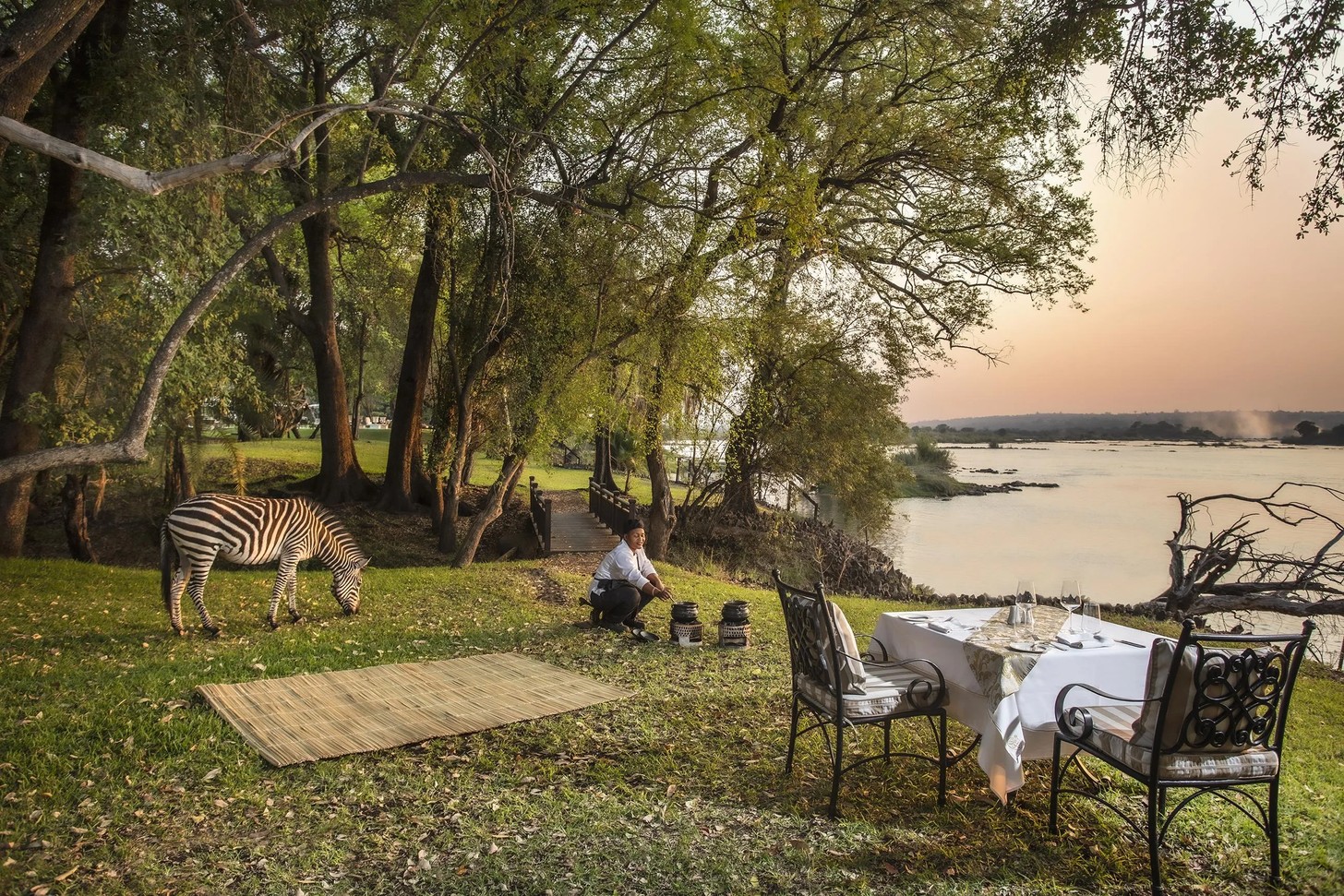
Caption: Dinner at Anantara The Royal Livingstone comes with a front-row seat to the Victoria Falls- and zebra as regular visitors
What’s strange is how accessible it all feels. Three hours from Cape Town. About ninety minutes from Johannesburg. A Natural World Heritage Site sitting there, rearranging people’s nervous systems on a daily basis, and somehow we still think it is terribly far away. People always ask which side is better – Zambia or Zimbabwe – but after six days experiencing both, while staying at The Royal Livingstone Victoria Falls Zambia Hotel by Anantara and Anantara Stanley & Livingstone Victoria Falls Hotel, the question became irrelevant. It is like asking whether you prefer thunder or lightning. The two sides do not compete. They simply destabilise you differently.
At The Royal Livingstone, the falls arrive physically. The hotel grounds spill into the national park and eventually towards the falls themselves, meaning the line between luxury hotel and wilderness becomes pleasantly blurred. Zebras wander across the lawns beside the swimming pool, while giraffes appear unexpectedly en route to the gym. One morning, the housekeeping buggy sat stalled entirely surrounded by zebras – including several impossibly sweet seven-day-old foals – while two giraffes hovered nearby inspecting neat stacks of fresh towels. Nobody seemed especially concerned, including the staff. It was as though this happened every other day, which I suspect it does.
Image 2
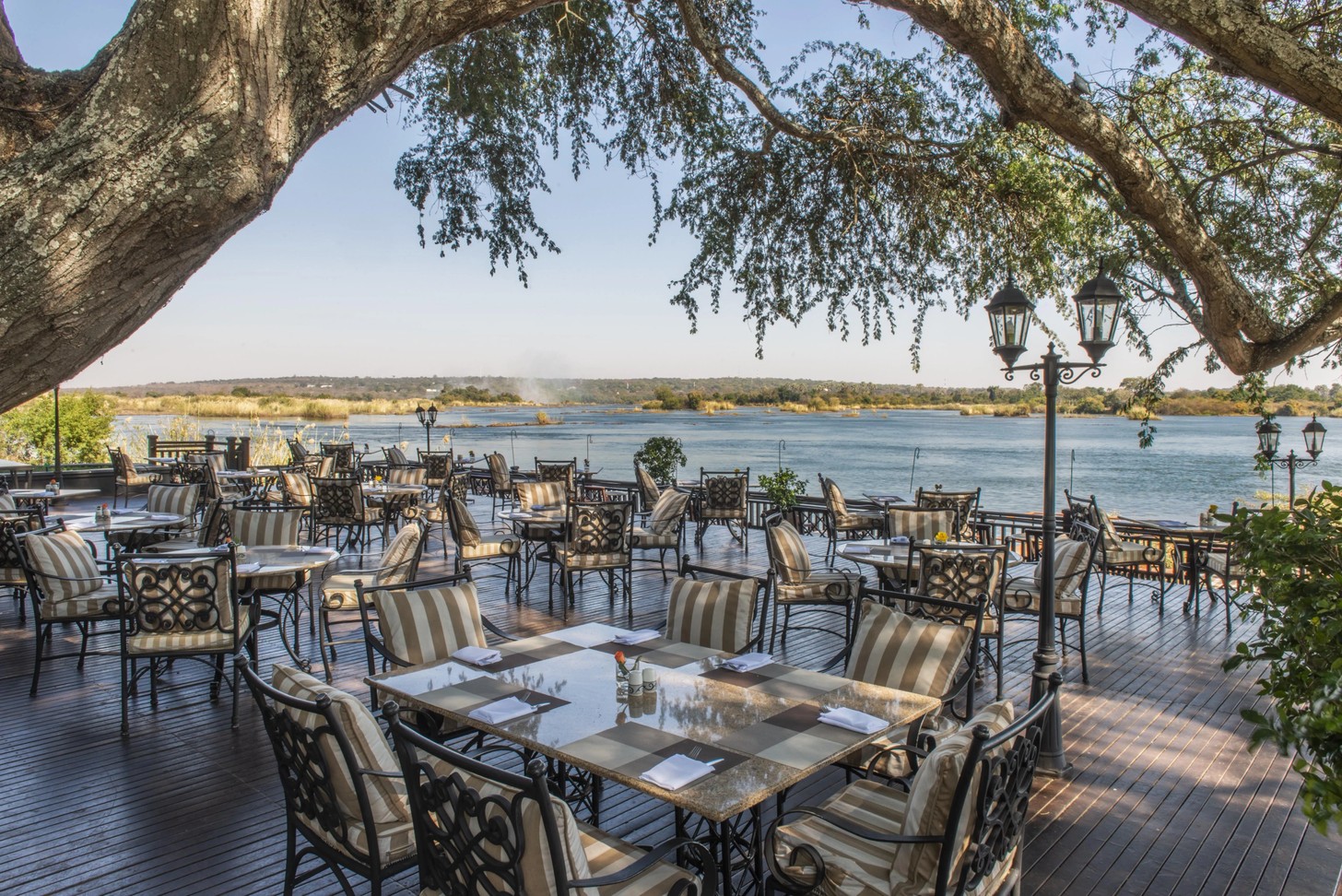
Caption: Alfresco lunch on the Zambezi River at The Royal Livingstone
The hotel still carries that old safari romance: river-facing verandas, ceiling fans turning lazily above four-poster beds and dark timber softened by pale linens, though the recently refreshed rooms feel lighter and more contemporary. Guests are assigned butlers who calibrate themselves to your rhythm. Coffee appears before you think to order it, while waterlogged shoes are dried, polished and returned to the wardrobe before another giraffe has a chance to wander past your veranda. The food here is excellent. The emphasis is on local produce handled lightly and influenced globally – fresh, bright and beautifully presented.
Then there is The Royal Livingstone Express, operated in partnership with Bushtracks Africa, the long-established safari and rail tourism company based in Livingstone. The restored steam train now runs additional departures during peak season because apparently none of us are entirely immune to the fantasy of polished brass, old-fashioned cocktails and moving slowly through surreal landscapes.
Image 3
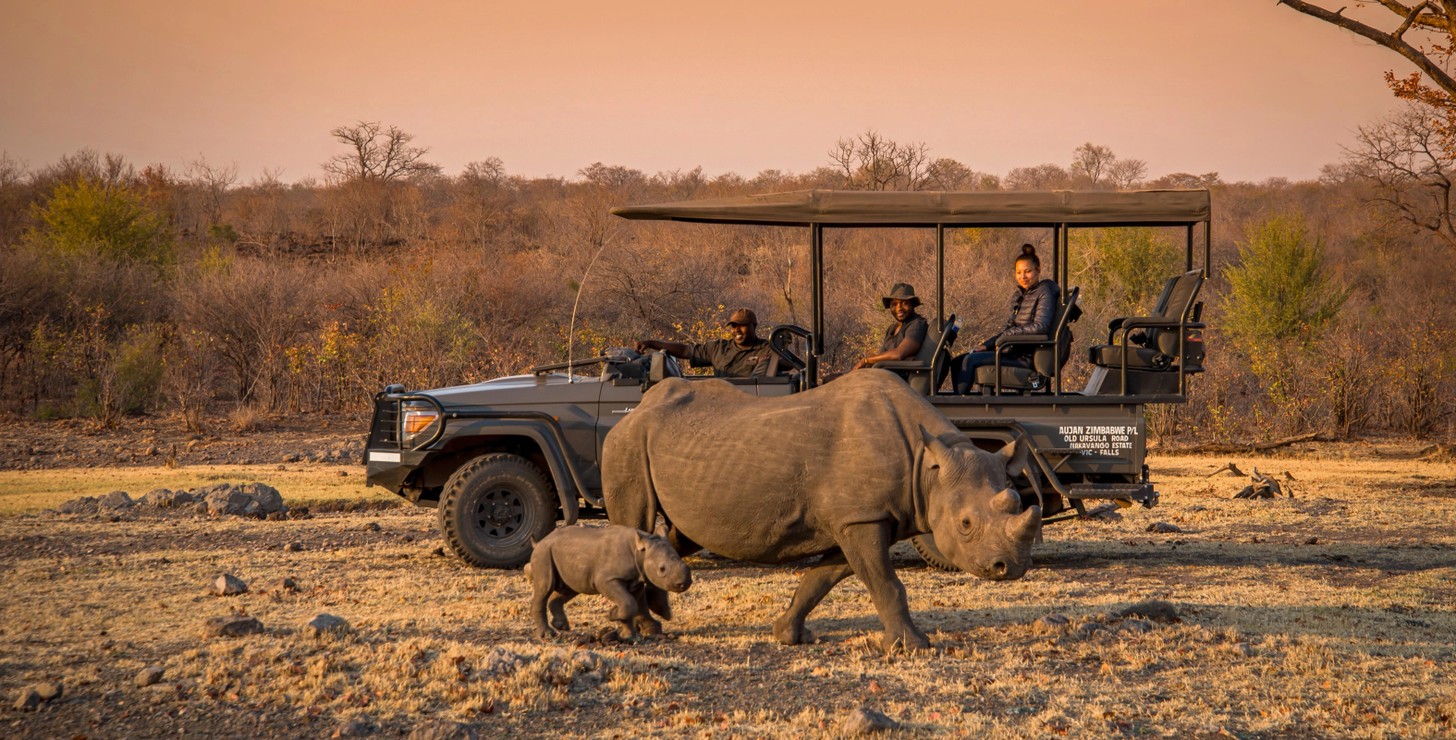
Caption: The Anantara Stanley & Livingstone Victoria Falls Hotel is situated within the only private game reserve and Black Rhino 'Intensive Protection Zone' in the vicinity of Victoria Falls
The train groans across the Victoria Falls Bridge, built in 1905 during Cecil Rhodes’ ambitious Cape-to-Cairo railway project. Dinner arrives course by course while colossal billows of mist rise from the gorge below like smoke from another century. Surreal barely covers it.
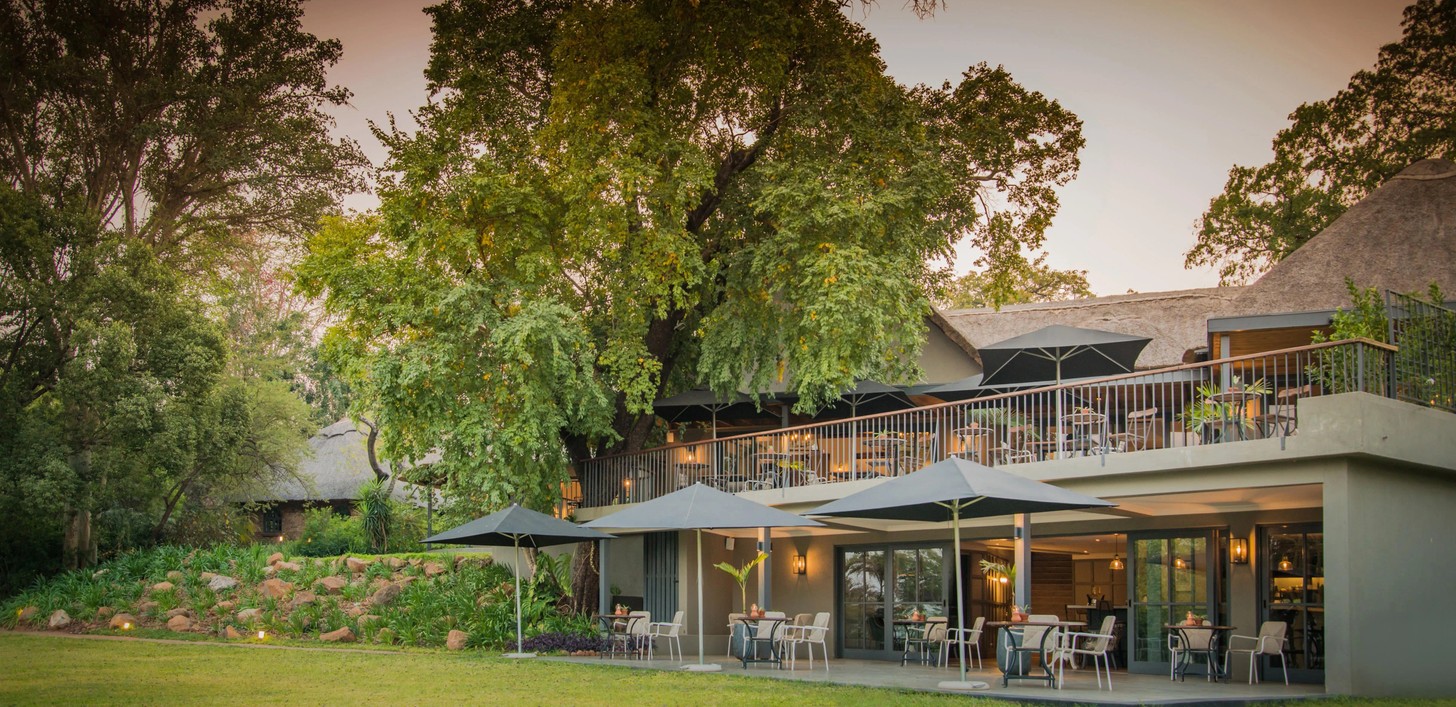
Zimbabwe feels different immediately. Broader somehow, quieter around the edges. The Anantara Stanley & Livingstone Victoria Falls Hotel sits within the only private game reserve in the immediate vicinity of Victoria Falls. Everything seems to exhale. There is a stillness to the landscape, yet the reserve hums constantly with life. As a Black Rhino Intensive Protection Zone, the 4,000-hectare reserve offers an exclusive conservation experience and the chance to encounter rhino in the wild, which we did, alongside some of the 470 bird species found on the property. Restaurant 1871 is exceptional, though another kind of theatre unfolds just beyond the dining room where a nearby waterhole draws animals in and out of view throughout the day. One evening, midway through the chef’s tasting menu and wine pairing, a lone giraffe emerged to drink while a herd of eland crossed the clearing and disappeared into the reserve for the night.
Image 4
Caption: At Anantara Stanley & Livingstone, dining comes with exclusive views of the watering hole and a regular parade of wildlife
And the falls themselves? From the Zimbabwean side, the full curtain of water reveals itself across the gorge in one immense sweep. The rainforest here depends entirely on the moisture for its survival, as do the plants clinging to the surrounding cliff faces. This strange suspended ecosystem exists entirely at the mercy of the falls and is increasingly sensitive to the pressure of too many human feet passing through it each day.
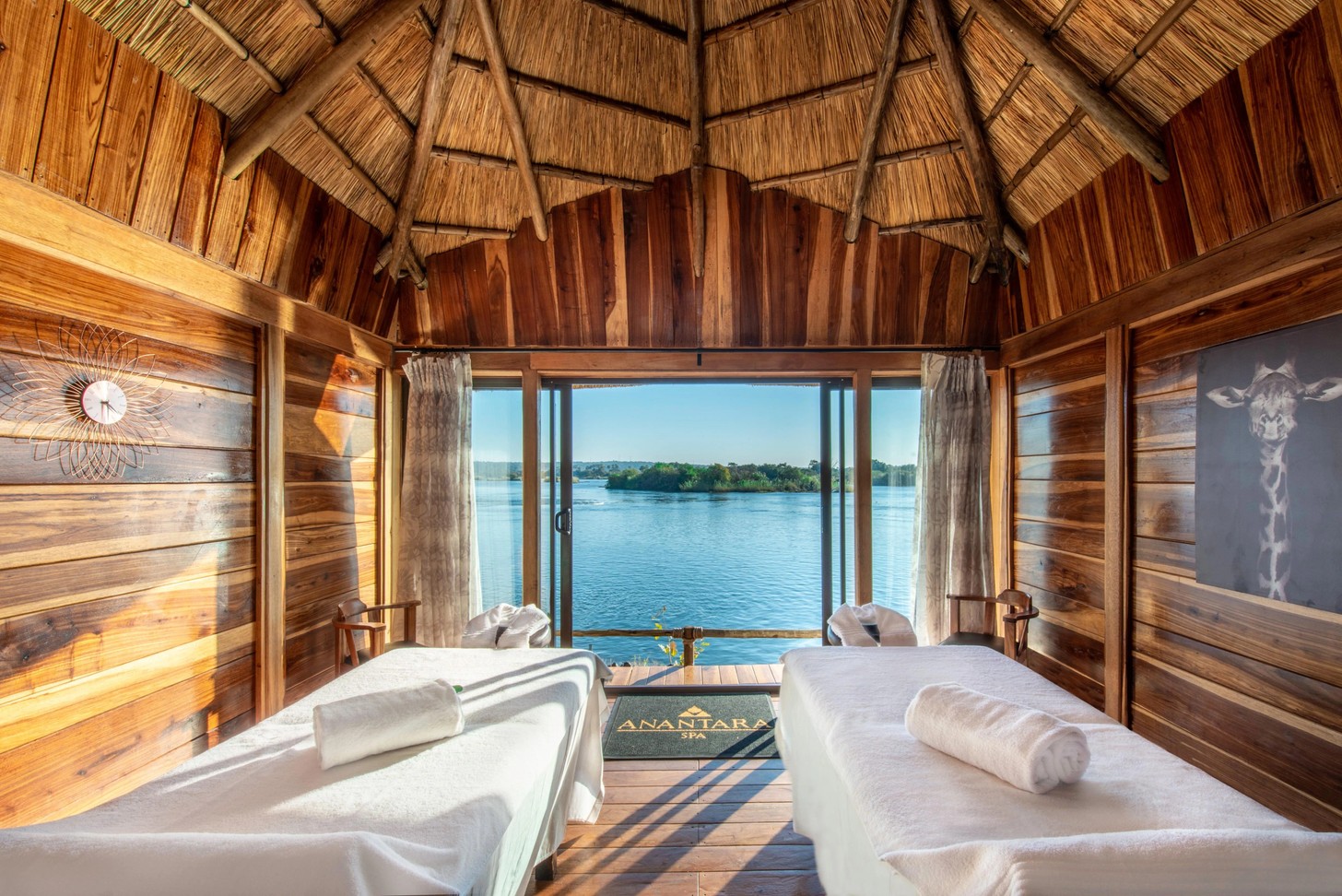
Image 5
Caption: The spa at The Royal Livingstone with a view of the falls.
In the end, the falls resist comparison entirely. Zambia immerses you in the chaos of it all; Zimbabwe allows you to step back and absorb the scale. Together, they create something far more transportive than either could alone. The real luxury was simply being close enough to feel undone by it.
Credits
Text by Heidi Bertish
Images: Supplied
What’s strange is how accessible it all feels. Three hours from Cape Town. About ninety minutes from Johannesburg. A Natural World Heritage Site sitting there, rearranging people’s nervous systems on a daily basis, and somehow we still think it is terribly far away. People always ask which side is better – Zambia or Zimbabwe – but after six days experiencing both, while staying at The Royal Livingstone Victoria Falls Zambia Hotel by Anantara and Anantara Stanley & Livingstone Victoria Falls Hotel, the question became irrelevant. It is like asking whether you prefer thunder or lightning. The two sides do not compete. They simply destabilise you differently.
At The Royal Livingstone, the falls arrive physically. The hotel grounds spill into the national park and eventually towards the falls themselves, meaning the line between luxury hotel and wilderness becomes pleasantly blurred. Zebras wander across the lawns beside the swimming pool, while giraffes appear unexpectedly en route to the gym. One morning, the housekeeping buggy sat stalled entirely surrounded by zebras – including several impossibly sweet seven-day-old foals – while two giraffes hovered nearby inspecting neat stacks of fresh towels. Nobody seemed especially concerned, including the staff. It was as though this happened every other day, which I suspect it does.
The hotel still carries that old safari romance: river-facing verandas, ceiling fans turning lazily above four-poster beds and dark timber softened by pale linens, though the recently refreshed rooms feel lighter and more contemporary. Guests are assigned butlers who calibrate themselves to your rhythm. Coffee appears before you think to order it, while waterlogged shoes are dried, polished and returned to the wardrobe before another giraffe has a chance to wander past your veranda. The food here is excellent. The emphasis is on local produce handled lightly and influenced globally – fresh, bright and beautifully presented.
Then there is The Royal Livingstone Express, operated in partnership with Bushtracks Africa, the long-established safari and rail tourism company based in Livingstone. The restored steam train now runs additional departures during peak season because apparently none of us are entirely immune to the fantasy of polished brass, old-fashioned cocktails and moving slowly through surreal landscapes.
The train groans across the Victoria Falls Bridge, built in 1905 during Cecil Rhodes’ ambitious Cape-to-Cairo railway project. Dinner arrives course by course while colossal billows of mist rise from the gorge below like smoke from another century. Surreal barely covers it.
Zimbabwe feels different immediately. Broader somehow, quieter around the edges. The Anantara Stanley & Livingstone Victoria Falls Hotel sits within the only private game reserve in the immediate vicinity of Victoria Falls. Everything seems to exhale. There is a stillness to the landscape, yet the reserve hums constantly with life. As a Black Rhino Intensive Protection Zone, the 4,000-hectare reserve offers an exclusive conservation experience and the chance to encounter rhino in the wild, which we did, alongside some of the 470 bird species found on the property. Restaurant 1871 is exceptional, though another kind of theatre unfolds just beyond the dining room where a nearby waterhole draws animals in and out of view throughout the day. One evening, midway through the chef’s tasting menu and wine pairing, a lone giraffe emerged to drink while a herd of eland crossed the clearing and disappeared into the reserve for the night.
And the falls themselves? From the Zimbabwean side, the full curtain of water reveals itself across the gorge in one immense sweep. The rainforest here depends entirely on the moisture for its survival, as do the plants clinging to the surrounding cliff faces. This strange suspended ecosystem exists entirely at the mercy of the falls and is increasingly sensitive to the pressure of too many human feet passing through it each day.
In the end, the falls resist comparison entirely. Zambia immerses you in the chaos of it all; Zimbabwe allows you to step back and absorb the scale. Together, they create something far more transportive than either could alone. The real luxury was simply being close enough to feel undone by it.
Credits
Text by Heidi Bertish
Images: Supplied


