
Airports have become some of the most important pieces of civic architecture of the 21st century. No longer simply gateways, they are increasingly conceived as destinations in their own right — places where design, culture and infrastructure converge. The newly announced Bishoftu International Airport in Ethiopia promises to do exactly that.
Construction has officially begun on what will become the largest airport on the African continent, a landmark project designed by Zaha Hadid Architects for Ethiopian Airlines Group. Located approximately 40 kilometres south of Addis Ababa in Bishoftu, the development represents a US$12.5 billion investment and is poised to transform Ethiopia into one of the world's most significant aviation hubs.

Inspired by Ethiopia's Landscape
Rather than imposing a generic international aesthetic, Zaha Hadid Architects looked to Ethiopia's geography for inspiration.
The terminal's design takes cues from the Great Rift Valley, which passes close to Bishoftu. A central architectural spine will connect the airport's facilities and aircraft piers, creating intuitive movement through the building while reducing transfer distances for passengers.
Inside, each pier will feature its own material palette and colour story, reflecting the country's diverse regions and cultural identities.
This emphasis on place-making is characteristic of the practice's recent work, where large-scale infrastructure projects increasingly seek to express local identity while delivering world-class functionality.
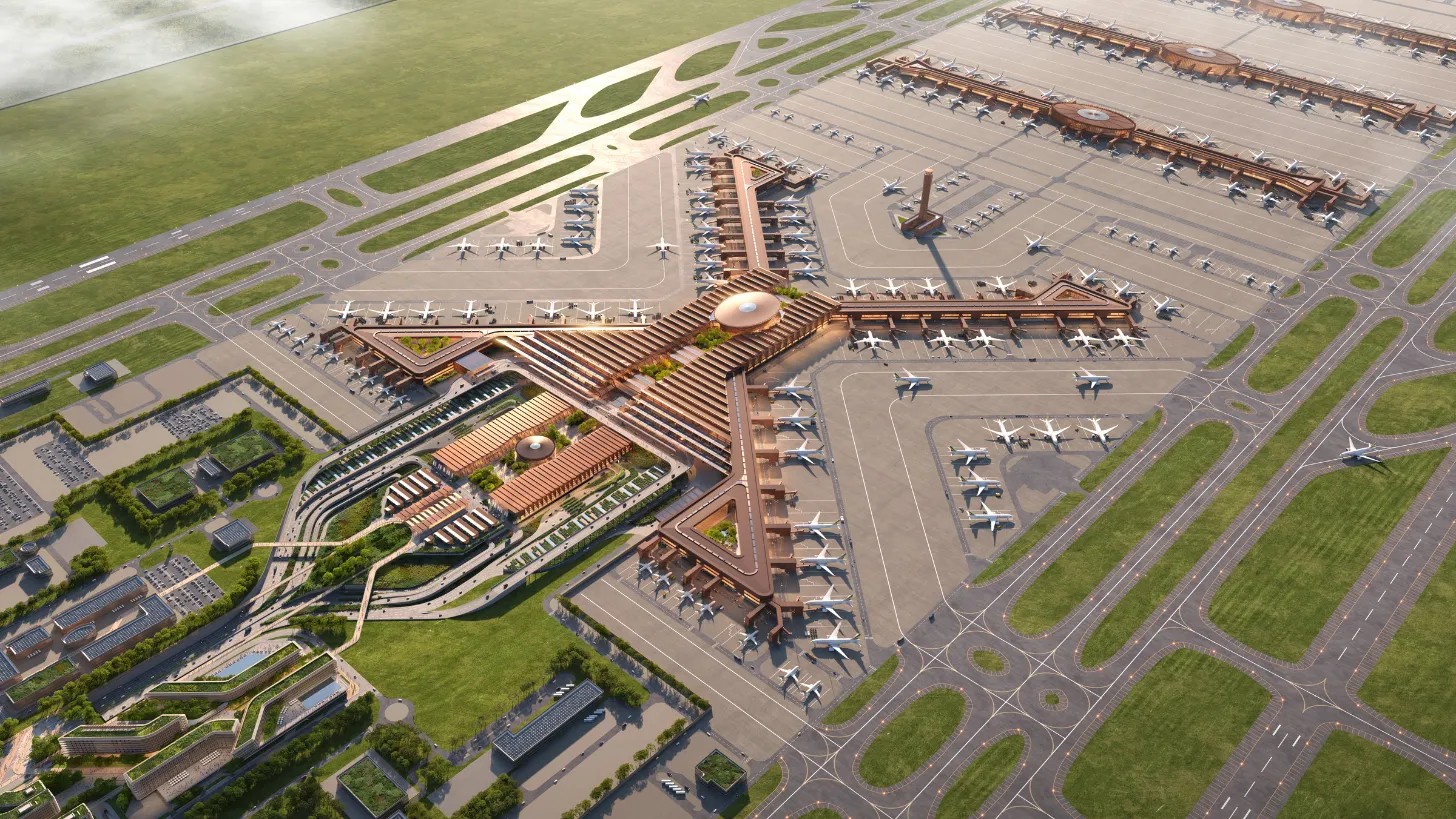
Designed for the Modern Traveller
A key consideration in the airport's planning is the passenger experience.
With Ethiopian Airlines operating as one of Africa's fastest-growing carriers, a significant proportion of travellers will be in transit. The airport has therefore been designed around seamless connections and extended dwell times.
Amenities will include a 350-room airside hotel, extensive dining and entertainment facilities, outdoor courtyards and landscaped gardens that allow travellers to spend time outdoors while remaining within the terminal environment.
The result is a vision of air travel that feels considerably more human-centred than the conventional airport experience.
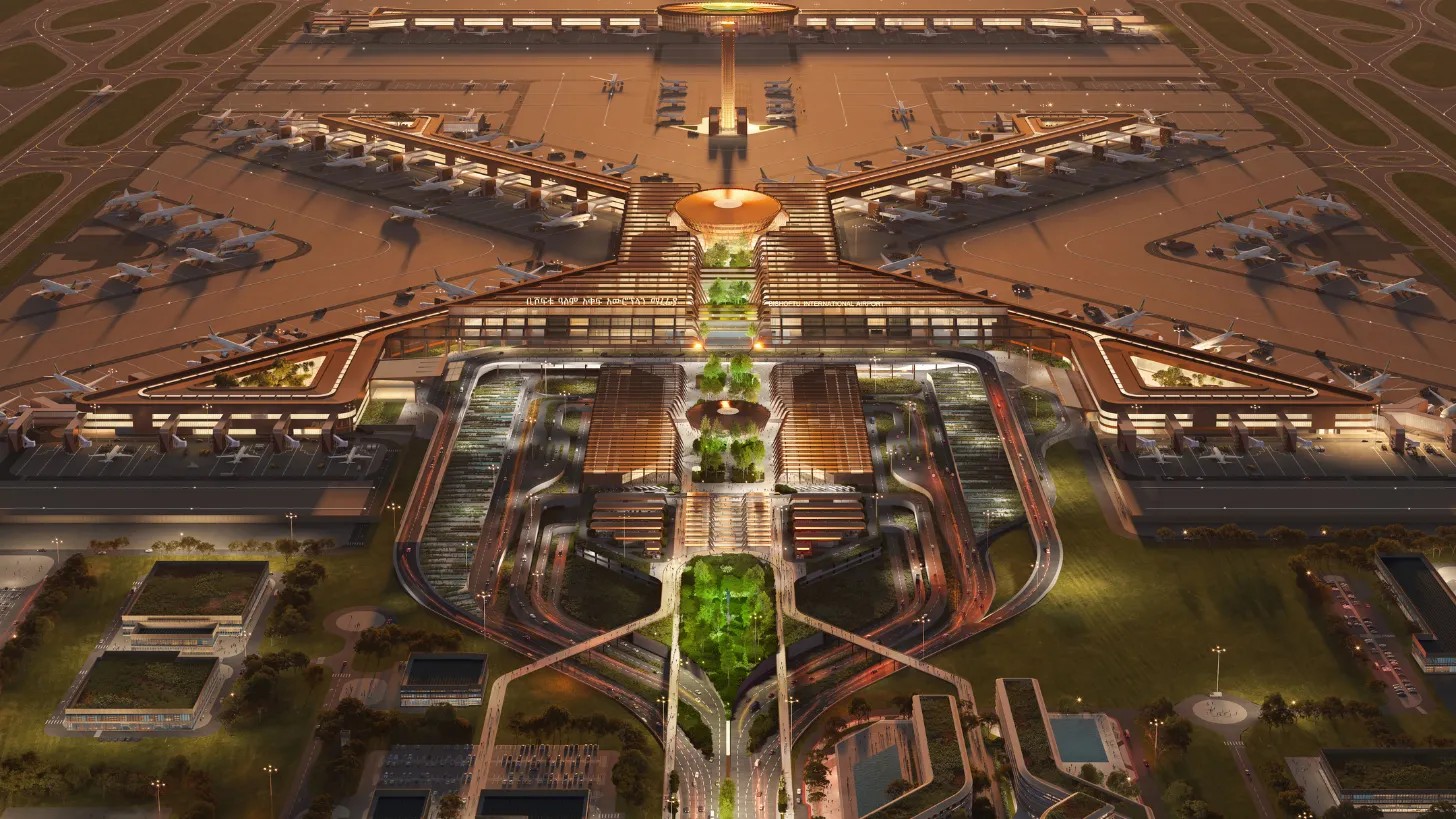
Sustainability at Scale
For a project of this magnitude, environmental performance has been placed firmly on the agenda.
Situated within Ethiopia's temperate highland climate, the terminal is targeting LEED Gold certification and will incorporate natural ventilation, extensive solar shading and semi-enclosed outdoor spaces that reduce reliance on mechanical cooling systems.
Construction will prioritise locally produced and recycled materials, including concrete, steel and aggregates sourced from the Bishoftu region.
Water management has also been carefully considered. Stormwater from runways, taxiways and terminal roofs will be channelled into wetlands and bioswales for storage and reuse, while enhancing biodiversity across the site. Photovoltaic arrays will contribute to on-site energy production, and native drought-resistant planting will shape both public parks and passenger gardens.
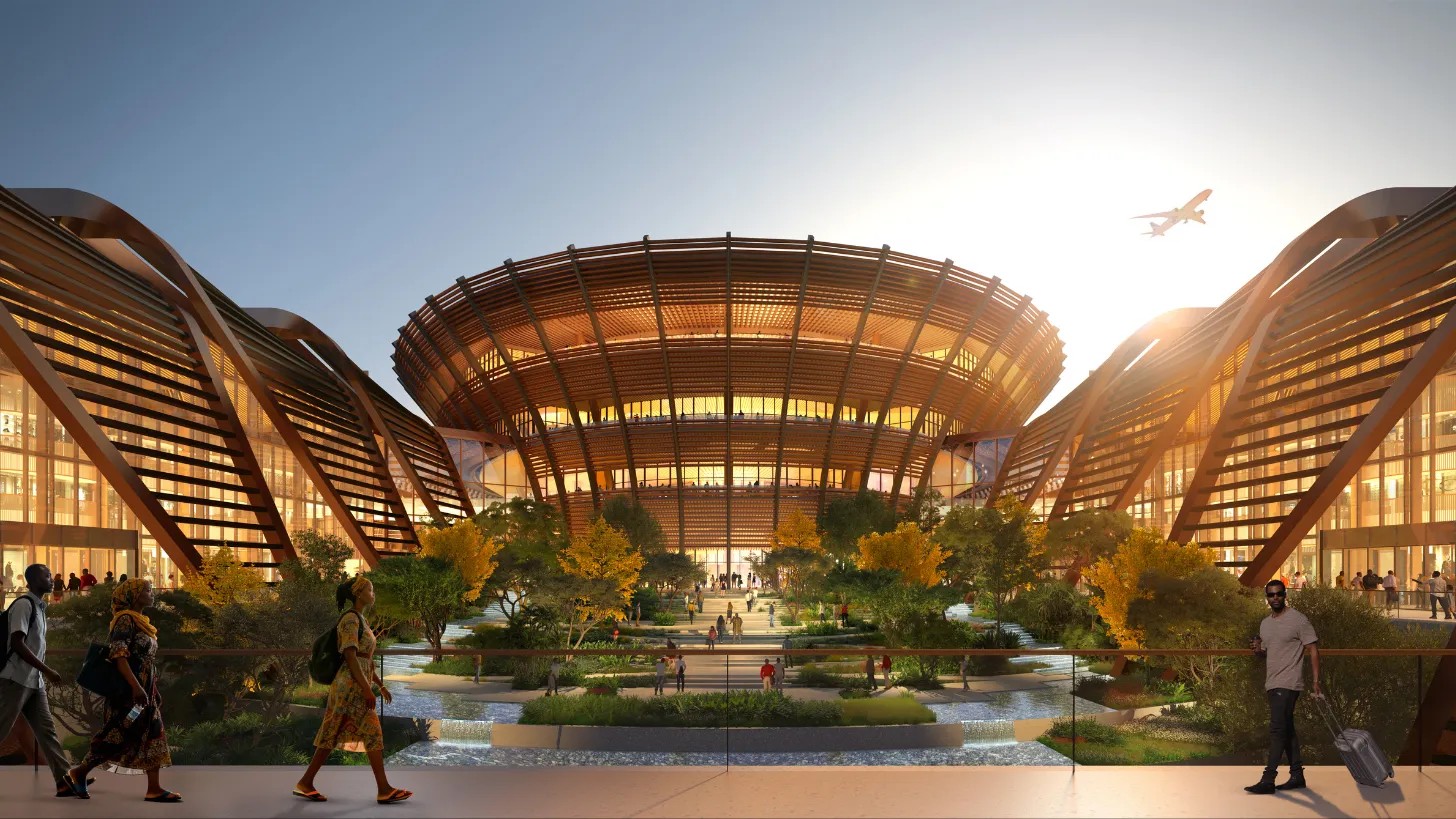
A New Gateway to Africa
The airport is being positioned as far more than a transport hub.
Connected to Addis Ababa and the existing Bole International Airport via a future high-speed rail link, Bishoftu International Airport will anchor an entirely new transport network and mixed-use Airport City development.
The wider precinct is expected to support a local population of around 80,000 people while creating significant employment opportunities and strengthening Ethiopia's role as a strategic link between Africa, Asia and the Middle East.
For Zaha Hadid Architects, it is also an opportunity to contribute to a project of extraordinary continental significance. As Cristiano Ceccato de Sabata, the practice's Director of Aviation, notes, airports have the power to bring people together and connect regions.
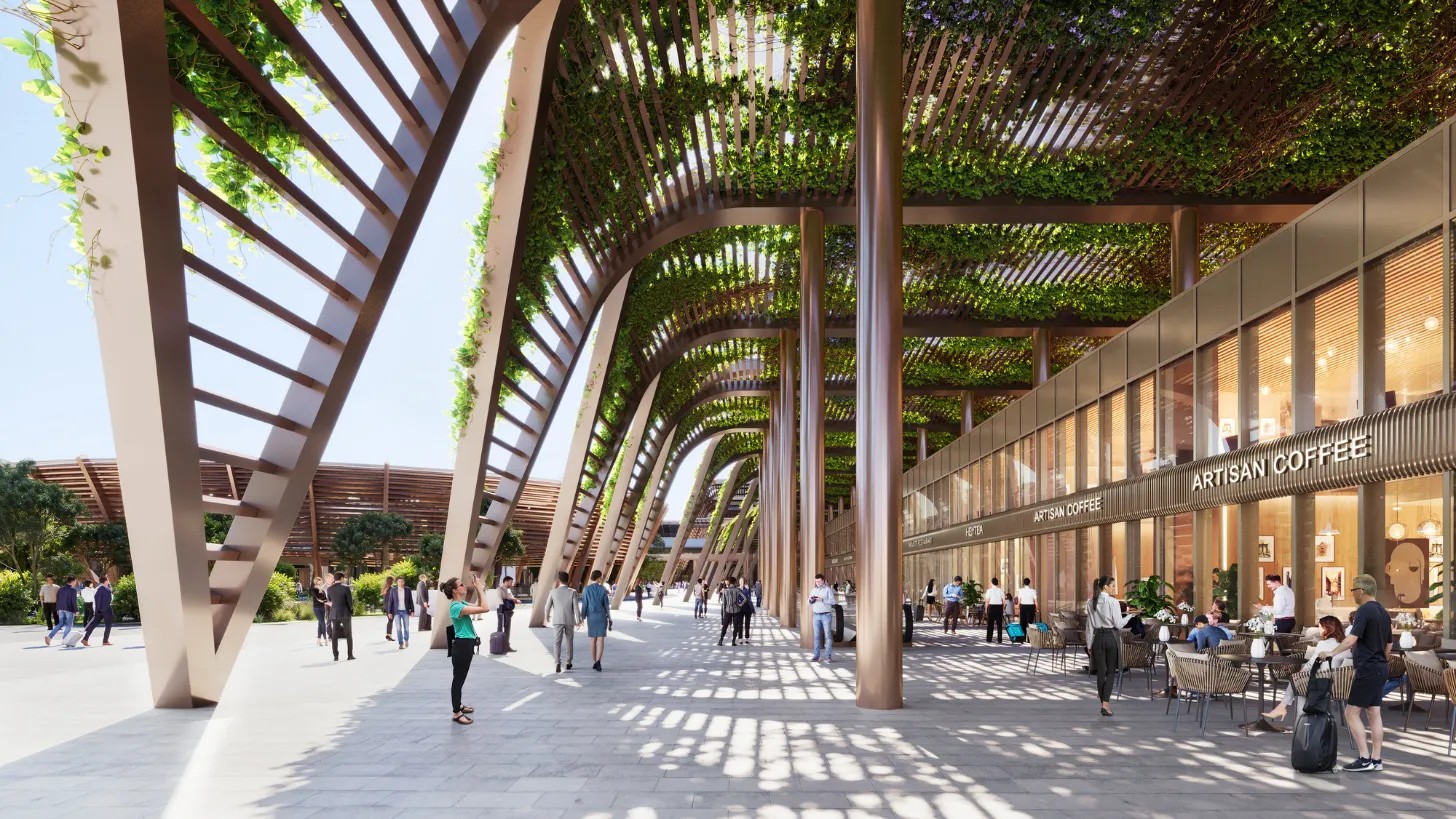
Scheduled to open its first phase in 2030, Bishoftu International Airport signals an ambitious new chapter for African infrastructure — one where architecture, sustainability and connectivity work in concert to shape the future of travel. zahahadid.com


