
Public seating is often treated as little more than a practical necessity, yet the most memorable examples of these designs shape how people experience a city. They invite conversation, encourage moments of pause and, at their best, reveal something about the place in which they are located.
That idea sits at the heart of Marmifere, a new collection of sculptural urban furniture by Florence-based Studio Lievito, which draws its identity directly from the dramatic marble landscapes of Carrara, Italy.

Instead of just approaching marble as a luxurious finish, the designers explored it as a storyteller.
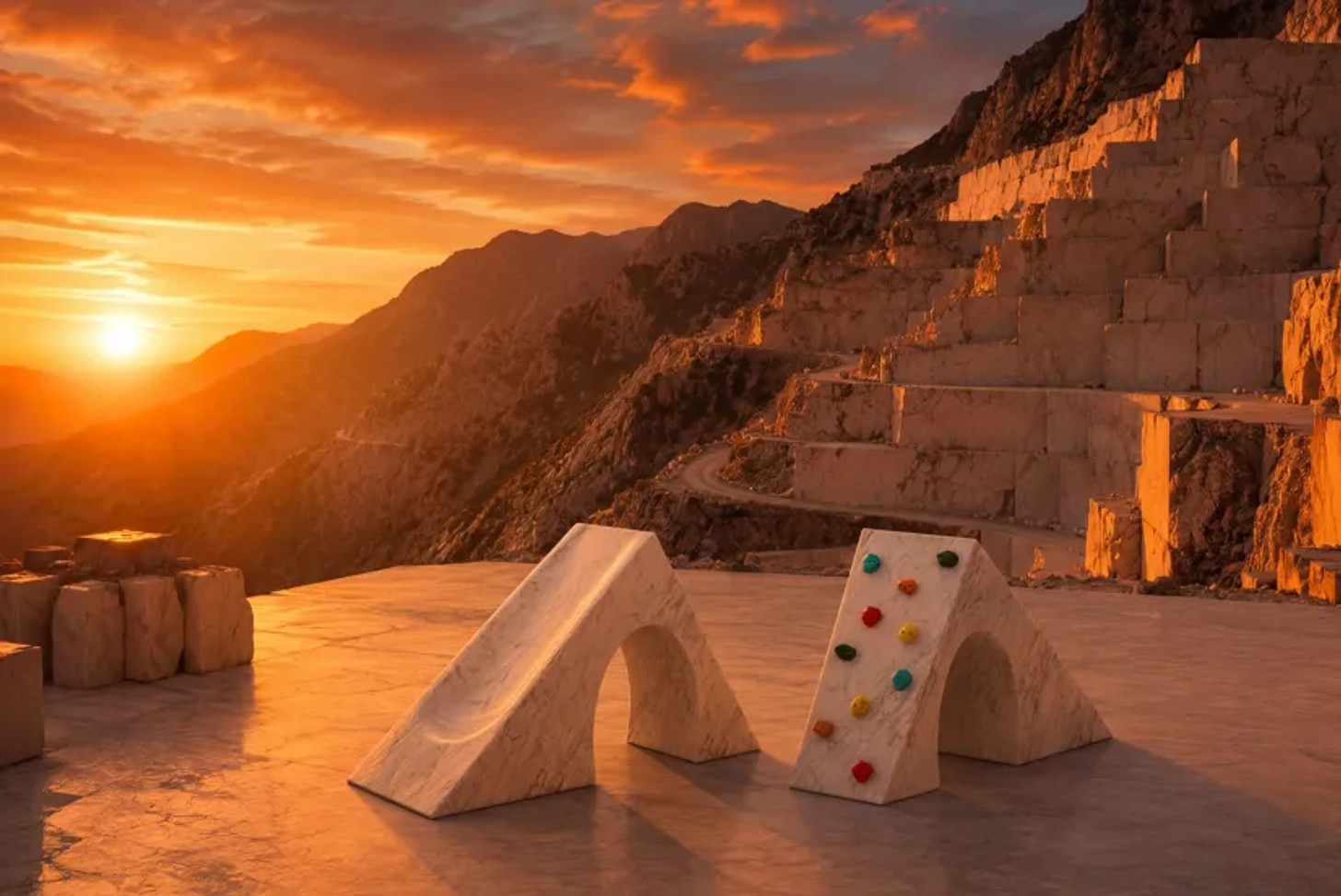
Every form refers to the relationship between the famous Carrara quarries and the communities that have grown around them for centuries, translating geological history into objects that are designed for everyday public life.
The collection takes its name from the historic Ferrovia Marmifera, the railway that once connected the marble quarries of the Apuan Alps to the coast, making it possible for Carrara marble to travel across the world.
Instead of reproducing this industrial history literally, Studio Lievito interprets it through a series of colossal forms that blur the line between sculpture, architecture, and street furniture.
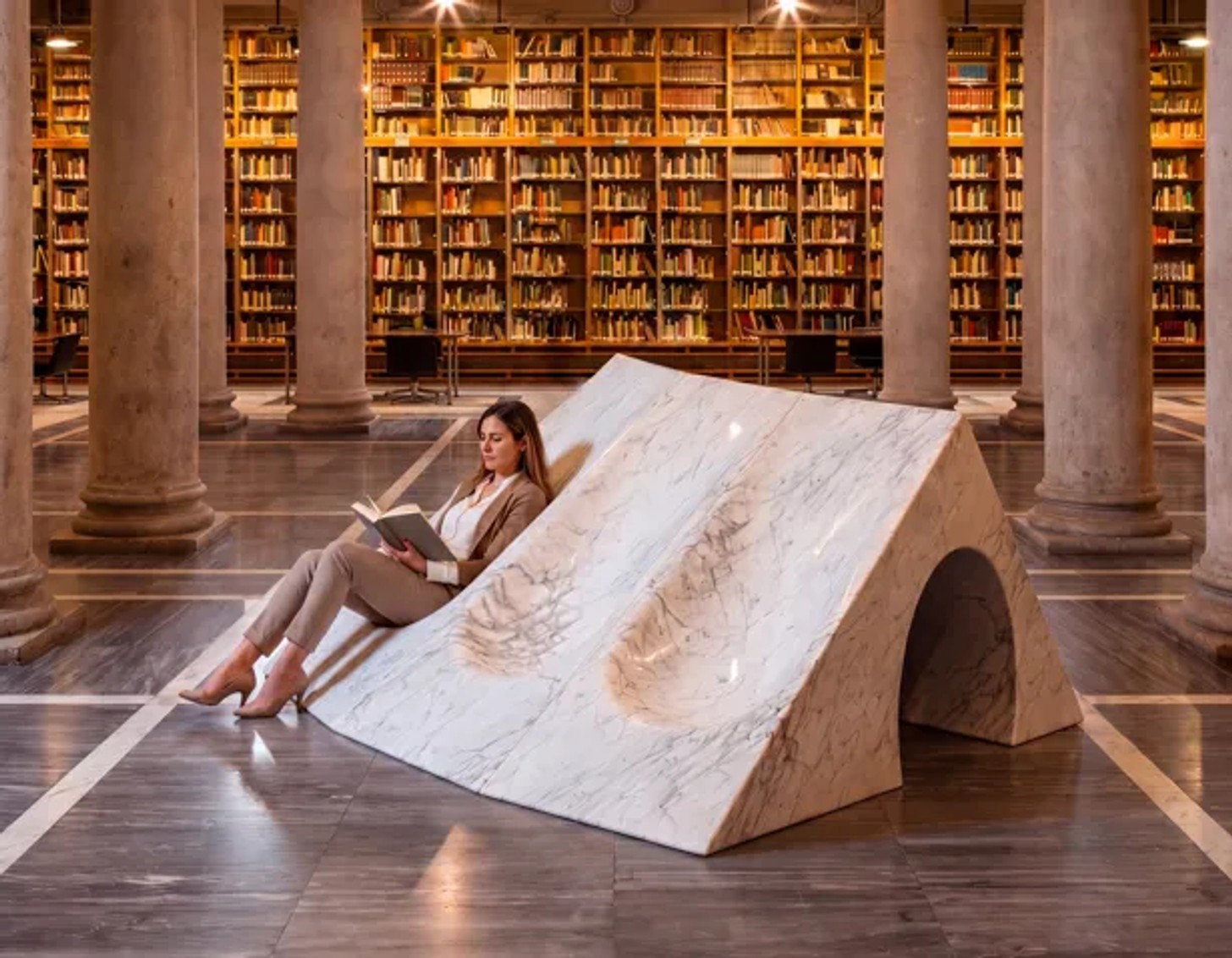
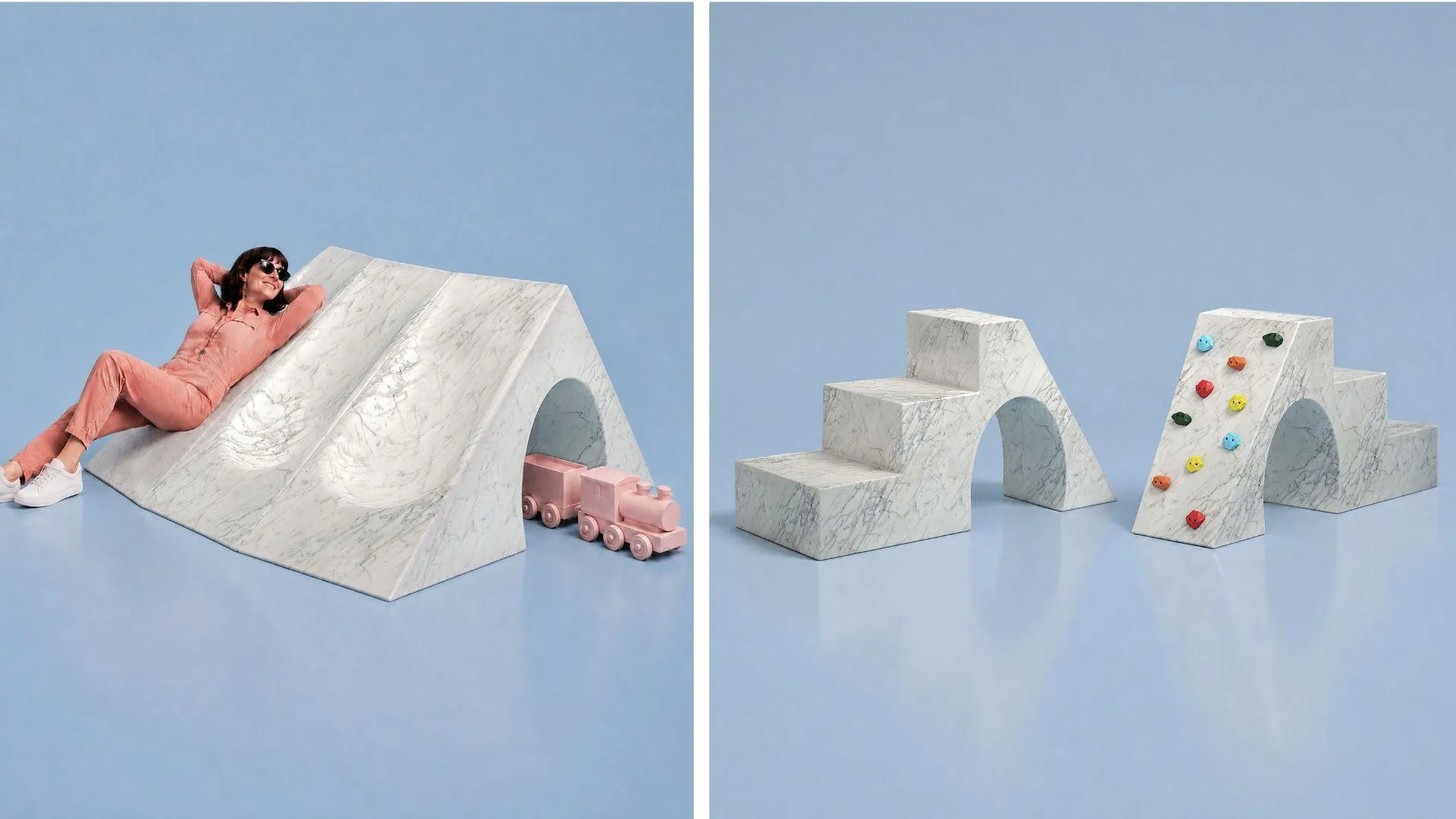
The pieces are inspired by the landscape itself. The terraces carved into the mountainsides, the enormous marble spoil heaps known as ravaneti, and the tunnels that cut through solid stone become abstract design references.
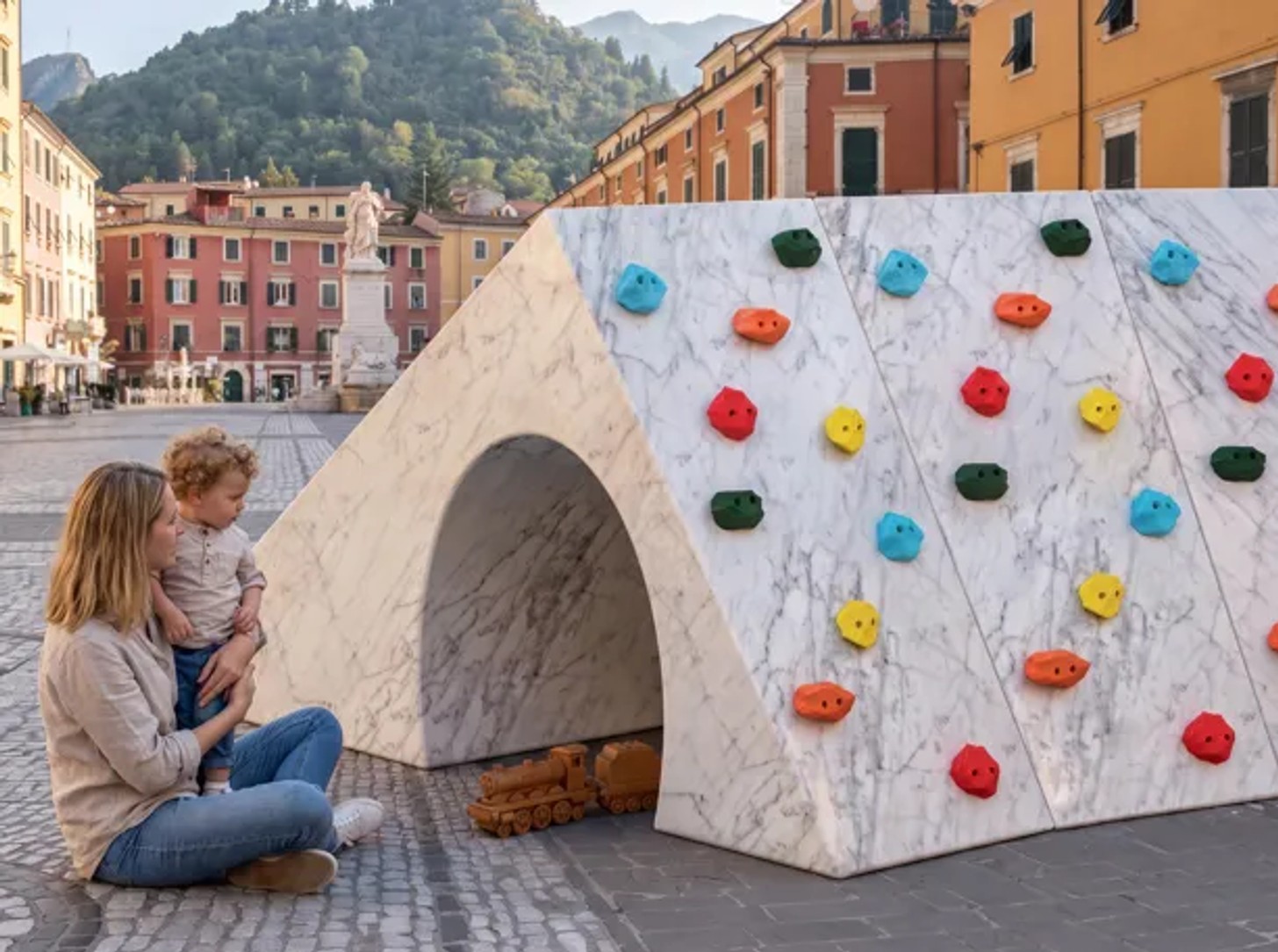
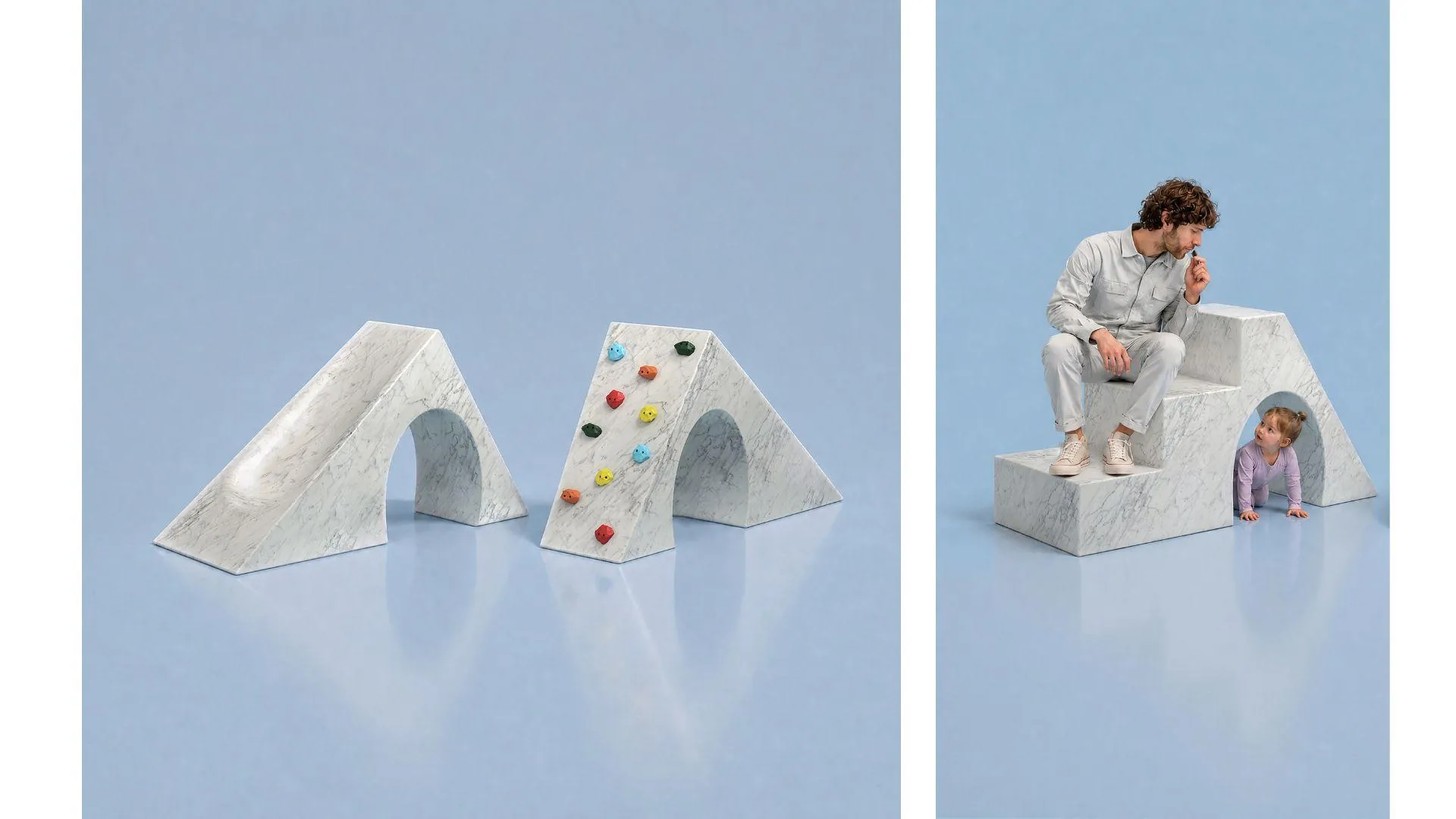
Each module performs multiple roles. One side provides generous seating with gently sculpted surfaces, while the opposite face transforms into an informal climbing wall fitted with recycled plastic handles, inviting children to interact with the stone in playful ways.
Hollow passages carved through each block become miniature tunnels when multiple elements are arranged together, encouraging exploration while creatively recalling the railway tunnels that once carried marble from mountain to sea.
This duality is central to the project.
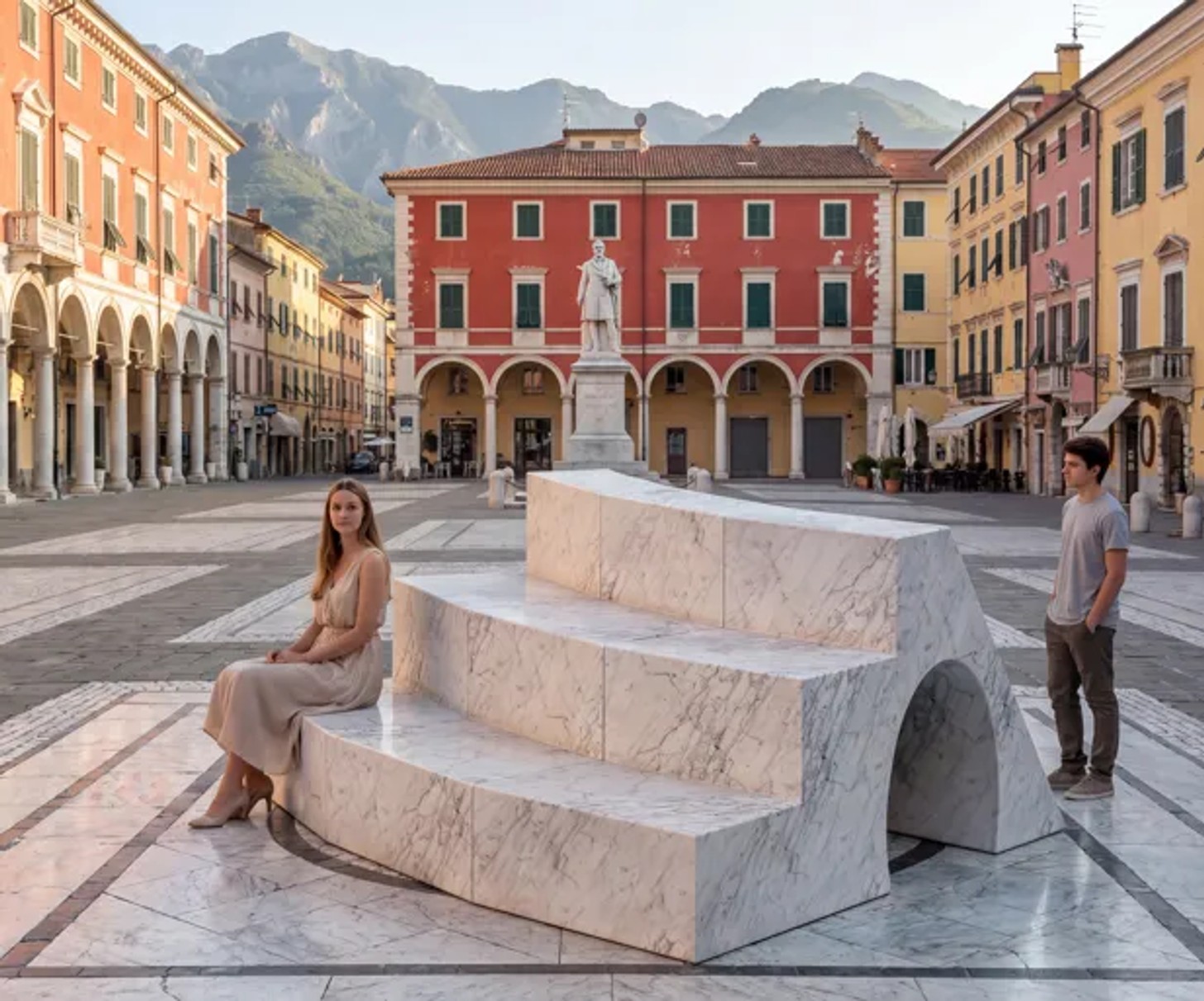
Marmifere isn't only about creating places to sit – it explores how public furniture can foster curiosity, movement, and social interaction without relying on complex technology or elaborate classifications.
The project also reflects a distinctly Italian design lineage. Elements of the radical design movement of the 1960s and 1970s can be found in its playful rejection of conventional furniture typologies.
The influence of figures such as Ugo La Pietra, whose work challenged accepted relationships between people and public space, sits alongside references to the thinking of the Florentine collective Archizoom.
Rather than functioning as historical references, these influences provide a framework for reconsidering how everyday urban objects might encourage new perspectives.
Instead of separating design from cultural heritage, Studio Lievito treats materials as carriers of memory. Marble, in particular, has become an ongoing area of exploration, allowing the designers to connect industrial processes with the traditions and histories embedded within the Tuscan landscape.
Throughout its works, familiar materials are interpreted through unexpected forms, revealing new ways of engaging with everyday objects.
Marmifere continues this approach by transforming one of Italy's most recognisable materials into something surprisingly approachable. Although carved from solid Carrara marble, the pieces resist the monumentality often associated with stone.
Their softened lines, playful functions, and invitation to touch, climb and play make them feel remarkably human.
As cities prioritise public spaces that encourage wellbeing and community, projects such as Marmifere suggest a different future for urban furniture – one where sculptures become playgrounds and local history becomes part of the everyday experience throughout a city.
Credits
Design: Studio Lievito, Instagram @studio_lievito


