
At Louis Vuitton's Spring/Summer 2027 menswear show, the clothes weren't the only display.
Before a single model stepped onto the runway, guests found themselves immersed in an environment that recreated the rhythm, sound, and atmosphere of the ocean – which is proof that the most memorable fashion sets become works of experiential design.

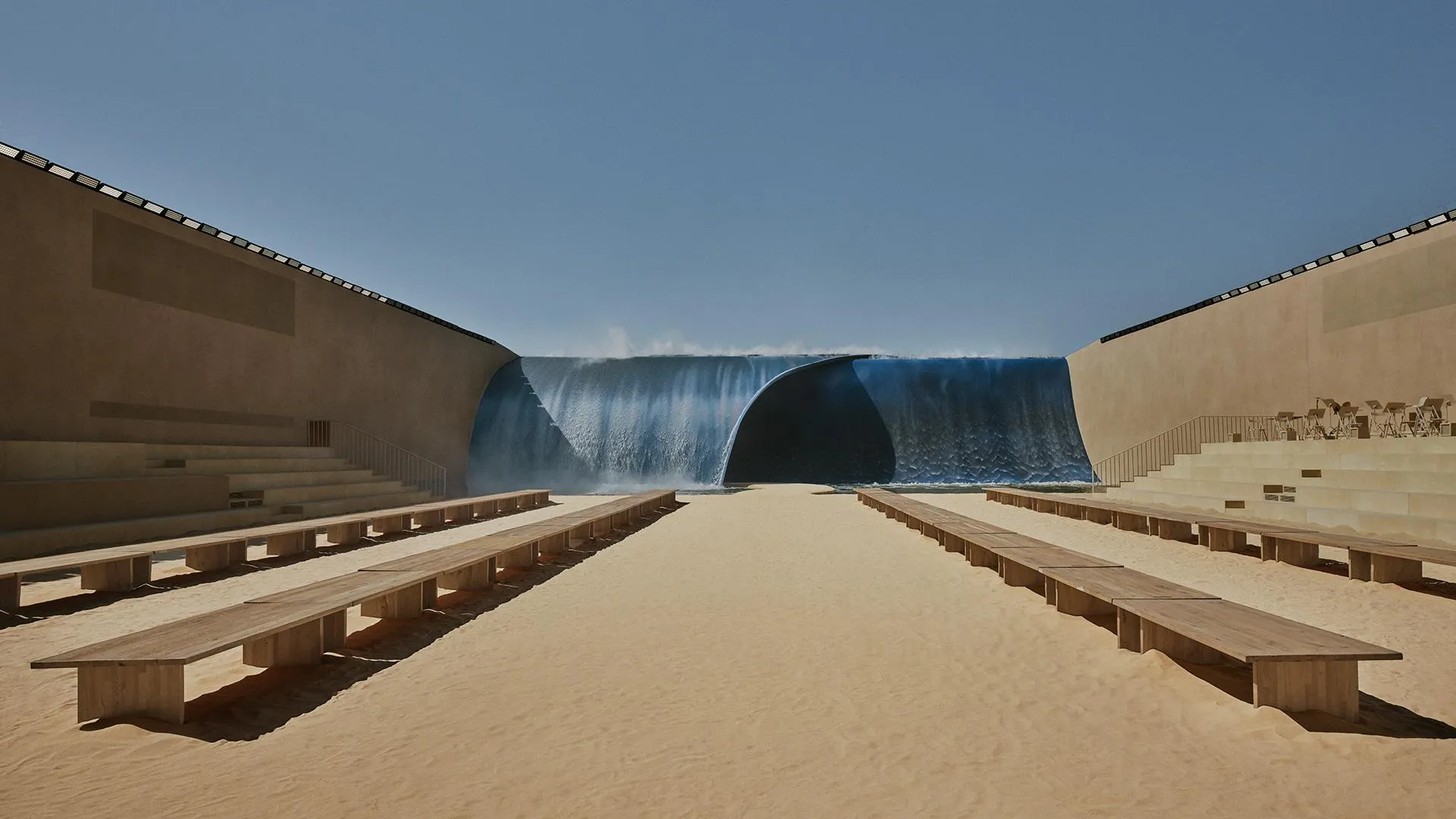
For his latest menswear collection, Pharrell Williams turned to surfing as both inspiration and metaphorical, but instead of relying on beach clichés, the set refined the feeling of standing at the edge of the sea.
A monumental sculptural wave rose through the centre of the venue, becoming the show's defining architectural demonstration. Being both an installation and a runway, it transformed the catwalk into a shifting coastline where fashion, art, and landscape merged.
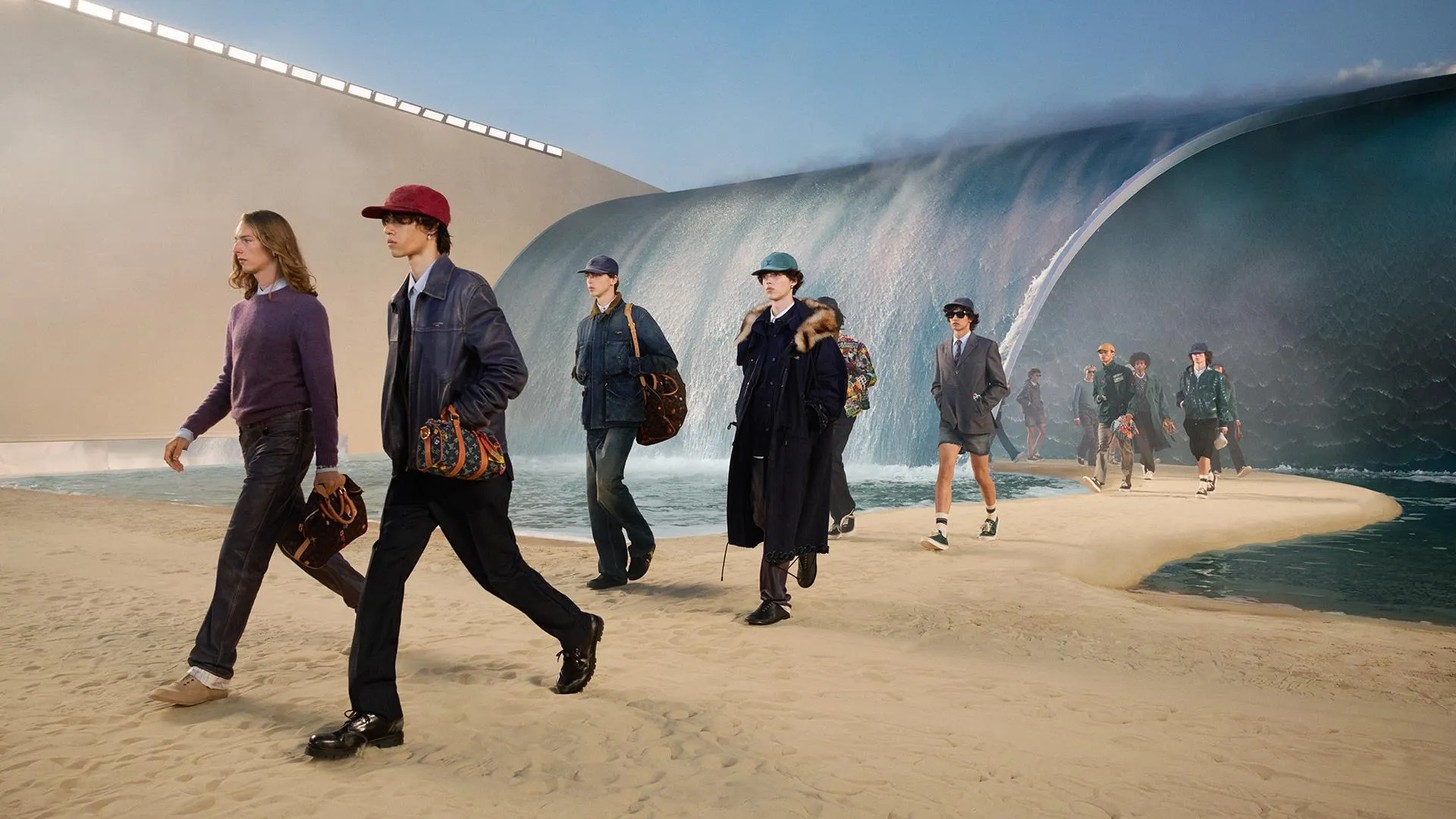
The experience unfolded on multiple sensory levels. The continuous crash of falling water echoed throughout the space, creating an immersive soundtrack that blurred the line between performance and the environment.
Above, the evening sky became part of the staging, while the wave itself suggested movement without the need to move. It was a reminder that the strongest design often relies on the atmosphere, as much as its form.
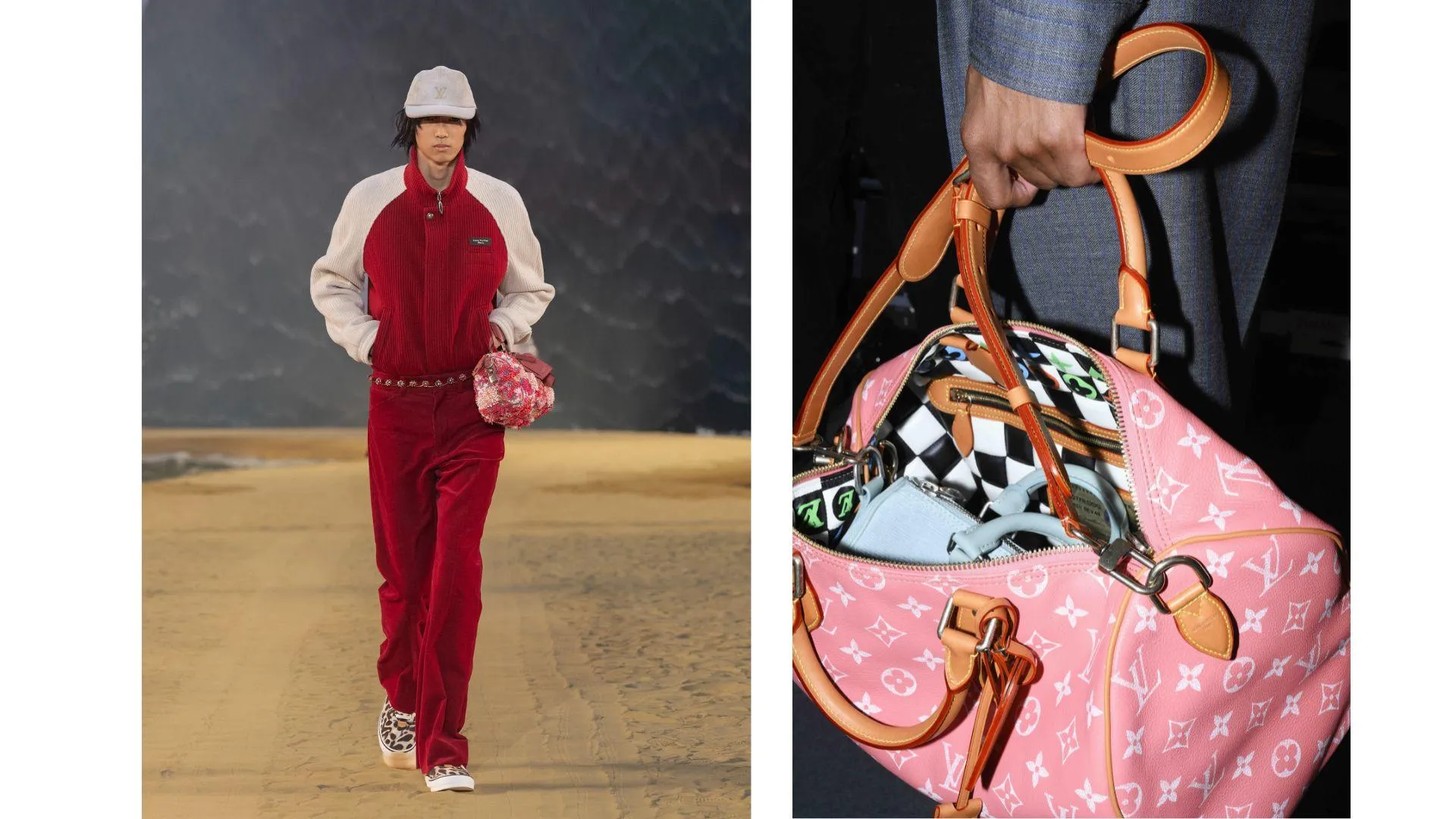
The set reflected the ideas behind the collection, which explored the coast as a place of connection. Surf culture was interpreted through the lens of Louis Vuitton's refined craftsmanship, pairing technical innovation with relaxed tailoring.
Performance-inspired wetsuits materialised alongside impeccably cut jackets, while weathered textures, hand-finished details, and chequerboard motifs referenced life by the water without feeling literal.
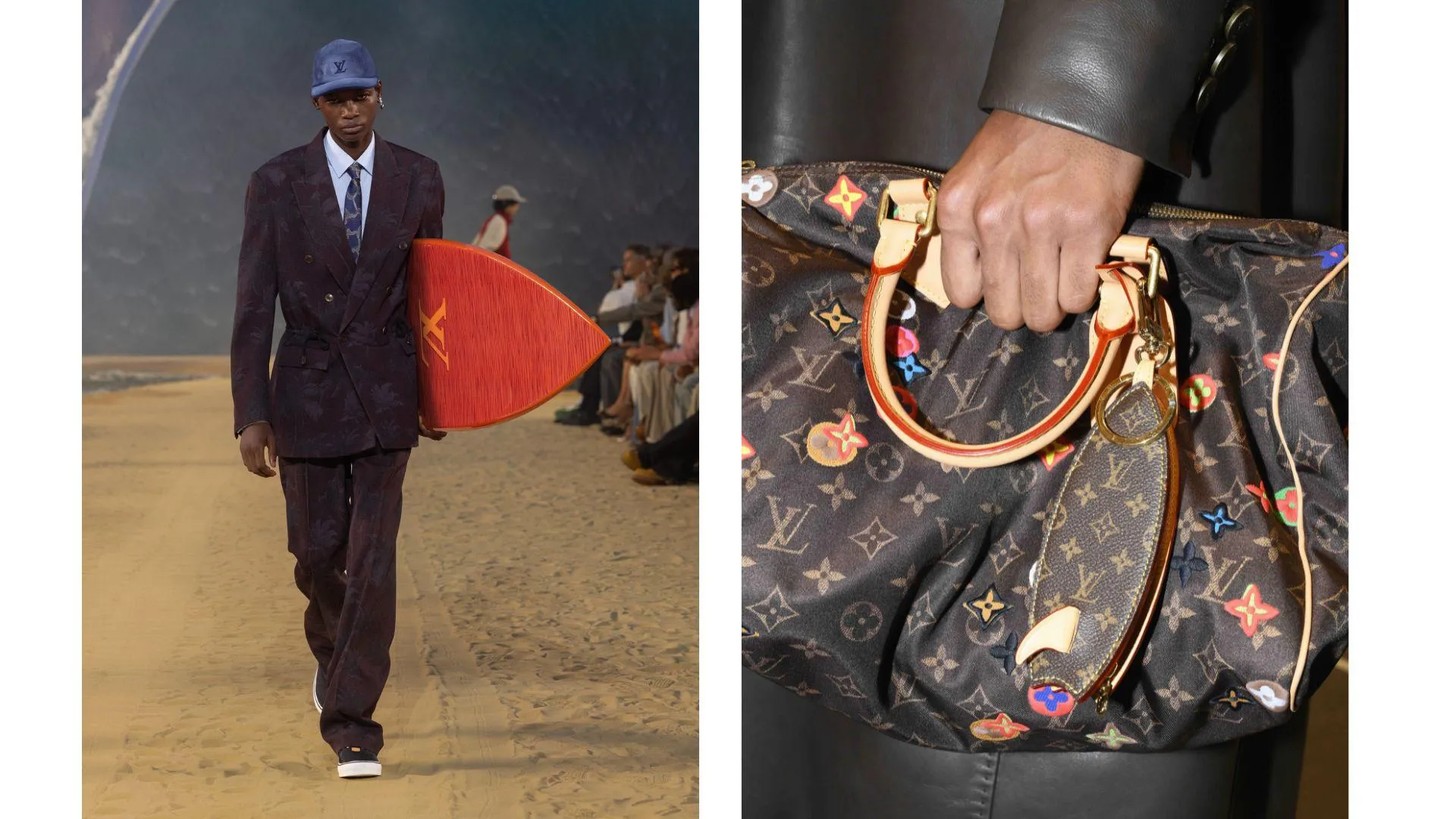
Even Louis Vuitton surfboards made an appearance, reinforcing the narrative of travel and craftsmanship that has become central to Pharrell's vision for the venue.
Adding another layer to the production was a futuristic silver camper positioned beside the sculptural "shoreline". Its reflective exterior and fluid form felt more like a contemporary design object than a vehicle, extending the show's theme of nomadic living inspired by chasing waves around the world.
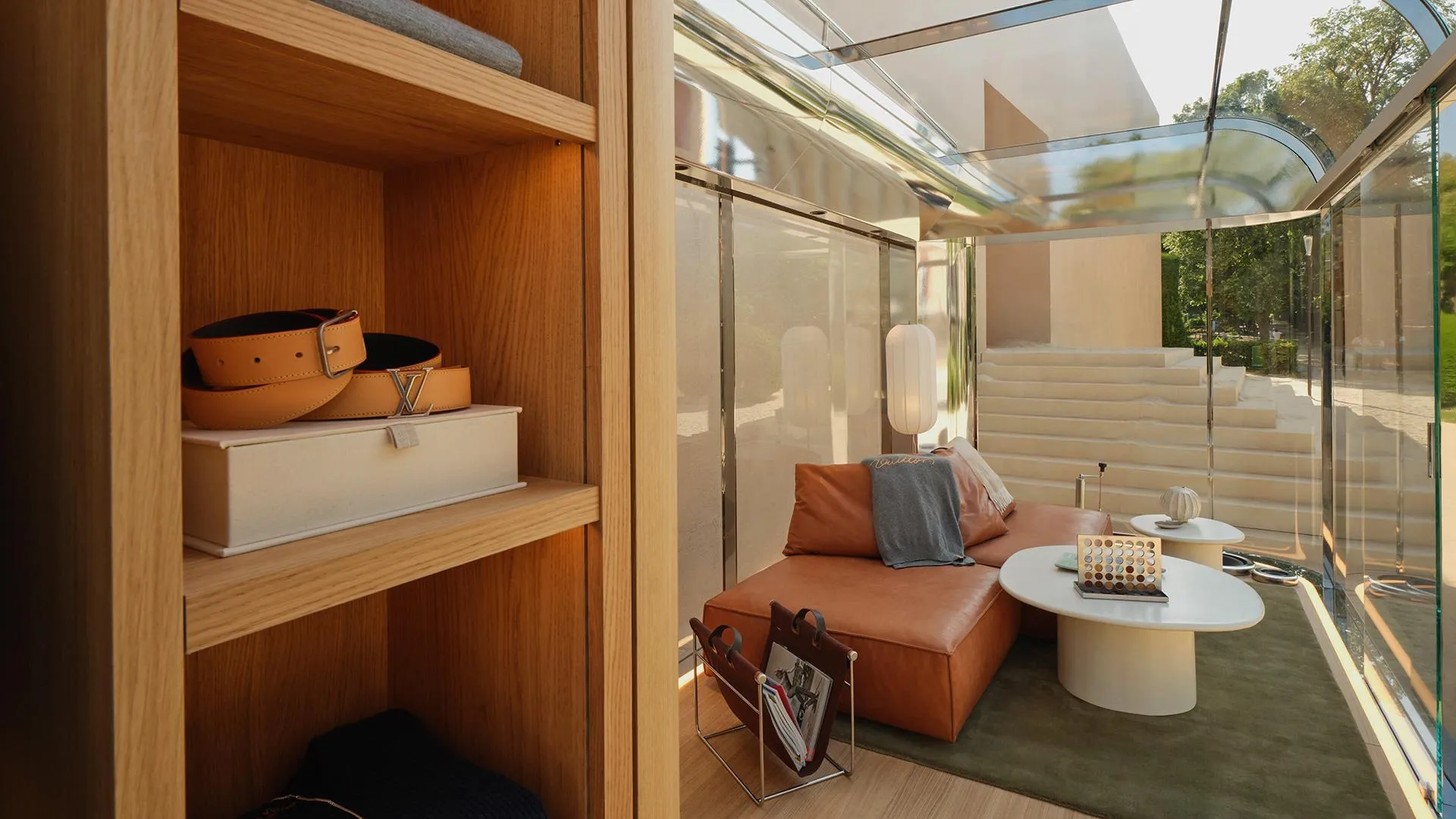
What made the presentation especially compelling was its restraint. Instead of recreating a beach, the production captured the qualities of the ocean – its scale, energy, and unpredictability – through sculptural form, sound, and light.
It wasn’t much about the literal scenery as it was about evoking a feeling, allowing the environment to become an integral part of the storytelling.
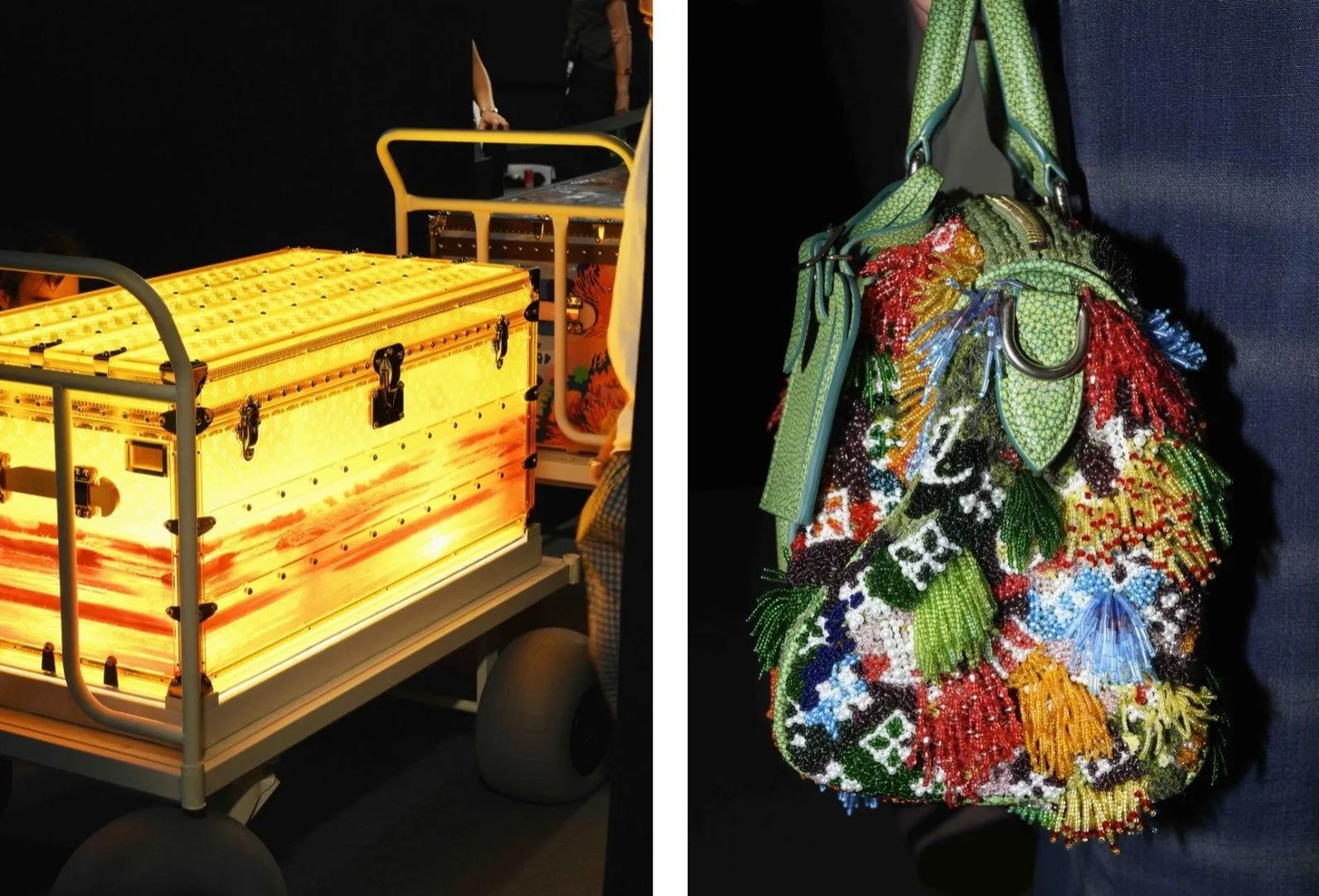
The installation also echoed a broader conversation around fashion presentations as cultural experiences. Luxury houses are known to be investing in immersive environments that prolong after the runway ends, where architecture, landscape, and design carry as much narrative weight as the garments themselves.
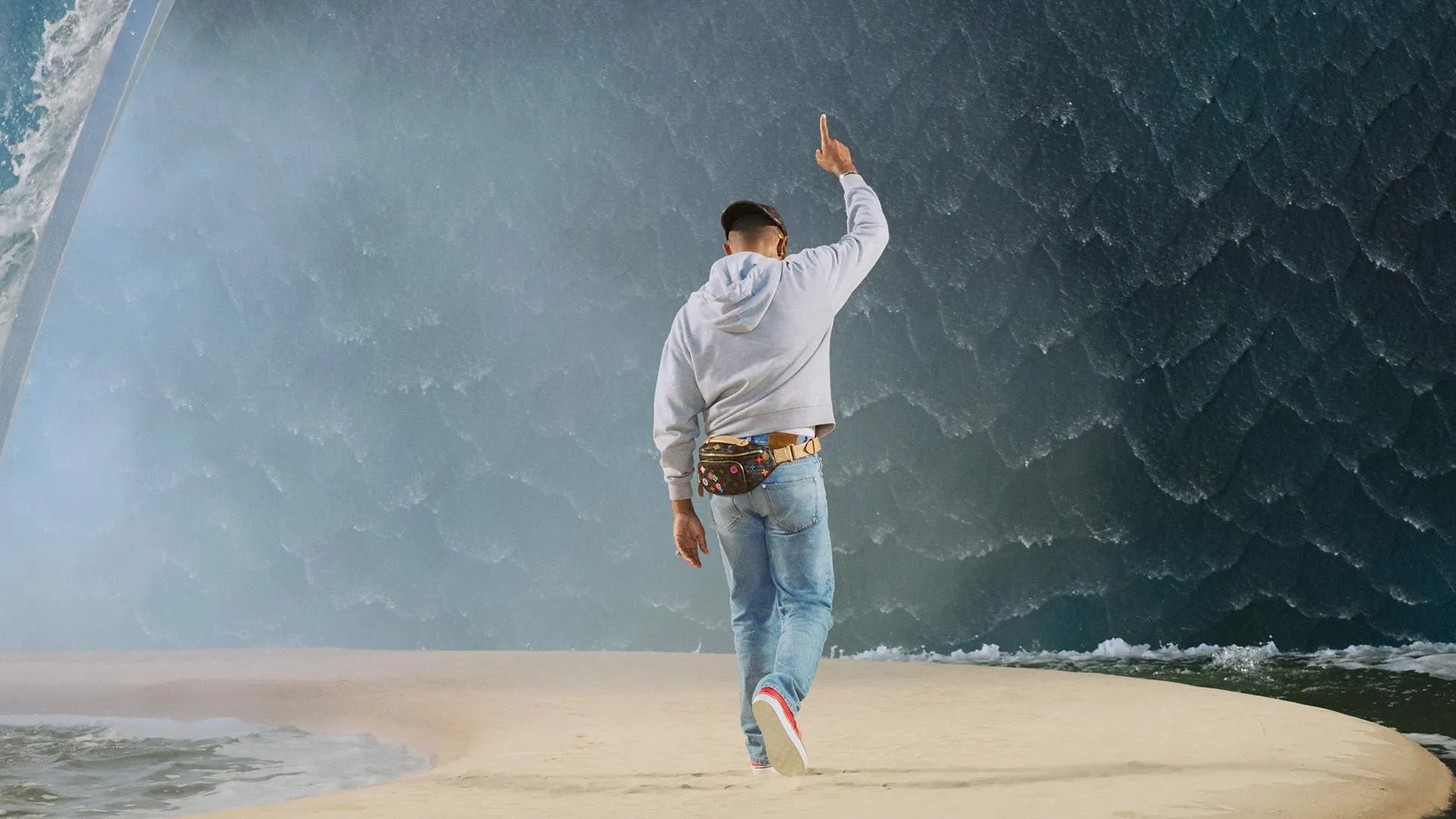
As the final look disappeared behind the towering wave, it became clear that the set had accomplished something few runway productions achieve.
It didn't simply frame the collection – it became part of its identity, transforming a fashion show into an unforgettable piece of spatial design.
Credits
Images: Courtesy of Louis Vuitton Summer / Spring 2027 Show


