
Travel has long been at the heart of the Weylandts design philosophy. For decades, the South African furniture and décor brand has looked beyond borders in search of materials, techniques and stories that can enrich contemporary living. Now, that spirit of exploration has culminated in The Journey of Design | India Chapter, a new collection inspired by the craftsmanship, culture and creative energy encountered throughout the brand's enduring relationship with India.
Unveiled during an exclusive preview event at Cape Town's historic 82 Adderley Street, the collection is more than a series of furniture and décor pieces. It is a reflection on process, preservation and the people behind the objects that shape our homes.

Designed by Weylandts and crafted in India, the collection celebrates the beauty of traditional making methods while exploring how heritage techniques can find expression within contemporary design.
A Journey Built on Relationships
At the centre of The Journey of Design | India Chapter is a story of collaboration. Over the years, Weylandts has developed deep relationships with artisans, workshops and suppliers across India, many of whom have worked alongside the brand for more than a decade. These partnerships have become integral to the company's design language, informing not only the aesthetic direction of its collections but also its understanding of craftsmanship itself. "For us, travel has always been about discovering beauty in unexpected places," says Chris Weylandt.
Rather than viewing travel as a source of visual inspiration alone, the brand approaches it as an opportunity to engage with local knowledge, traditional skills and cultural narratives. This philosophy is evident throughout the collection, where every material and finish carries the imprint of human hands.

The Beauty of Imperfection
One of the defining themes of the collection is the celebration of process. In the northern Indian city of Moradabad, renowned for its metalworking heritage, ancient sand-casting techniques continue to shape production. Here, moulds are formed by hand using clay, sand and water before being broken apart and rebuilt for each new piece. The result is that no two objects are ever exactly alike.
Rather than concealing these subtle variations, Weylandts embraces them. Marks left by the making process become part of the design itself, introducing texture, individuality and authenticity. "The journey of the product and the amount of effort that goes into making these pieces sets us apart," says Chris Weylandt. "We are passionate about finishes, obsessed with detail, and dedicated to craft." It is an approach that stands in contrast to mass production, placing value on the irregularities that make handcrafted objects unique.
Materiality as Storytelling
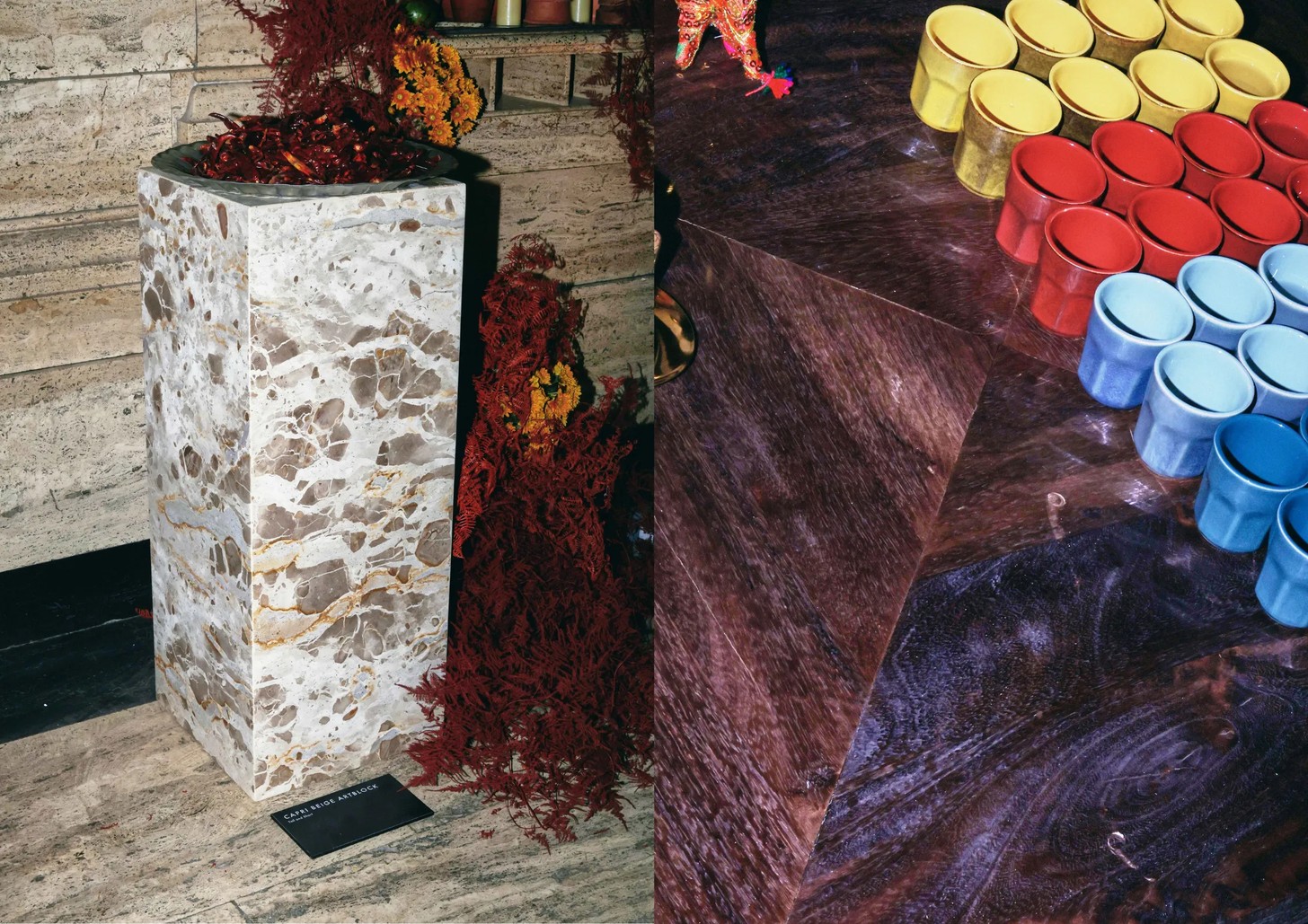
The collection's material palette reflects the landscapes and craft traditions encountered throughout India. Richly veined marble sourced from Rajasthan features prominently, bringing depth and natural character to many of the pieces. Sculptural forms, aged finishes and layered materials further reinforce the tactile quality that has become synonymous with the Weylandts aesthetic.
Throughout the collection, stone is treated not simply as a surface but as a storytelling medium. Marble veneers, monumental slabs and textured finishes reveal the natural beauty of the material while showcasing the expertise required to shape it.
Alongside stone, intricate wood carvings and metallic detailing introduce warmth and complexity, creating a dialogue between contemporary design and centuries-old artisanal traditions. The result is a collection that feels both grounded and globally relevant.
An Immersive Experience at 82 Adderley
The launch event itself was designed to transport guests into the world that inspired the collection. Curated by Scape in collaboration with Sanri Pienaar, the experience transformed the historic 82 Adderley Street building into a multi-sensory exploration of India. Upon arrival, guests were welcomed with chai—a ritual that Chris and Anna Weylandt have come to associate closely with their travels through the country.
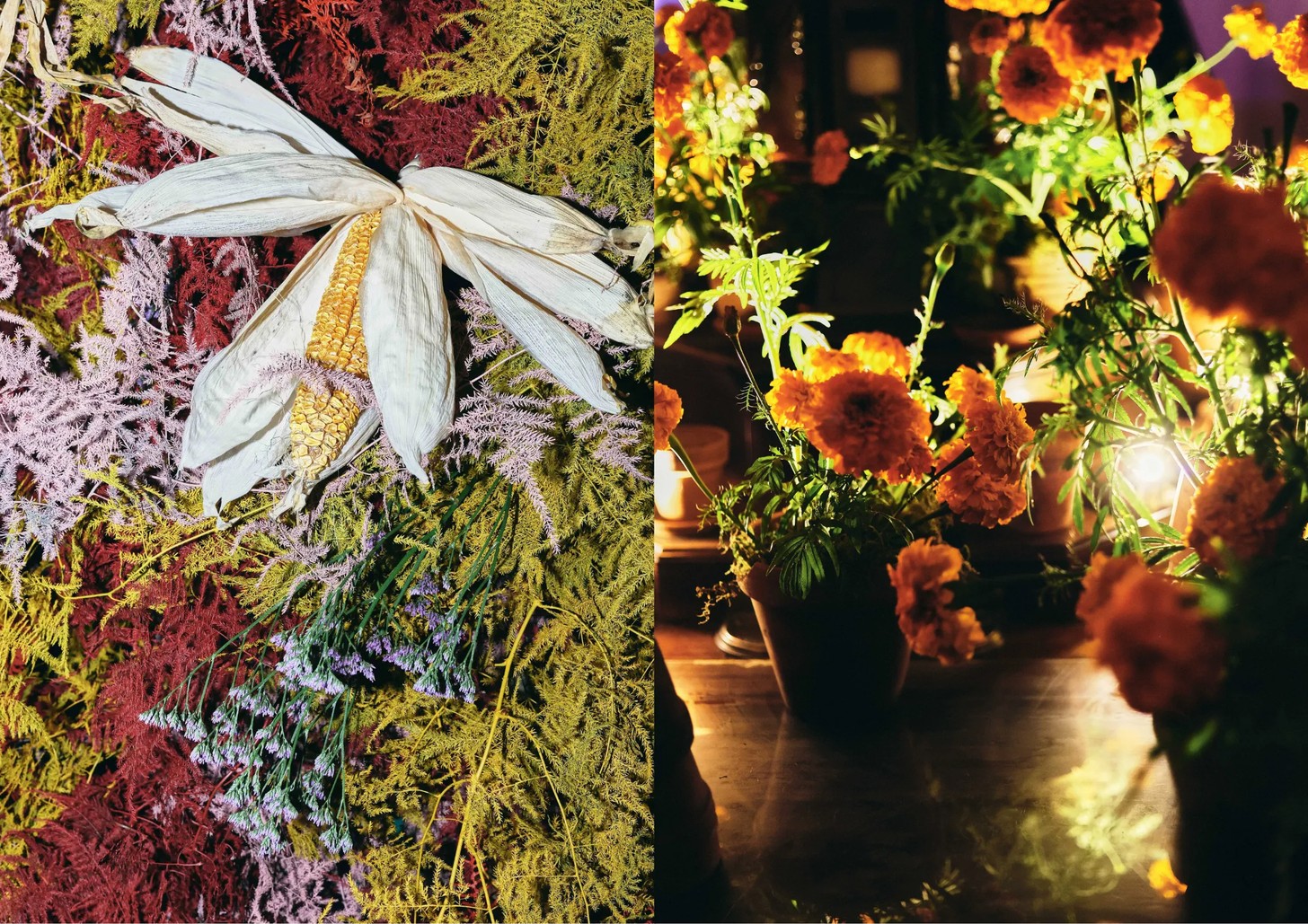
Marigold garlands brought bursts of colour to the historic interiors, while layered soundscapes recreated the rhythms of workshops, foundries and bustling streets. The aim was not simply to display furniture, but to communicate the atmosphere and energy that informed its creation.
The Stories Behind the Objects
A key moment of the evening was the screening of a 14-minute film shot by photographer PJ Kotzé and edited by Dirk van Niekerk. The film offered an intimate look at the making of the collection, taking viewers from foundries and stone yards to roadside chai stops and artisan workshops. Rather than focusing solely on finished products, it highlighted the people, processes and environments that contribute to their creation.
This emphasis on storytelling reflects a growing desire within contemporary design to understand where objects come from and how they are made. In an increasingly digital world, craftsmanship remains one of the most powerful forms of connection.
Designing Through Curiosity
Following the screening, guests moved by candlelight into the final exhibition space, guided through displays of travel memorabilia collected throughout the Weylandts team's journeys. The atmospheric setting drew inspiration from India's ancient architectural heritage. Against this backdrop, the collection revealed itself piece by piece: sculptural forms, intricate detailing and tactile materials that reflected years of research, refinement and collaboration.
As guests explored the space with masala sours in hand, accompanied by incense and a soundscape curated by Bizhan Govindji, the evening became a celebration of creativity, curiosity and cultural exchange. For Chris Weylandt, the experience encapsulates one of the most enduring lessons of travel. "Everything is possible. Nothing is impossible. The endless possibility is inspiring. And obviously the curry."
Crafting a Global Design Language
With The Journey of Design | India Chapter, Weylandts demonstrates that meaningful design extends far beyond aesthetics. It is shaped by relationships, cultural exchange and a deep respect for craftsmanship.
By bringing together South African design sensibilities and Indian artisanal traditions, the collection offers a thoughtful exploration of what contemporary luxury can be: tactile, authentic and deeply connected to the hands that made it.
Credits
Images: Supplied


