
There is a polite fiction we maintain about gardens. We speak of them as exercises in curation: composed borders, considered planting schemes and flowers arriving on cue. Yet the real work is taking place elsewhere, beneath the surface, orchestrated by a hidden world that thrives on the very things we clear away - fallen leaves, dead wood and decay.
Far from being waste, these are the raw materials of renewal. Beneath every woodland floor and garden bed lies mycelium- a vast network of microscopic fungal filaments threading through soil, leaf litter and rotting timber. The mushrooms that emerge after rain are only a fleeting glimpse of a much larger organism, a brief appearance in a life that is otherwise almost entirely concealed.

This underground web forms relationships with plant roots, extending their reach into the soil and connecting them to the wider life of the garden. Long regarded as a sign of dampness or neglect, today fungi are increasingly recognised as evidence that a garden is truly alive.
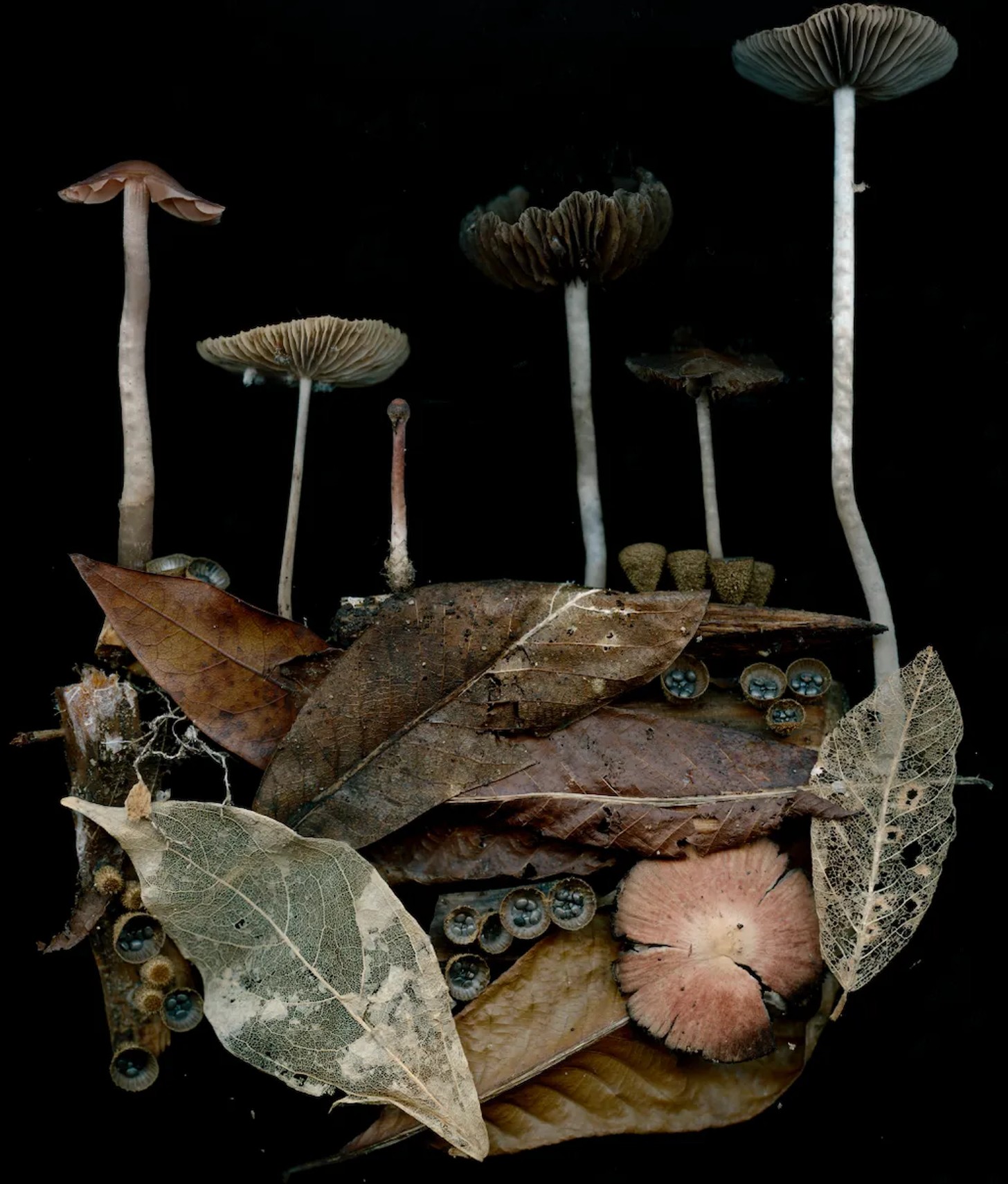
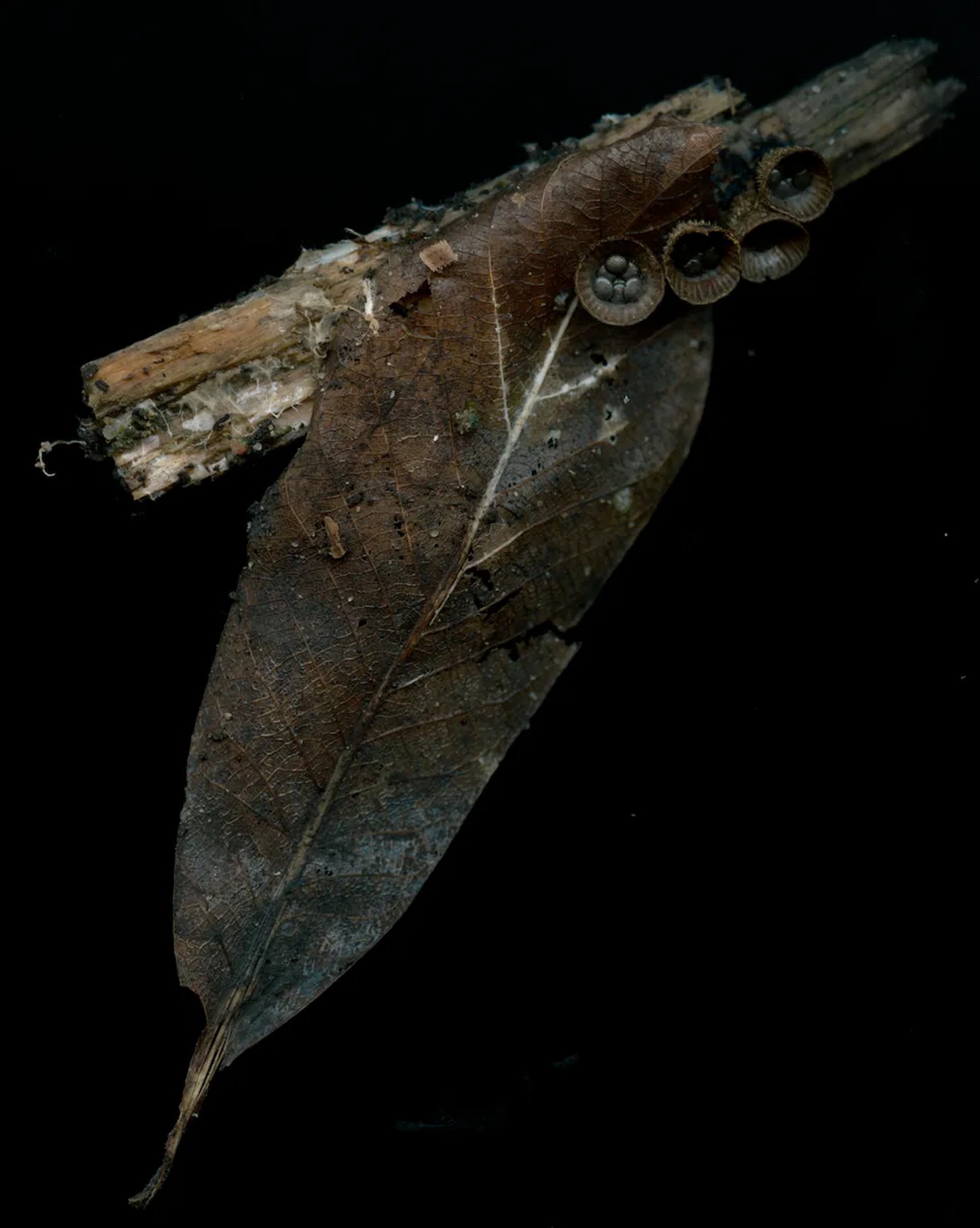
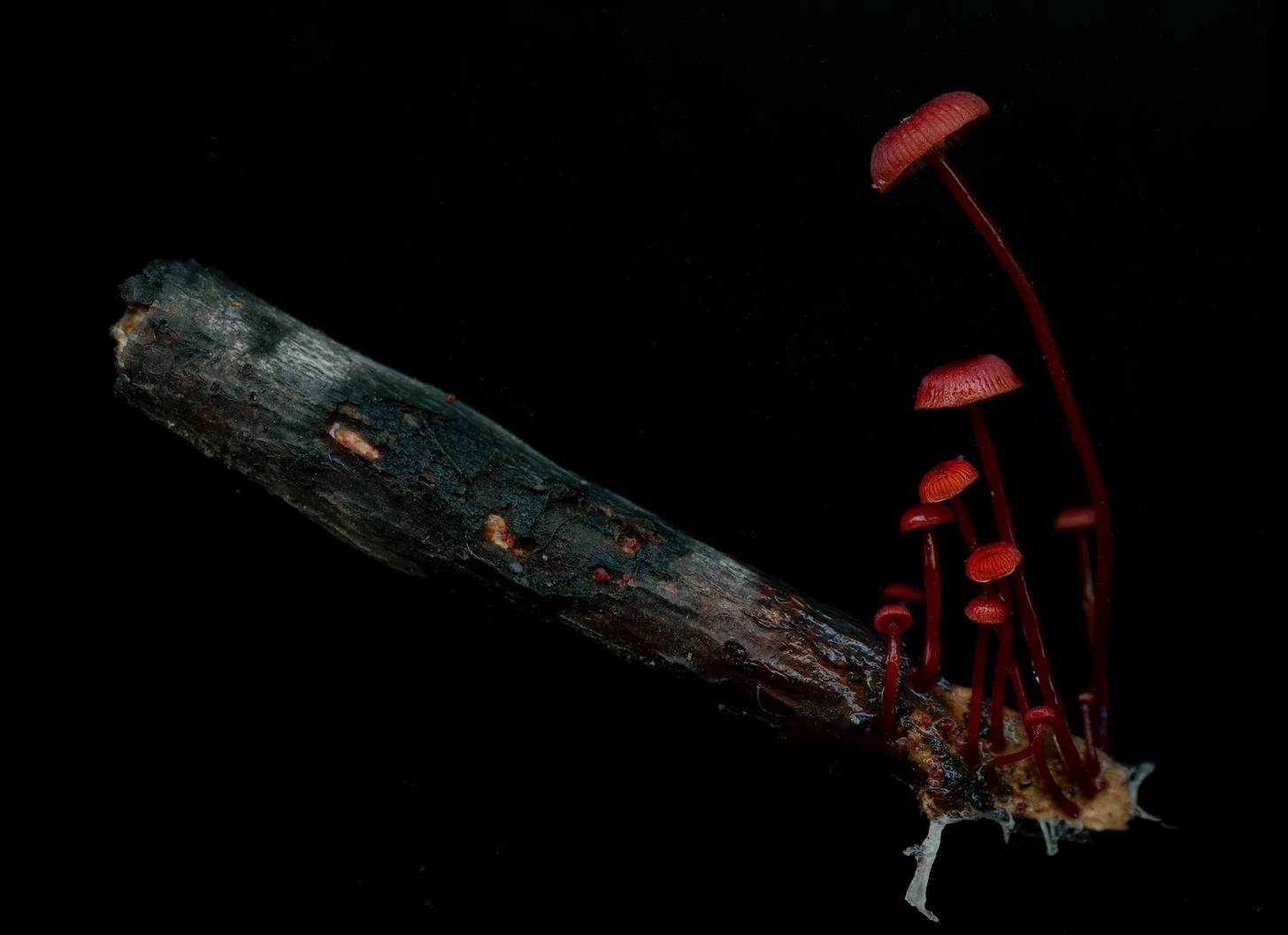
A hare's-foot inkcap (Coprinopsis lagopus) delicate as spun wool, emerges from a decaying branch. Nearby, the ruby bonnet (Cruentomycena viscidocruenta) appears - a vivid flash of crimson amongst leaf litter. Frosty bonnet fungi (Mycena adscendens) gather on fallen twigs, so small they are easily missed. Bird's-nest fungi (Nidulariaceae sp.) turn decomposing bark into miniature landscapes, while the split gill (Schizophyllum commune) slowly colonises weathered timber, waiting for the return of moisture. Sharing this damp estate are lichens and mosses, softening bark, holding moisture and creating the conditions in which countless other organisms can flourish. Together they form a world that is perpetually dismantling and rebuilding itself.
What makes fungi so compelling is not simply their appearance, but the role they play. In nature, death is not an ending, it’s a mere change of form. A fallen branch becomes habitat, dead wood becomes nourishment and last season's leaves become next season's soil.
Fungi occupy the threshold between what has been and what is yet to come, breaking down and releasing, making way for whatever follows. Without them, forests would eventually suffocate beneath their own debris. Renewal depends upon their quiet labour. Gardeners understand this instinctively. Winter is not an ending, dormancy is not inactivity. Beneath bare branches and borders, roots continue to grow, soil organisms remain at work and mycelial networks continue their invisible labour. The apparent stillness of the garden conceals extraordinary activity.
Perhaps this explains our fascination with fungi at a time when so much of life is defined by speed and visibility. Gardens teach us that the most important processes are often hidden from view. Growth is rarely linear. Relationships matter. What appears to be an ending may simply be the beginning of something else.
Credits
Text Heidi Bertish
Photographs: Celeste de Kock


