
South Africa's culinary heritage is rooted in recipes passed between generations, with familiar flavours carrying stories of family, community and place. This Heritage Month, one of Cape Town's best-loved sweet treats has received a distinctly local reinterpretation, with rooibos taking centre stage in a traditional Cape Malay koesister.
The winning creation was unveiled at the 2026 World Koesister Day Competition, held on 6 September at Makers Landing at the V&A Waterfront in Cape Town. The event challenged chefs and aspiring young cooks to reinterpret the traditional pastry using rooibos as this year's heritage ingredient, following the introduction of spekboom in 2025.

The winning recipe came from 24-year-old Cape Town chef Huwitt Strydom, who incorporated the indigenous South African ingredient into the warm spices and sweetness that define a classic koesister.
Celebrating South African Ingredients
Rooibos, scientifically known as Aspalathus linearis, is cultivated primarily in the Cederberg region of the Western Cape. Recognised internationally and enjoyed in homes across the country, the indigenous plant has become an enduring part of South Africa's food and drink culture.
For Adele du Toit, spokesperson for the SA Rooibos Council, the competition demonstrates the potential of familiar ingredients to find new expression.
“Rooibos is one of those ingredients that is unmistakably South African, yet its versatility gives us so many ways to reinterpret how we use it. Seeing it paired with a traditional koesister during Heritage Month is a great example of how we can celebrate our food heritage while also giving familiar ingredients and traditions a fresh expression.”
For Mark Jacobs, creator of World Koesister Day, rooibos was a natural progression from the previous year's competition.
“Rooibos is proudly South African, internationally recognised and already familiar in our homes,” says Jacobs. “We wanted contestants to use it creatively while still respecting the traditional taste and character of the Cape koesister.”
The distinction between a koesister and a koeksister is important. The Cape Malay koesister is a soft, spiced, doughnut-like pastry, traditionally fried, dipped in syrup and coated in coconut. A koeksister, by contrast, is plaited, crisp on the outside and soaked in syrup. Both belong to South Africa's culinary landscape, but each has its own identity and traditions.
A New Generation Of Culinary Storytelling
World Koesister Day celebrates the Malay community, its recipes and the stories that have sustained them, while giving young participants opportunities to develop their culinary and entrepreneurial skills.
“Heritage food does not have to remain in the past,” says Jacobs. “It can be respected, developed and presented in new ways.”
For Strydom, the challenge was to introduce rooibos without overwhelming the koesister's established flavour profile.
“Rooibos immediately felt like a natural ingredient to work with because it is proudly South African and has such a distinctive flavour,” he says. “I wanted to use it in a way that complemented the spices and sweetness of the koesister rather than overpowering them.”
Having worked in kitchens in Cape Town and France, Strydom sees potential for rooibos beyond the teacup.
“Rooibos is one of those ingredients that can add depth without overpowering other flavours. I think it adds another layer of South African identity to the koesister. Our food heritage has a place in modern kitchens and there are still so many exciting stories and flavours for the next generation of chefs to explore.”
For Strydom, the significance of the win extends beyond the recipe itself.
“Koesisters are so much more than just a sweet treat – they are connected to Cape Town, our history, our culture and memories shared around food.”
Kiare Arendse took second place, followed by Amber Williams in third, while Chelsea Hendricks represented False Bay College among the finalists. The event also brought together CSP-SA, weRproudly NPC and Makers Landing, connecting emerging culinary talent with the professional hospitality industry.
How To Make Huwitt Strydom's Rooibos Heritage Koesisters
Recreate the winning chef's interpretation of this Cape Malay classic with a warmly spiced yeast dough and a fragrant rooibos syrup infused with cinnamon, cardamom and orange peel.
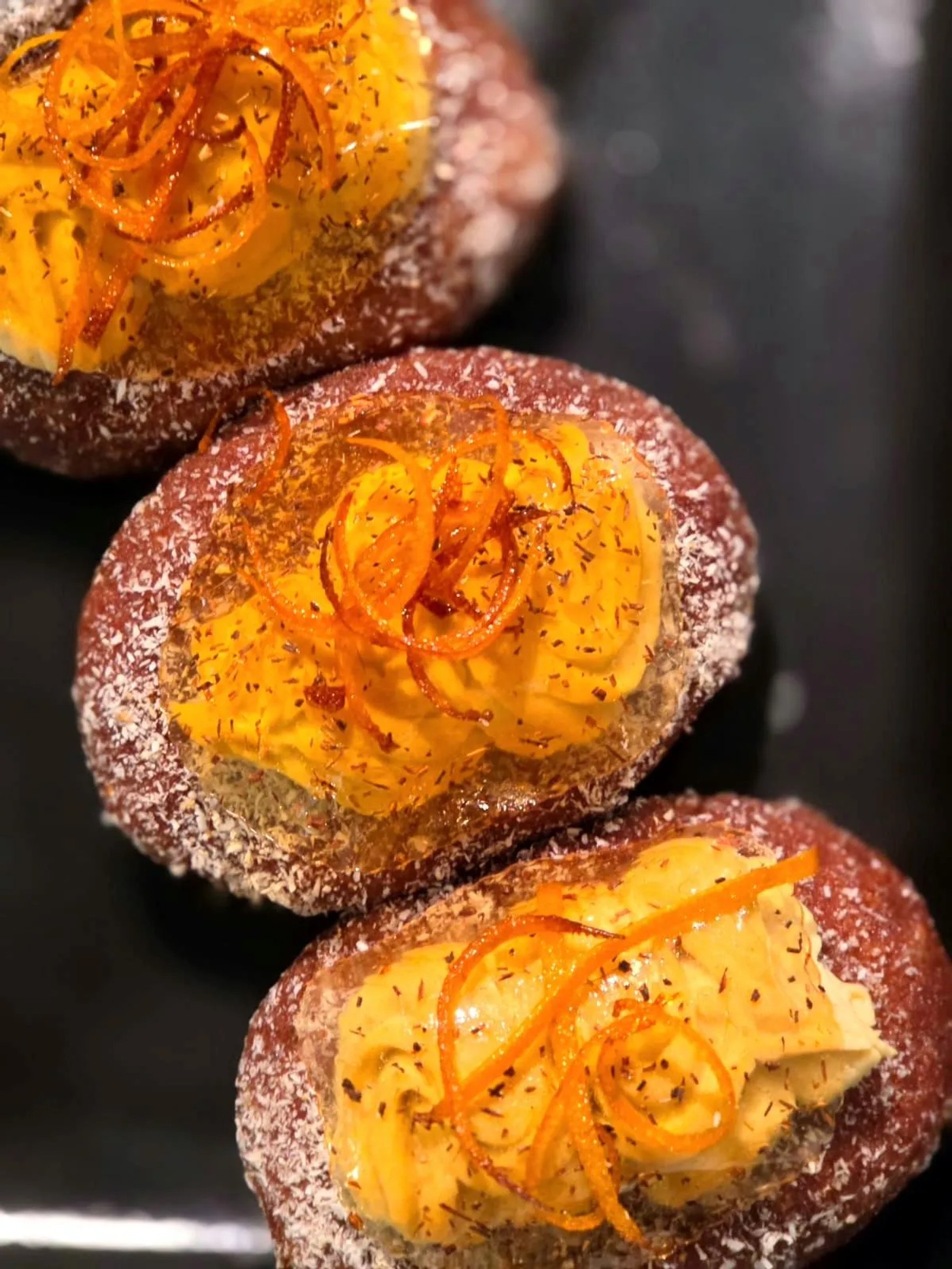
Makes: 12 koesisters
Ingredients
For The Koesister Dough
- 500g cake flour
- 50g fine caster sugar
- 7g instant yeast
- 4g ground cinnamon
- 2g ground cardamom
- 3g ground ginger
- 1g ground aniseed
- 6g fine salt
- 220g whole milk
- 80g water
- 40g unsalted butter, melted
- 50g egg
- 3g vanilla
For The Rooibos Syrup
- 300g water
- 12g rooibos
- 220g caster sugar
- 30g glucose
- 12g lemon juice
- 3g orange peel
- 1 cinnamon stick
- 3 cardamom pods, crushed
Method
Step 1: Prepare The Dough
Combine the cake flour, caster sugar, instant yeast, cinnamon, cardamom, ginger, aniseed and salt in a large mixing bowl.
Step 2: Mix The Wet Ingredients
In a separate bowl, whisk together the milk, water, egg and vanilla until combined.
Step 3: Bring The Dough Together
Add the wet ingredients to the dry mixture. Gradually incorporate the melted butter, mixing until a dough forms.
Step 4: Knead And Prove
Knead the dough for 8–10 minutes, until smooth and elastic. Cover and leave to rest at 25–27°C for 60–75 minutes, allowing it to rise.
Step 5: Shape The Koesisters
Knock back the dough to release excess air. Divide it into 12 portions of approximately 75g each and shape into ovals. Leave to rest for 15 minutes.
Step 6: Fry Until Golden
Heat the frying oil to 170–175°C. Fry the koesisters until deeply golden, turning them regularly to ensure even cooking. Remove and drain on a wire rack.
Step 7: Brew The Rooibos
Bring the 300g of water to approximately 95°C. Add the rooibos and steep for eight minutes, then strain. Measure out 250g of the rooibos infusion for the syrup.
Step 8: Make The Syrup
Combine the 250g rooibos infusion with the caster sugar, glucose, orange peel, cinnamon stick and crushed cardamom pods in a saucepan. Simmer until the mixture reaches 106–107°C.
Step 9: Finish The Syrup
Add the lemon juice, then strain the syrup to remove the spices and orange peel. Allow it to cool.
Step 10: Glaze And Serve
Lightly brush the rooibos syrup over the fried koesisters. Avoid soaking them; the aim is to add a fragrant layer of flavour while allowing the spiced dough to remain the star.
A Recipe Rooted In Heritage
Strydom's Rooibos Heritage Koesisters demonstrate how indigenous ingredients can bring new dimensions to familiar recipes without losing their cultural significance. By pairing the distinctive flavour of rooibos with the spices of a Cape Malay classic, the winning creation celebrates South African culinary heritage while making space for a new generation of cooks to reinterpret it.
Credits
Images: Supplied


