
In the gardens of Villa Antinori in Tuscany, an unlikely meeting of craftsmanship, wine and cuisine provides the setting for a new celebration of Italian culinary culture. Bespoke kitchen specialists Officine Gullo and Villa Antinori, the historic wine label of Marchesi Antinori, have joined forces on a visual project exploring the traditions, values and spirit of conviviality that underpin Italian food.
The collaboration comes at a significant moment for Italian cuisine. In 2025, Italian cuisine was inscribed on UNESCO’s Representative List of the Intangible Cultural Heritage of Humanity, recognising it not simply as a collection of recipes, dishes or culinary techniques, but as a cultural practice rooted in community, knowledge and the transmission of traditions.

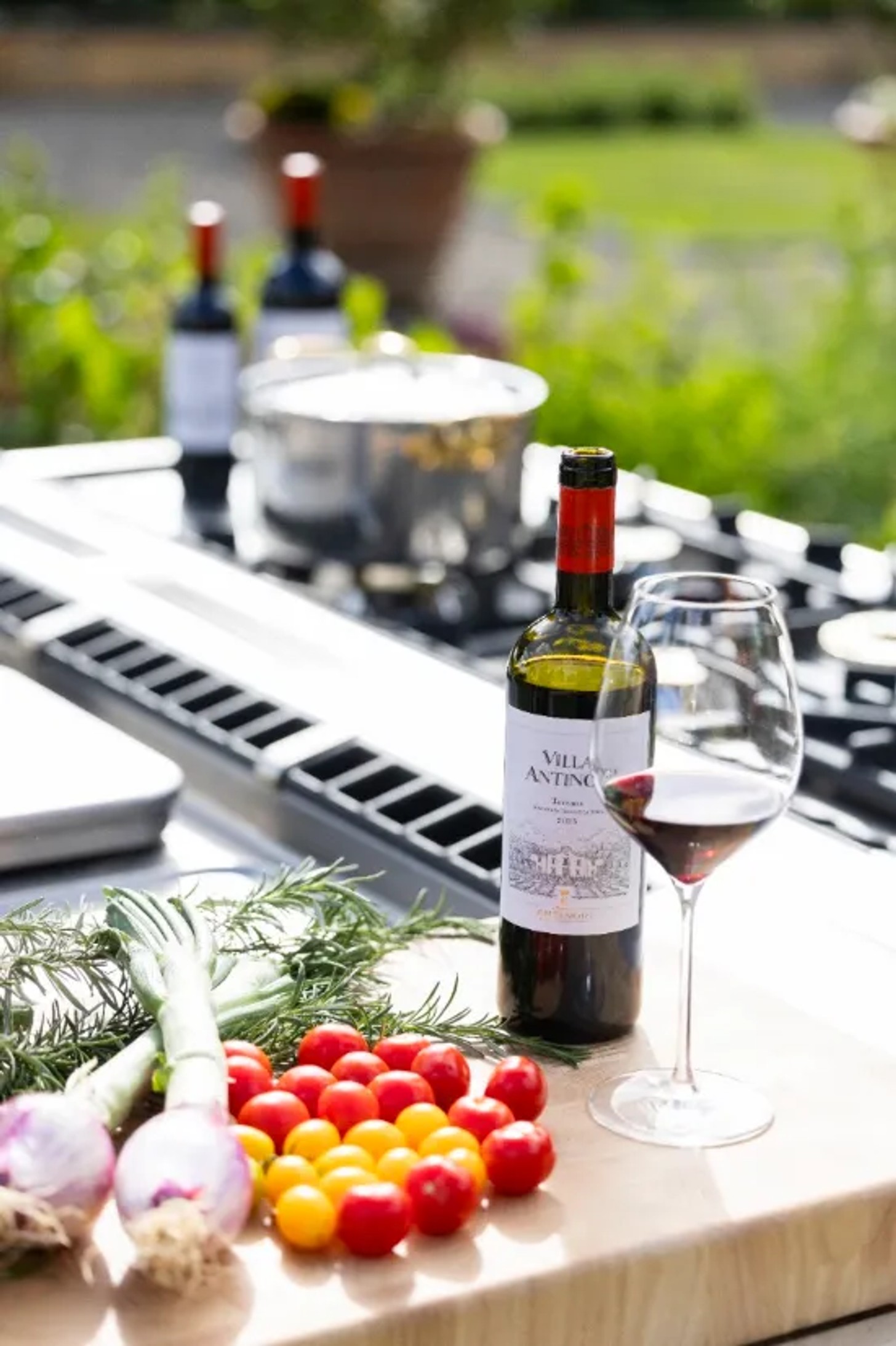
Against this backdrop, the project brings together two Tuscan names with long-standing connections to Florence and the wider region. Villa Antinori has represented Tuscan wine culture for almost a century, while Officine Gullo is known for its bespoke metal kitchens, crafted with an emphasis on materials, precision and individuality.
A Meeting Of Tuscan Craft
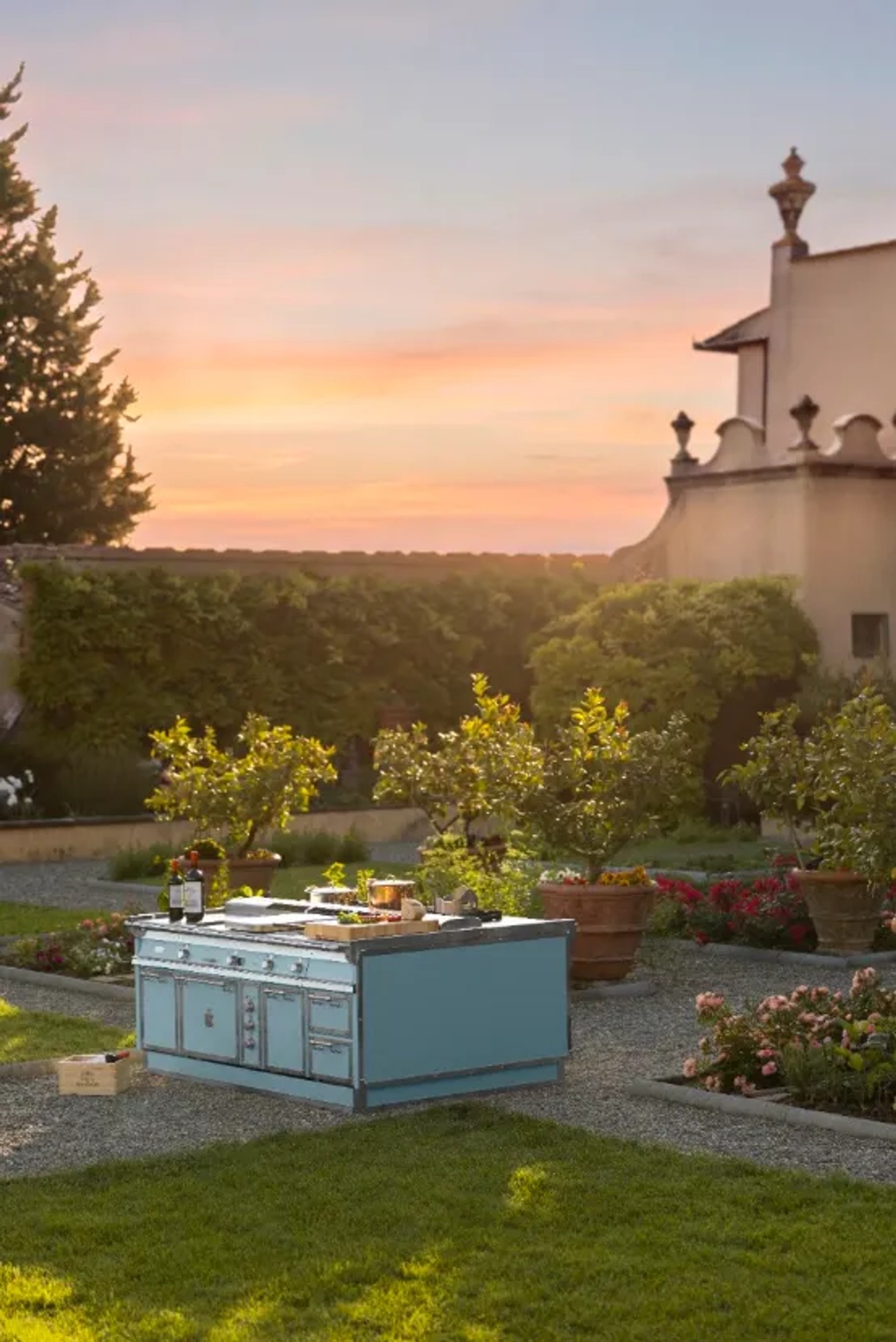
The visual narrative unfolds within the historic gardens of Villa Antinori, where an Officine Gullo cooking island has been placed among stone architecture, vegetation and vineyards. Its delicate light-blue finish picks up the colours of the surrounding landscape, while the metal construction introduces a more contemporary element.
The setting reflects a shared approach to heritage. At Villa Antinori, the cultivation of vineyards requires an intimate understanding of the land, careful attention and time for wine to develop its character. At Officine Gullo, similarly, the creation of a bespoke kitchen relies on an understanding of materials and meticulous craftsmanship.
The two brands describe this relationship as an understanding of tradition as “not a fixed formula, but living knowledge, capable of evolving and finding new forms of expression.”
It is a useful way of considering the relationship between Italian design, food and wine. Rather than preserving heritage behind glass, both companies present it as something that remains relevant because it continues to be practised, adapted and passed on.
Food As A Social Tradition
The UNESCO recognition adds another layer to the collaboration. Italian cuisine's cultural significance lies not only in what is prepared, but also in the ways food brings people together. Cooking, eating and sharing knowledge form part of a broader social tradition in which family, community, local ingredients and regional identity intersect.
That emphasis on connection is central to the project. The garden setting becomes an outdoor kitchen and gathering space, placing food preparation alongside the vineyards and historic architecture of the estate.
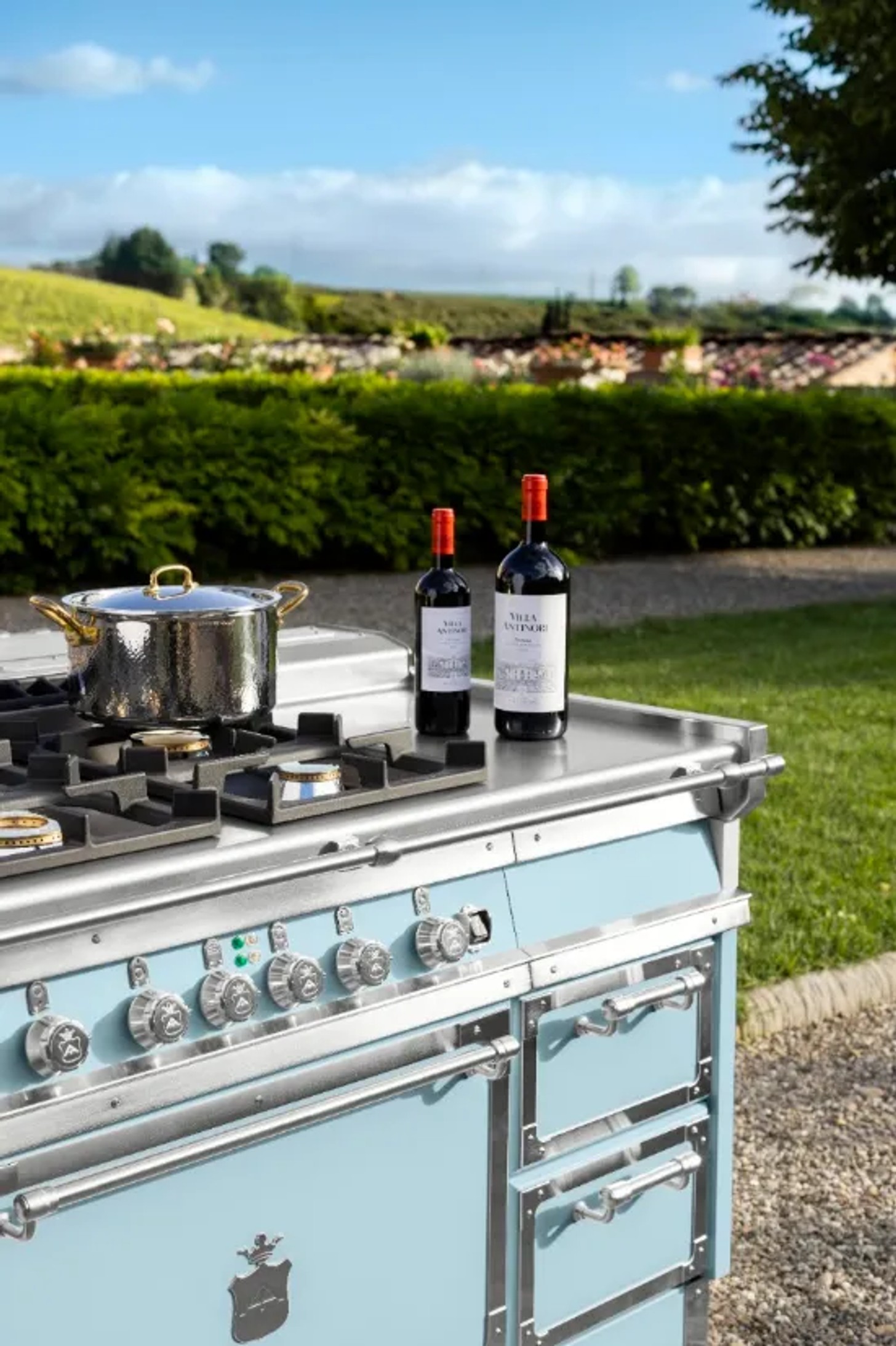
Here, wine and food are presented as complementary expressions of Italian hospitality. Both depend on knowledge accumulated over generations, an understanding of place and an appreciation of the ingredients and materials involved.
Keeping Heritage Alive
Through images and videos created in the gardens of Villa Antinori, Officine Gullo and Villa Antinori aim to explore these ideas and share them with an international audience. The programme will extend beyond a single visual story, with a broader focus on research and cultural outreach.
At its heart is an understanding of Italian culinary heritage as something active rather than nostalgic. Recipes, techniques, agricultural knowledge, craftsmanship and rituals are continually shaped by the people who practise them.
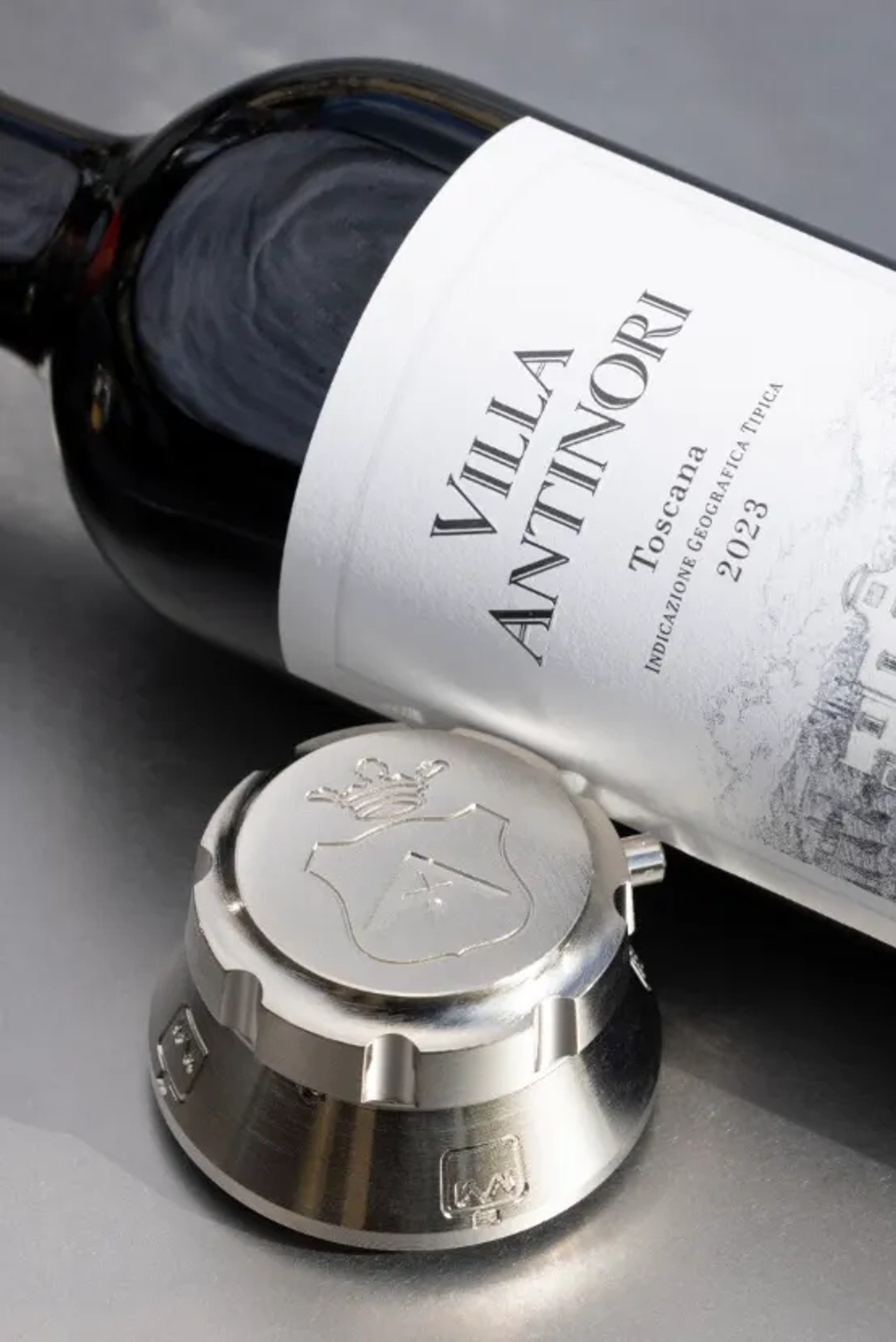
In Tuscany, where vineyards, historic architecture and contemporary design coexist, the collaboration offers a fitting setting for that conversation. Food becomes more than sustenance, wine more than a drink and the kitchen more than a functional room. Together, they form part of a living culture of hospitality, craftsmanship and connection – one that is being carried forward for future generations.
Credits
Images: Supplied


