
Inspired in part by Japan’s jazz kissa tradition, a new generation of hi-fi cafés treats sound as an interior-design consideration. Speakers become architectural features, vinyl collections become visual installations, and materials are chosen as much for atmosphere and acoustics as aesthetics.
From Barcelona to Seoul, these spaces show how music is influencing the way cafés look – and how design, in turn, can change the way we listen.

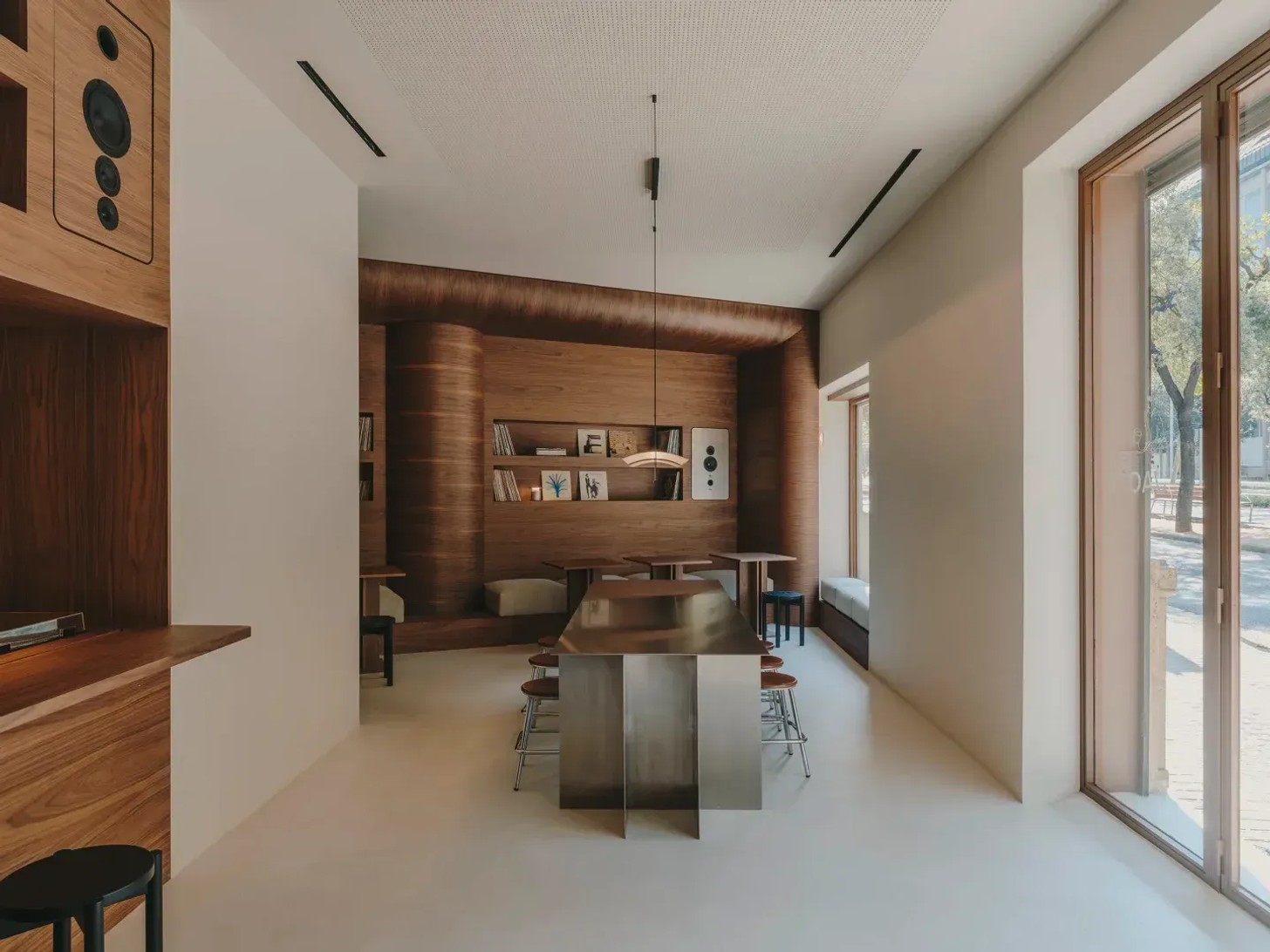
Jaç Hi-Fi Café – Barcelona, Spain
Designed by Isern Serra Studio, Jaç interprets the Japanese jazz kissa through a distinctly Mediterranean lens. The 95-square-metre space is calm and tactile, with walnut, microcement, and stainless steel creating a restrained material palette that allows the sound system to take centre stage.
Rather than hiding the technology, the design incorporates it directly into the architecture.
The sculptural walnut bar is particularly clever, functioning as a counter, vinyl storage and speaker cabinet, while another curved timber installation creates a more intimate listening zone. It is an approach that makes the equipment feel less like technology and more like furniture – an integral part of the room's visual language.
Kurasu Kissaten – Jakarta, Indonesia
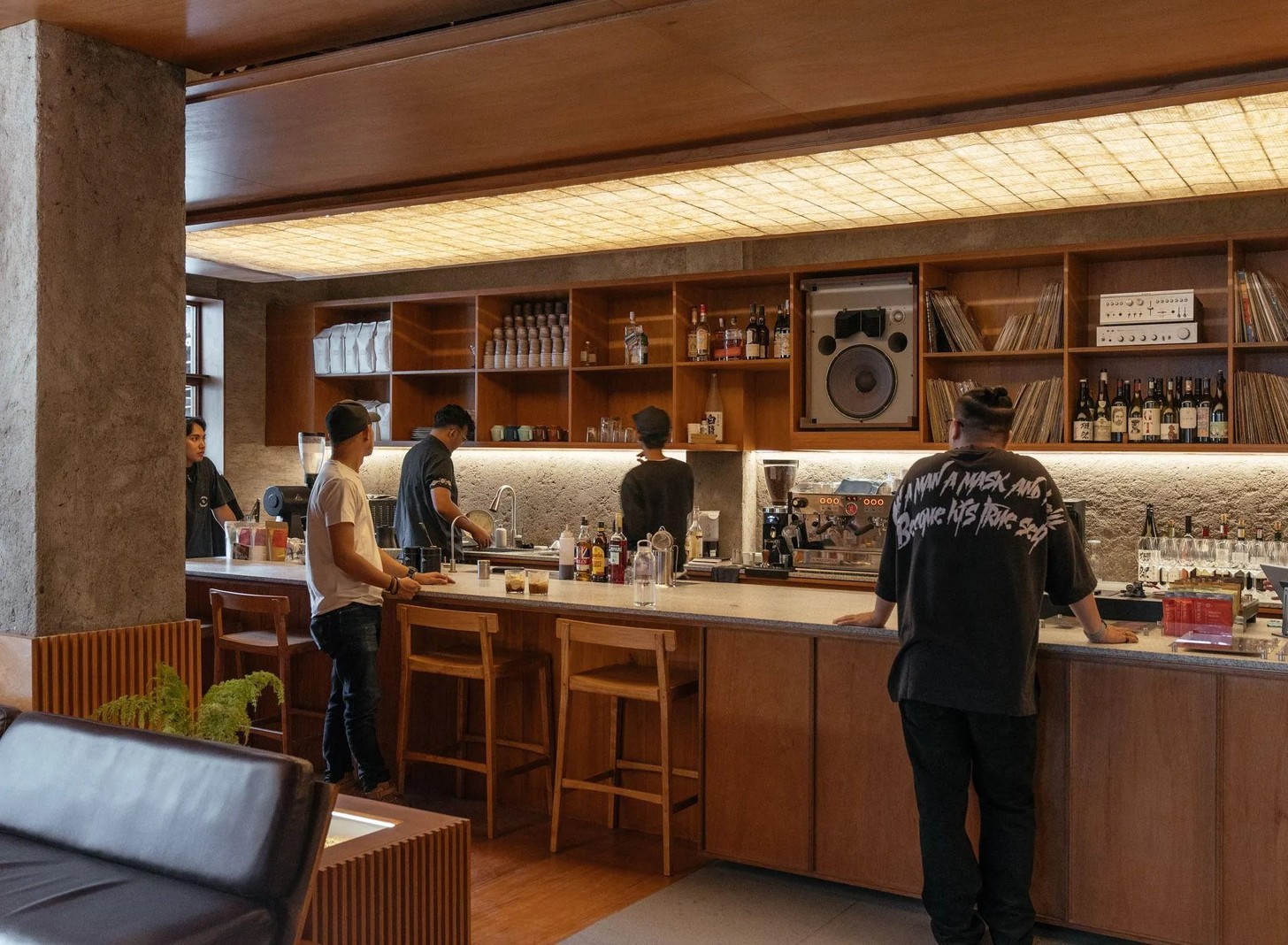
Kurasu Kissaten brings the atmosphere of the traditional Japanese kissaten to Jakarta, with music and coffee treated as equally important concepts. The story behind it has a personal history: Kurasu founder Yozo Otsuki's mother once operated a jazz kissaten in Kyoto, and that influence is evident in the café's intimate, listening-focused atmosphere.
The interior relies on light as much as material. Soft illumination, Japanese washi techniques and natural paper create a warm, diffused glow against darker timber, while the restrained palette keeps the focus on coffee, vinyl and conversation.
Komfortabel COFFEE – Seoul, South Korea
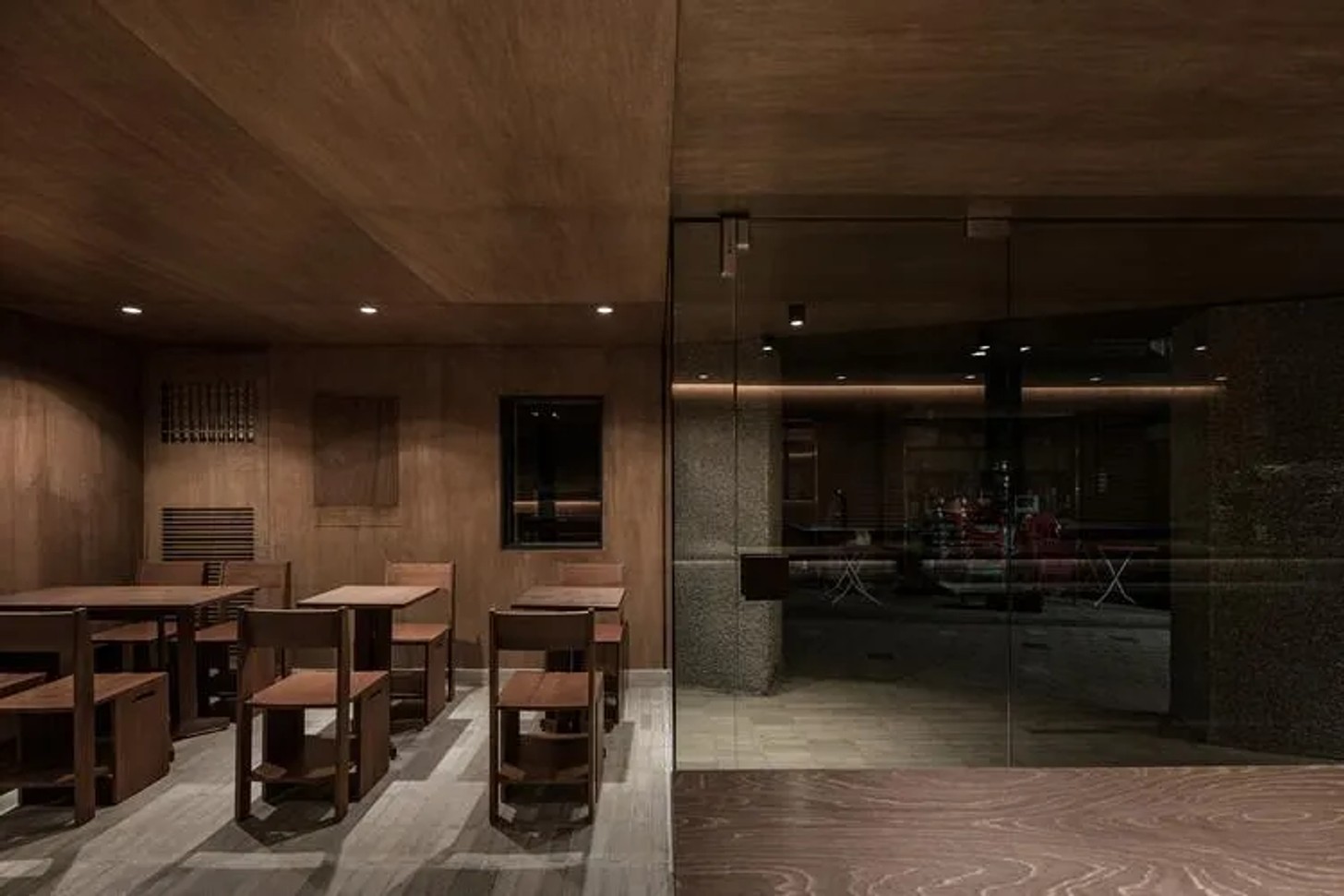
Komfortabel takes the listening café in a softer direction. Its Gungjeong-dong space in Seoul is designed around natural light and views, with timber and understated finishes creating an environment that feels more like a considered home than a conventional coffee shop.
The design deliberately resists the dark, enclosed atmosphere often associated with listening rooms. Windows, greenery, and changing daylight become part of the interior palette, while the pared-back furniture allows the surrounding landscape to do some of the visual work.
ACID P-Berg – Berlin, Germany
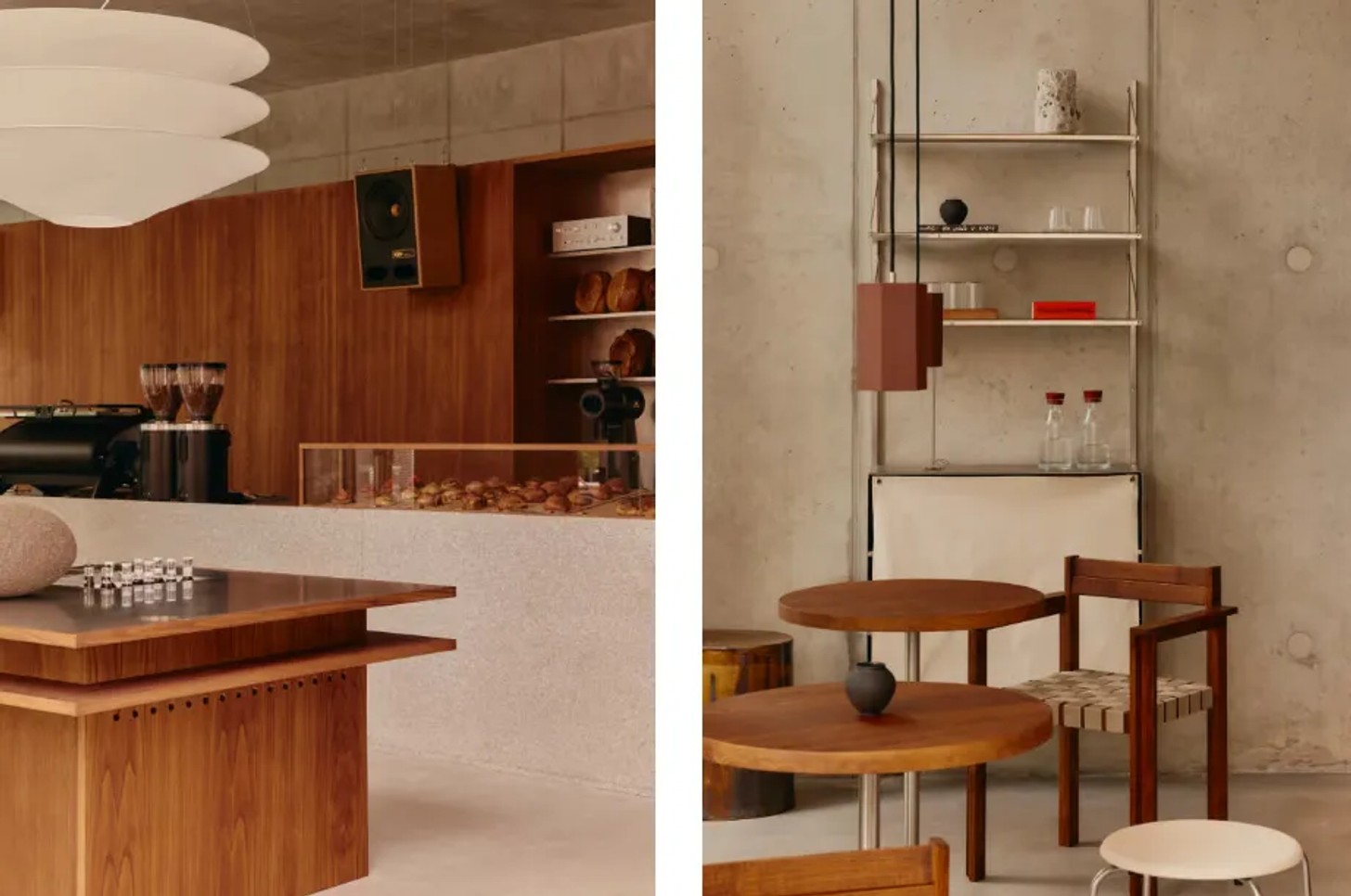
ACID P-Berg begins with an unapologetically industrial shell of exposed concrete, aluminium, and galvanised steel. Instead of softening it into submission, Spanish studio Plantea introduces warmer elements – chestnut wood, linen, and ceramic lighting – creating tension between hard and tactile surfaces.
That contrast gives the space its character. A granite and stainless-steel counter provides a solid architectural anchor, while timber wraps around the stairwell and softer textiles appear around the seating. The palette is restrained, but the material shifts keep the room visually rich.
NOD – Taichung, Taiwan
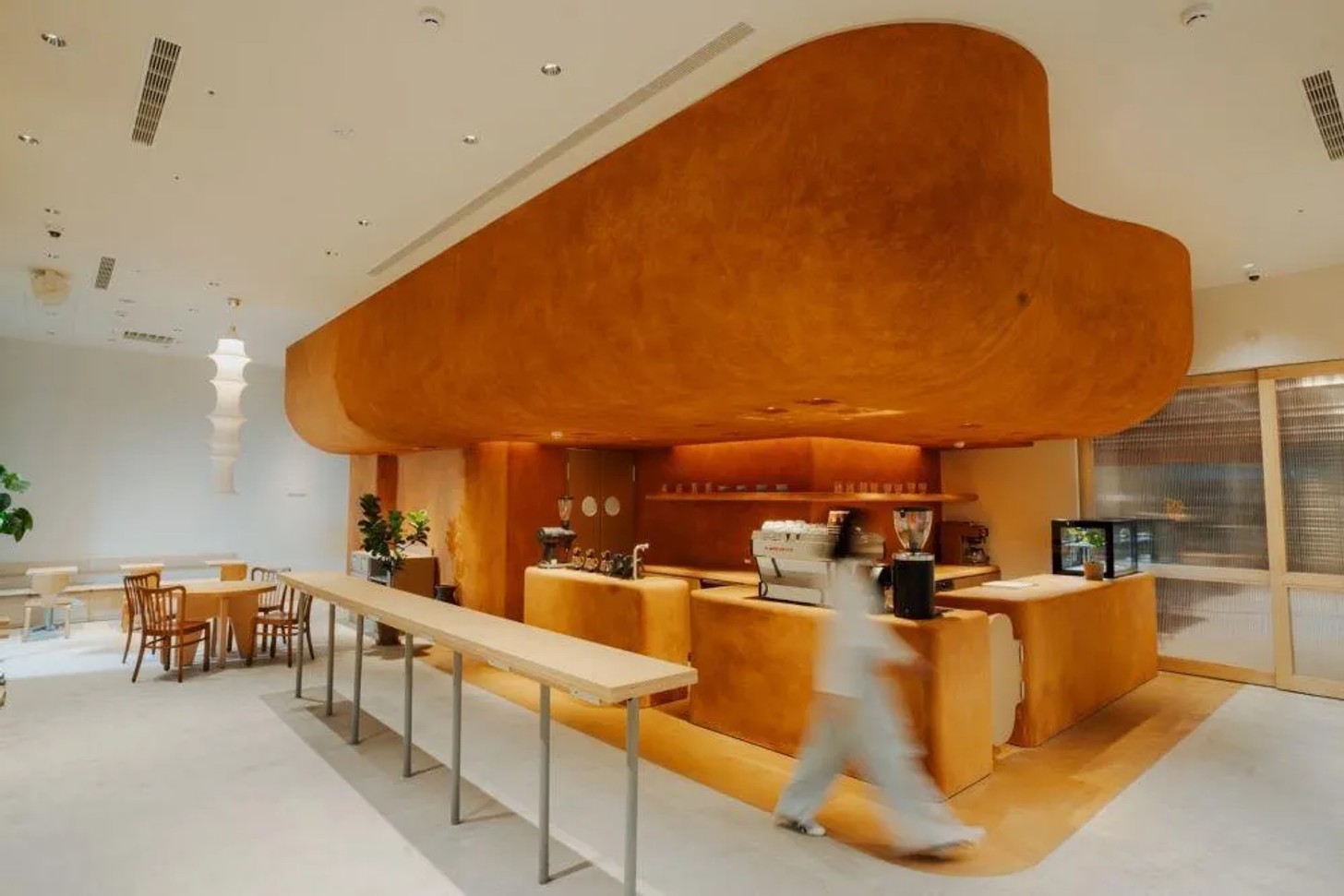
NOD takes a more colourful approach to the listening café. In Taichung, saturated orange is paired with timber, curved forms and reflective details, creating an interior that feels retro without becoming overly nostalgic. The strong colour gives the compact space a distinct visual temperature.
Its design also allows the café to shift from daytime coffee stop to evening destination. Warm lighting and darker tones deepen the atmosphere as the day progresses, demonstrating how colour can be used not simply as decoration, but to influence the perceived mood of a room.
Sabi Sounds – Melbourne, Australia
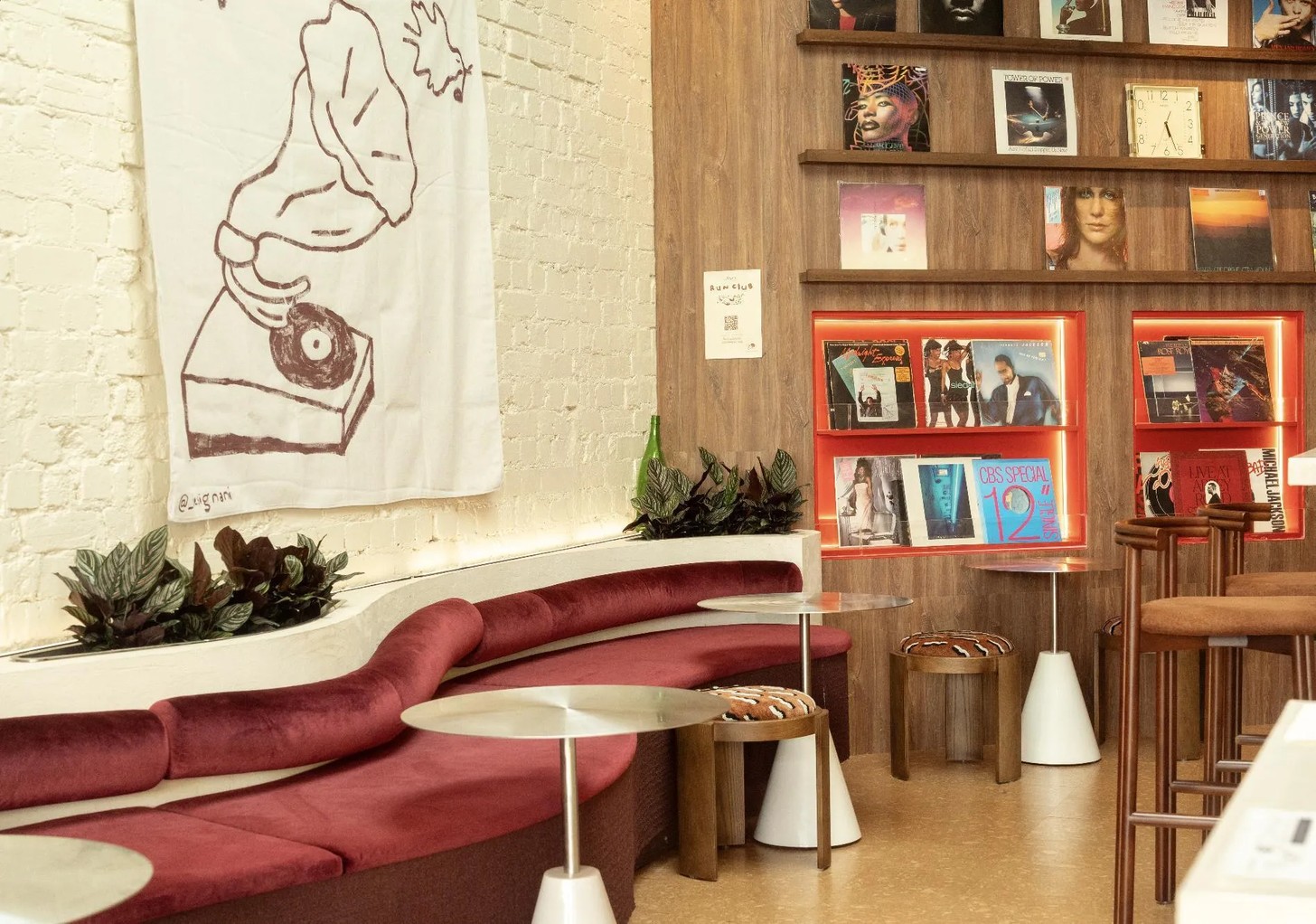
Sabi Sounds is designed around different ways of listening. The Melbourne space combines specialty coffee and matcha with a vinyl library, private listening booths, and a more intimate hi-fi lounge, allowing the room to accommodate both conversation and solitary listening.
The design is layered, with deeper colours and enclosed seating creating a sense of retreat within the larger café. Vintage Japanese JBL speakers and analogue equipment become visual features rather than hidden infrastructure. It is a space where the furniture plan is as important as the playlist.
Sound and Coffee – Paris, France
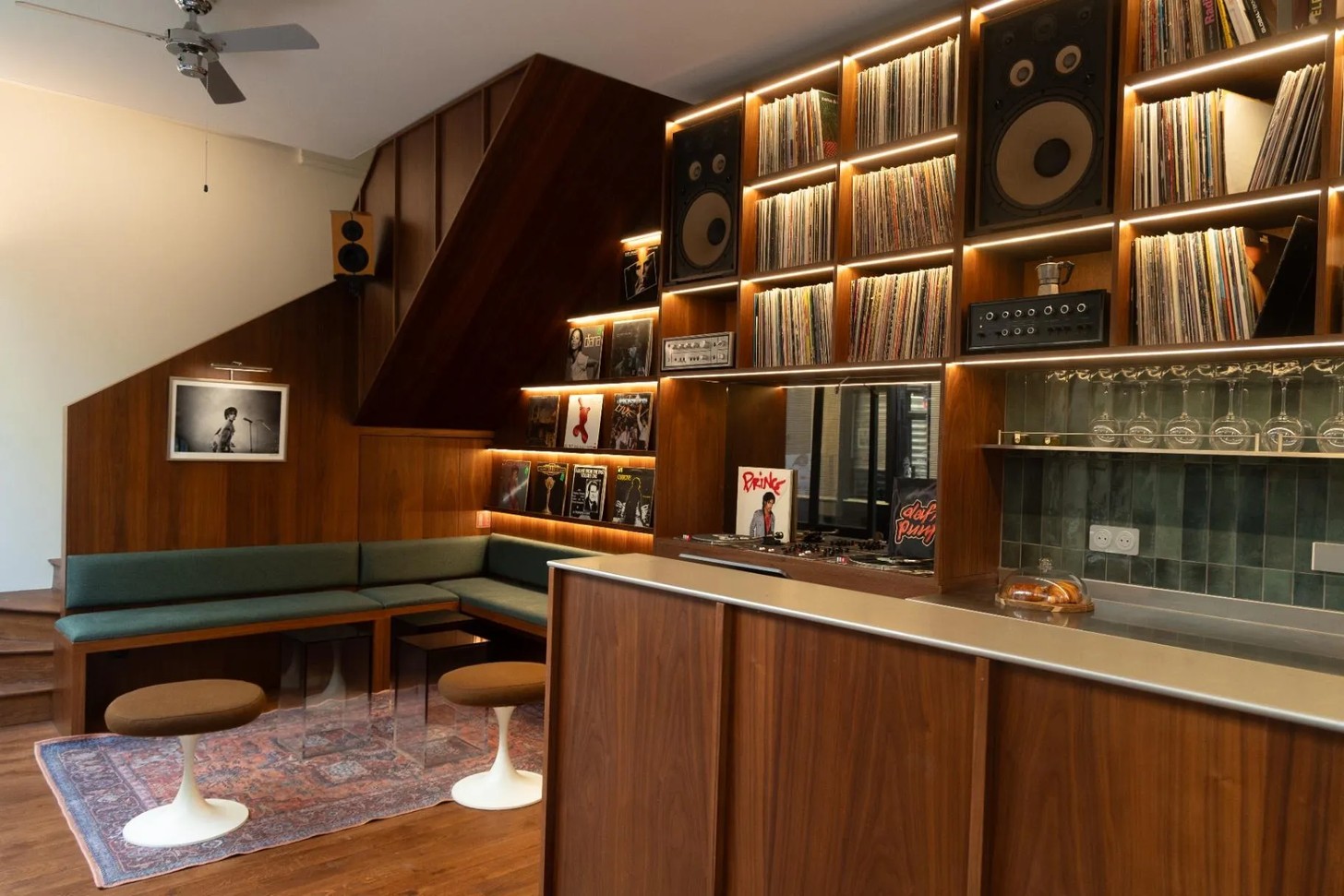
Inside Paris's historic Passage des Panoramas, Sound and Coffee takes its cues from the intimacy of a private music room. Parquet floors, walnut, warm lighting and an extensive vinyl collection give the café a residential quality, while vintage hi-fi equipment provides its visual and sonic centre.
The result feels collected rather than styled. Records are displayed as part of the interior rather than treated as decoration, and the historic architecture of the passage adds another layer of texture. It is a useful reminder that some of the most inviting hospitality interiors borrow more from homes than commercial spaces.
Little Soul Café – Tokyo, Japan
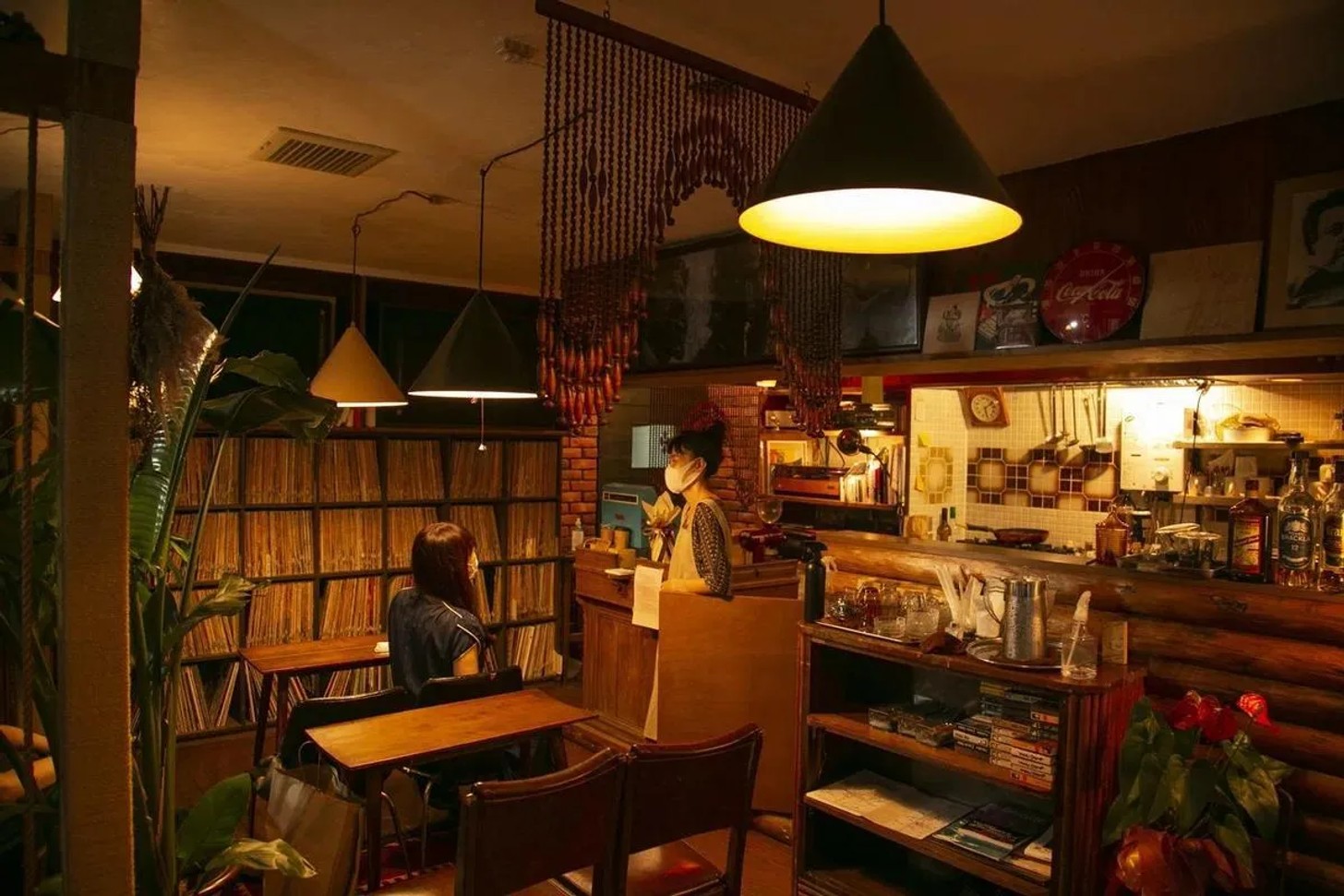
Tokyo's Little Soul Café is a reminder that a listening space doesn't need an elaborate architectural concept. Operating since 1999, the intimate Shimokitazawa café houses more than 14,000 records, collected by its owner over decades. The compact room is centred around a handmade counter and a handful of sofas, putting the collection firmly at the heart of the experience.
Here, the records become the interior. Their accumulated presence gives the space texture, personality, and a sense of history that would be difficult to manufacture through decoration alone. It feels less like a designed café than someone's exceptionally well-curated music room – and that's exactly its charm.
The New Language of the Hi-Fi Café
What makes these spaces compelling is that there is no single hi-fi aesthetic. Some are dark and cocooning; others are filled with daylight. Some favour raw concrete, others walnut, and parquet. There are saturated oranges, deep burgundies, soft neutrals, and almost no colour at all.
What connects them is intentionality. Sound has become part of the design brief.
Perhaps the biggest appeal, however, is cultural. At a time when so many cafés are designed around productivity, the hi-fi café offers something slower: a place where attention itself becomes a luxury.


