
When people talk about the Blyde River Canyon, the conversation usually begins with scale.
As the world's third-largest canyon – and often described as the largest green canyon on Earth – it is one of South Africa's most extraordinary landscapes. Towering cliffs plunge into valleys, waterfalls disappear into dense vegetation, and viewpoints like Three Rondavels and God’s Window have become essential stops on countless bucket-lists.

Yet just beyond the canyon's famous views lies a place few travellers know about, despite it being every bit as remarkable.
Welcome to Cape Vulture Nature Reserve.
At first glance, it seems an unlikely star attraction. After all, vultures rarely enjoy the same admiration as lions, leopards or elephants. But spend an hour watching hundreds of these giant birds soar effortlessly and it quickly becomes clear why conservationists, photographers, and wildlife enthusiasts travel from around the world to see them.
The reserve protects one of the largest breeding colonies of endangered Cape Vultures anywhere on the planet, with an estimated 728 breeding pairs calling these cliffs home. It is a powerful reminder that some of Africa's greatest wildlife displays unfold far from the safari spotlight.
The Unexpected Beginning of a Bigger Journey
What makes Cape Vulture Nature Reserve particularly compelling isn't only what happens within its borders – it's where it sits.
The reserve forms part of the Kruger to Canyons Biosphere Region, South Africa's largest UNESCO ecosystem and one of the world's recognised learning destinations for sustainable development. Stretching across wide sections of Limpopo and Mpumalanga, the biosphere connects conservation areas, communities, wilderness landscapes and tourism experiences into one interconnected ecological network.
For travellers, this means something rather special: within a relatively short drive, it's possible to move from a conservation-focused vulture experience to one of the world's great canyon landscapes and then on to Big Five territory in the Kruger National Park.
Few destinations offer such a seamless combination of wildlife, adventure and environmental storytelling.
A Front-Row Seat to Conservation
Often misunderstood, vultures perform one of nature's most important ecological roles. By rapidly consuming carcasses, they help prevent the spread of disease and keep ecosystems healthy.
At Cape Vulture Nature Reserve, purpose-built viewing locations and guided experiences offer a rare opportunity to observe nesting and feeding behaviour without disturbing the colony. Visitors gain insight into the conservation challenges facing the species, from habitat loss to poisoning incidents, while witnessing the absolute scale of a population that continues to survive against significant odds.
It's the kind of experience that changes perceptions. Visitors arrive expecting birds and leave with a far deeper understanding of the delicate balance that keeps ecosystems functioning.
Into the Canyon
Leaving the reserve behind, the landscape begins to shift.
The journey towards the Blyde River Canyon takes less than an hour, but the scenery feels increasingly cinematic with every kilometre. Mountains rise from the horizon, valleys deepen, and the cliff reveals itself in layers of green and gold.
The Panorama Route remains one of South Africa's most rewarding road trips for good reason. Around every bend is another point demanding a stop, another sweeping view that feels impossible to capture fully in a photograph.
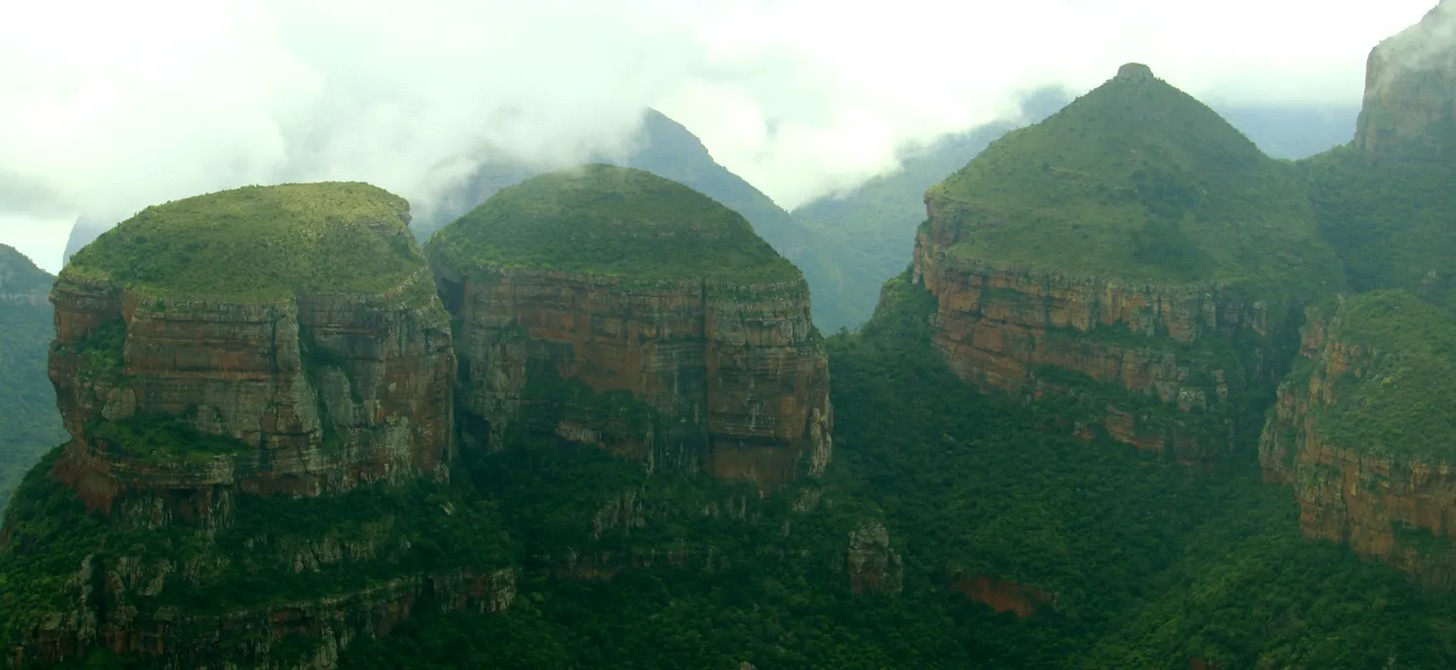
At Three Rondavels, enormous rock formations stand like ancient guards overlooking the canyon. At God's Window, the slopes appear to fall away endlessly towards the Lowveld below. Wonder View lives up to its name, offering some of the highest accessible points in the region.
Adventure Between Earth and Sky
The canyon rewards both slow travellers and adrenaline seekers.
Some choose to explore from the water on a guided cruise across the Blyde Dam, drifting beneath cliffs while scanning the shoreline for wildlife. Others prefer to experience the landscape from above, zip-lining through forest canopies, or helicopters for aerial perspectives that show the canyon's immense scale.
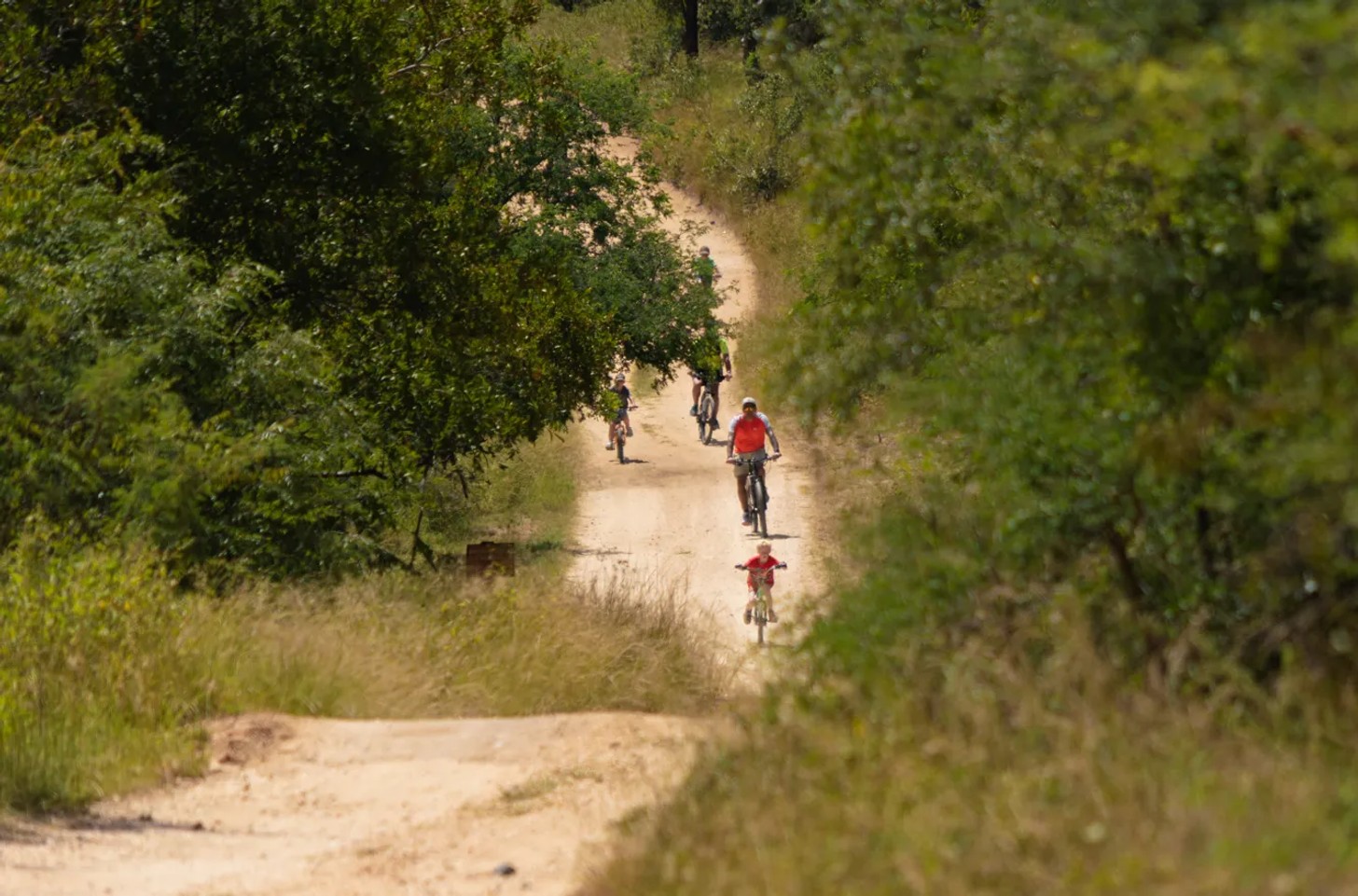
For those craving a little more action, the surrounding region offers rock climbing, abseiling, horse riding, quad biking, and seasonal river adventures. Hikers can also disappear into a network of trails that weave through indigenous forests, waterfalls and dramatic geological structures.
Waterfalls, Potholes and Geological Wonders
The canyon's beauty extends well beyond its famous views.
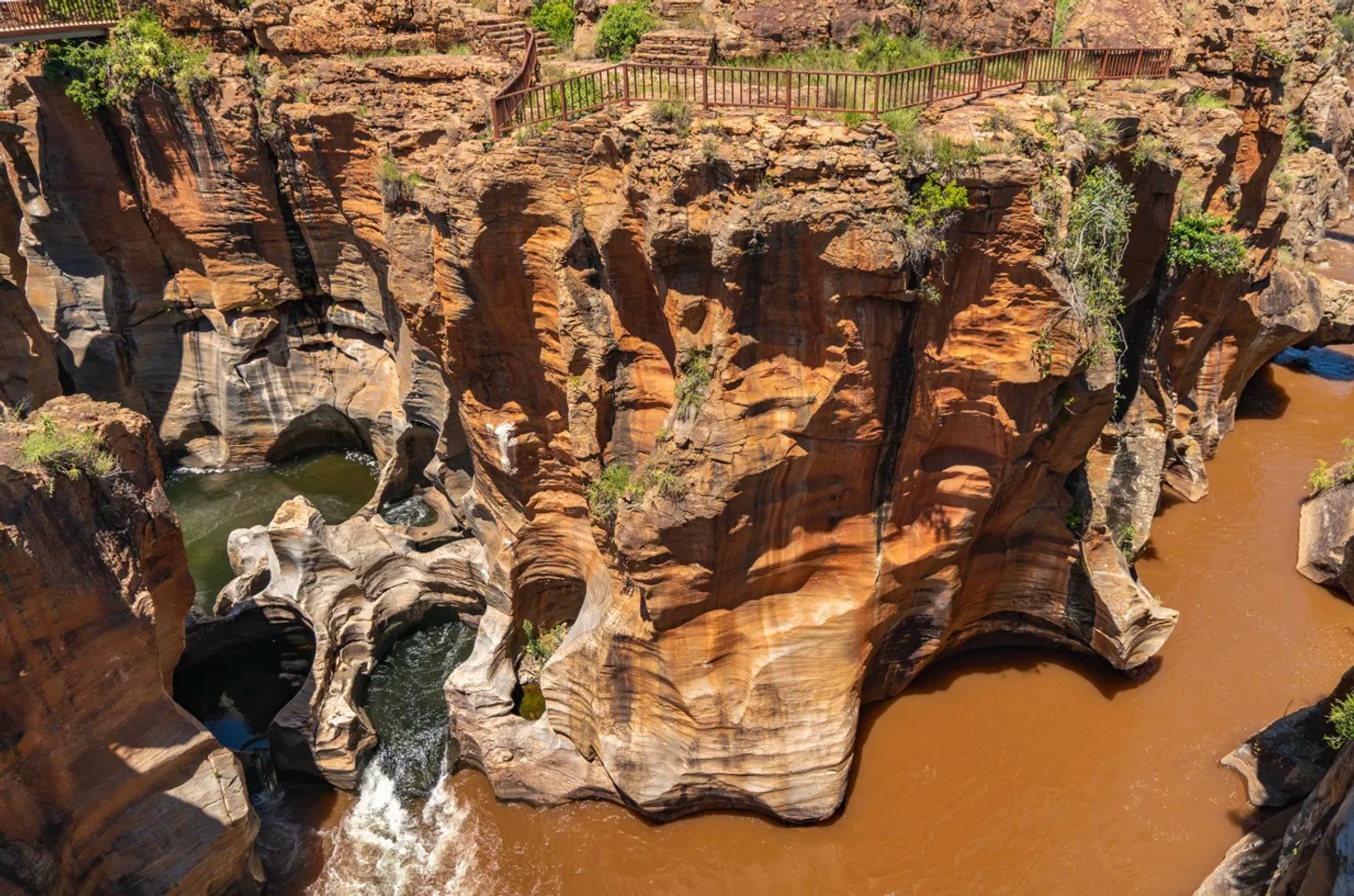
At Bourke's Luck Potholes, centuries of swirling water have sculpted extraordinary tube-shaped formations into the rock, creating a landscape that feels ethereal.
Elsewhere, waterfalls punctuate the landscape with spectacular regularity. Lisbon Falls plunges into the gorge below, Berlin Falls cuts a striking path through the cliffs, and Mac-Mac Falls remains one of the region's most beloved natural attractions.
Together, they create a landscape that feels endlessly different despite being concentrated within a relatively compact area.
Where the Wild Things Are
Then, of course, there is the Kruger.
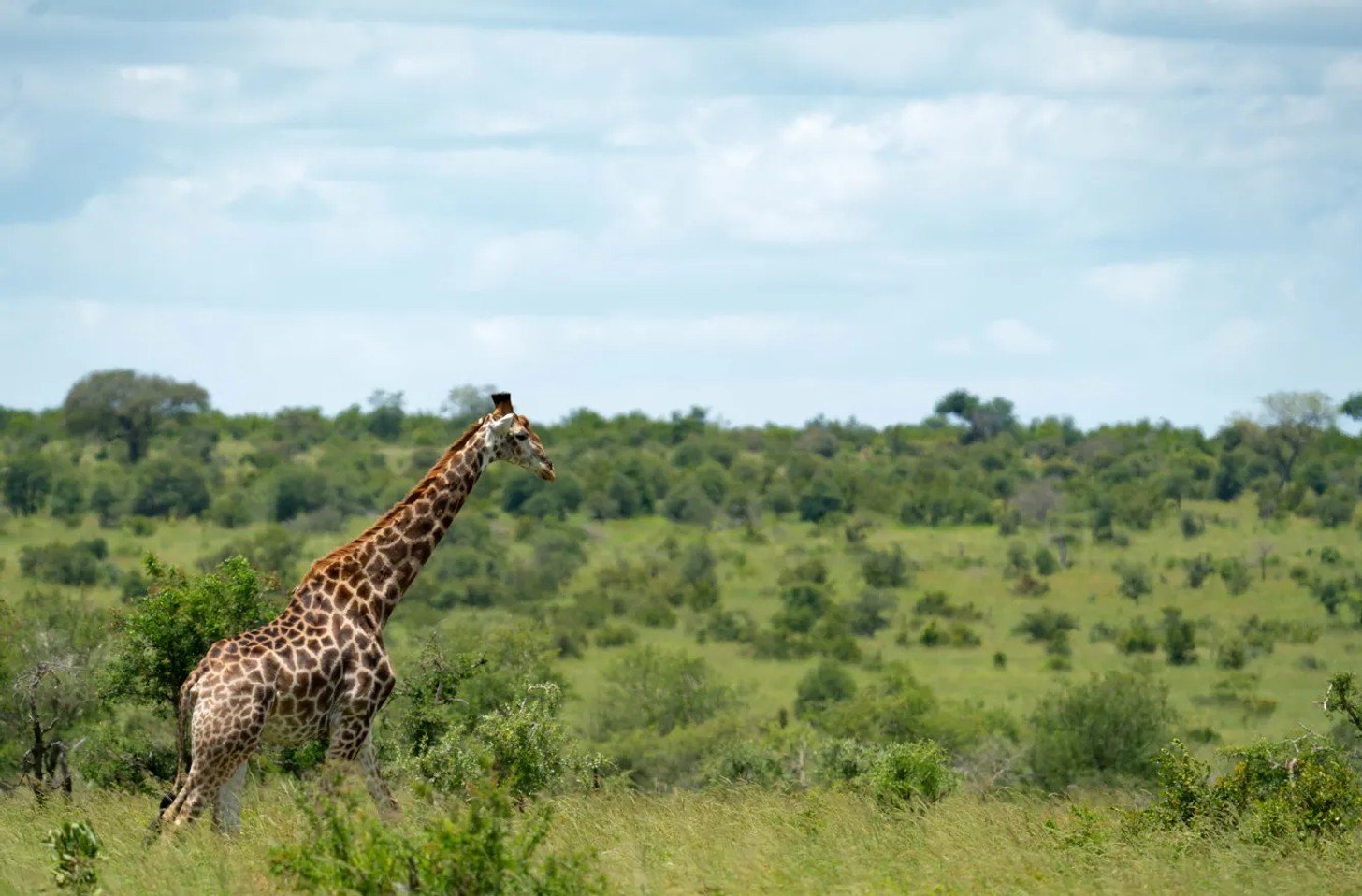
Less than an hour away, one of Africa's most celebrated national parks adds another layer to an already remarkable itinerary. Here, the focus shifts from soaring vultures to lions resting beneath thorn trees, elephants crossing dusty roads, and leopards disappearing into forests.
It's this diversity that makes the wider Kruger to Canyons Biosphere Region so compelling. Rather than a single destination, it functions as a collection of interconnected experiences, each revealing a different part of South Africa's natural heritage.
The Journey Most Travellers Miss
The Blyde River Canyon has long deserved its reputation as one of Africa's great landscapes.
But perhaps the more interesting story lies in what surrounds it.
Beyond the famous outlooks exists a living environment where conservation, adventure, wildlife, and community intersect. It is a place where endangered vultures share the stage with waterfalls, canyon walls, cultural experiences and Big Five safaris.
And it all begins with a bird many travellers never thought to look for.
Credits
Images: Supplied


