
Industrial interiors have a certain architectural honesty. They reveal rather than conceal: brickwork is left exposed, steel is allowed to age, concrete becomes a finish in its own right, and pipes, beams, and ductwork can become part of the visual language. However, the most successful industrial homes are not just collections of hard surfaces. They balance the raw with the refined, creating spaces that feel considered, comfortable and, above all, liveable.
Start with the architecture
Industrial style has its roots in buildings designed for work instead of domestic life – factories, warehouses, workshops, and former commercial spaces. The aesthetic became particularly associated with urban lofts as industrial buildings were converted into homes, notably in New York from the mid-20th century onwards. High ceilings, generous windows, open plans, and structural elements such as columns and beams became desirable residential features in their own right.

If you are renovating an older property, resist the temptation to disguise its history. Original brick, timber beams, concrete floors, steel columns, old windows, and even pipes can provide the strongest foundation for an industrial palette.
In a newer home, the look can be interpreted rather than replicated. Steel-framed doors, oversized windows, concrete-look surfaces, visible shelving, and a restrained material palette can introduce an industrial type of language without pretending that the building is a converted factory.
Think in materials, not motifs
The secret to avoiding a themed-looking interior is to work with a combination of materials. Steel and iron bring structure; timber introduces warmth; brick supplies texture; concrete adds weight; glass keeps the overall effect visually light.
Colour should also support the architecture. Charcoal, warm white, stone, rust, tobacco and earthy neutrals work naturally with industrial materials, while deeper greens, blues, or burgundy can provide moments of contrast.
The palette does not have to be dark: pale walls and abundant natural light can make raw materials feel surprisingly soft.
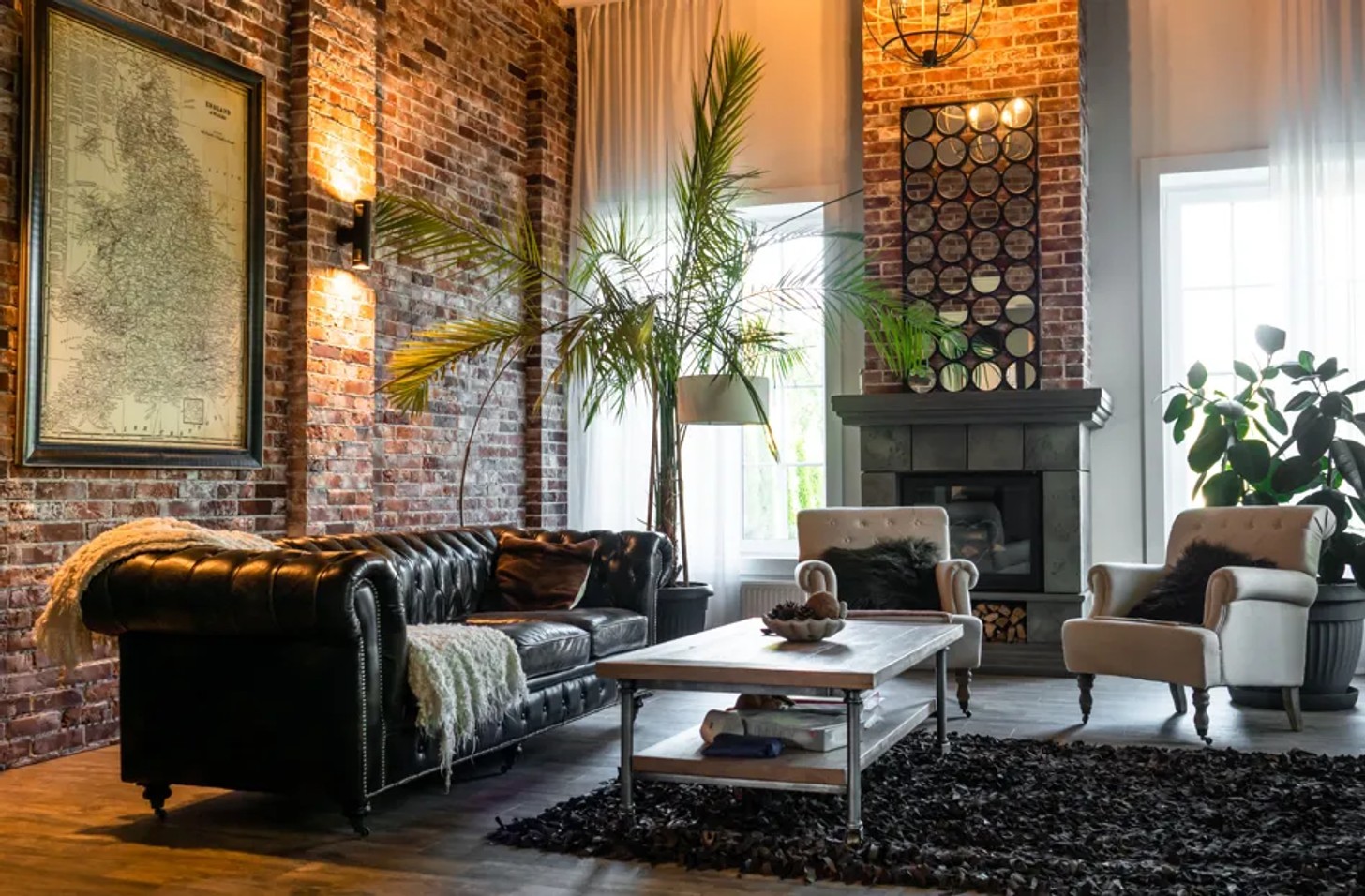
Make the hard stuff feel soft
Large upholstered sofas, generous armchairs, rugs, curtains and cushions counterbalance concrete, steel, and exposed brick. Timber furniture can also do the same. A vintage rug under a streamlined dining table, linen curtains against a concrete wall, or a sculptural wooden chair beside a steel kitchen island introduces the visual and tactile variation that prevents the room from feeling cold.
Lighting is equally important. Industrial interiors benefit from a layered approach rather than relying on one dramatic pendant. Combine architectural lighting with table lamps, floor lamps, and wall lights to create pools of warmth after dark. Strategic lighting is particularly useful when a room contains several strong architectural elements.
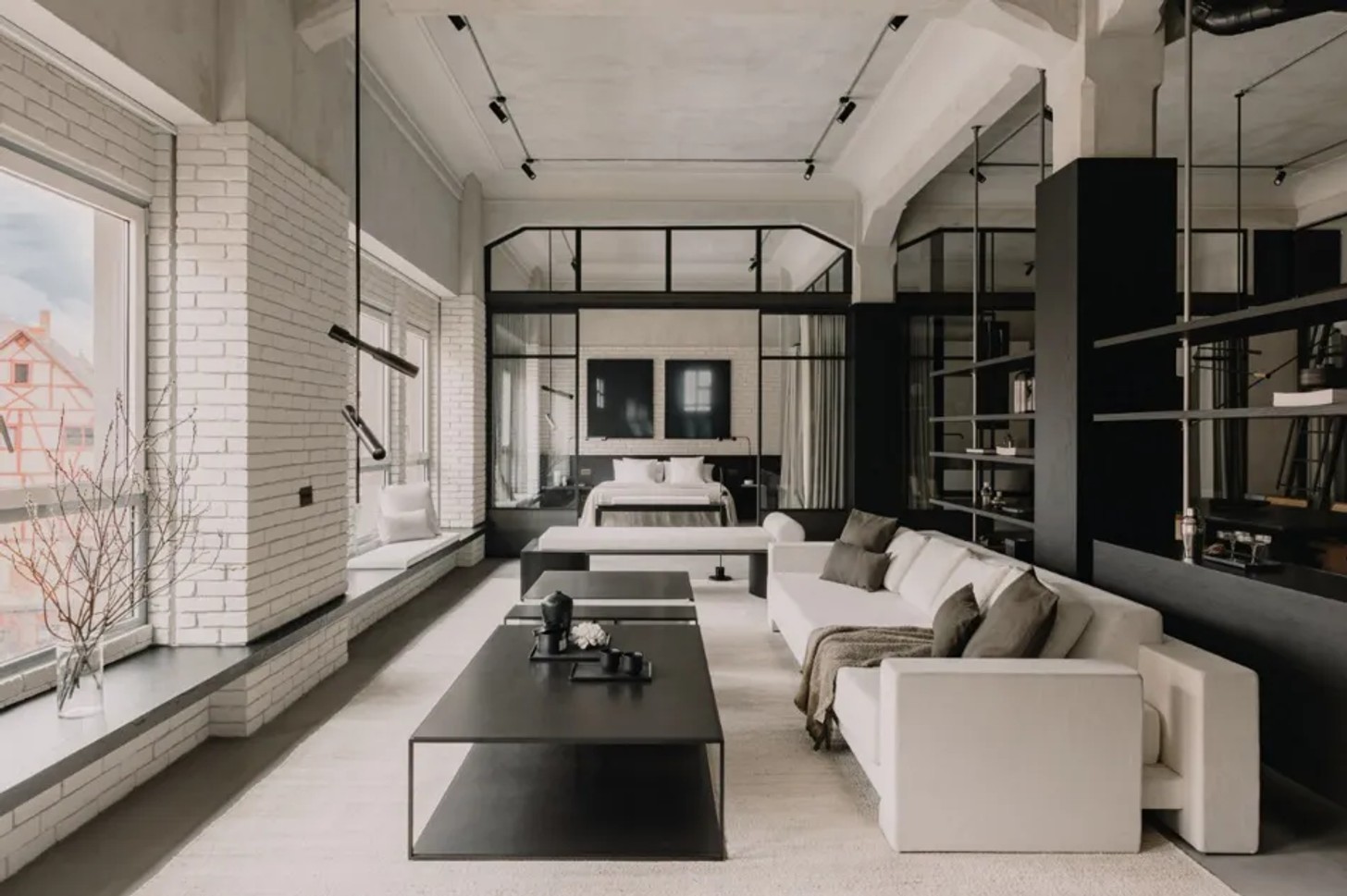
Let furniture do the decorating
Industrial spaces generally benefit from restraint. Instead of filling every wall and surface, choose furniture and objects with presence.
There is also plenty of room for personality. Contemporary industrial homes increasingly mix vintage pieces, art, mid-century furniture, and more luxurious materials with traditional industrial finishes. The contrast is what gives the style its sophistication.
For open-plan homes, furniture can also create the architecture that is missing. A large sofa can define the living area; an open shelving unit can subtly divide kitchen and dining spaces; a rug can establish a room within a larger room.
Glass partitions and steel-framed doors are another way to preserve openness while creating separation in the space.
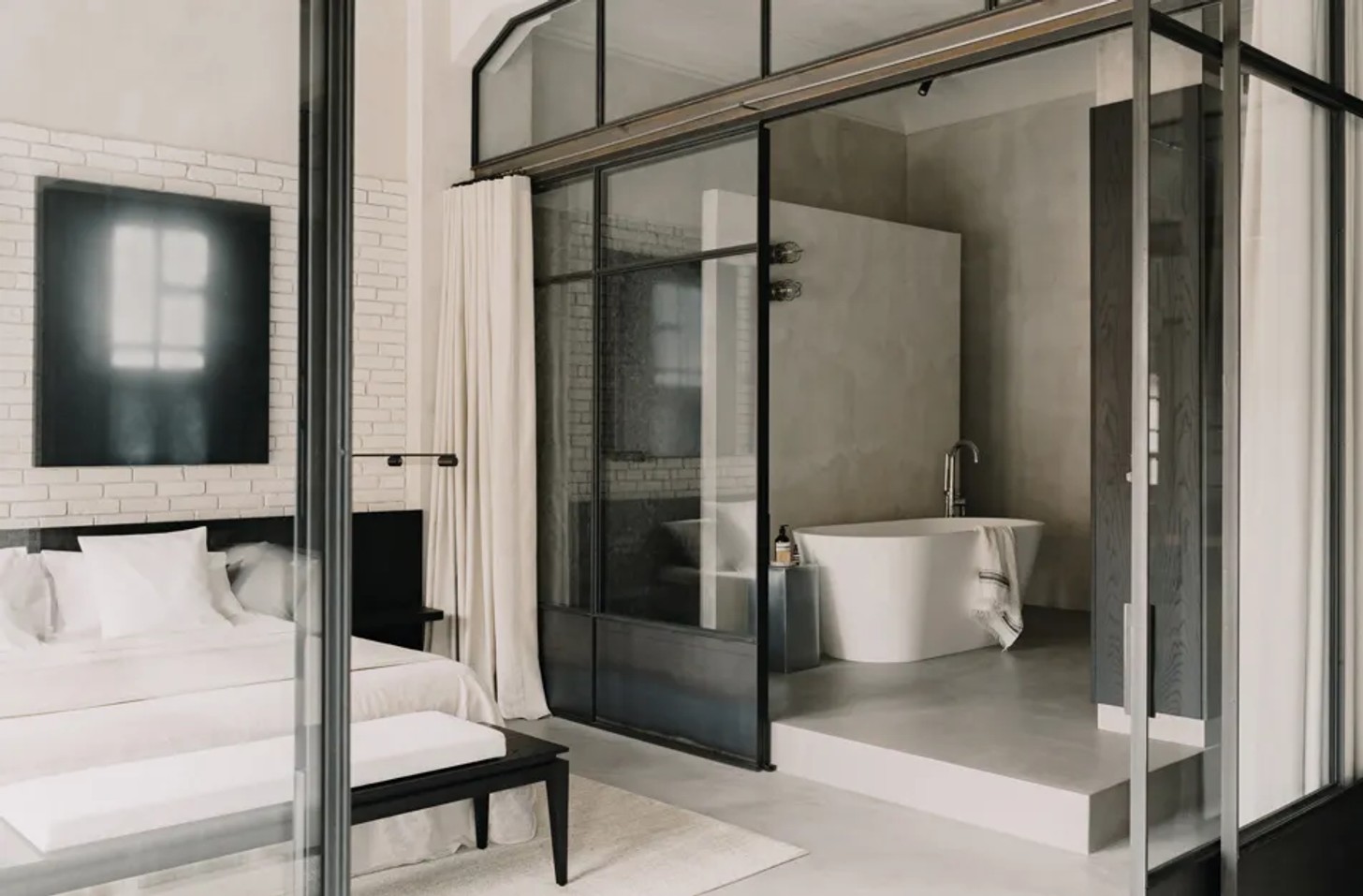
The modern industrial home
Today, industrial style is less about reproducing a warehouse and more about understanding what makes those spaces compelling: the honesty of materials, generous proportions, functional details, and a willingness to let architecture speak for itself.
The best versions are layered – raw concrete alongside soft upholstery, aged timber beside polished steel, and contemporary lighting against original brick. In other words, industrial design works best when the building provides resilience and the people provide the needed warmth.
Image Credits
Nikita Teplitsky, Edvinas Bruzas, Pexels: Puscas Adryan, Luk Sauvage, Polina


