
An outdoor rug can transform a patio, veranda, or poolside terrace into a considered extension of the home. Beyond introducing colour, pattern and texture, it anchors furniture, defines entertaining areas, and softens hard surfaces.
However in South Africa, where intense sunshine, seasonal downpours, coastal humidity and dry inland conditions all influence outdoor living, choosing the right rug requires more than an eye for design.

The secret is to balance aesthetics with performance. Here's what to consider before investing in an outdoor rug that looks beautiful and stands up to the elements.
1. Start with the material
For exposed patios and open-air entertaining areas, polypropylene is one of the most practical choices. This synthetic fibre absorbs very little moisture, dries relatively quickly and resists mould, mildew, and staining. Look for solution-dyed polypropylene, in which colour is incorporated into the fibre during manufacture, helping it retain its appearance under intense and long sun exposure.
Recycled PET (a polyester made from recycled plastic) is another option, offering a contemporary finish and a more circular-materials story. However, durability, water resistance, and fade performance depend on the particular construction and treatment.
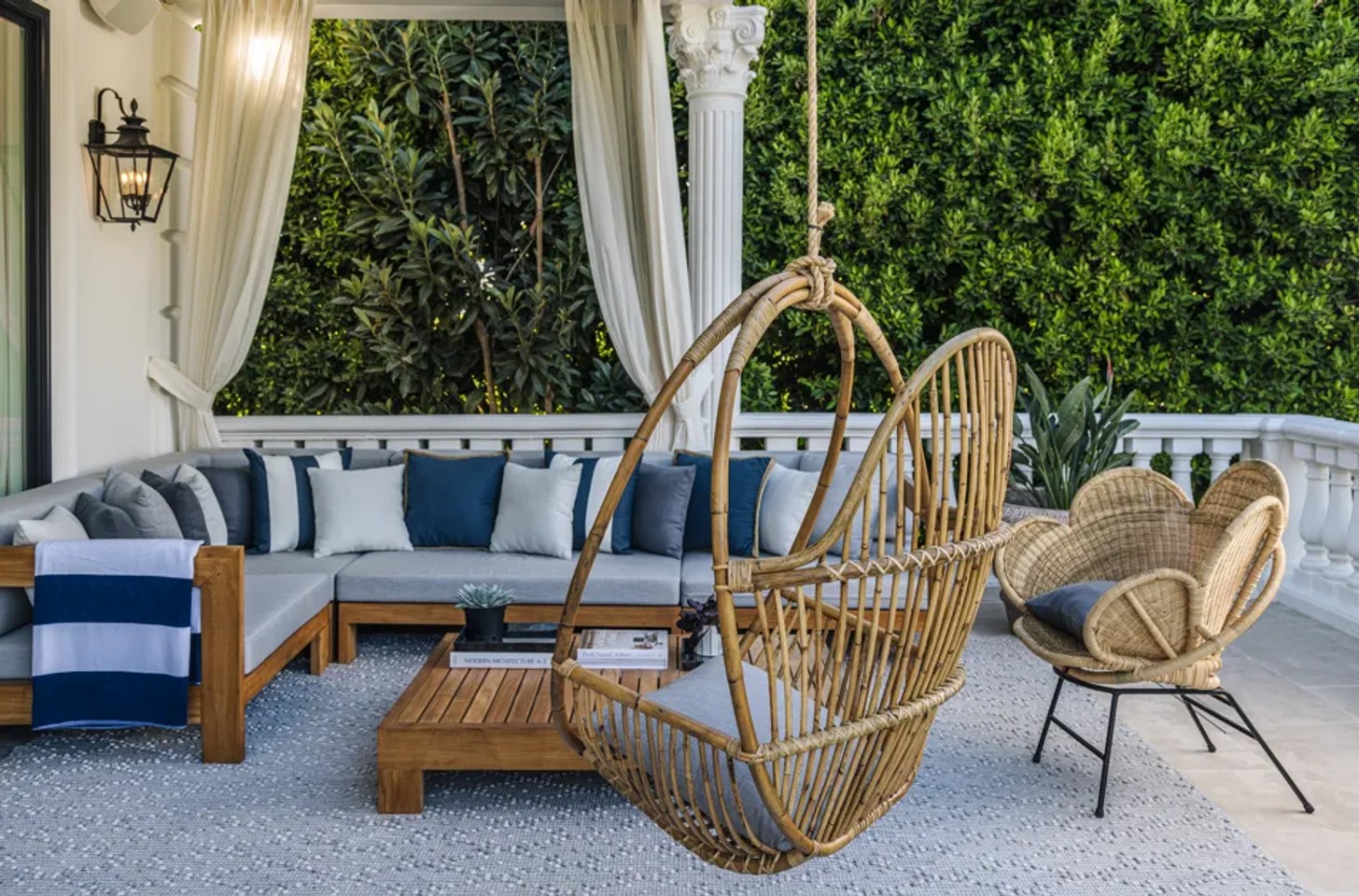
Natural fibres such as jute, sisal and seagrass bring an appealing organic texture to relaxed, earthy layouts. Reserve them for covered, well-ventilated verandas where they will not be exposed to persistent damp or direct rain.
2. Choose for your South African climate
South Africa's contrasting rainfall patterns and coastal conditions mean that a rug suited to one region may not be ideal for another.
Western Cape: Winter rainfall and windy coastal conditions make quick-drying, moisture-resistant rugs a sensible choice for uncovered terraces. In Cape Town, consider how the summer southeaster might lift lighter rugs; choose a suitably weighted design and secure it where necessary.
KwaZulu-Natal and the humid east coast: Prioritise moisture resistance, good drainage, and ventilation. A low-pile synthetic rug is generally better suited to humid conditions than absorbent natural fibres. After heavy rain, lift the rug to ensure the surface beneath can dry properly.
Gauteng and the Highveld: Hot summer sunshine, afternoon thunderstorms, and chilly winter nights call for versatility. UV-resistant synthetic fibres are useful in exposed spaces, while a covered patio offers more freedom to experiment with softer textures.
The Karoo and other dry, sunny regions: Intense sun, dust, and temperature fluctuations are the main considerations. Look for UV-stabilised fibres, practical colours, and a weave that can be swept or rinsed easily. A pergola or shade structure can also help to maintain the rug's appearance.
3. Pay attention to the weave and backing
A flatweave or low-pile rug is often the most practical choice outdoors. Its relatively smooth surface collects less debris than a deep pile, making it easier to sweep, rinse, and maintain in high-traffic areas.
Equally important is what happens underneath. Choose a construction that allows water to drain rather than trapping moisture against tiles or timber decking. On smooth paving, a suitable outdoor rug gripper can help prevent slipping, particularly in windy conditions. Always check that the rug and its underlay are appropriate for the surface on which they will be placed.
4. Get the proportions right
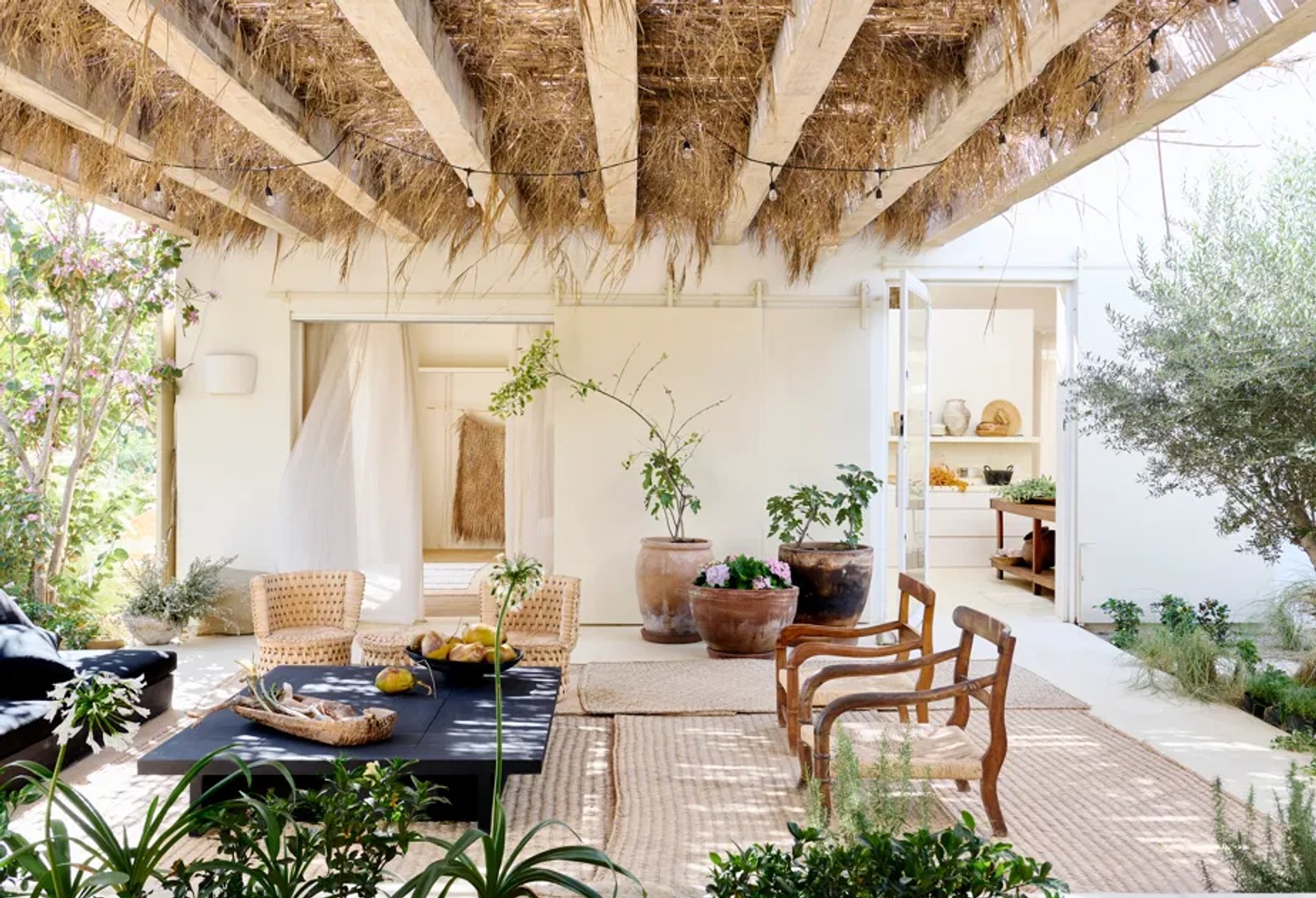
An outdoor rug should bring a seating arrangement together. In a lounge setting, aim to place at least the front legs of sofas and chairs on the rug. For outdoor dining, choose a size that allows chairs to remain on the rug when pulled back from the table.
Rectangular rugs work well beneath dining tables and linear seating arrangements, while round rugs can soften compact courtyards or define a bistro setting. Leave some flooring visible around the perimeter to maintain a sense of space.
5. Consider colour, pattern and practicality
Outdoor rugs are an opportunity to introduce personality without committing to permanent finishes. Stripes and geometric patterns complement contemporary architecture, while earthy terracotta, olive, sand, and stone shades can be used alongside natural timber, greenery, and textured stone.
Consider the setting before settling on a palette. Pale rugs can make a small courtyard feel brighter but may show mud and food spills more easily. Darker colours can disguise some marks, although they may reveal dust and pollen. Patterned designs offer a useful middle ground.
For sun-drenched patios, lighter neutrals can also be a good choice, but colour alone will not prevent fading.
6. Make maintenance part of the plan
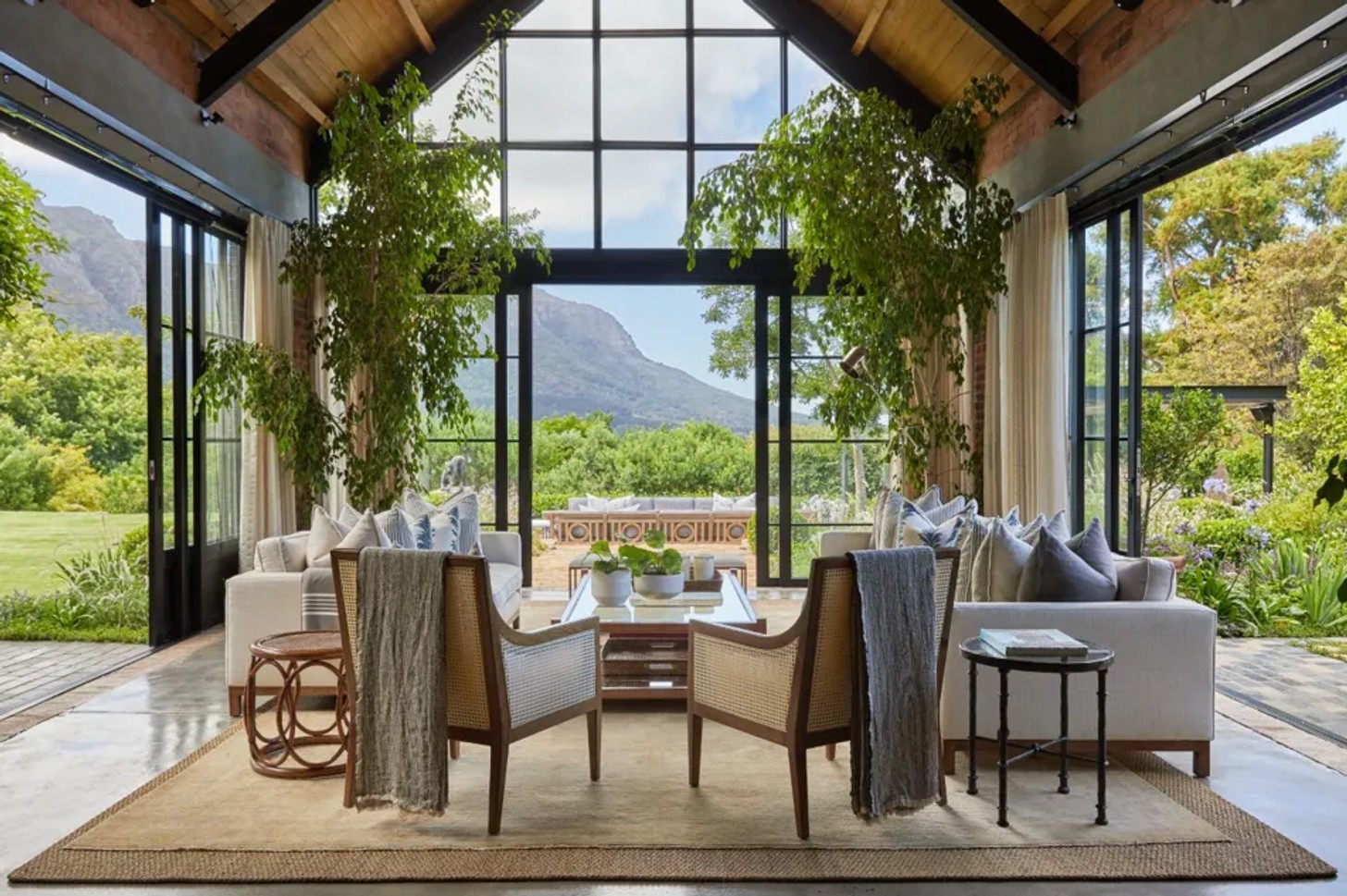
Even a rug designed for the outdoors needs care. Sweep or shake it regularly to remove grit, which can wear down fibres. Clean spills immediately, following the manufacturer's instructions, and rinse washable rugs when necessary.
After rain, allow the rug and the surface beneath it to dry thoroughly. Lift it to prevent moisture from becoming trapped, especially on timber decking. During extended periods of harsh weather or when an outdoor area is not in use, roll up the rug and store it somewhere clean and dry.
The best outdoor rug is one that suits the way you live. Whether you're styling a breezy coastal veranda, a Highveld entertaining terrace or a shaded garden courtyard, the right combination of material, scale, and texture can make alfresco living feel just as considered as the interiors.
Image Credits
Linda Boronkay, Greg Cox, Elsa Young, Amy Neusinger, Taryn Elliot (Pexels)


