
In Prince Albert, at the foot of the Swartberg Mountains, gardening comes with its own set of realities. Summer temperatures regularly climb above 40°C, rainfall is scarce, soils are often alkaline and saline, and water is never taken for granted. Yet it is precisely these conditions that have inspired a different way of thinking about gardens.
For Malcolm and Derryn Searle, the journey began with a neglected piece of former agricultural land. Once irrigated cropland, the site had stood abandoned for decades after changes in water allocation rendered farming unviable. The soil was compacted and exposed, baked by the Karoo sun and seemingly devoid of life.

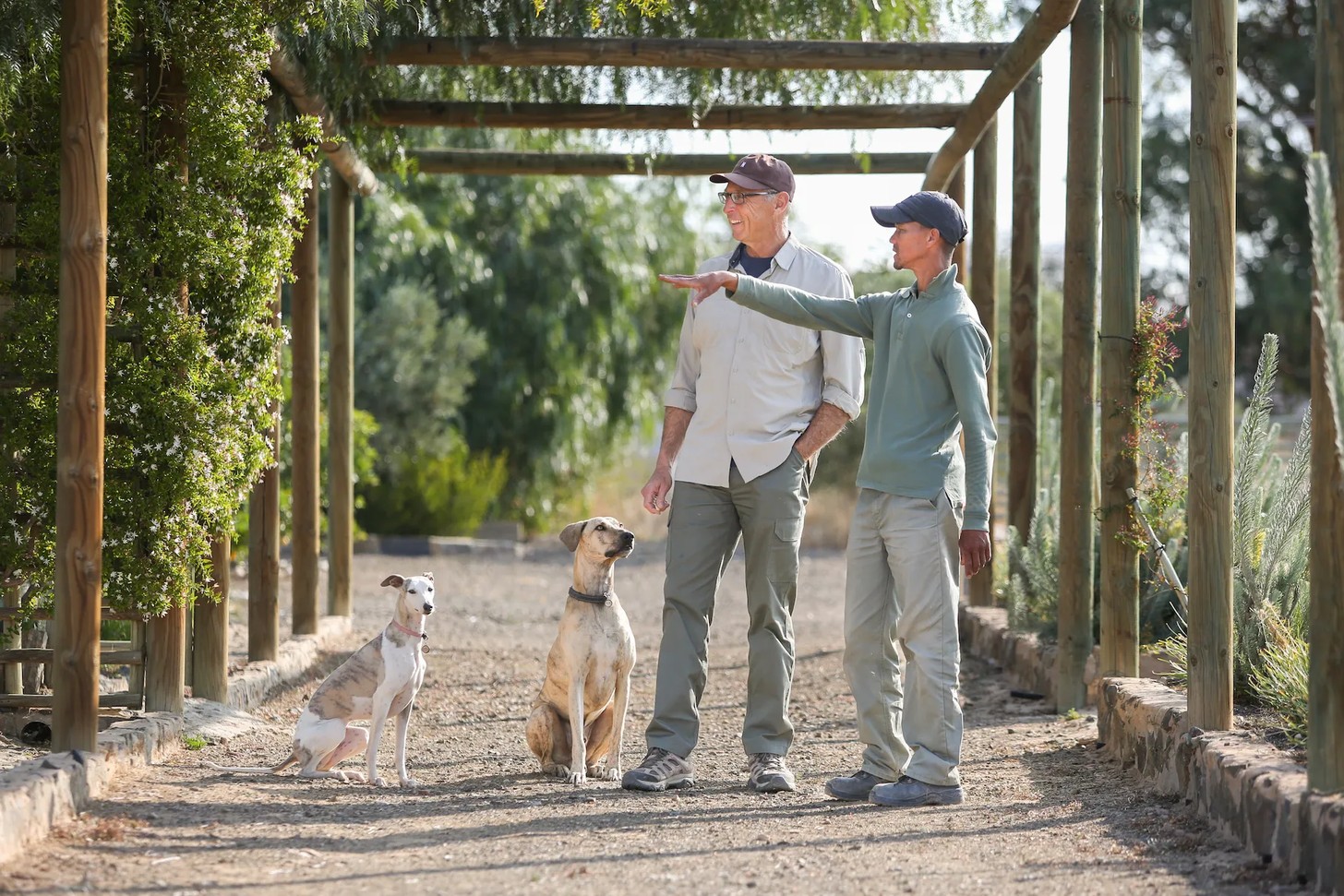
Conventional gardening solutions felt increasingly at odds with the landscape. Beyond the boundaries of the property, indigenous veld continued to flourish without intervention. After the rain, plants flowered, insects emerged, birds, bees and small mammals moved through the landscape with remarkable resilience. Rather than asking what plants could survive the Karoo, the Searle’s began asking what the Karoo could teach them about gardening. ‘Our job is not to try and manipulate their world, it is to learn from it,’ says Malcolm.
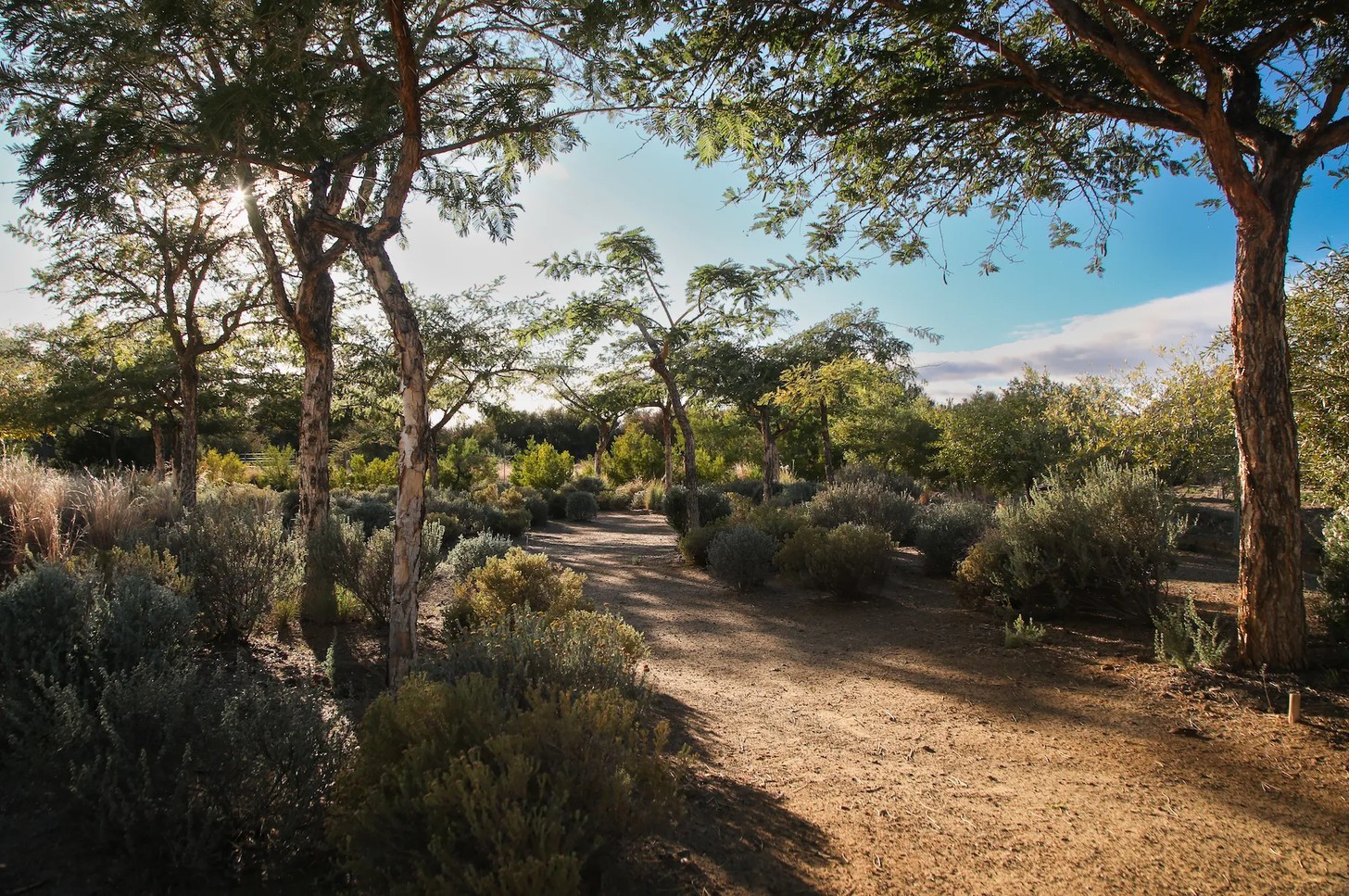
That shift in perspective became the guiding principle behind both Kraal, the garden surrounding their home, and the adjacent Veld Garden, an ongoing experiment in ecological restoration and indigenous plant cultivation. Central to the project has been the mentorship of ecologist Dr Sue Milton-Dean and horticulturist Bertus Fourie of Renu- Karoo Veld Restoration. Long before indigenous Karoo plants entered mainstream gardening conversations, they were documenting, propagating and championing species adapted to the region's harsh conditions. Their work has helped bring hundreds of locally adapted grasses, bossies, flowering shrubs and succulents into cultivation, providing an invaluable resource for gardeners seeking to work with the regions ecology. It is a philosophy grounded in observation.
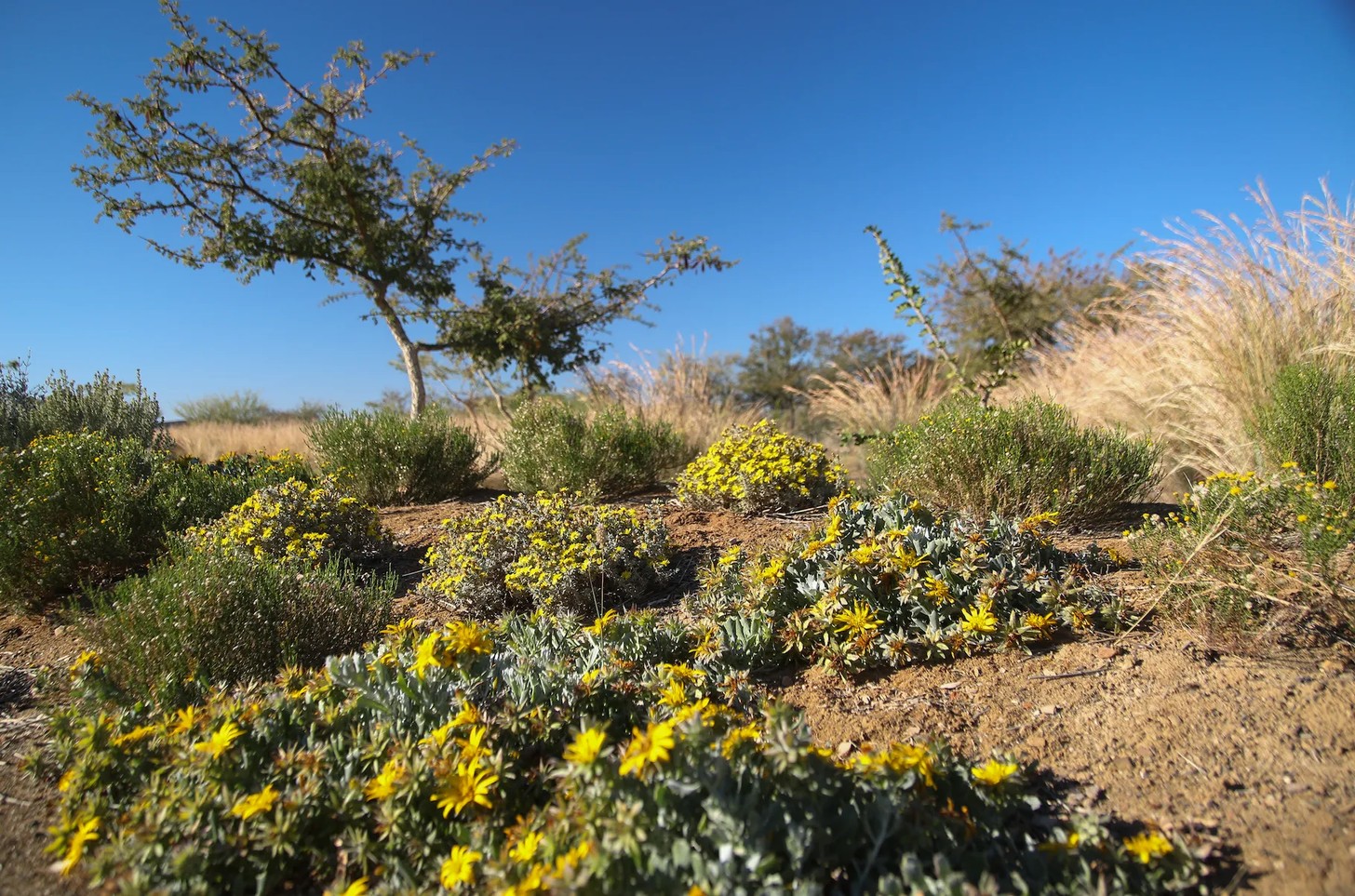
Over time, the landscape itself revealed its clues. Natural drainage channels show how water moves. Indigenous plant communities demonstrate which species belong and where. Wildlife indicates the health of an ecosystem. Even pruning takes its cues from nature as shrubs are lightly trimmed in ways that mimic browsing animals.
The Veld Garden has become a testing ground for these ideas. Formerly barren ground now supports a mosaic of indigenous plantings carefully matched to differing microhabitats. Low-lying saline areas host different species from elevated, free-draining mounds. Seasonal runoff channels mimic natural Karoo plains, and endemic indigenous grasslands help shelter the more delicate species from wind and heat. The resulting plant palette is unlike anything found in a conventional garden. Hardy bossies such as skaapbossie (Pentzia incana), bitterbossie (Chrysocoma ciliata), bokdissel (Berkheya spinosa), knoppiesdoringbossie (Dicoma picta), draaibos (Osteospermum spinosa) and perdekaroo (Oedera humilis) have proved remarkably resilient. Tall reedy Lammerlat (Gomphocarpus filiformis) rises above the surrounding vegetation, and purple steekvy, colourful noordvygies and the silky plumes of bushman grass, bring texture, movement and seasonal variation to the landscape.
None were selected simply because they flower well. They were chosen because they belong. The project has also challenged conventional thinking about climate resilience. ‘Drought management is about water,’ says Malcolm, heat management is about hot sun.’ Over the years as summer temperatures have shifted from the mid-thirties into the low forties, plants increasingly suffer from what he calls ‘heat burn’- the baking of soil and roots beneath relentless sunlight. The response has been to create selective areas of shade, use mulch to insulate the soil, establish windbreaks and above all, choose plants capable of enduring what Malcolm describes as ‘the torture test of the first summer.’
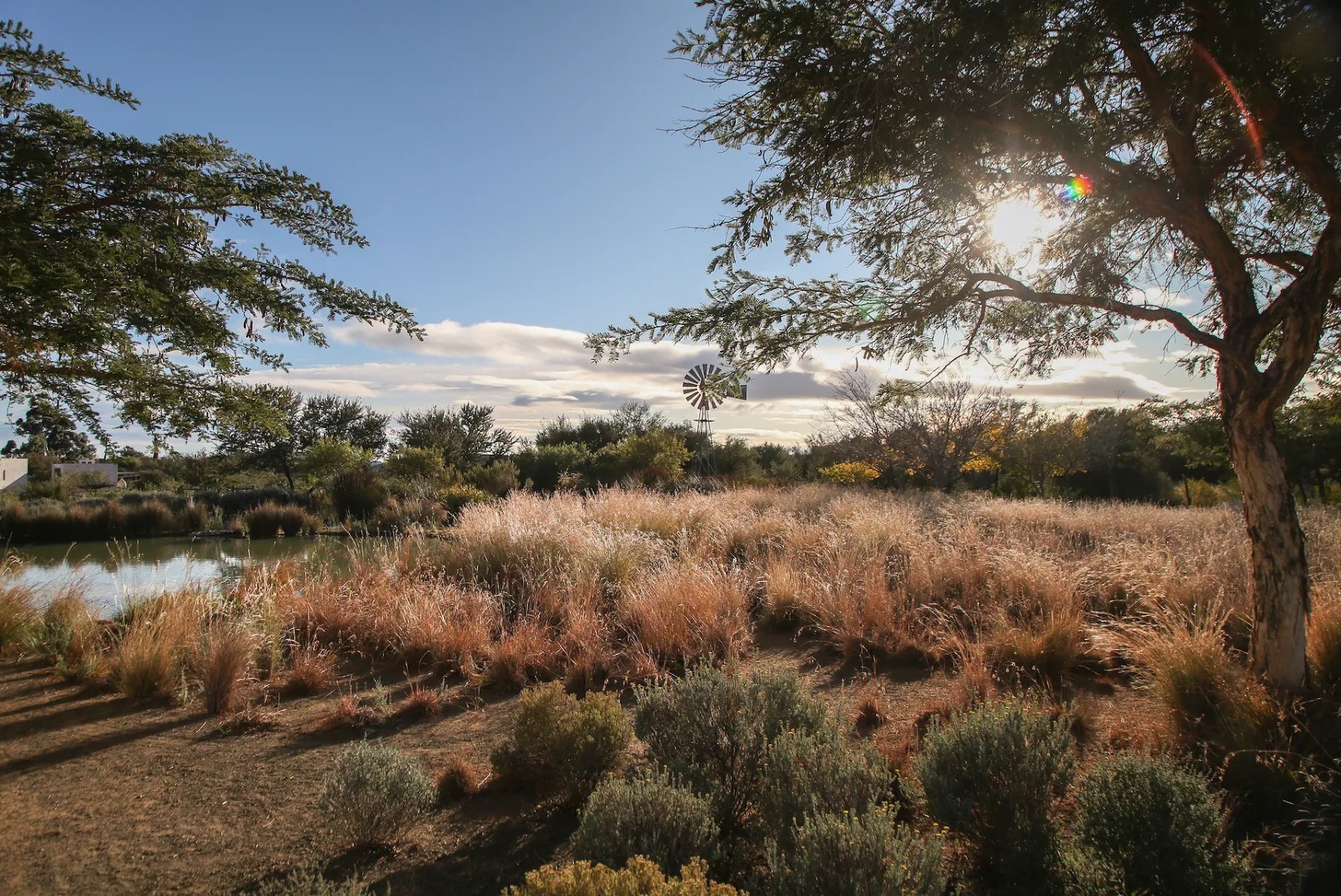
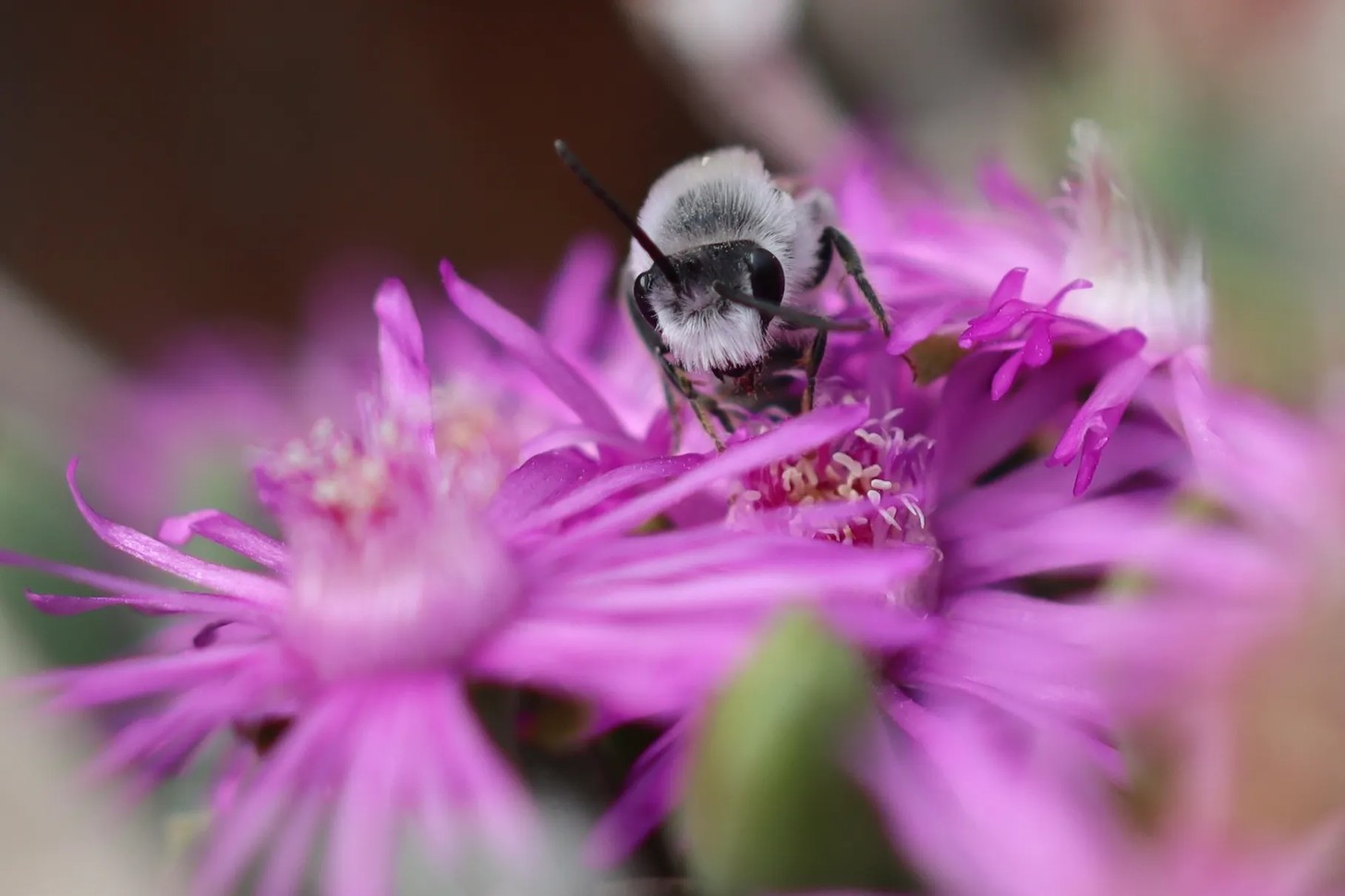
The garden's most rewarding achievements, however, are not measured in growth rates or flowering displays. A fenced rewilding corner, left largely untouched, has become a refuge for nature to reclaim. In the Veld Garden, solitary bees gather pollen from species that flower after rain. Birds nest among self-seeded trees. Fresh aardvark tracks regularly appear in the sand. A resident boomslang patrols and harmless house snakes follow mice into the shelter of long grasses. Frogs arrive after rain and even the occasional heron has paid a visit.
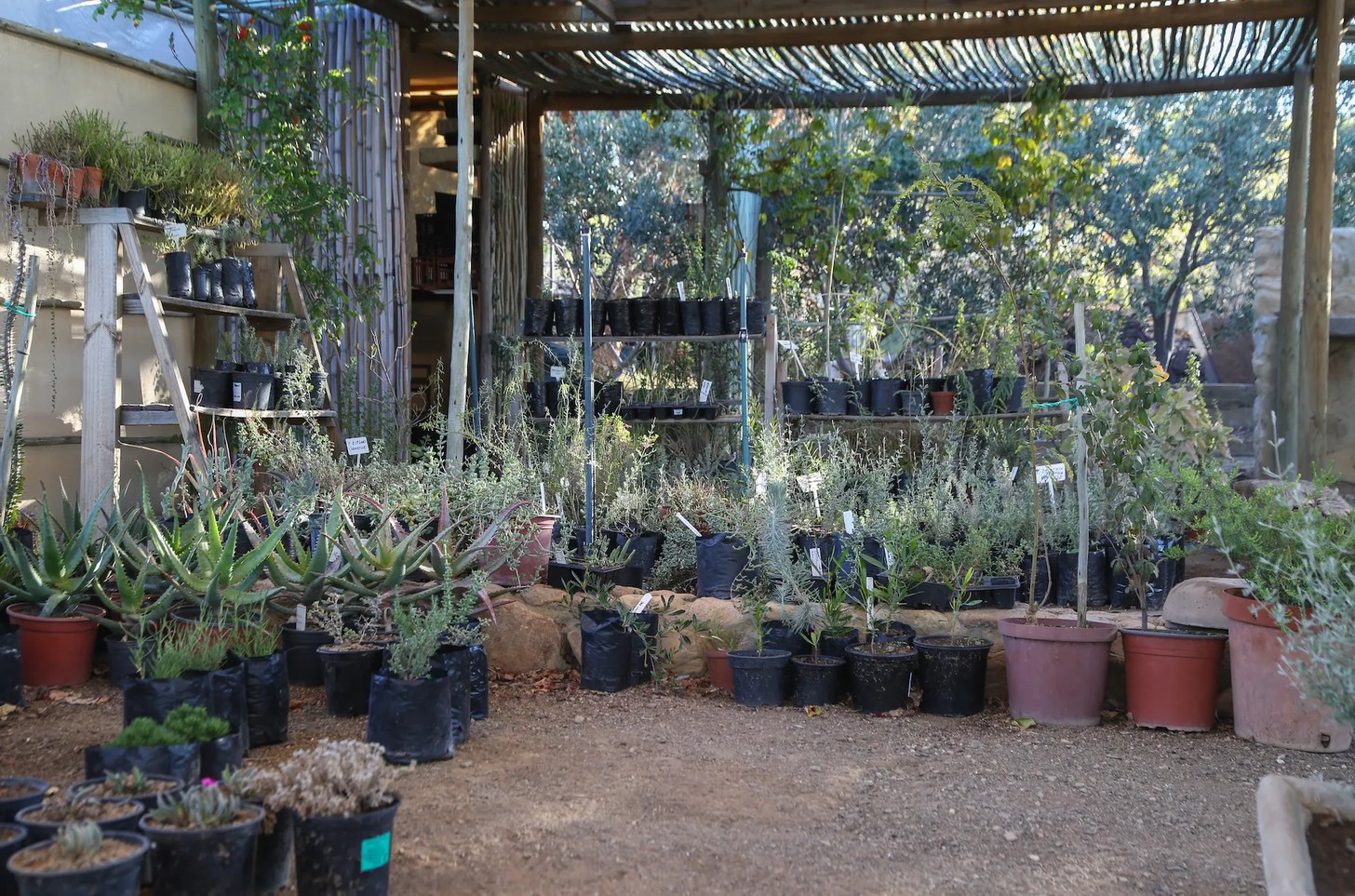
Together, these signs suggest that ecological processes are beginning to re-establish themselves. What makes the project particularly significant is that it moves beyond the idea of a drought tolerant garden. Instead, it explores how degraded land can be rehabilitated through ecological tuning-in, and how indigenous plant communities can inform a new aesthetic for arid landscapes. ‘It's less about winning the beauty pageant,’ Malcolm reflects, ‘and more about learning to appreciate transformation.’
Overlooking the Kraal, where Derryn teaches yoga and breathwork, the rhythms of the garden become part of her daily practice. Here, stillness, observation and awareness are cultivated alongside plants. In many ways, the garden reflects the same lesson as the veld itself - that meaningful transformation begins with paying attention.
Credits
Text by Heidi Bertish
Photographs: Inga Terblanche and Karin Sternberg


