
“I’m sick of living in a white-box house.” That was the brief Dr Maria Raven gave San Francisco interior designer Alison Damonte when reimagining her historic Berkeley home. The result, aptly named Soul Revival, is a confident collision of century-old architecture, contemporary art, collectible furniture and unapologetic colour.
Designed in 1915 by celebrated architect Willis Polk, the approximately 4,000-square-foot residence at 20 Oak Ridge Road had plenty of character to begin with. Rather than stripping it back in favour of the neutral finishes often associated with contemporary renovations, Damonte’s approach was to uncover its original details and build upon them, creating a home that feels as individual as its owner.

A Historic Home with a New Perspective
Polk helped shape the architectural identity of the Bay Area, with landmark projects including Filoli, the country estate in Woodside, and San Francisco’s pioneering Hallidie Building. His Berkeley residence was reportedly designed for T. Ronnenberg, his chief engineer, who later worked as a structural engineer on both the Golden Gate and Bay bridges.
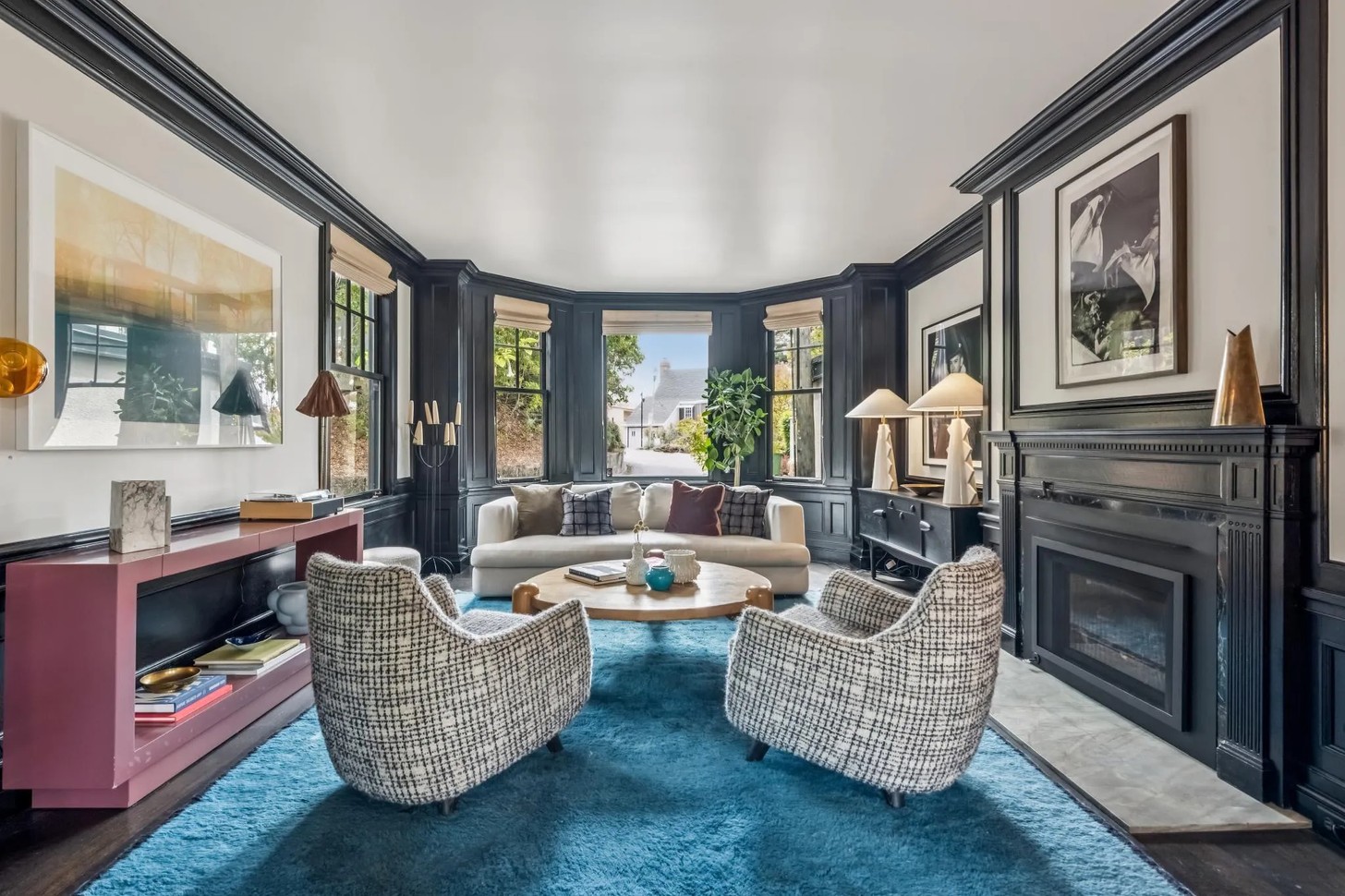
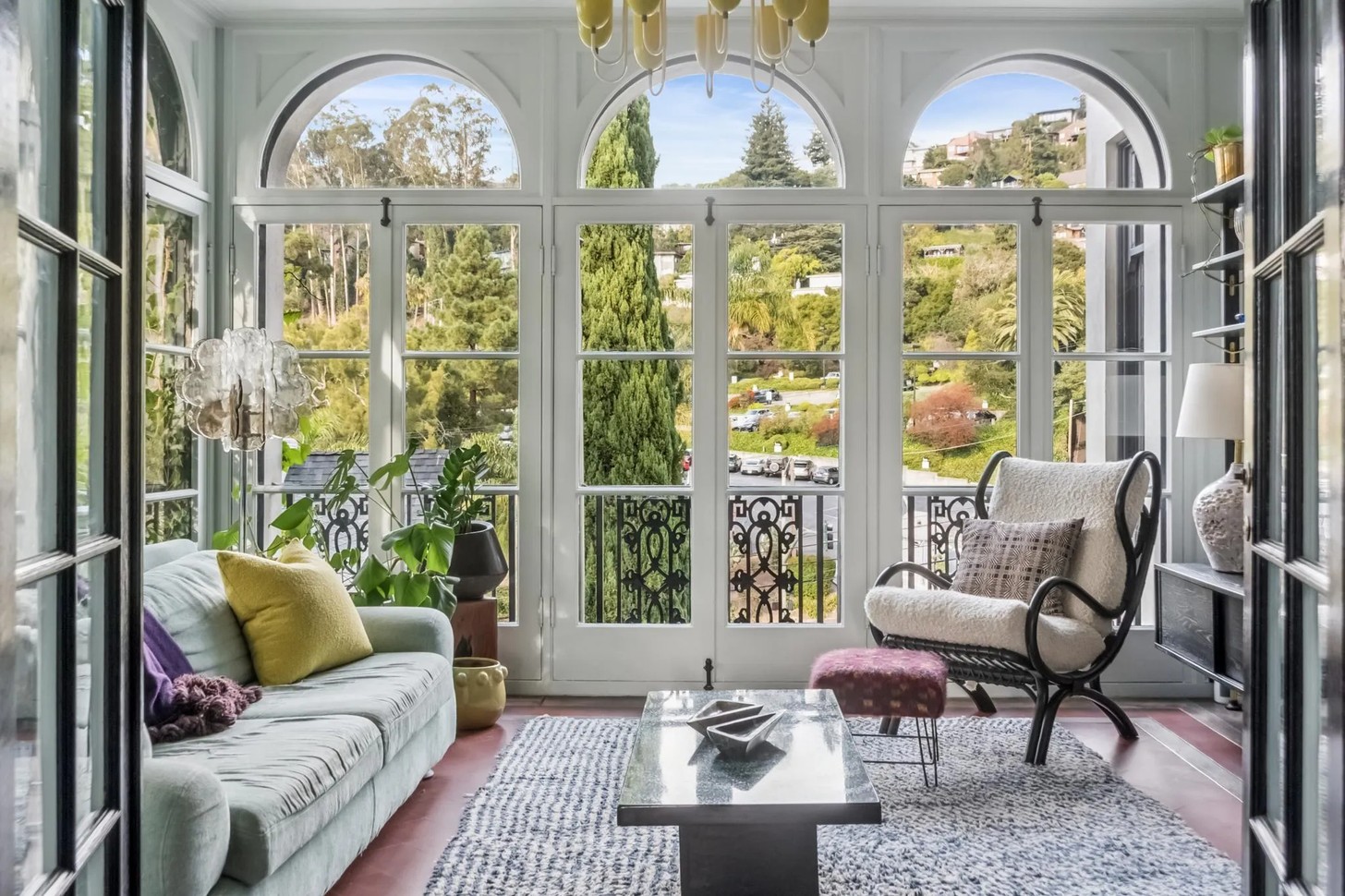
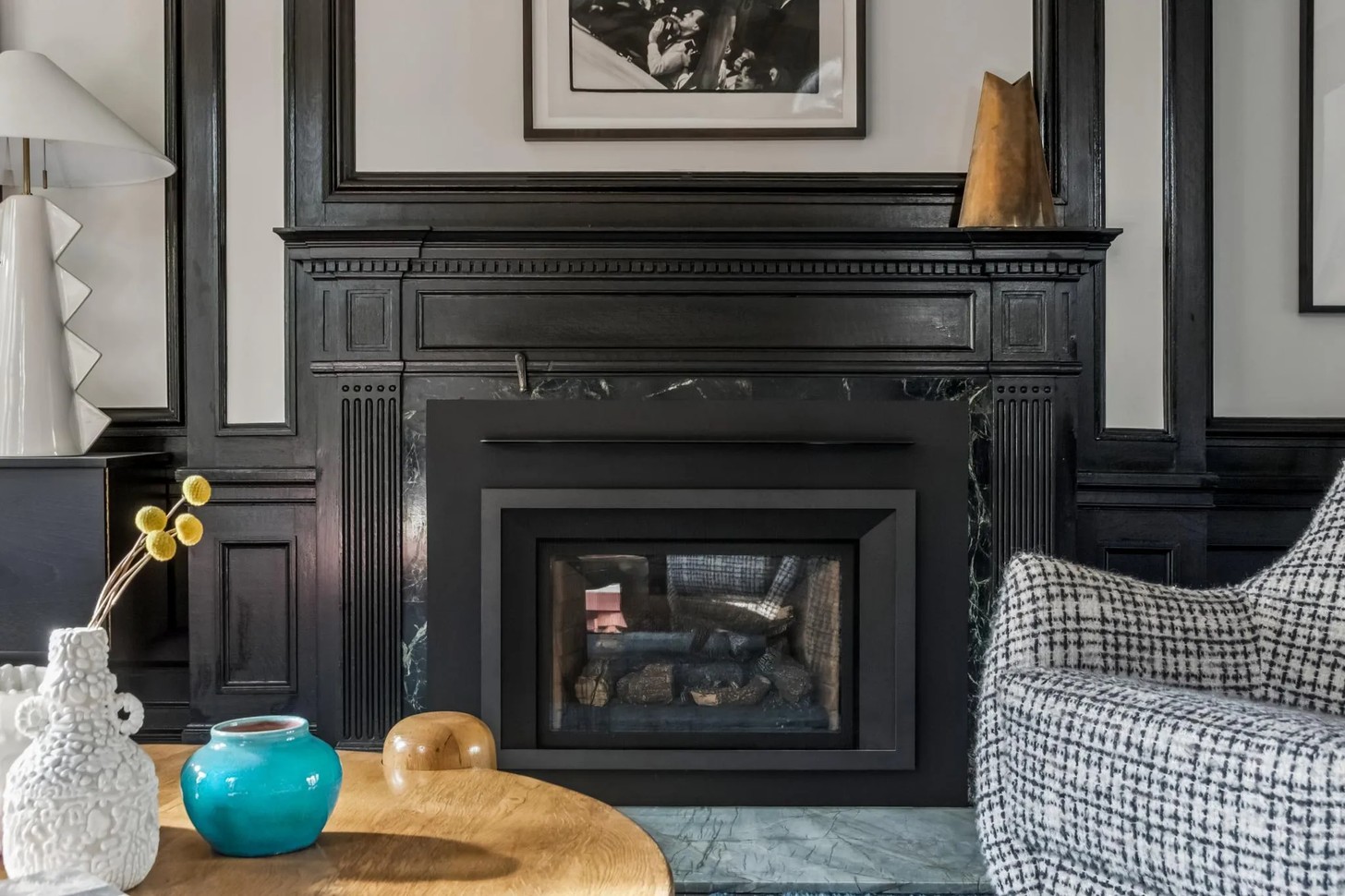
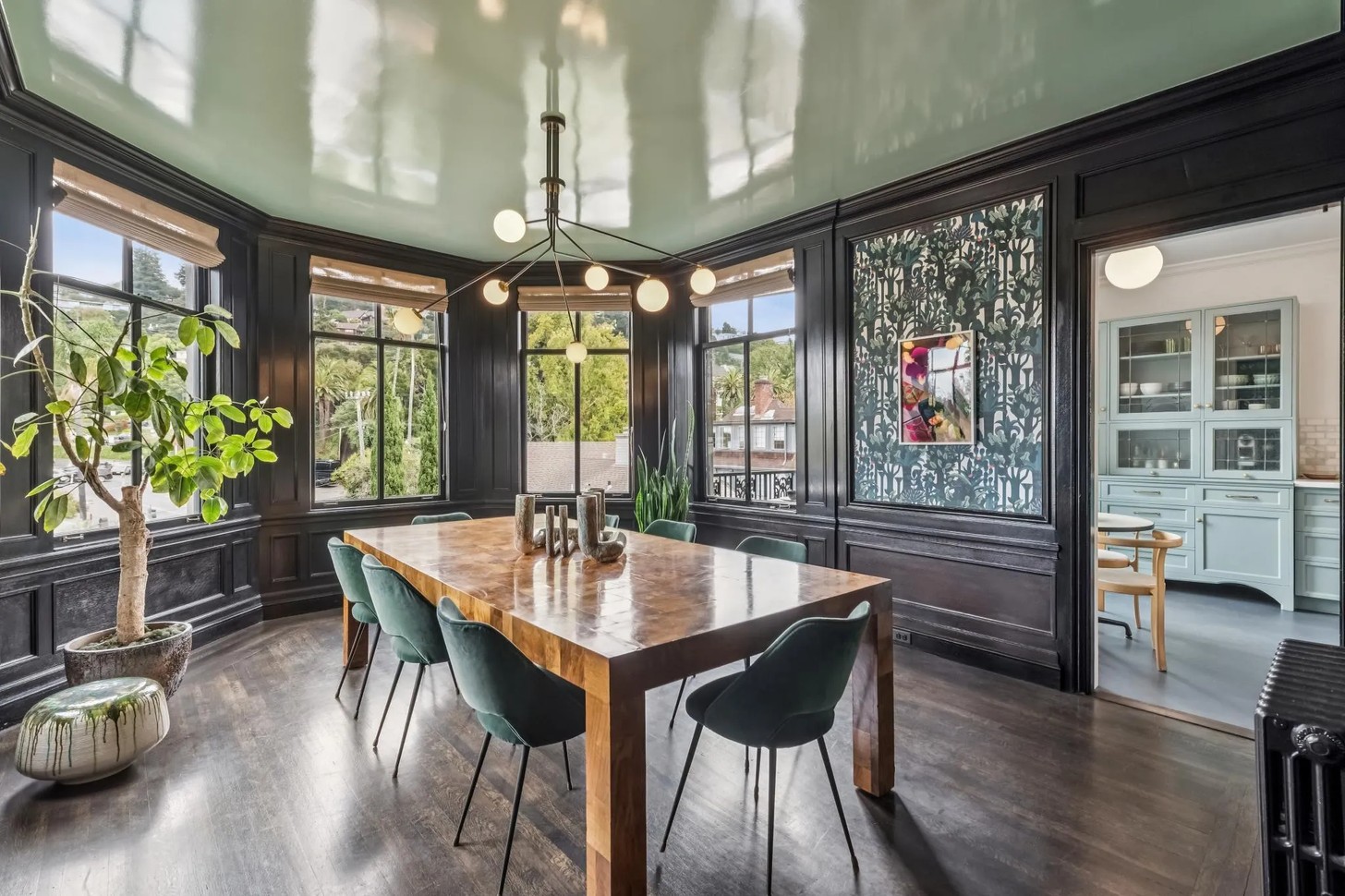
Today, the house retains its gracious proportions and period features, including original oak panelling, arched windows, French doors and a sun-filled solarium. A wood-burning fireplace, balconies, terraces and mature gardens further connect the interiors with the surrounding Berkeley hills.
For Raven, however, preserving the past did not mean creating a period-perfect interior. After years spent in classic California-modern environments defined by white walls and expanses of glass, she wanted colour, personality and a sense of history.
Damonte’s team restored original millwork and oak panelling, returned coloured glass to the pocket doors and introduced ceramic mosaic bathroom floors and period-conscious fixtures. Push-button light switches add another considered nod to the house’s heritage. These details establish a connection to the past without dictating every design decision.
Art, Colour and Collectible Design
The interiors take a more adventurous turn through the juxtaposition of old and new. Works by artists and photographers including Yayoi Kusama, Gordon Parks, William Eggleston, Marilyn Minter and Zoe Leonard bring a contemporary perspective to rooms framed by early-20th-century architectural details.
Collectible furniture is equally eclectic. A 1969 floor lamp by Franco Albini and Franca Helg sits within the historic living room, while a sculptural Gio Ponti chair occupies the original sunroom. Vintage Flexform and Vladimir Kagan pieces share space with contemporary lighting, expressive wallpaper and sculptural furnishings.
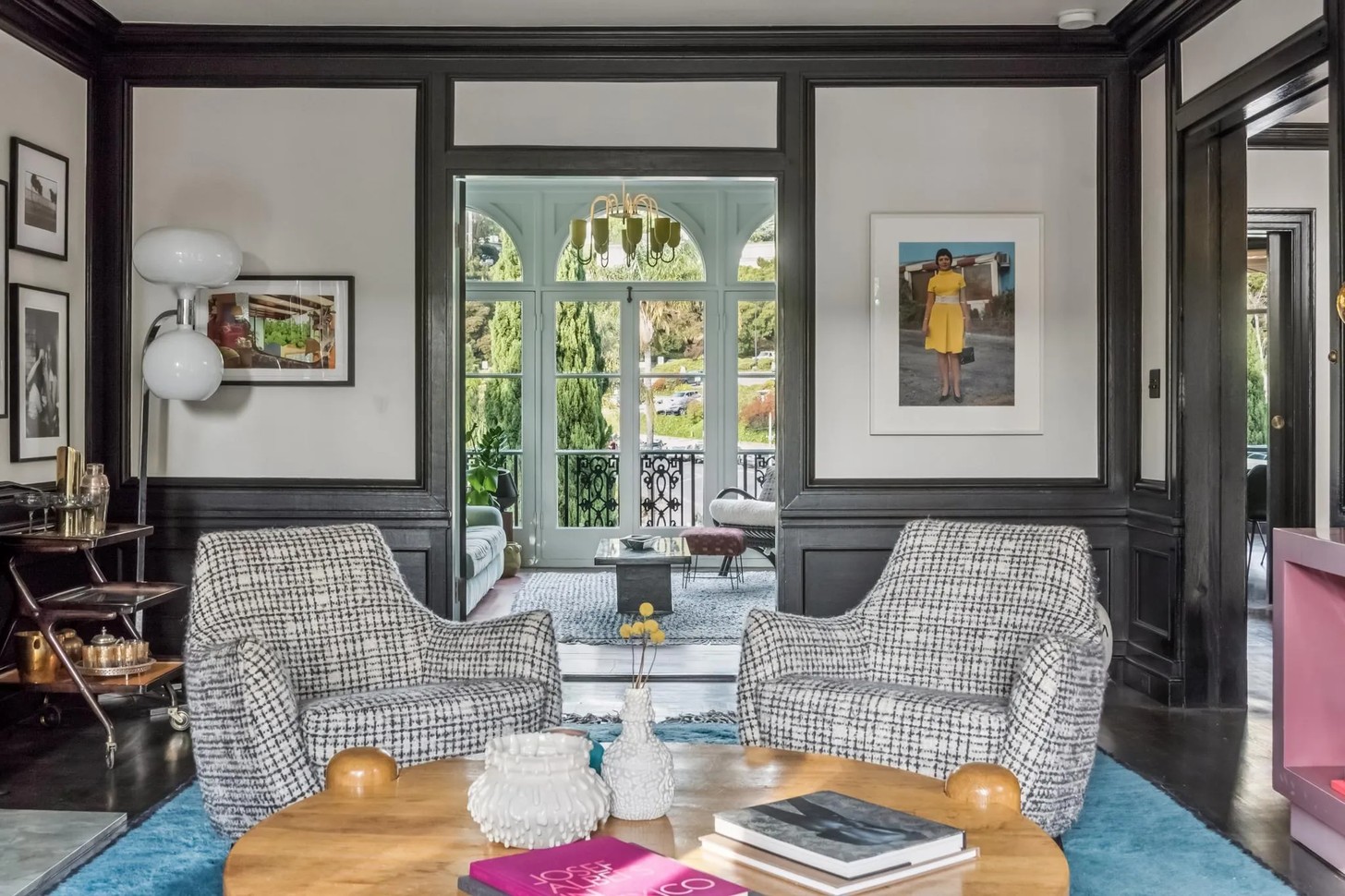
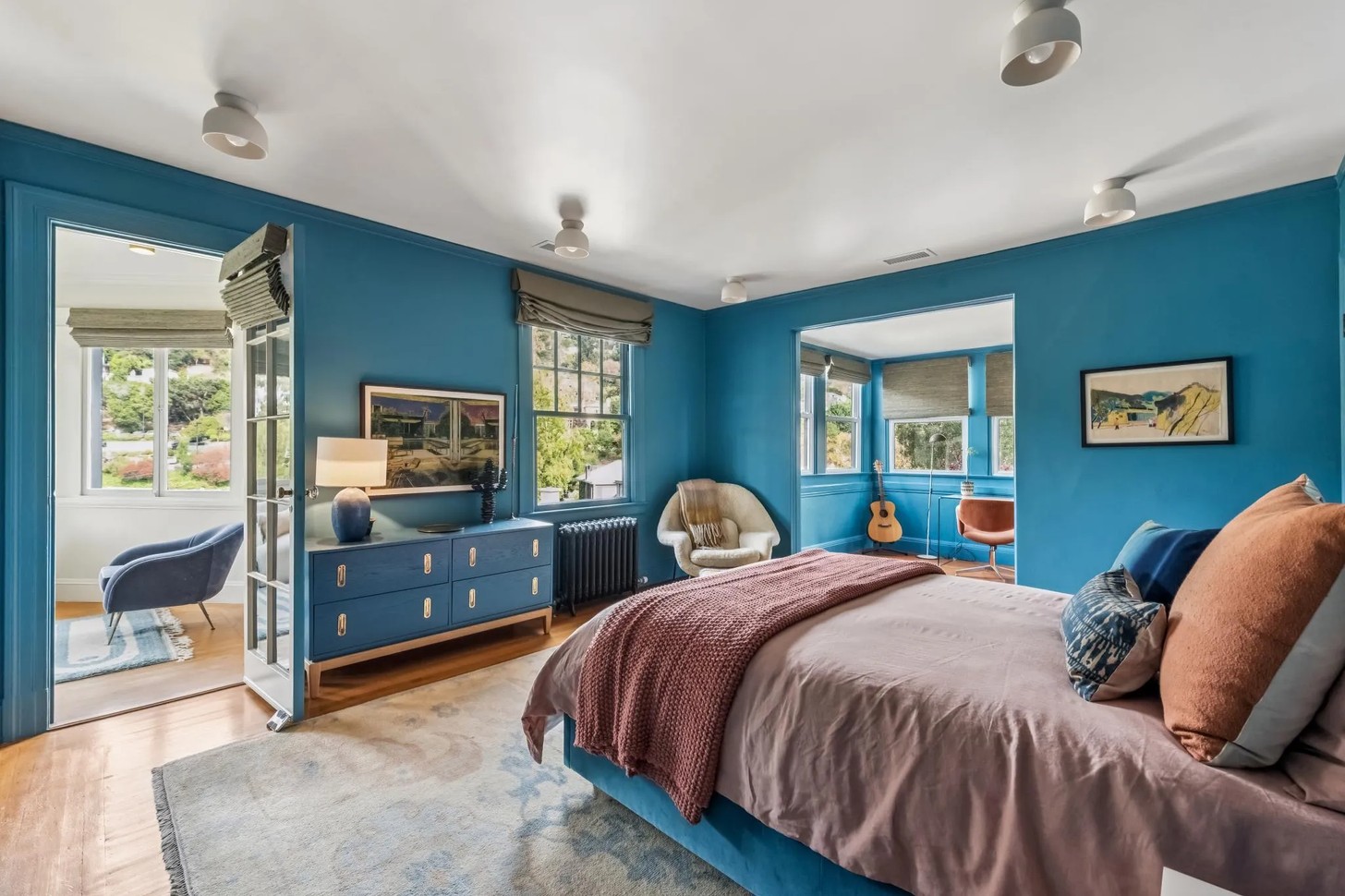
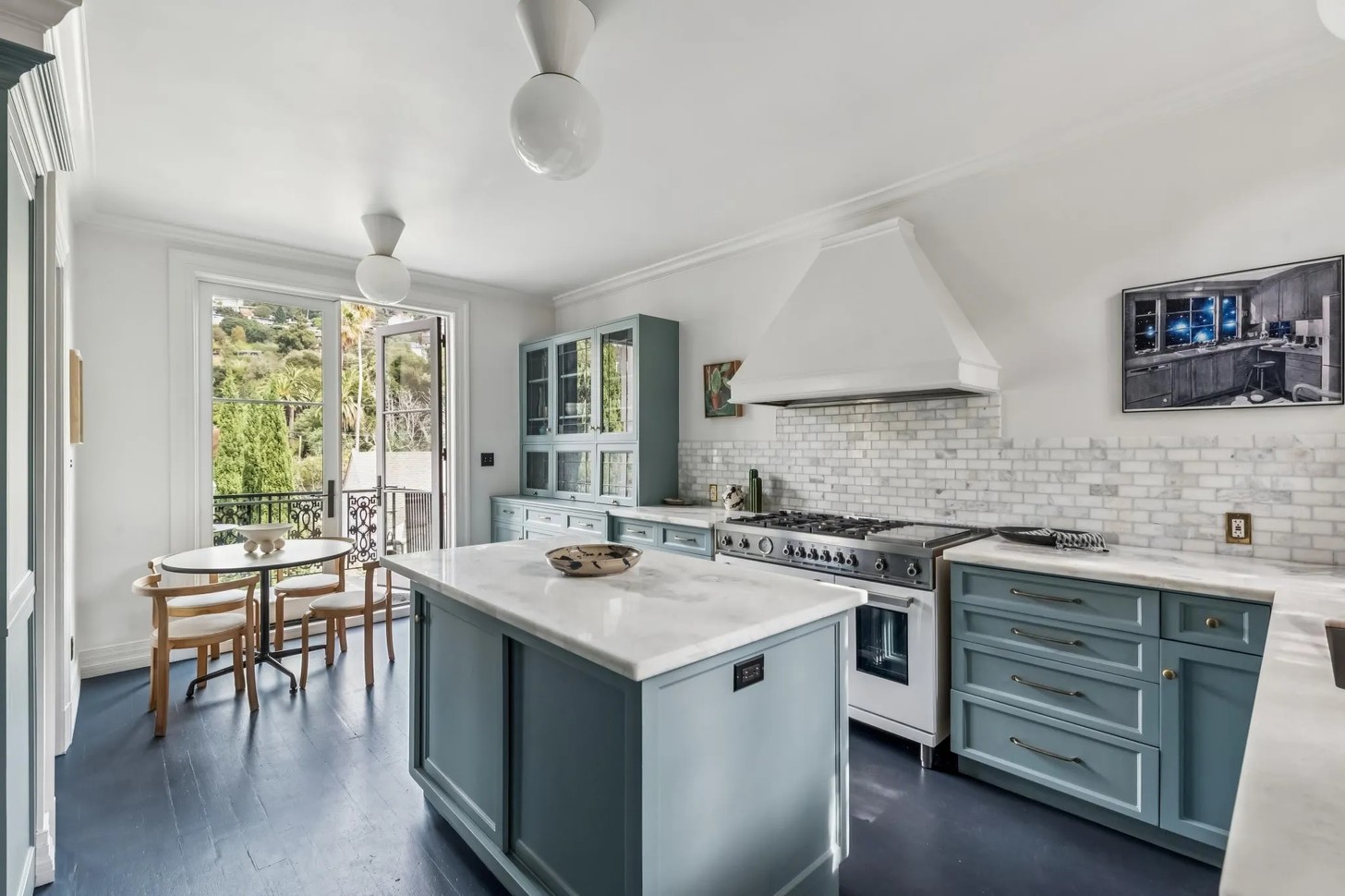
Elsewhere, Hermès wallpaper meets a glossy ceiling, neon-celery cabinetry injects unexpected energy into the kitchen, and layered shades of blue give the bedroom its own identity. Pattern sits alongside pattern, while the original oak panelling provides a grounding counterpoint to the more exuberant finishes. As Damonte describes it, the result is an “alchemy balancing the past with the present”.
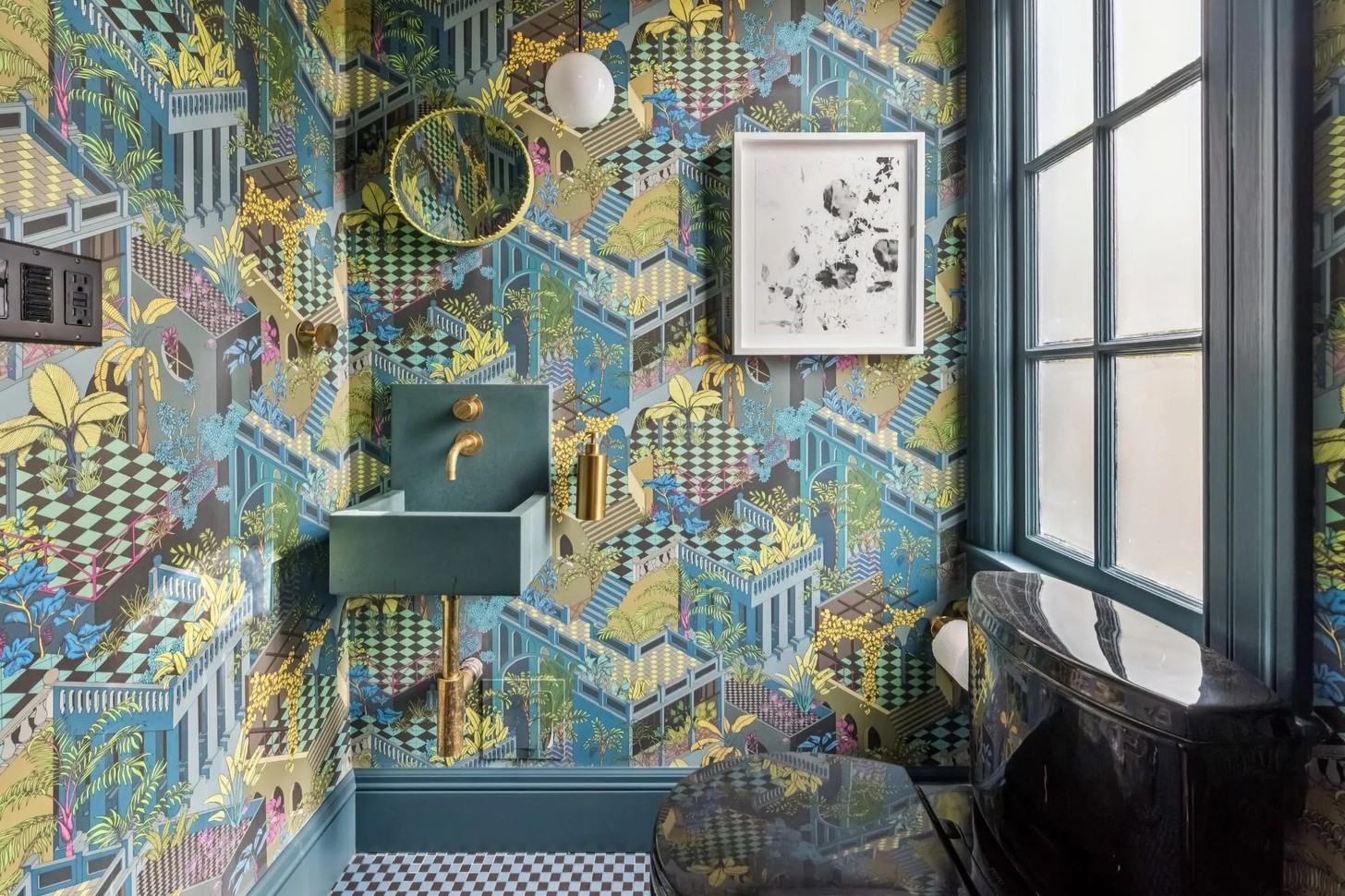
The powder room is a particularly striking example of this approach, bringing historic trim together with checkerboard tile, concrete fixtures and tropical wallpaper. The scheme earned Damonte a 2023 Luxe RED Award, recognising the project’s distinctive combination of architectural heritage and contemporary expression.
A Home Designed to be Lived In
Beyond its design credentials, the residence remains a practical family home, with five bedrooms, four-and-a-half bathrooms and a flexible layout spanning its main, upper and lower levels. A kitchen with a breakfast nook, a separate sitting area and office, guest accommodation, a family room and generous storage support everyday life as comfortably as entertaining.
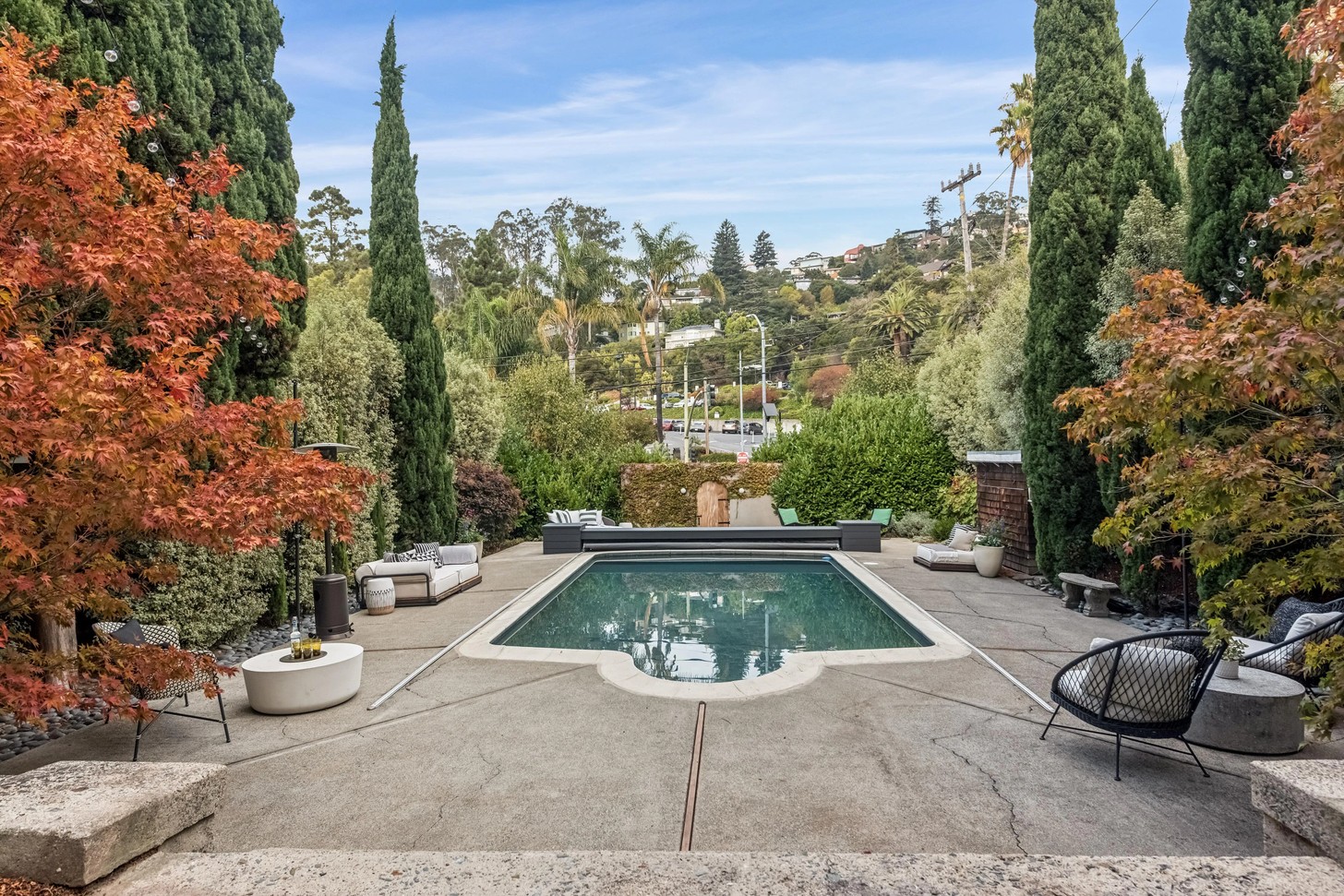
Outside, a heated swimming pool, patios, terraces and mature landscaping extend the living spaces into the garden, with views towards the Claremont and surrounding hills.
Raven, chief of emergency medicine at UCSF Medical Center, may not be a designer by profession, but her brief offered a clear direction: a home with soul, rather than one dictated by convention. Damonte’s response demonstrates that historic preservation need not mean restraint at every turn. Sometimes, the most thoughtful way to honour a house is to give its next chapter a personality all its own.
Credits
Images: Open Homes Photography


