
Perched on a hill between Rimini and Cesena, the medieval village of Longiano appears almost untouched by time. It was here, within the historic centre's winding streets and stone walls, that a family of art collectors discovered an abandoned ruin with extraordinary potential. What followed was a deeply personal restoration that transformed a neglected shell into a contemporary second home designed around light, art and family life.
Working alongside Tisselli Studio Architetti, the owners approached the project not simply as a renovation, but as an opportunity to create a place capable of evolving over time. Today, the home serves as a gathering space for family and friends, a gallery for their private art collection and a peaceful retreat overlooking the surrounding countryside and distant Adriatic Sea.

A Chance Discovery in the Heart of Longiano
The property first caught the eye of homeowner Nicola, who had long been drawn to the quiet beauty of Longiano. While browsing real estate listings, he stumbled upon the abandoned structure in the village's ancient centre and immediately recognised its potential.
The discovery carried an unexpected emotional resonance. The property stood on the same street where Nicola's father had once invested many years earlier, creating what the family describes as an invisible thread connecting past and future. That coincidence made the opportunity impossible to ignore.
At the time of purchase, however, the building was little more than an empty shell. Years of abandonment had left it uninhabitable, yet its position within the village and expansive views across the landscape offered something far more valuable than its deteriorated condition suggested.
A Blank Canvas for Art and Family Life
Rather than rushing into construction, the family allowed the project to develop gradually. Over several years, ideas matured and ambitions evolved alongside their daughter Carolina, whose own vision for the house grew as she moved from childhood into adolescence.
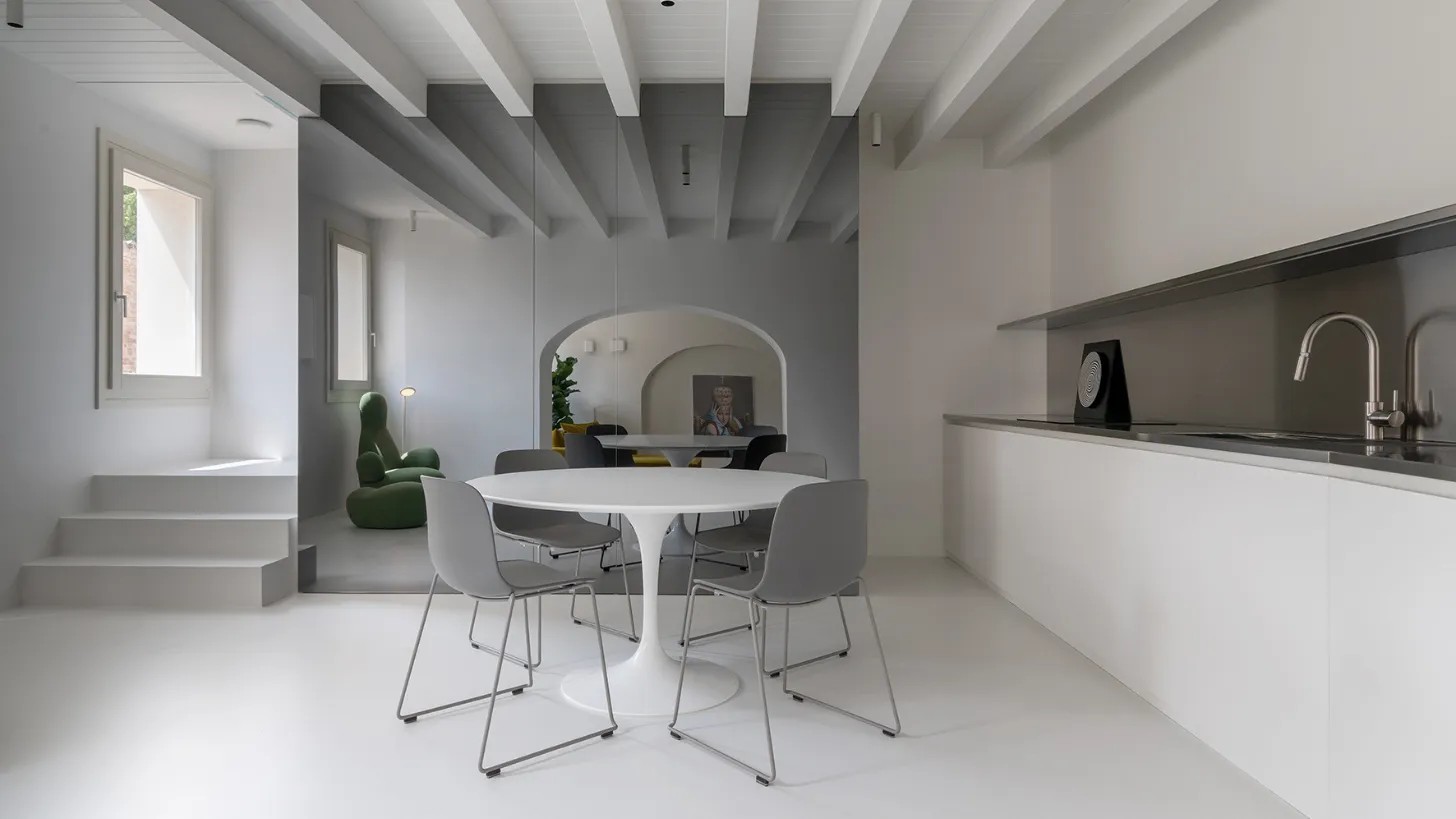
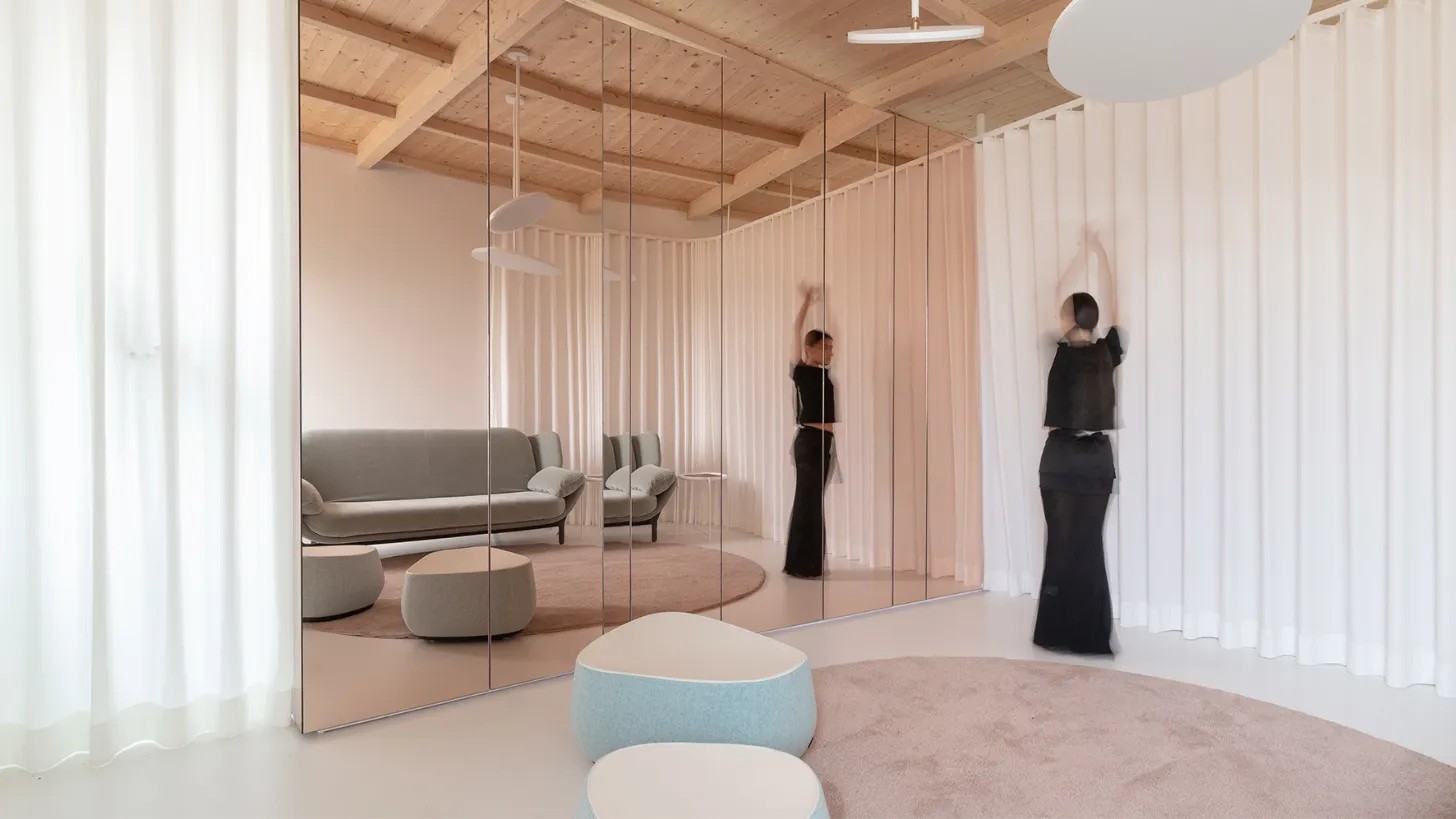
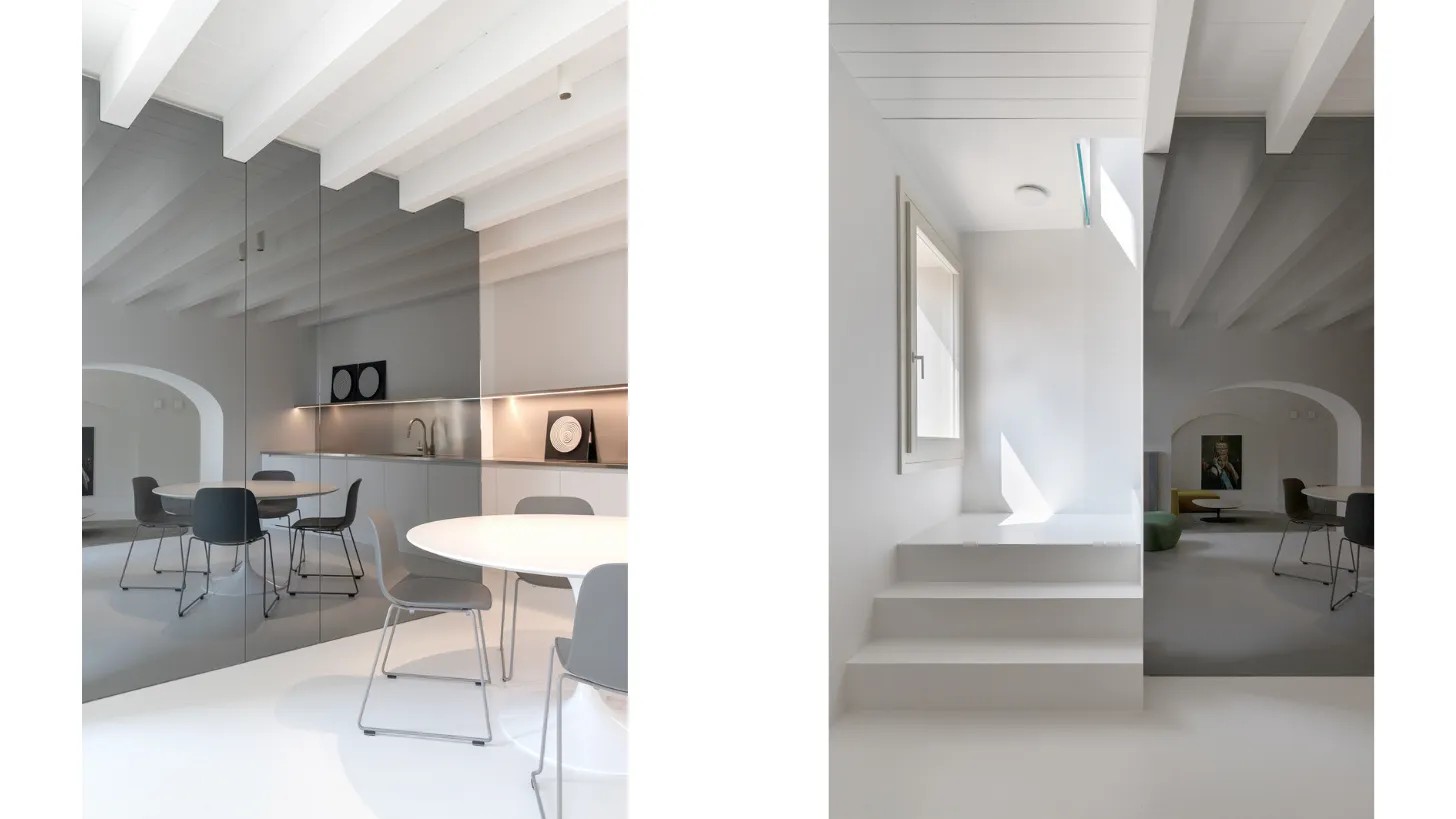
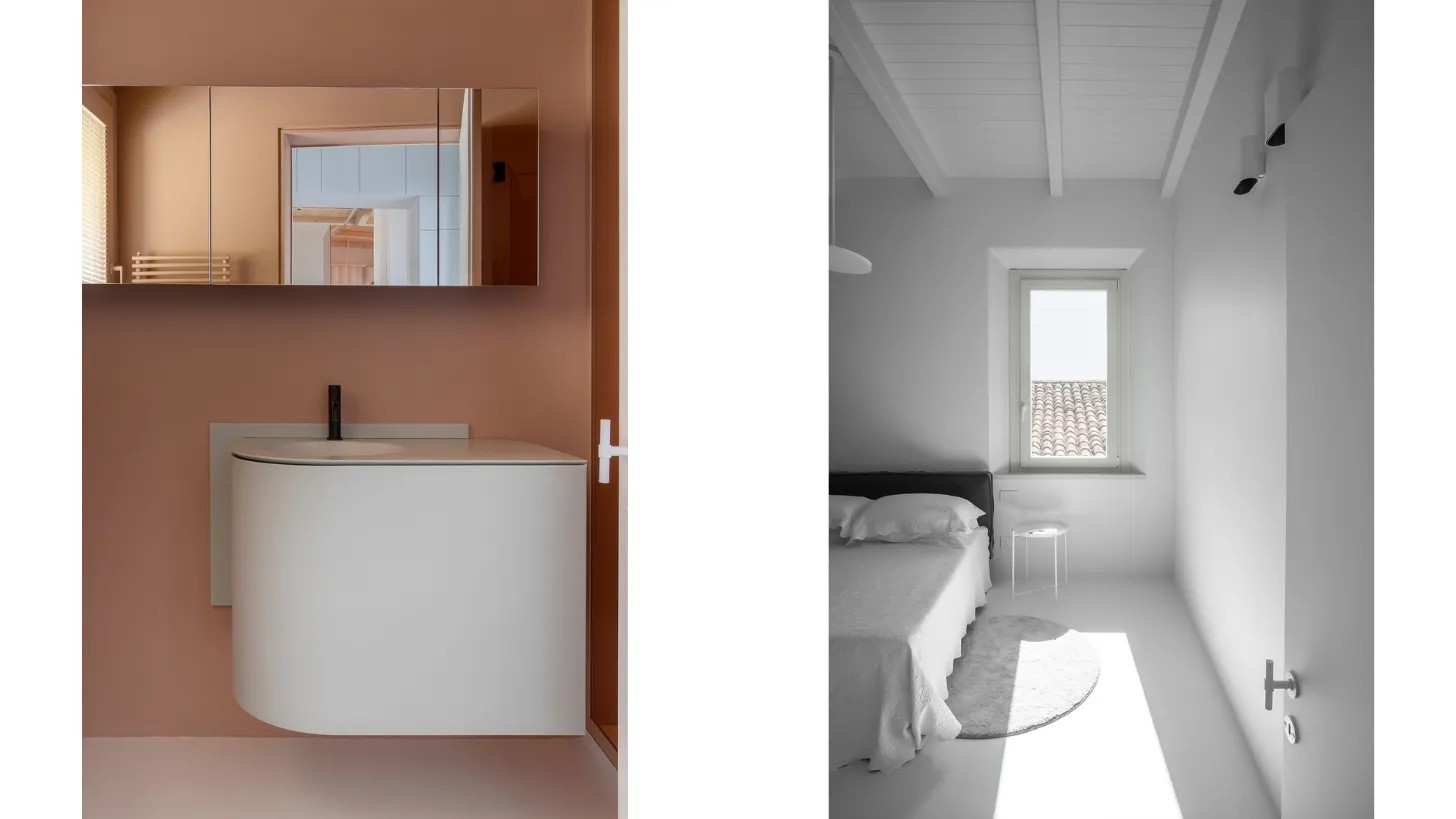
From the outset, the architects conceived the home as a blank canvas. A continuous white resin surface wraps floors, walls and ceilings, amplifying natural light while providing a neutral backdrop for art and carefully selected furnishings. The approach creates a sense of calm restraint, allowing both architecture and artwork to take centre stage.
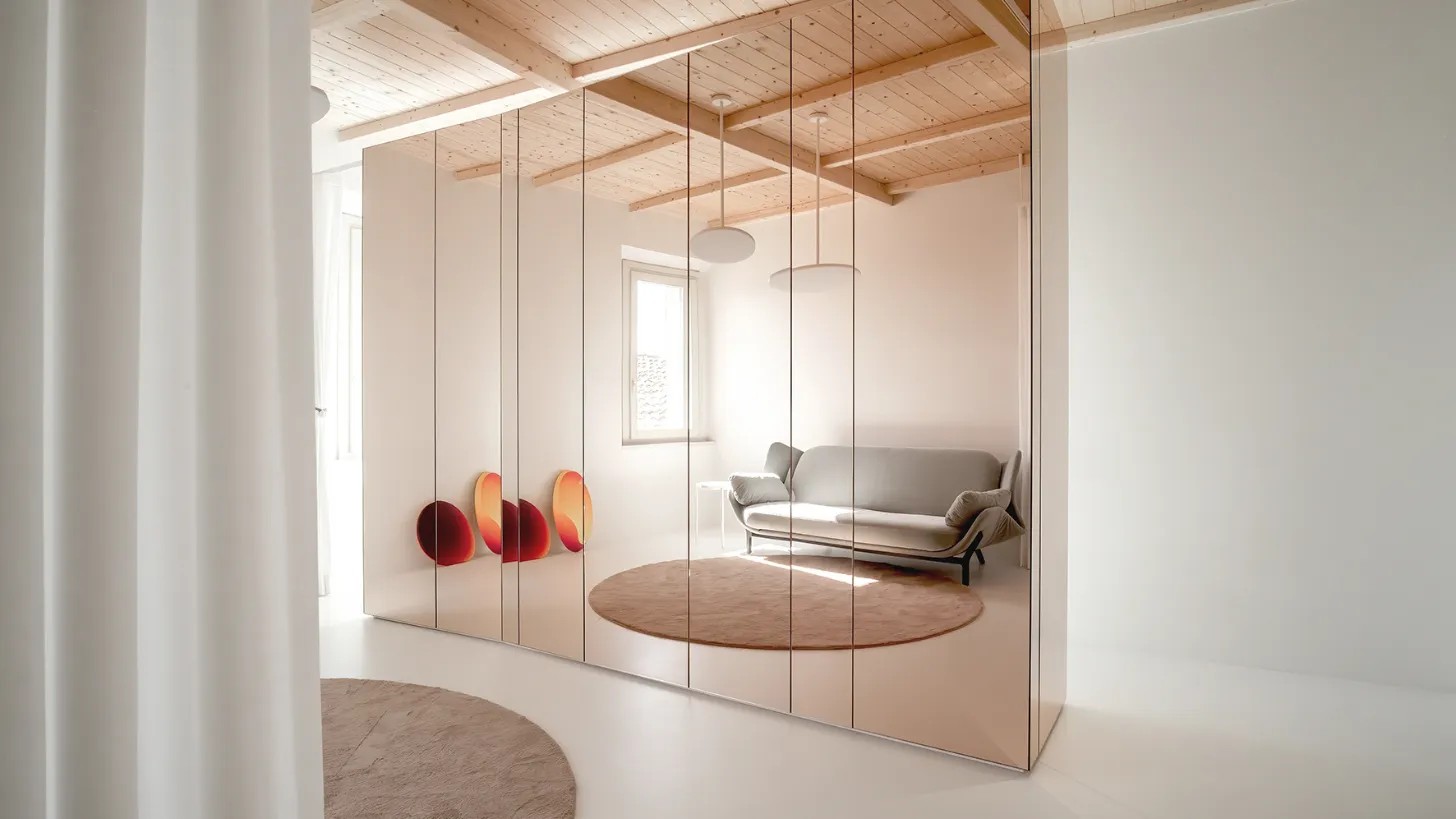
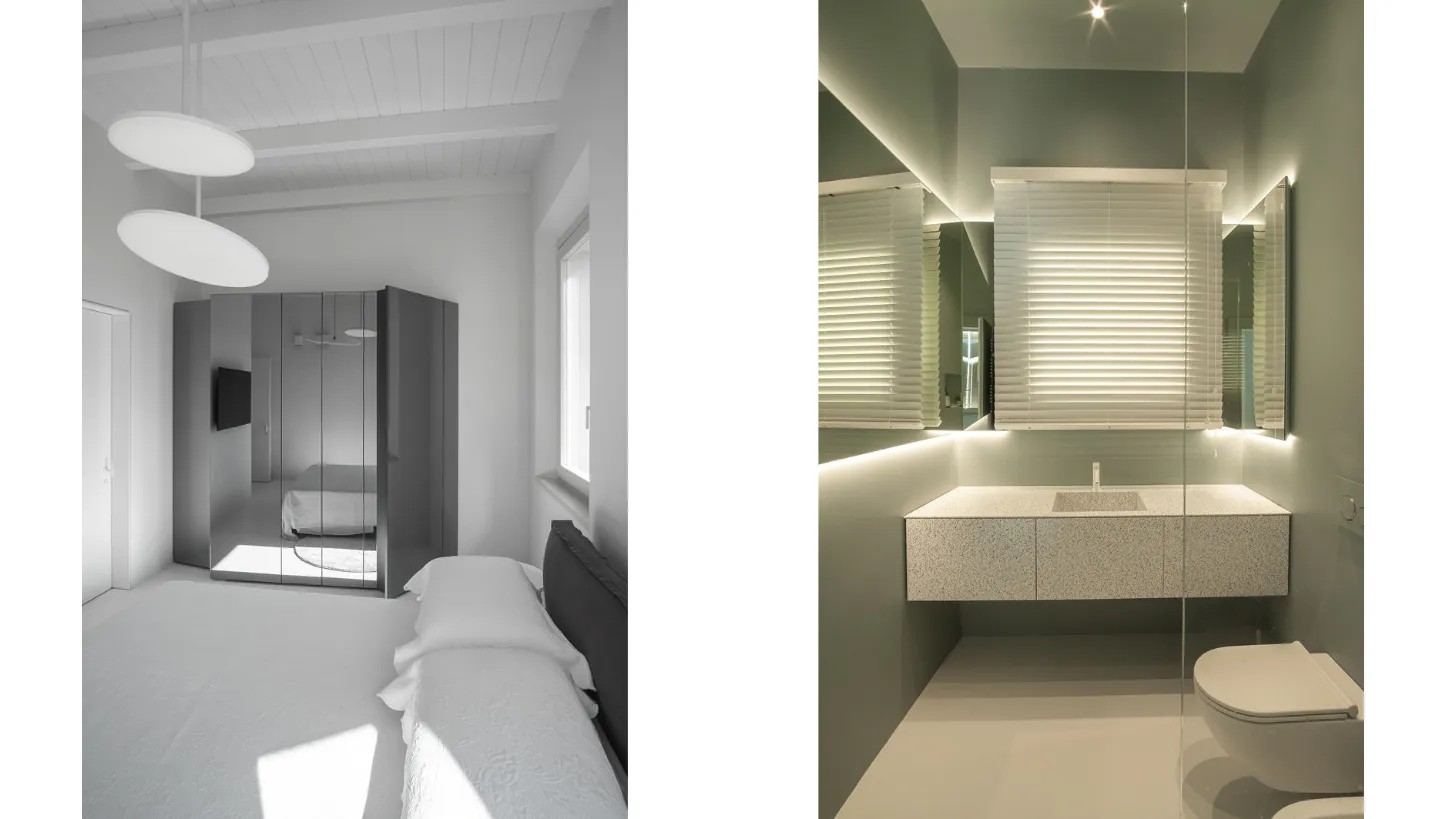
Custom-designed furniture introduces moments of colour and reflection throughout the interiors, many pieces incorporating coloured mirror finishes that transform them into sculptural objects in their own right.
The result is a home that feels simultaneously contemporary and timeless — one where architecture quietly recedes to allow life, art and landscape to become the protagonists.
Preserving History Through Contemporary Design
The restoration carefully respects the character of the original structure. Rather than imposing a completely new identity, the project retains the building's historic footprint while introducing a distinctly contemporary architectural language.
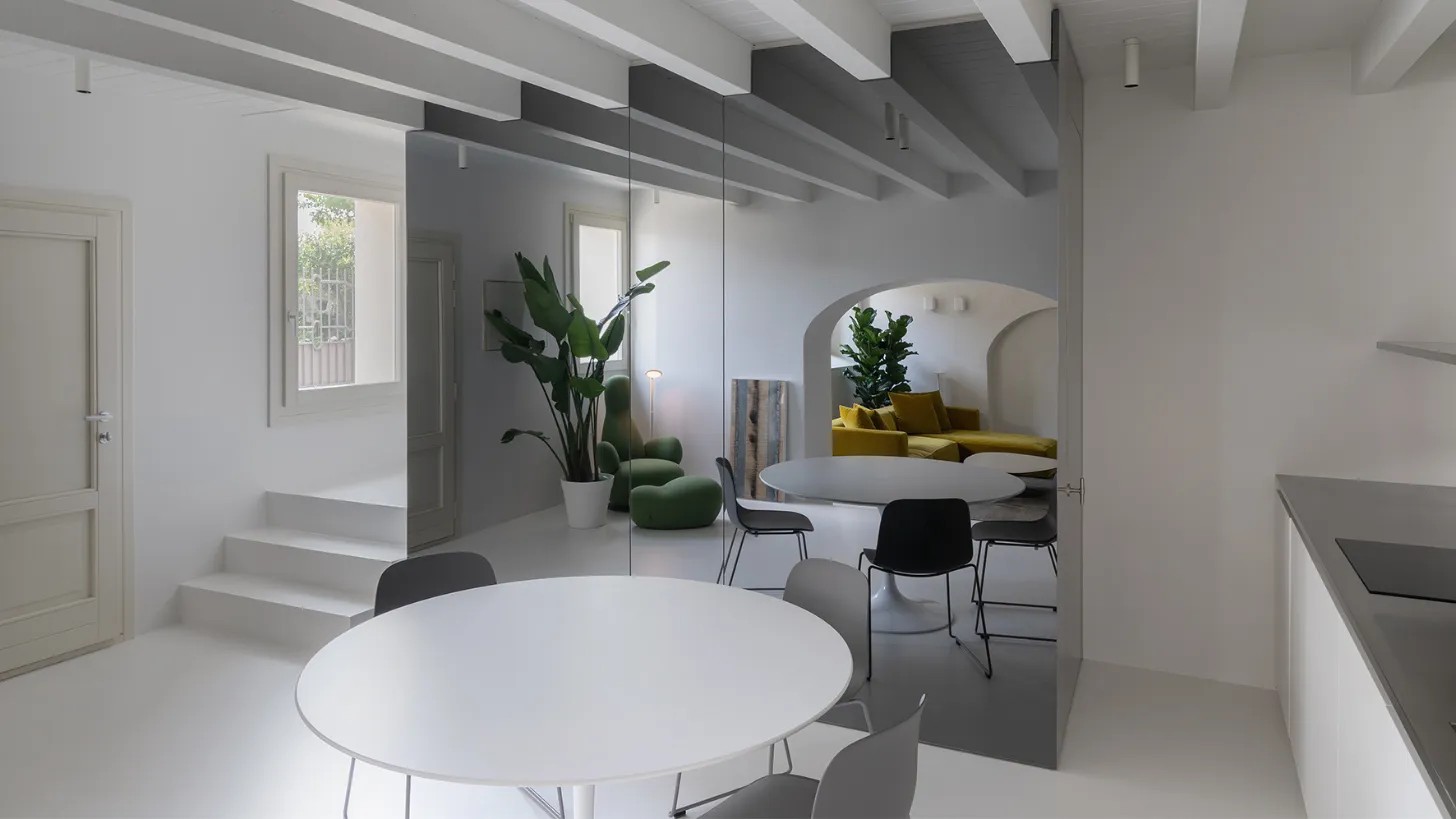
The house unfolds across two levels and four distinct volumes. The ground floor is dedicated to open-plan living and entertaining, while the upper level contains the more private sleeping quarters. Carolina's room was designed as a particularly adaptable space, capable of changing alongside her needs through the use of flexible partitions and furnishings.
Throughout the home, openings frame carefully considered views of the surrounding countryside and sea. These visual connections transform the landscape into an active architectural element, constantly changing with the seasons and the movement of light.
Light as the Defining Material
When asked about their favourite feature of the completed home, the owners struggle to single out a single room or object. Instead, they point to something less tangible: light.
The architects' careful orchestration of daylight has become one of the defining qualities of the project. As sunlight moves through the interiors, it interacts with reflective surfaces, artworks and carefully chosen materials, creating shifting atmospheres throughout the day. What might initially appear minimalist reveals increasing complexity through these subtle changes.
It is this quality that transforms the house from a static architectural object into a living environment — one that feels different every hour, every season and every visit.
The Sustainable Power of Restoration
In an era increasingly focused on sustainability, the project demonstrates the environmental value of adaptive reuse. Rather than building anew, the family chose to restore an existing structure, preserving both embodied energy and cultural heritage.
For the architects, sustainability extends beyond environmental considerations. They believe beauty itself contributes to longevity. By creating spaces people genuinely cherish, buildings are more likely to be maintained and preserved for generations, reducing the cycle of demolition and replacement.
The Longiano project embodies this philosophy perfectly. A ruin once destined for continued decline has been given a renewed purpose, ensuring its story continues long into the future.
A Home Designed to Evolve
What began as a speculative investment has become something far more meaningful. Over the years, the house has adapted to changing family dynamics and shifting needs. Carolina, now eighteen, uses the property as a social hub for gatherings with friends, while her parents continue to enjoy it as a place of reflection and escape.
The owners describe every room as a carefully composed perspective, every detail contributing to an overarching sense of harmony. Yet despite the precision of its design, the house remains remarkably flexible — capable of evolving alongside the family who inhabit it.
In many ways, that adaptability is the project's greatest achievement. Set within the ancient walls of Longiano, this once-forgotten ruin has become a living expression of memory, creativity and contemporary family life.
Credits
Photography: @tissellistudioarchitetti


