
For the designer behind this 190-square-metre family apartment, the project was shaped by a deeply personal desire to create something that had been missing for years: a true sense of home. After living in rental properties for an extended period, the family's vision became increasingly clear. They were no longer looking for a temporary solution or a compromise. They wanted permanence, comfort and a space that reflected their lifestyle in every detail.
The result is an apartment that feels less like a showcase of design decisions and more like a natural extension of the people who live there. Every room has been shaped by habit, routine and future aspirations, creating an interior that feels remarkably authentic. As the designer describes it, the goal was not simply to create a beautiful home, but “a place where everything aligns and resonates with one’s inner sense of comfort”.

Finding the Right Foundation
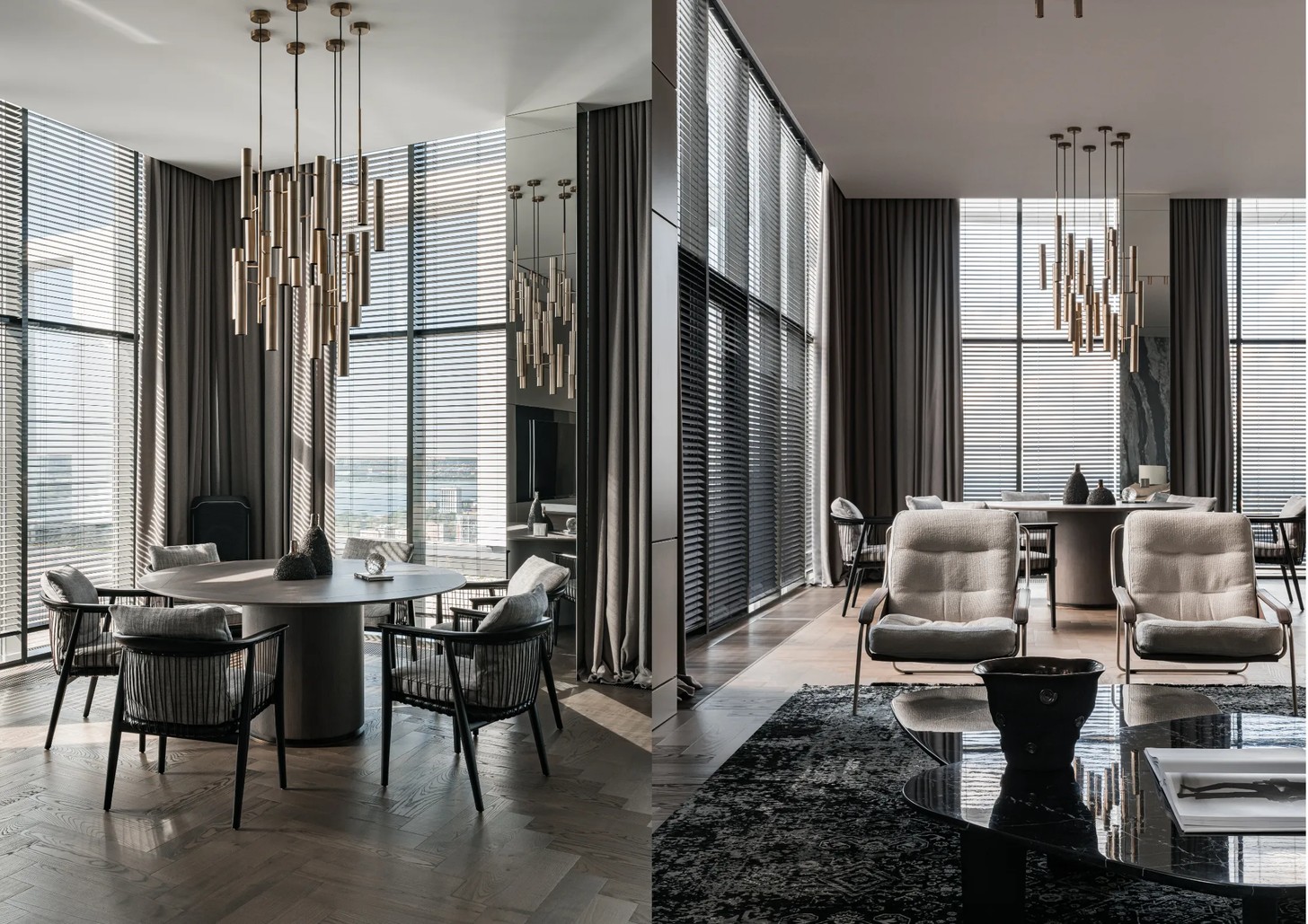
The search for the apartment itself was a lengthy process. The family knew exactly what they wanted and were unwilling to settle for anything less. When they finally discovered a property with panoramic windows, soaring ceilings, a spacious terrace and a rare sense of privacy, the direction for the project became immediately apparent. The architecture already possessed a strong identity; the task was to build a life within it.
The apartment comprises four living spaces and was designed with future growth in mind. At the time of the renovation, the family had one child, but plans for expansion had already informed the layout. Those plans would later become reality, proving the foresight behind the design decisions. This emphasis on longevity runs throughout the project, creating a home that can evolve alongside the family rather than requiring constant reinvention.
Letting the Architecture Lead
Although the designer has a long-standing appreciation for classical interiors, this project called for a different approach. The architecture itself dictated the design language. Expansive glazing, contemporary geometry and uninterrupted views demanded restraint rather than decoration. Rather than imposing a style onto the space, the interior became a continuation of the building's architectural framework.
This approach creates a sense of cohesion throughout the apartment. Nothing feels forced or overly designed. Instead, materials, furnishings and finishes work together to reinforce the qualities already present in the architecture. The challenge, however, lay in the designer occupying two roles simultaneously: both client and creator.
That dual perspective raised expectations considerably. Adding another layer to the process was the designer's husband, whose priorities centred on functionality and everyday comfort. The success of the project ultimately depended on balancing aesthetics and practicality without compromising either.
A Bathroom Designed Around Emotion
One of the most compelling spaces in the apartment is the primary bathroom, where an emotional decision became one of the defining features of the entire home.
During the planning process, a choice emerged between allocating natural light to the entrance hall or to the bathroom. The final decision was guided not by logic, but by feeling. “For the designer, windows are not merely a source of light—they represent a sense of freedom and connection to the outside world.” The bathroom won.
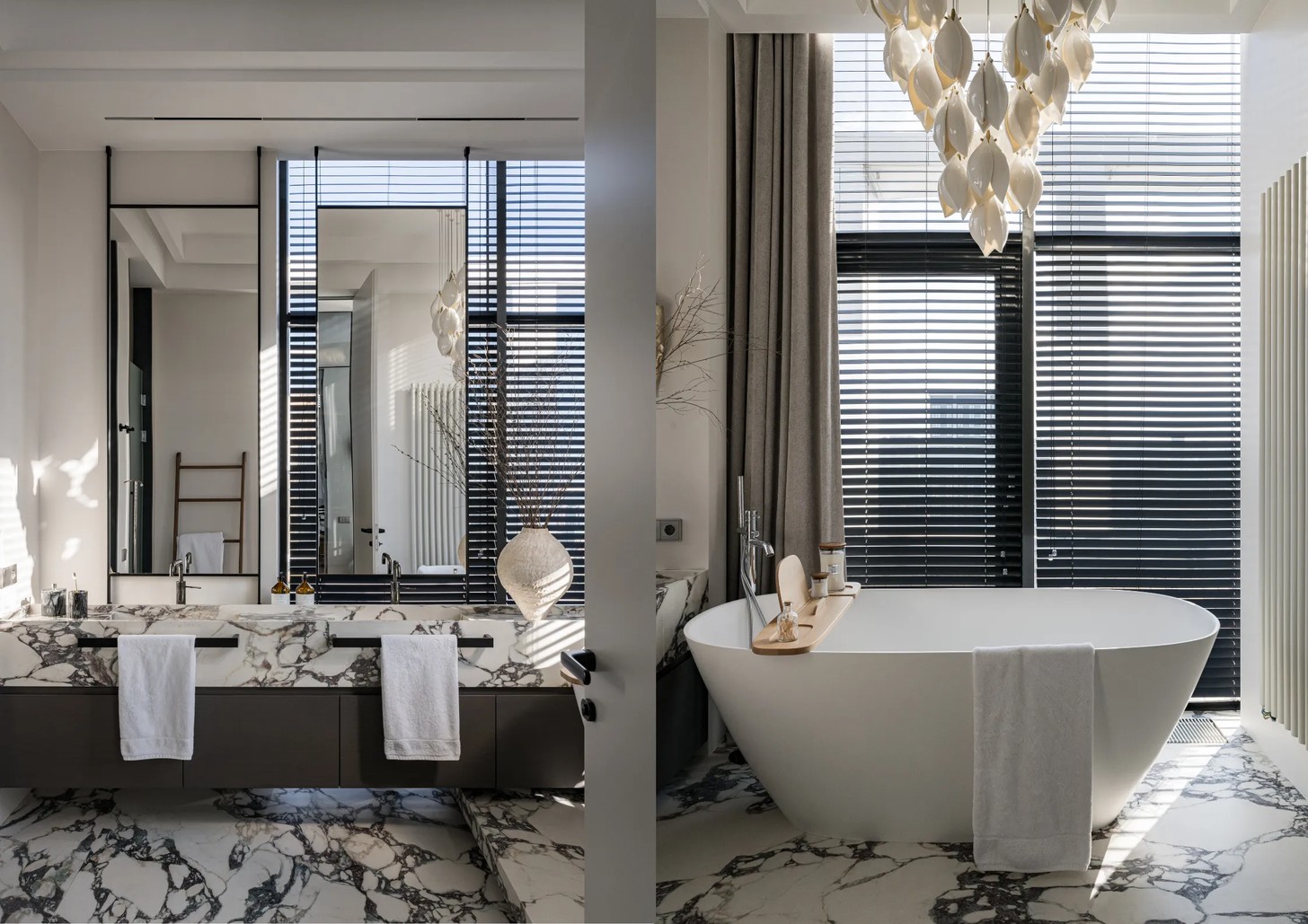
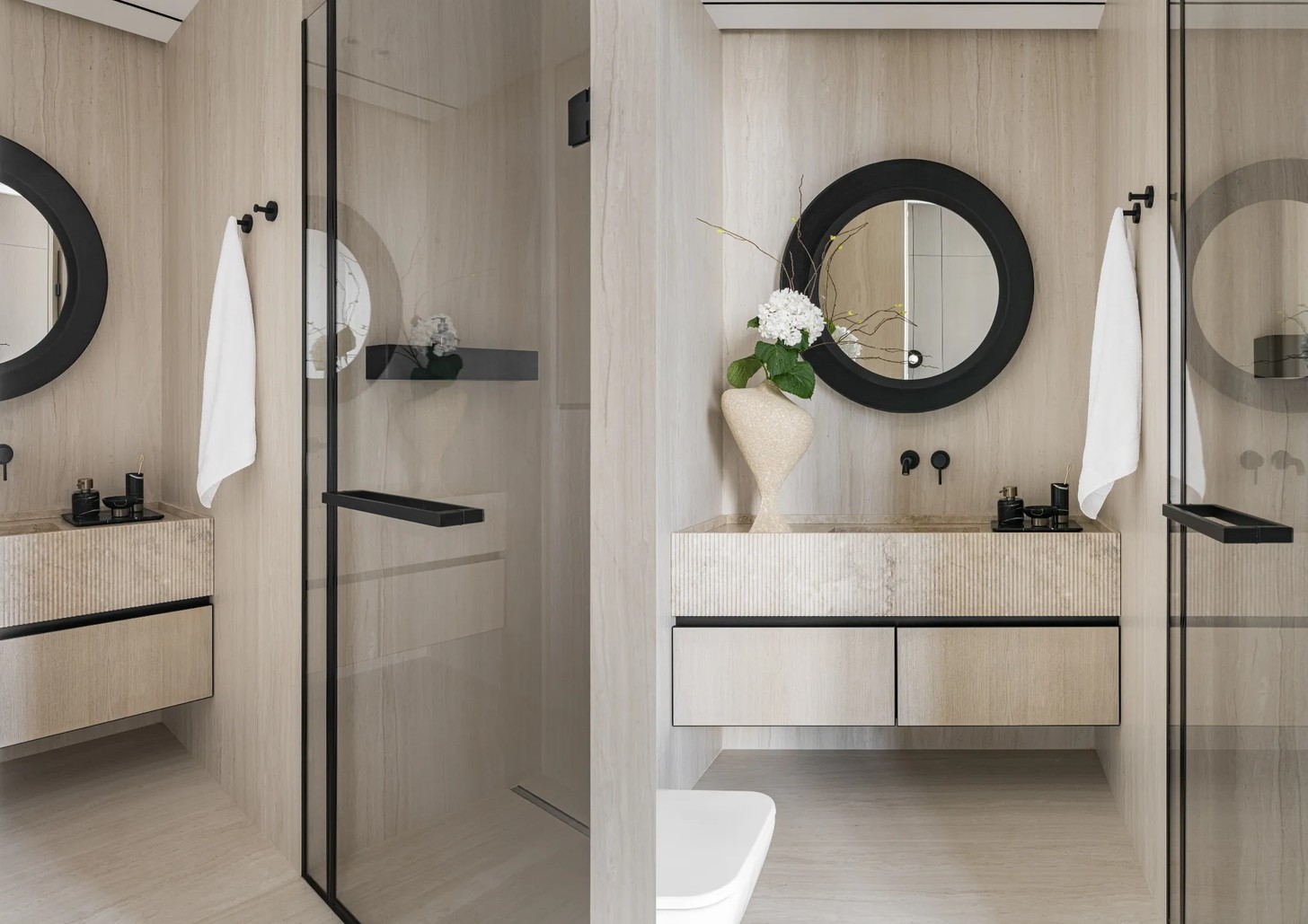
Today, the space serves as a calm starting point to each day. Large-format porcelain stoneware creates a refined backdrop, while functional elements such as the shower and WC have been concealed within niches behind frosted glass partitions. The effect is striking. Rather than focusing on utility, the eye is drawn to volume, light and the view beyond the window.
Horizontal blinds introduce another layer of atmosphere, filtering sunlight into soft patterns that shift throughout the day and create an ever-changing play of shadow across surfaces.
Living with the View
The connection to natural light continues into the main bedroom, where the design embraces one of the apartment's most valuable assets: its panoramic outlook. In a deliberate departure from convention, the bedroom contains no television. Instead, the bed faces the window directly, transforming the city skyline into the room's focal point.
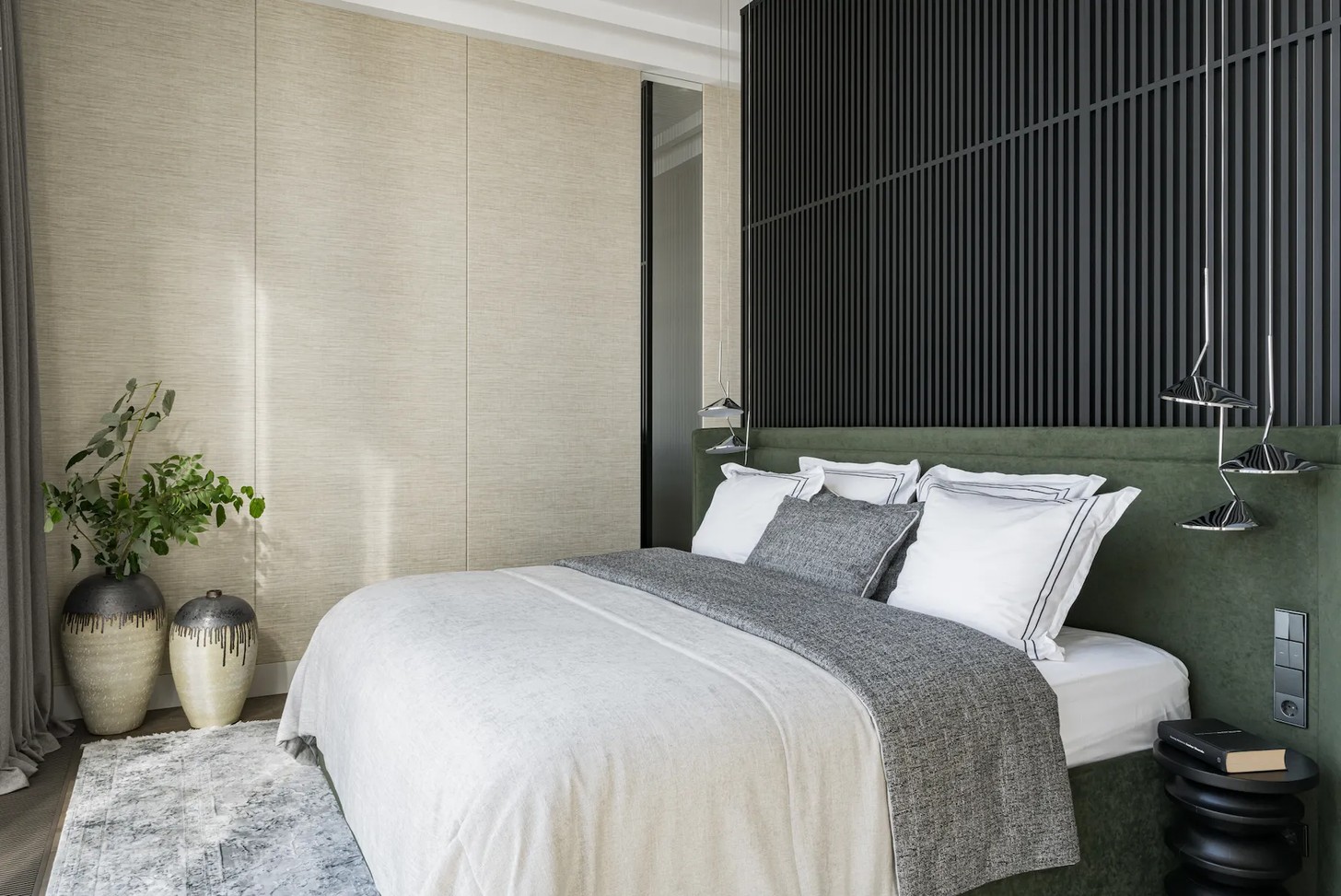
Evenings end with views of illuminated buildings and distant city lights. Mornings begin with daylight rather than screens. The decision reflects a broader philosophy underpinning the home—that interiors are defined not only by objects, but by experiences. It is a subtle gesture, yet one that profoundly shapes daily life.
A Dynamic Approach to Family Living
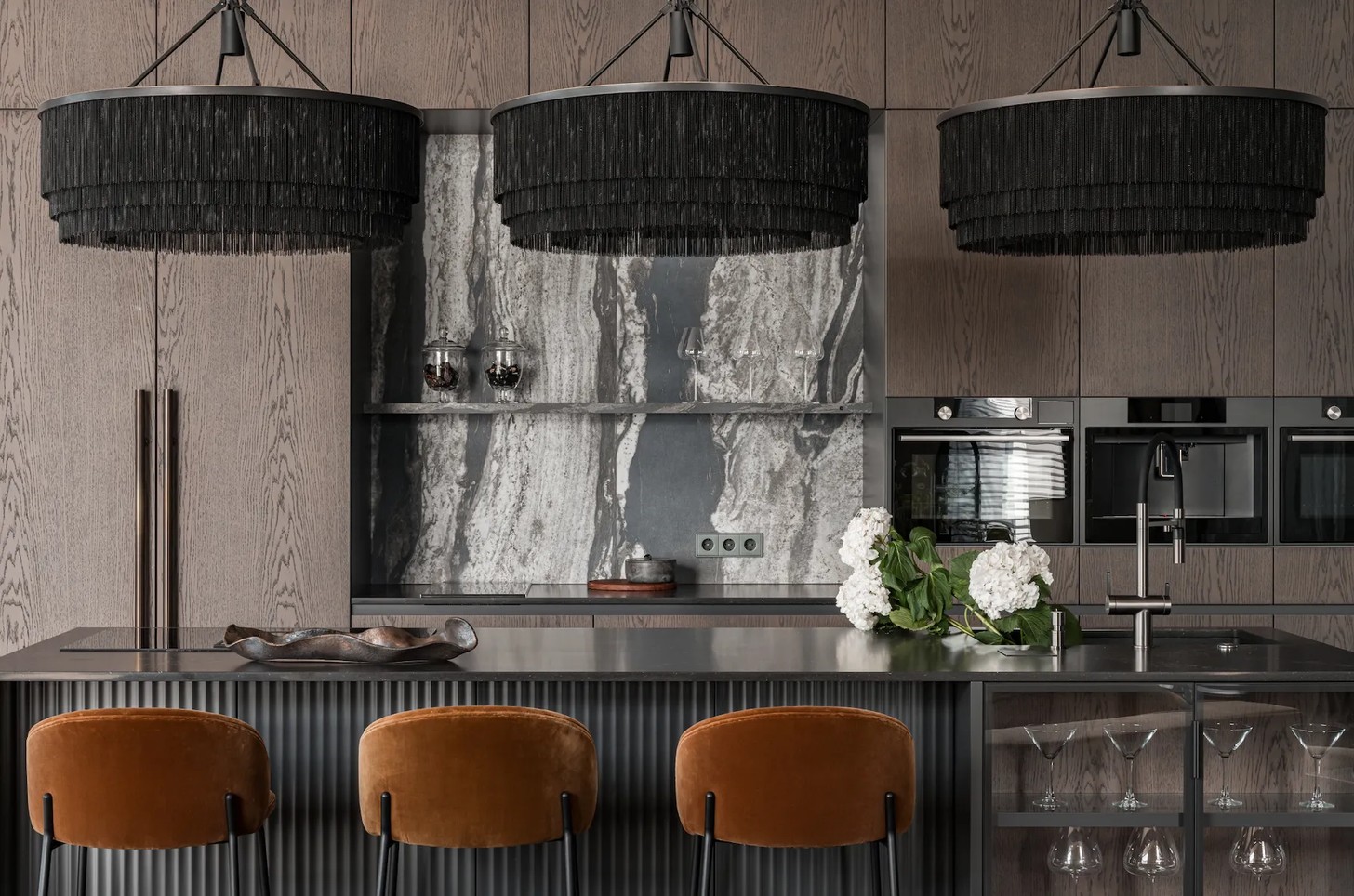
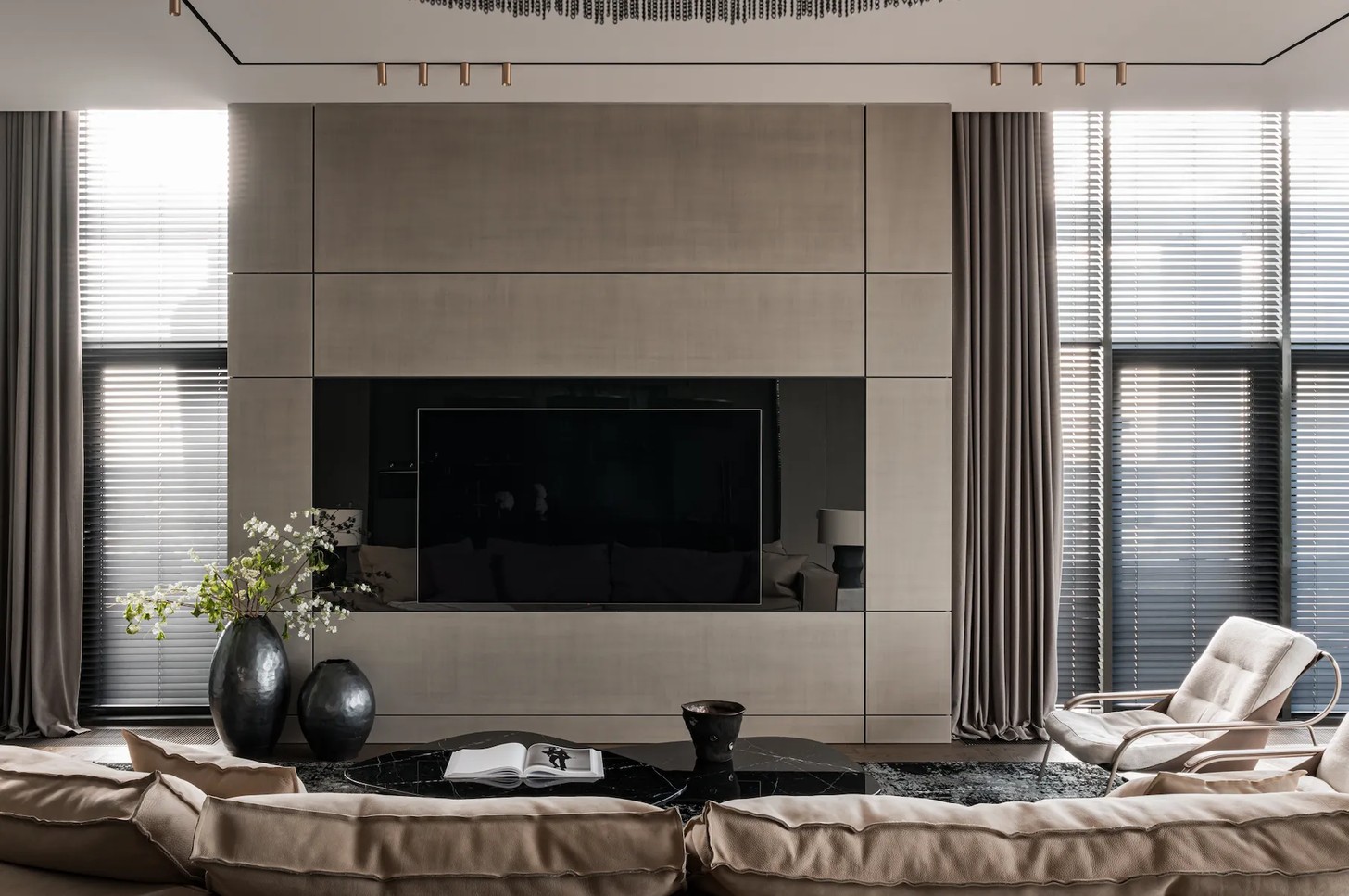
The kitchen, dining and living areas occupy a generous open-plan space, but the near-square layout presented unique planning challenges. Rather than arranging furniture along predictable axes, the designer sought a more fluid composition. A sofa with a sculptural, unconventional form became the anchor of the living area, introducing movement and softening the geometry of the room.
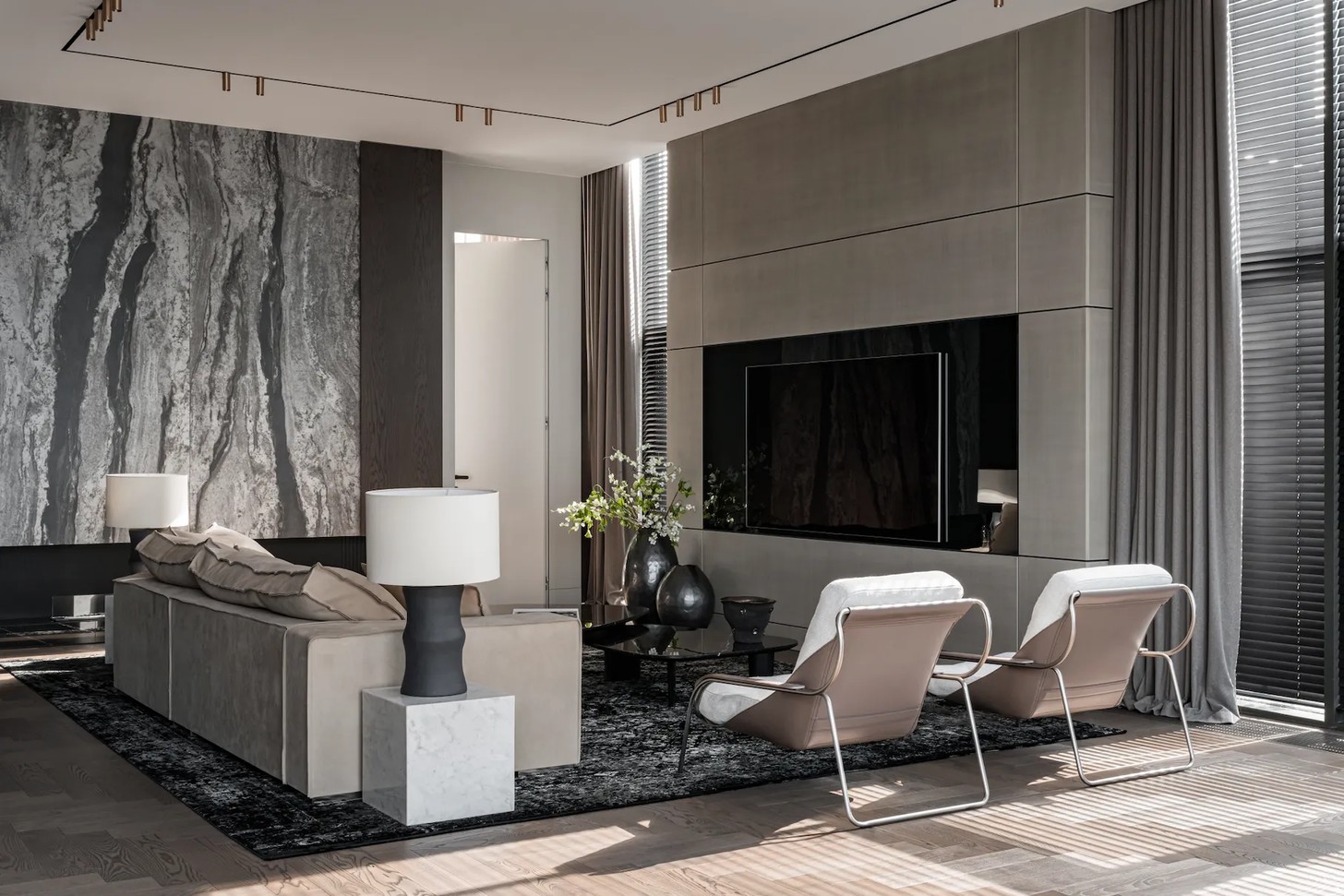
Nearby, a bioethanol fireplace adds warmth and atmosphere without the practical complexities associated with traditional fireplaces. The dining area occupies the position with the best views, while the kitchen integrates seamlessly along the longest wall. Together, these elements create a space that feels connected yet varied, supporting both family life and entertaining.
Designing for the Future
The children's bedrooms reflect the same long-term thinking evident throughout the apartment. One room was intentionally designed in a neutral palette, ensuring flexibility regardless of future changes. Over time, personal touches have added character and individuality.
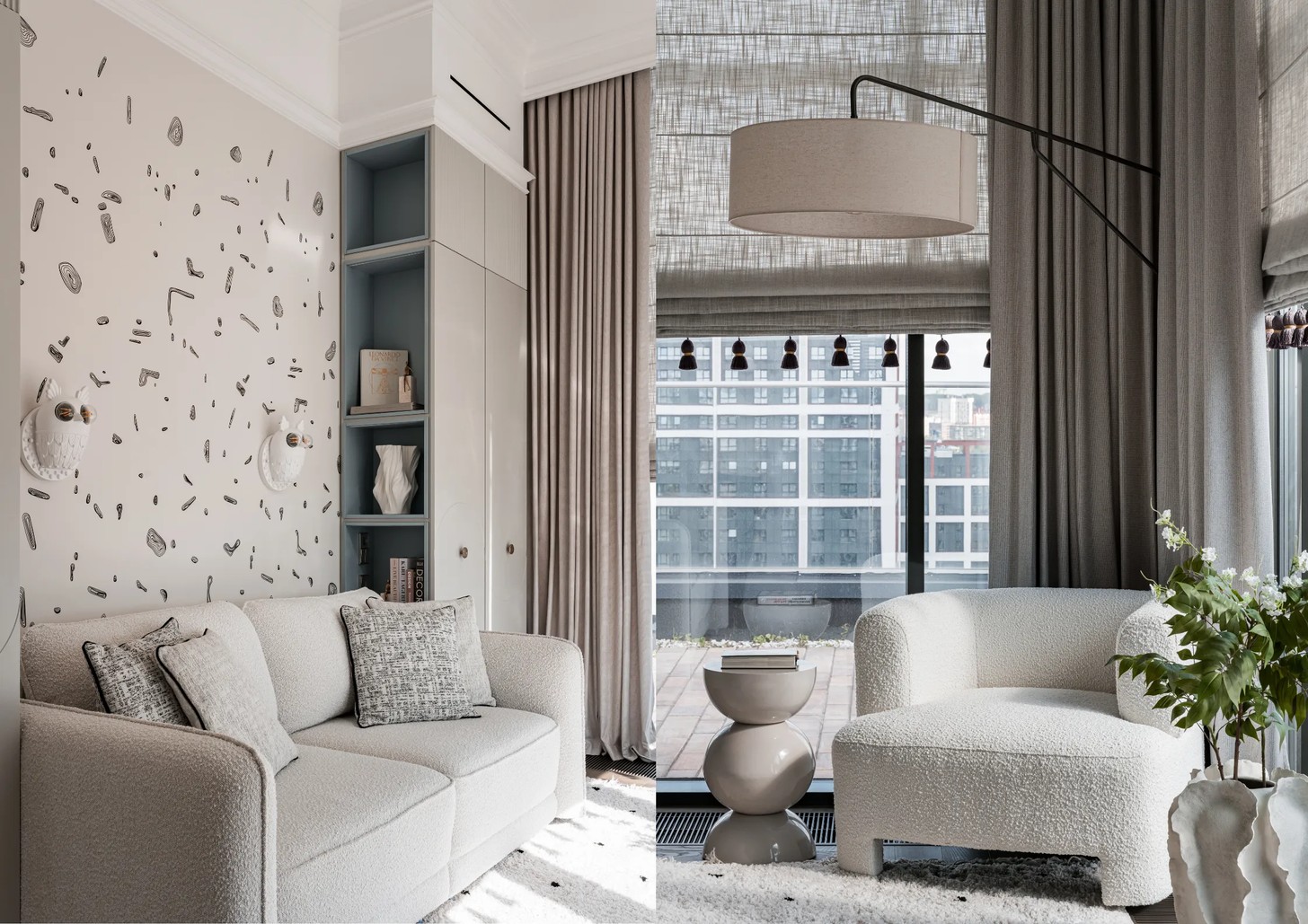
The second room was conceived as a space the child could grow into, avoiding overly youthful motifs in favour of richer colours and more sophisticated detailing. This thoughtful approach ensures the interiors remain relevant for years rather than seasons.
More Than a Collection of Rooms
What makes this project particularly compelling is its refusal to separate design from life. Every material, layout decision and furnishing choice stems from the habits and aspirations of the family who live there. The result is not an interior designed to impress visitors, but one designed to support daily rituals, personal comfort and future growth.
In an era where many homes are created primarily for visual impact, this apartment offers a reminder that the most successful interiors are often the most personal. They are spaces where architecture, emotion and everyday life meet—and where expectations are not merely met, but exceeded.
Credits
Designer: Margarita Melnikova
Photographer: Natalia Gorbunova
Decor: Elena Aichukova


