
When interior designer Sofia Voznenko, founder of CASESTUDY Interiors, began reimagining an apartment in Moscow for her family, she approached the project with a clear ambition: to create a home capable of accommodating the realities of daily family life while still feeling calm, considered and inspiring. It needed to work equally well for lively dinners, focused workdays and quiet evenings spent reading.
The apartment already possessed something many city homes lack: extraordinary natural light. With ten windows, three balconies and views stretching across historic city buildings, a church and a public square, the architecture provided an enviable starting point. The challenge was ensuring nothing compromised it.

Letting the Architecture Lead
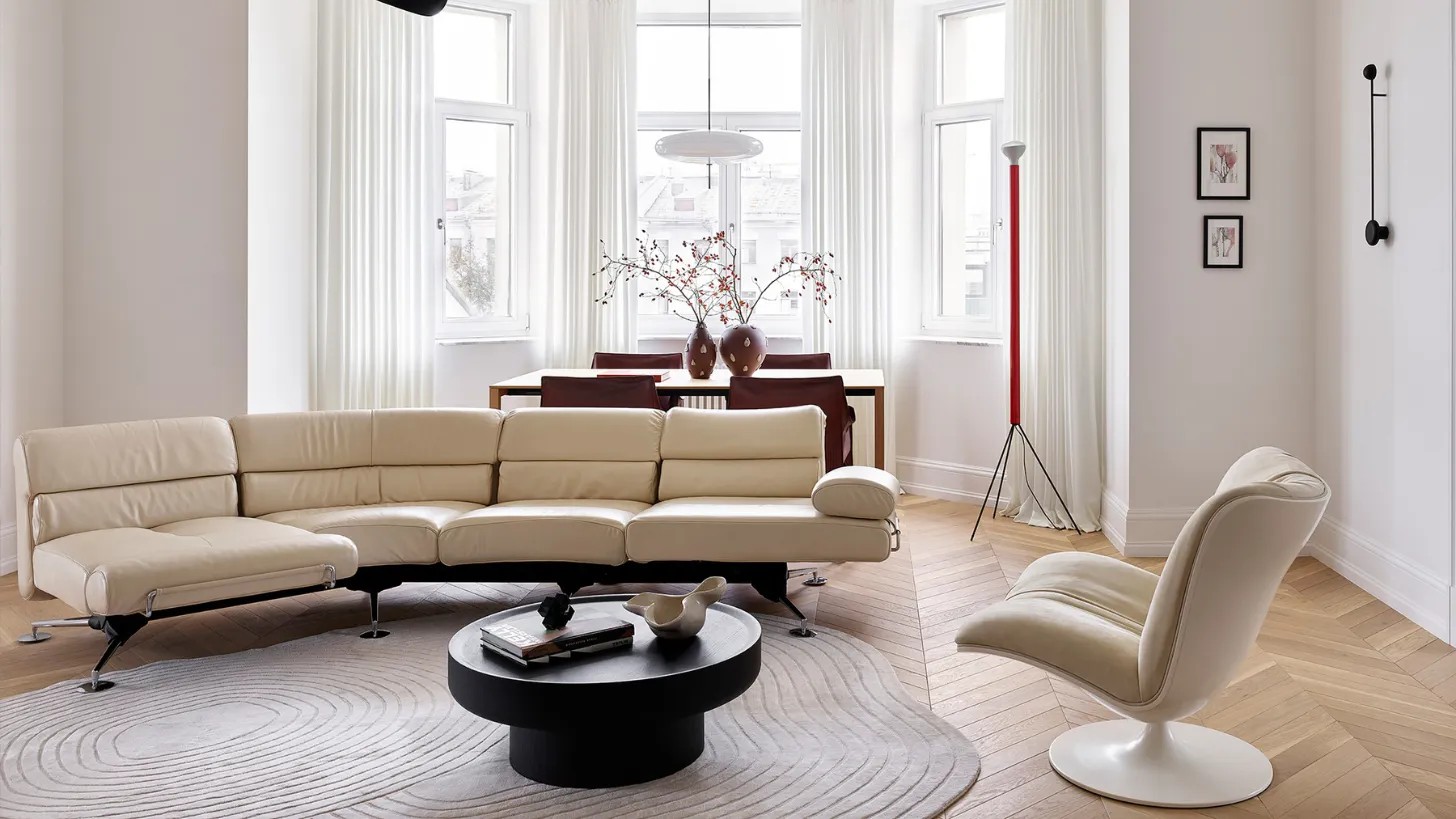
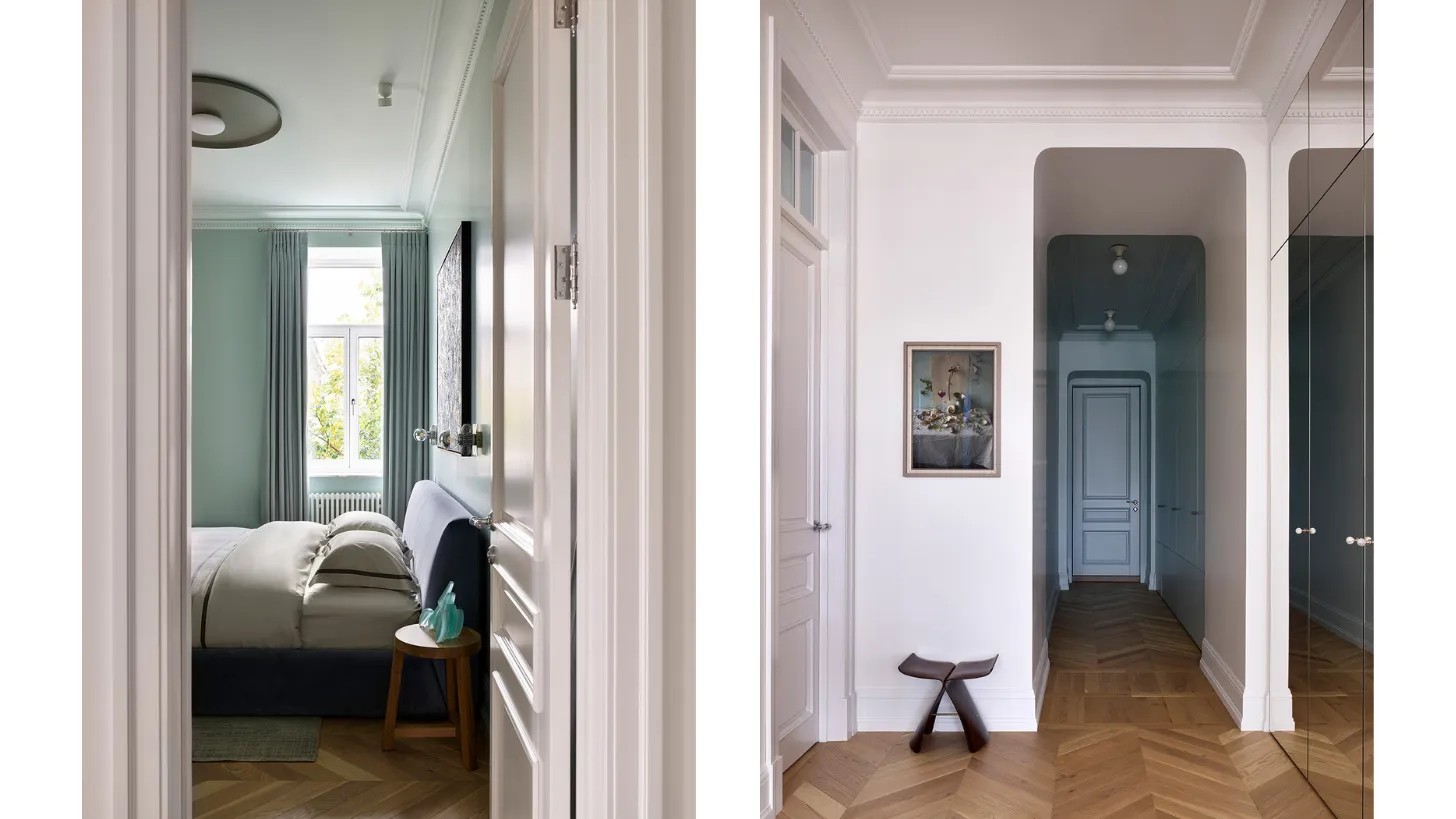
For Sofia, every project begins with the architecture. Once the existing walls were removed, one of the apartment's defining features revealed itself: a generous bay window in the living room that could be seen directly from the entrance. Rather than interrupting that sightline with a conventional doorway, she designed an elegant arched portal that subtly separates the entrance hall from the living spaces while allowing light to travel deep into the home.
The layout was reconfigured to prioritise openness and movement. Instead of relying on corridors, the living area became a connective space linking the children's room, home office and shared family areas. The result is an apartment that feels significantly larger than its footprint suggests.
Additional connections between rooms reinforce this sense of flow. Double doors between the home office and primary bedroom allow the two spaces to function independently or together, while multiple circulation routes create a more fluid relationship between each room.
A Home Shaped by Art
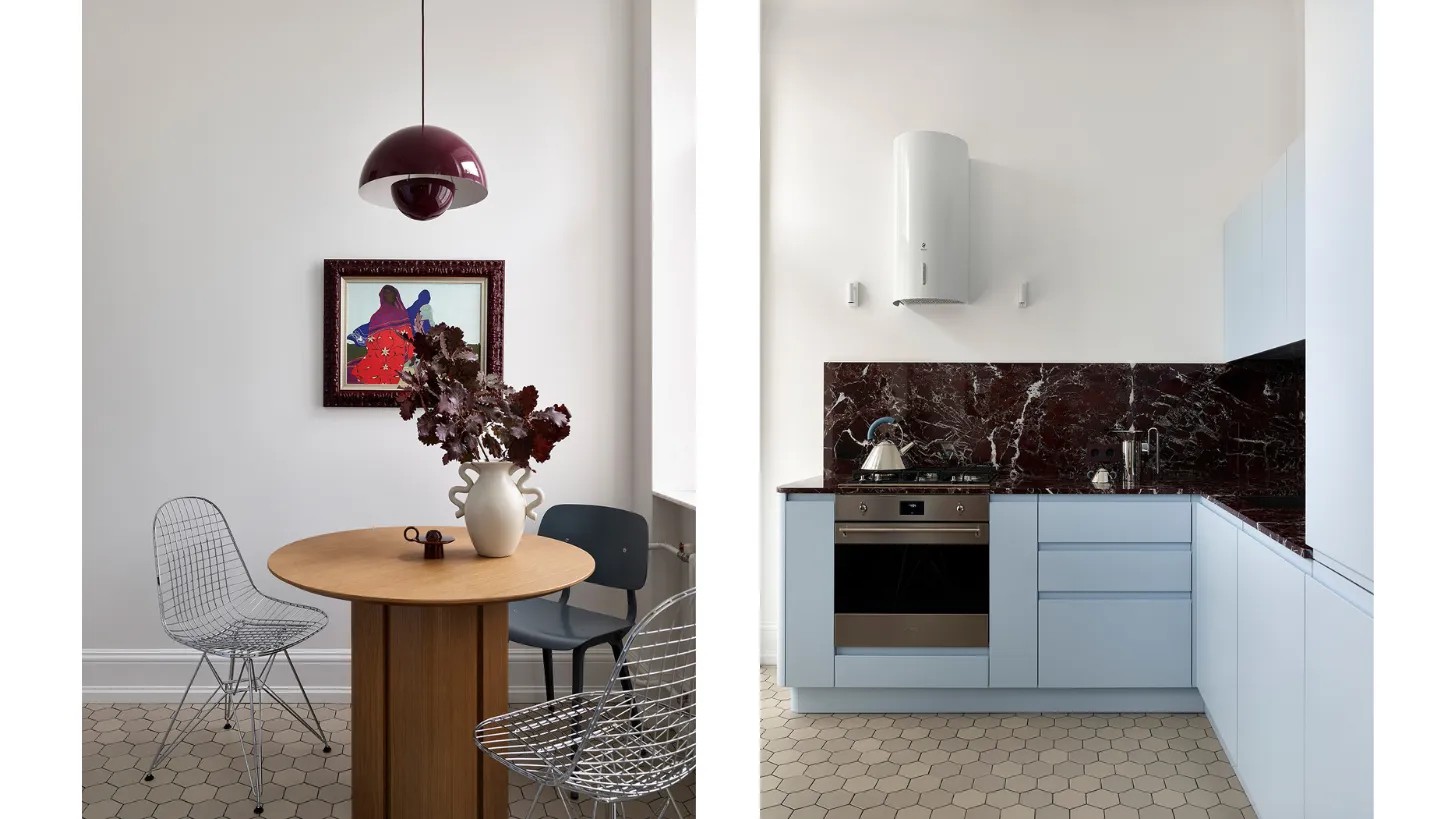
While the architecture established the framework, the family's art collection became the foundation for the interior palette.
Works by renowned local artists and photographers informed many of the colours used throughout the apartment. Rather than applying colour as decoration, Sofia used the artworks to create a visual thread that connects the spaces.
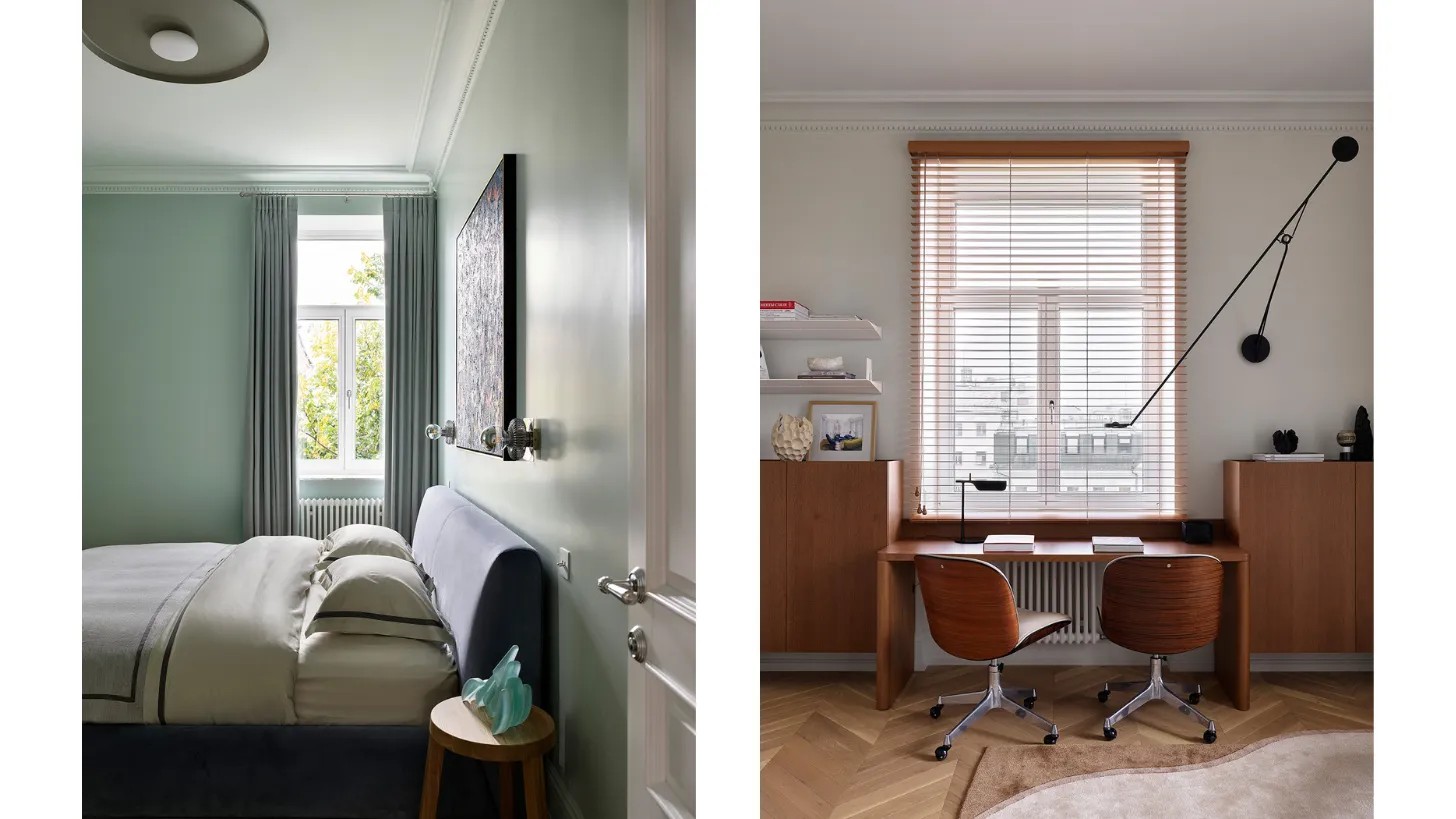
The shared living areas remain light and restrained, allowing the art to take centre stage. In contrast, the bedroom and home office are wrapped in richer tones of green and aquamarine, creating spaces that feel quieter and more intimate. This measured approach allows each room to develop its own atmosphere while remaining part of a cohesive whole.
Layering Contemporary and Vintage Design
Sofia describes her interiors as layered rather than stylistically fixed. Furniture, lighting and decorative objects are selected according to the needs of each project rather than a predetermined design language. And this is evident throughout the apartment.
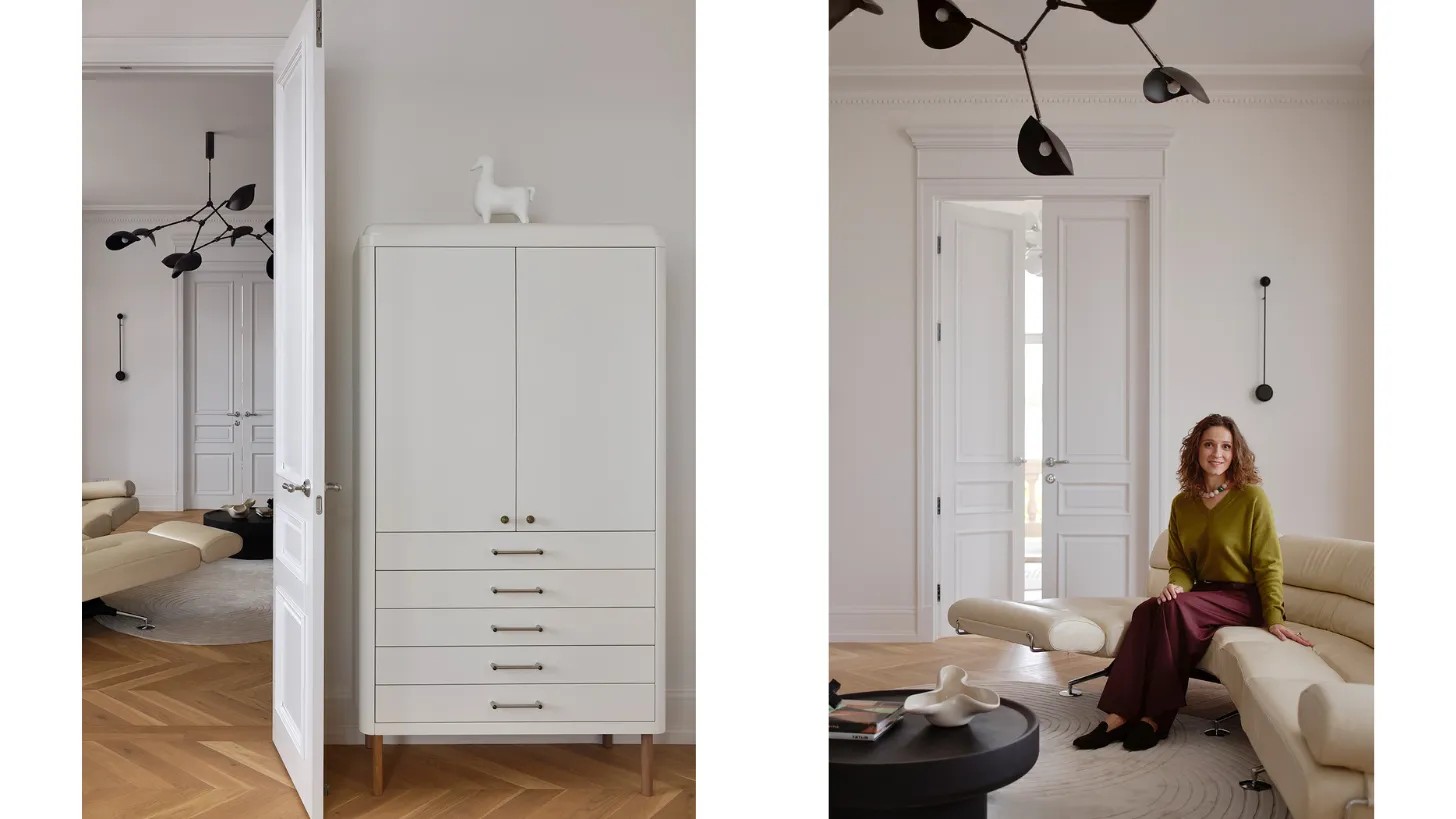
In the living room, a sculptural curved sofa introduces a contemporary note without disrupting the home's classical framework. Vintage pieces sit comfortably alongside contemporary designs, creating the sense of a home assembled gradually over time rather than furnished all at once.
The dining area occupies the bay window, transforming one of the apartment's most architecturally significant spaces into the natural heart of the home. Here, family meals take place against a backdrop of city views and ever-changing light.
Vintage finds appear throughout the apartment, each contributing a sense of character and permanence. Rather than functioning as decorative statements, they help create the layered atmosphere Sofia was seeking.
Classical Foundations With Contemporary Interventions
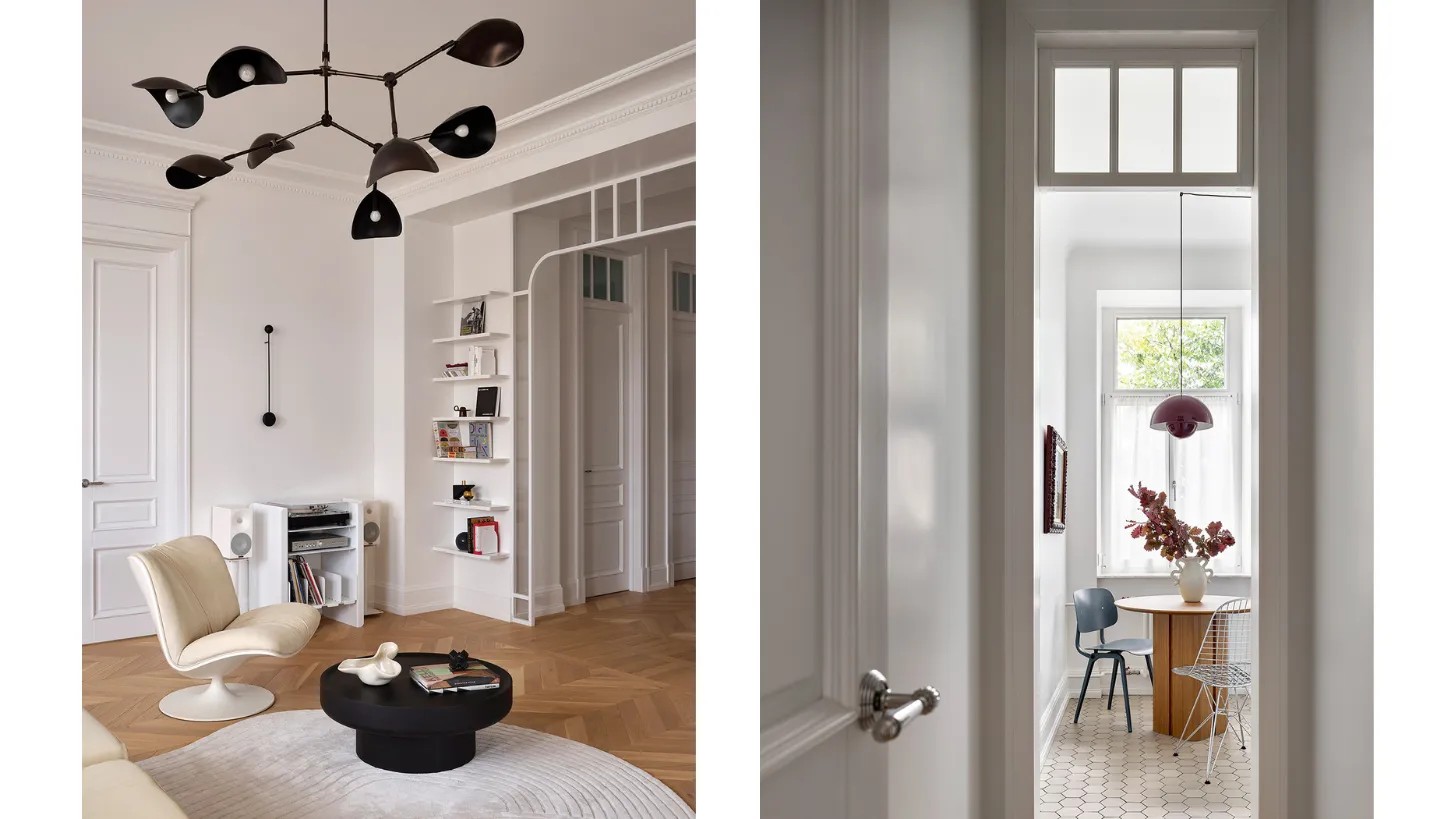
The apartment's material palette is intentionally restrained. Classical elements such as plaster ceiling mouldings, neutral walls and chevron parquet flooring provide a timeless foundation, while contemporary interventions introduce freshness and personality. New timber windows and marble sills were installed to replace original historic features that had been lost over time.
Custom-designed doors and the apartment's distinctive arched portal were developed specifically for the project. Their carefully considered proportions subtly enhance the perception of height, while minimal mouldings provide a quiet backdrop for art, furniture and collected objects. The result is an interior that feels rooted in history without becoming nostalgic.
Designing for Family Life
Perhaps the most impressive aspect of the project is how effortlessly it accommodates family life. The entrance hall, originally long and awkwardly proportioned, now conceals extensive storage behind wall-coloured cabinetry that reduces visual clutter. Mirrored storage units help reflect light while correcting the room's irregular geometry.
The children's room was approached with similar consideration. Visible from the living areas, it needed to feel connected to the rest of the apartment while remaining distinctly playful. Artworks, books and personal objects create a sense of individuality without disrupting the home's overall aesthetic.
Even the custom cabinetry, inspired by the streamlined forms of 1930s American design, balances practicality with visual character.
A Home Designed to Endure
At its core, this project reflects Sofia's belief in designing interiors that remain relevant over time.
Rather than chasing trends, she has focused on creating a strong architectural framework capable of evolving alongside her family's needs. Art, furniture and personal collections may change over the years, but the apartment's foundations are designed to endure.
The result is a home that feels simultaneously calm and energetic: a place that offers refuge from the city while supporting the rhythms of work, family life and creativity.
For Sofia, that balance is what makes the apartment successful. It is a home designed not simply to be admired, but to be lived in.
Credits
Interior designer Sofia Voznenko, founder of CASESTUDY , Instagram @sofi_okrylyaet
Photos: Sergey Ananyev, Instagram @sergeyananiev
Style by: Ekaterina Naumova, Instagram @_naumovakaterina


