
On the Sorrento Peninsula, where olive trees sway in the Mediterranean breeze and sunlight dances across the landscape from dawn until dusk, architect Valentina Autiero has transformed a modest 45m² residence into a home that feels remarkably expansive.
Known as La Casa Olive e Capperi, the project sits within a lush olive grove that became both the visual and emotional starting point for the design. Rather than imposing a predetermined aesthetic, the architect allowed the surrounding landscape to shape every decision, resulting in a home that feels deeply connected to its setting while challenging conventional ideas about compact living.

Small-Space Design That Prioritises What Matters
The home's footprint may be modest, but its design philosophy is ambitious. Existing structural walls, unusual window openings and a rigid floor plan left little room for architectural intervention. Rather than seeing these constraints as limitations, Autiero treated them as an opportunity to question what is truly essential in a home.
The result is a carefully considered layout that strips away excess and prioritises experience over accumulation. Every square metre serves a purpose, yet nothing feels crowded or over-designed. Instead, the spaces unfold with an ease that encourages both movement and pause.
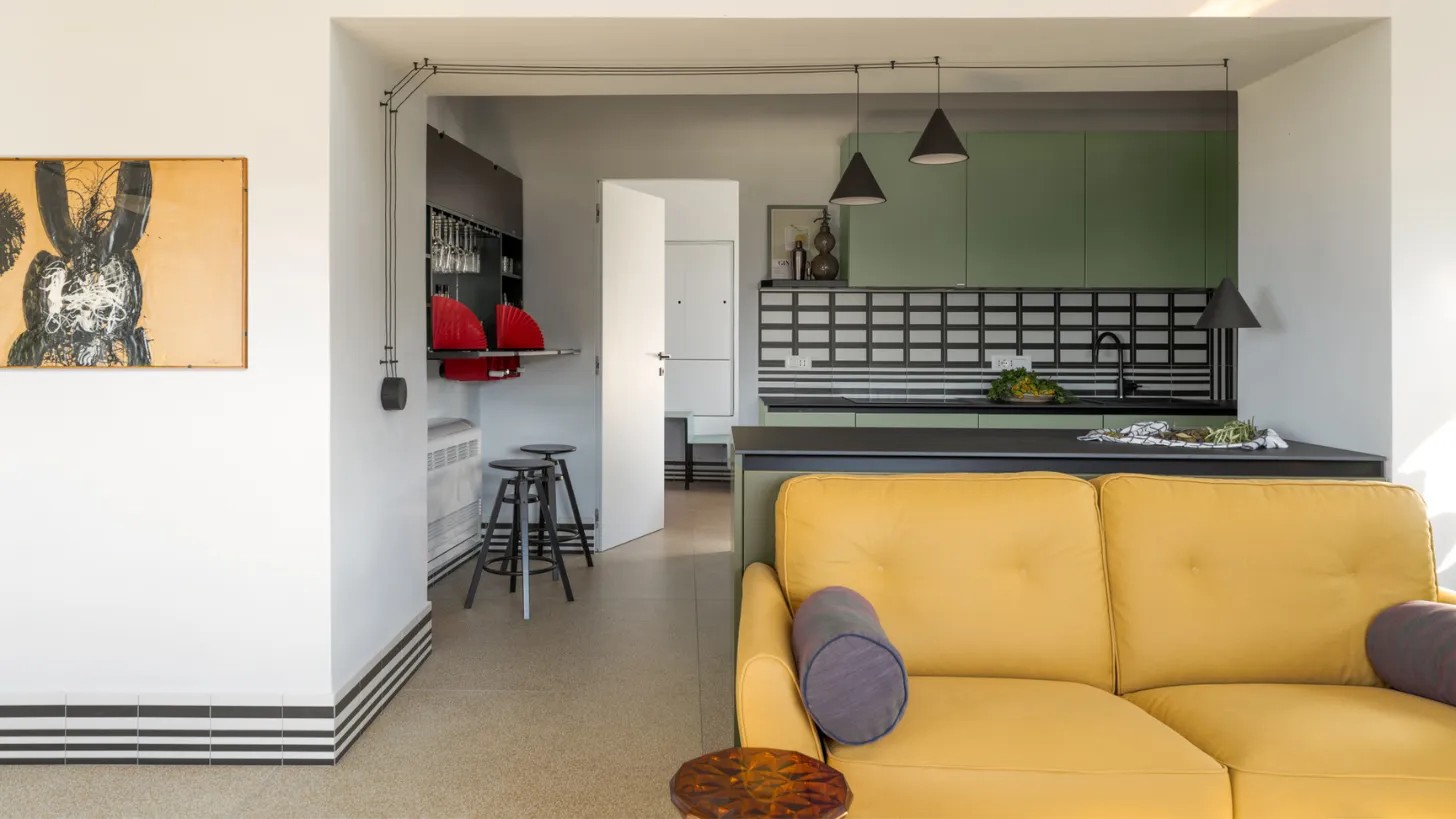
The residence is organised into three distinct zones: an open-plan living and kitchen area, a sleeping space with a raised wardrobe and office mezzanine, and a compact bathroom with integrated storage. Each area retains its own identity while remaining visually connected to the rest of the home.
Mediterranean Interiors Inspired by Nature
The surrounding landscape provided more than just views. It also informed the home's vibrant palette. Shades of olive green, yellow and aubergine appear throughout, echoing the colours of the Mediterranean garden beyond. These hues are used with confidence, appearing in furniture, cabinetry, joinery and decorative details that establish a playful dialogue between inside and out.
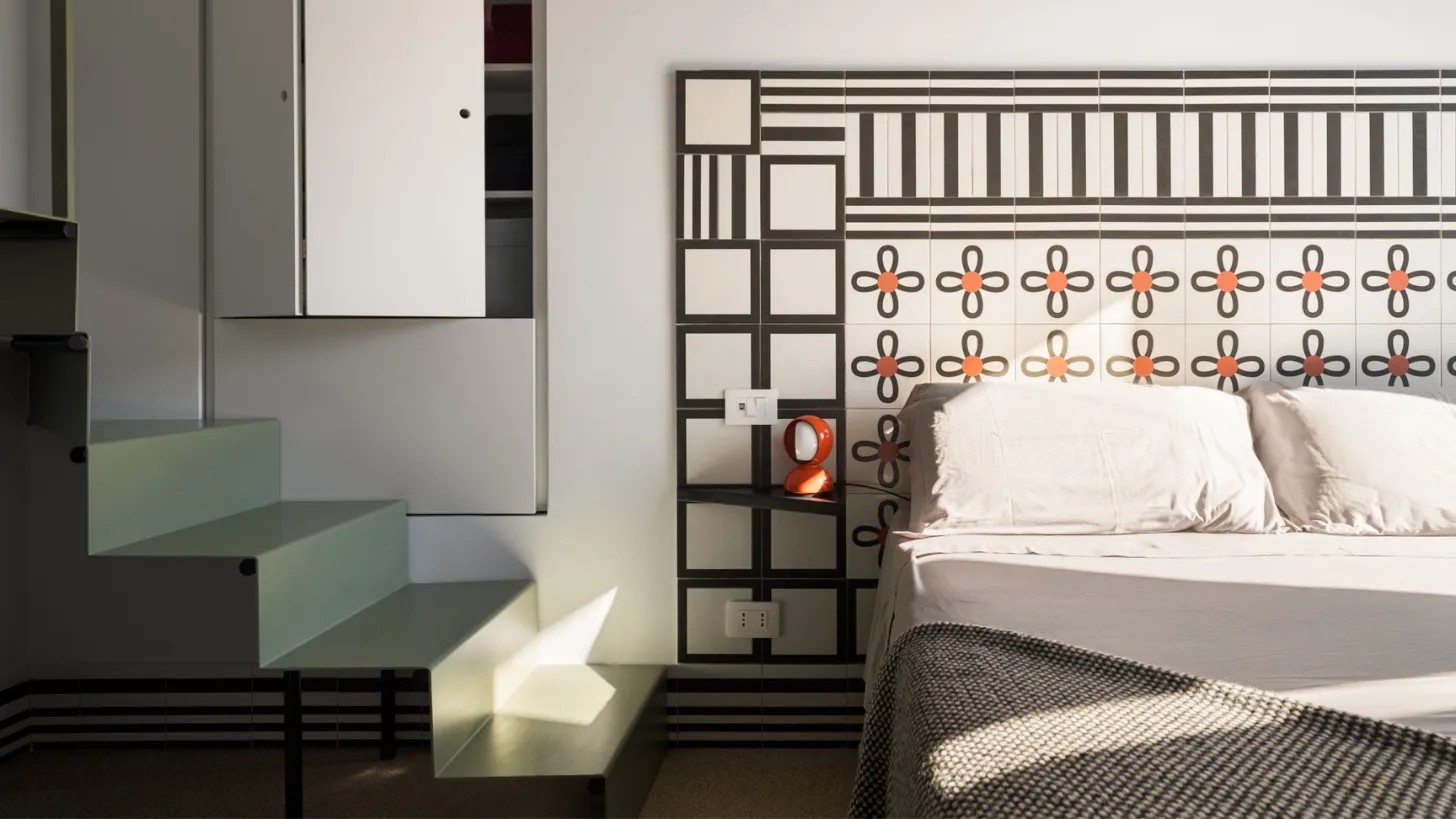
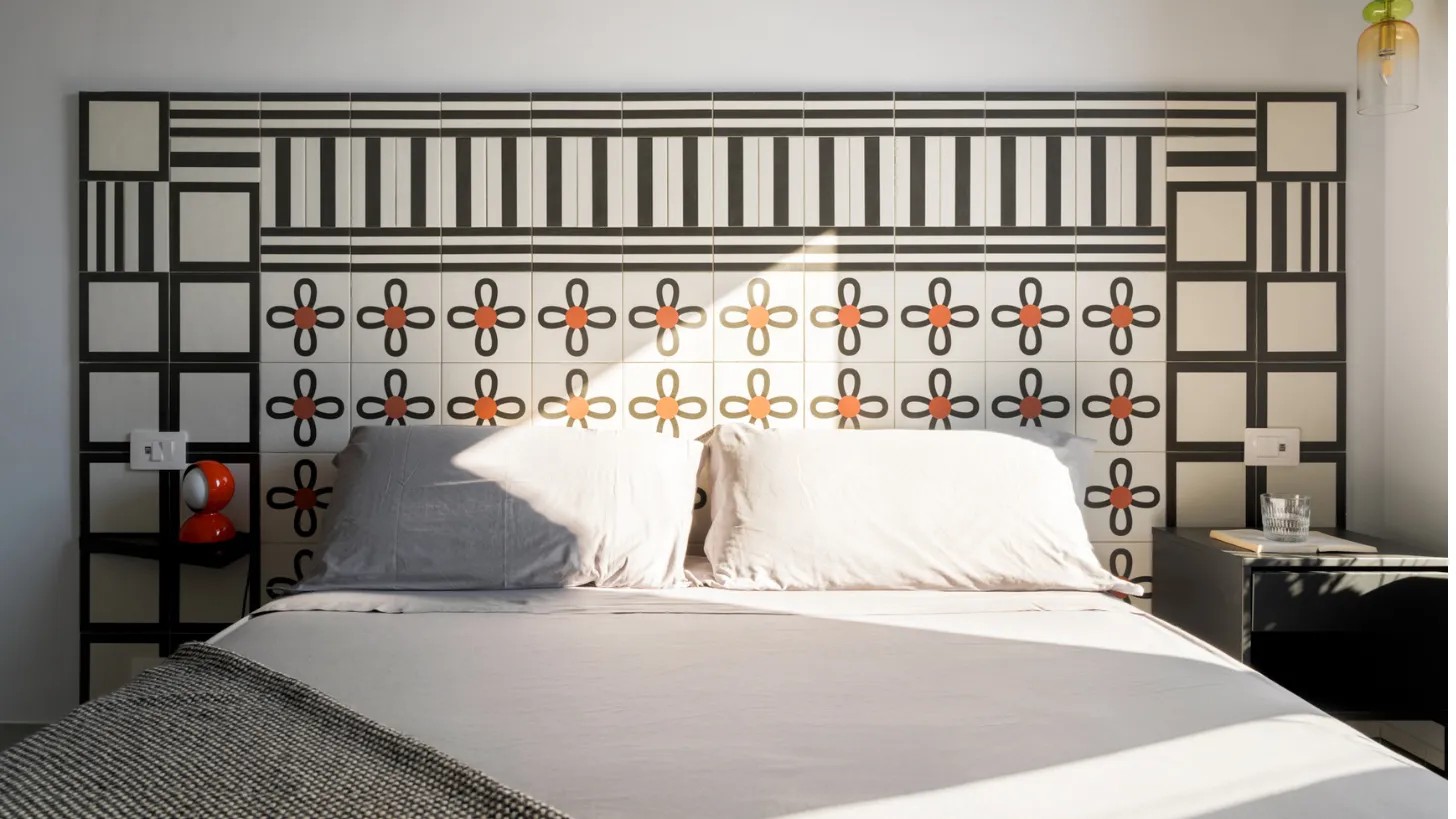
A recurring motif of black-and-white horizontal stripes provides visual continuity throughout the home. Appearing first as skirting, the graphic element re-emerges as a kitchen backsplash, bedroom headboard and bathroom details.
Despite the richness of colour, the overall effect feels calm rather than overwhelming. Natural light softens the palette throughout the day, allowing the interiors to shift and evolve alongside the landscape beyond the windows.
Sea Views, Unusual Windows and a Light-Filled Living Space
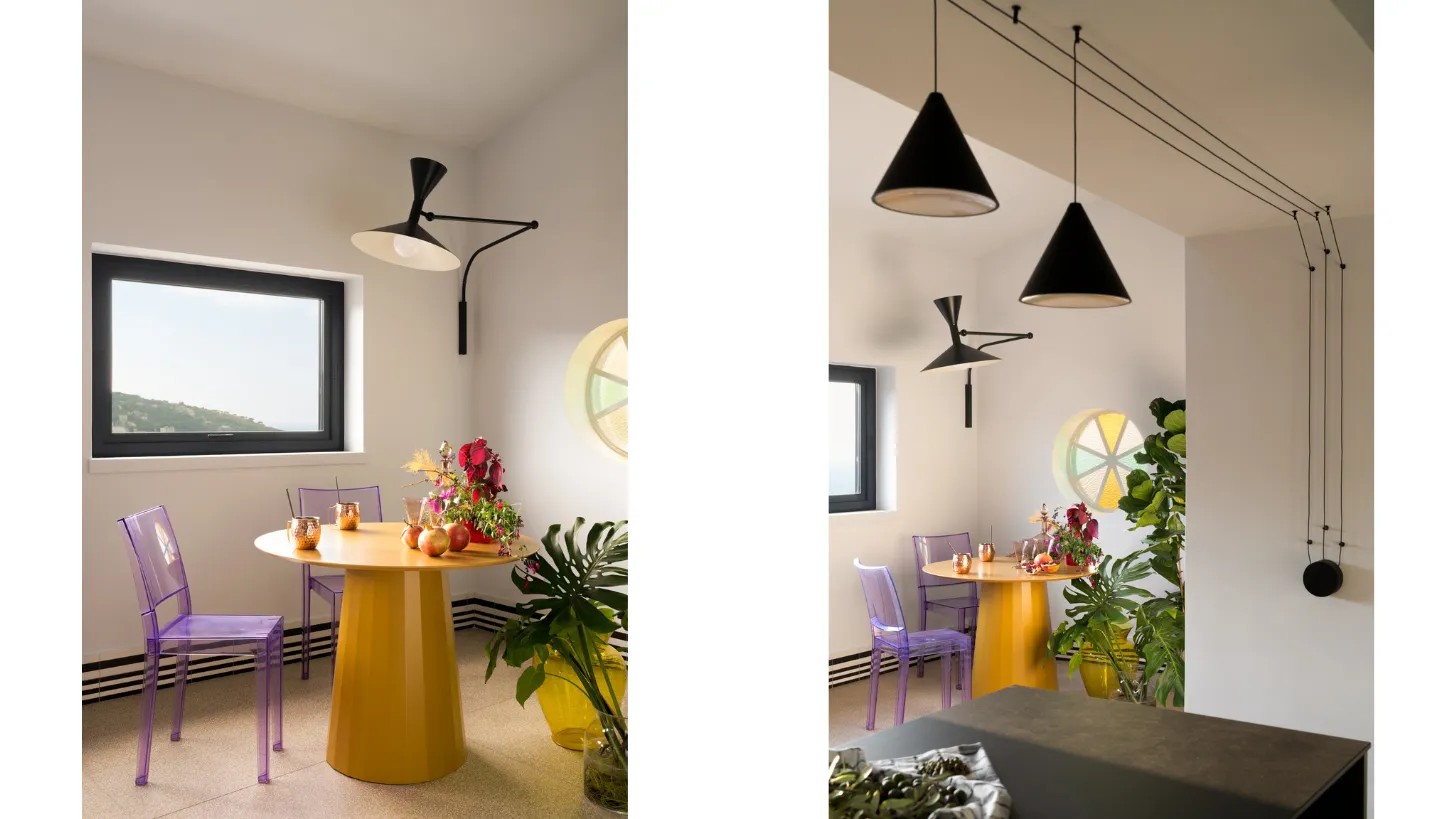
One of the home's defining characteristics is its collection of unconventional window openings. A circular stained-glass window frames views of the olive grove, while three rectangular windows sit side-by-side overlooking the sea. Elsewhere, circular openings punctuate the walls, introducing changing patterns of light throughout the day.
These varied apertures transform the landscape into a constantly evolving backdrop. Rather than relying on decorative objets to create visual interest, the home uses natural light and framed views as living artworks.
Within the main living area, the dining area centres around a circular yellow table paired with translucent violet chairs. Positioned beneath a sculptural light fitting, the arrangement responds directly to the circular stained-glass window nearby, creating a visual rhythm that feels both playful.
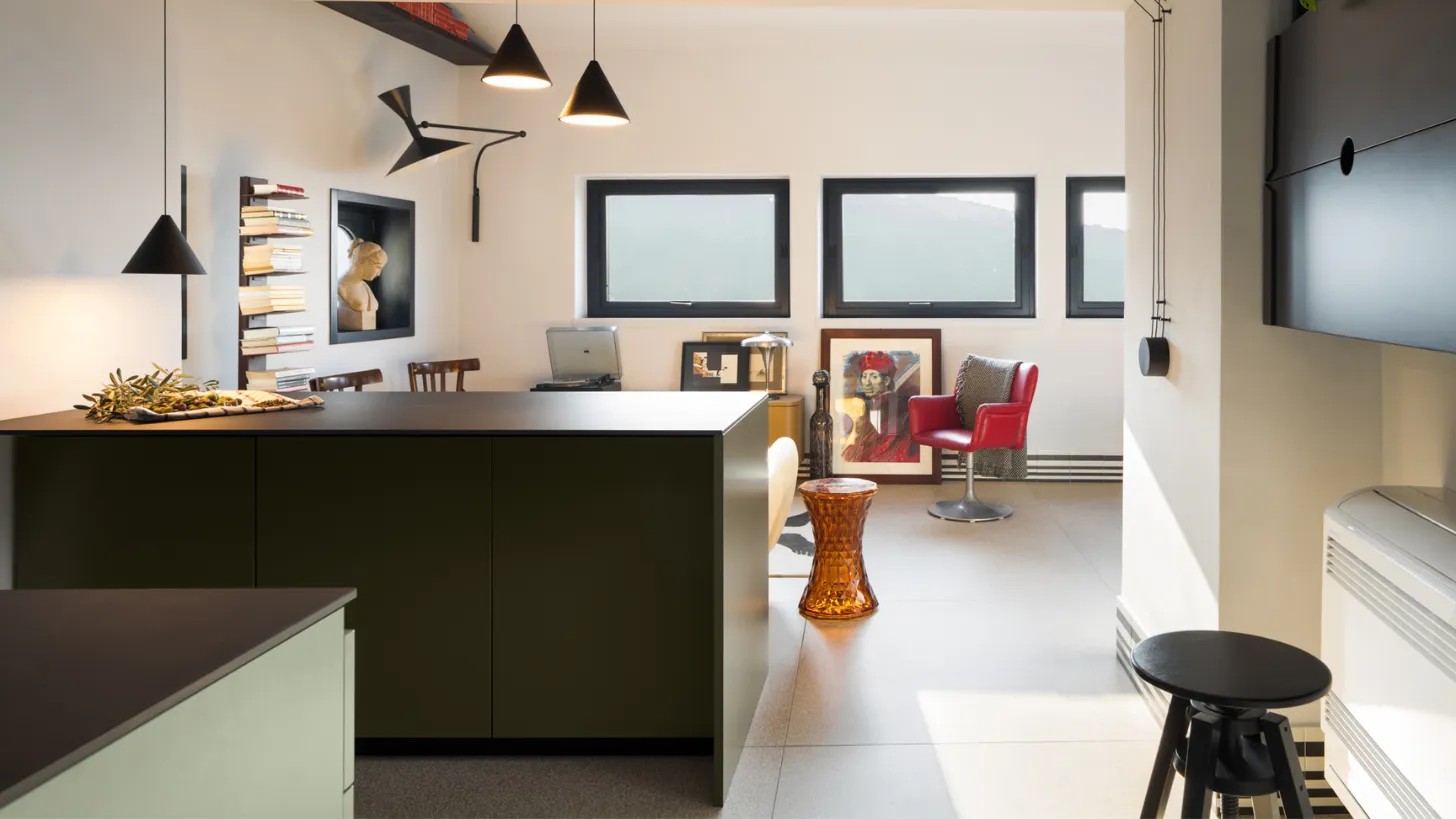
Adjacent to the dining space, a compact sitting area encourages conversation and reflection. Notably absent is a television. Instead, the focus shifts towards human connection, books, music and the ever-changing scenery outside.
Clever Storage Solutions in a Compact Home
Making small homes function efficiently requires careful planning, and nowhere is this more evident than in the kitchen and sleeping areas of this retreat.
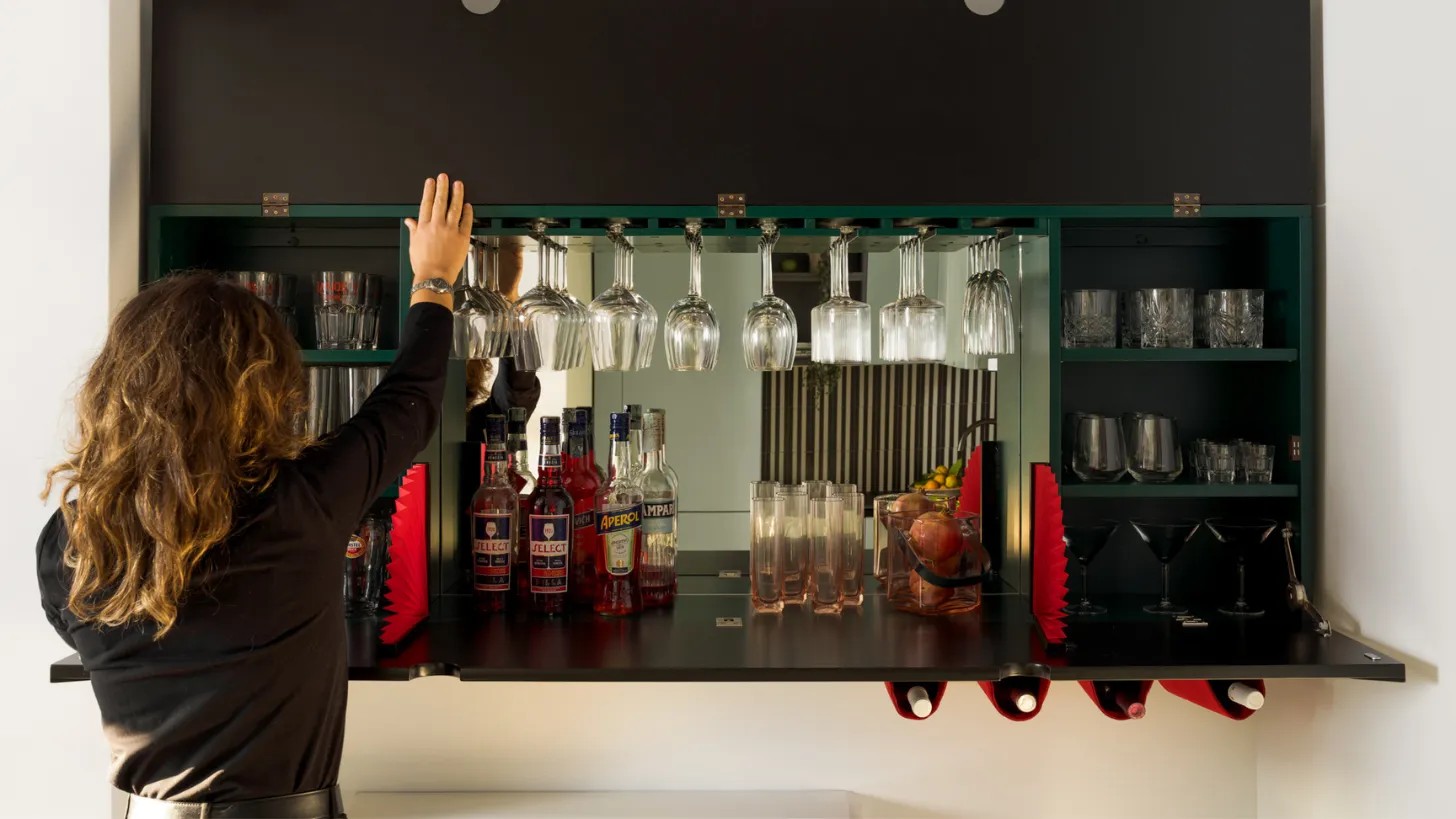
To maximise available volume, part of the vaulted-ceiling bedroom space was strategically allocated to the kitchen. This decision allowed the cabinetry height to extend upwards, creating generous storage while simultaneously making room for a raised mezzanine above.
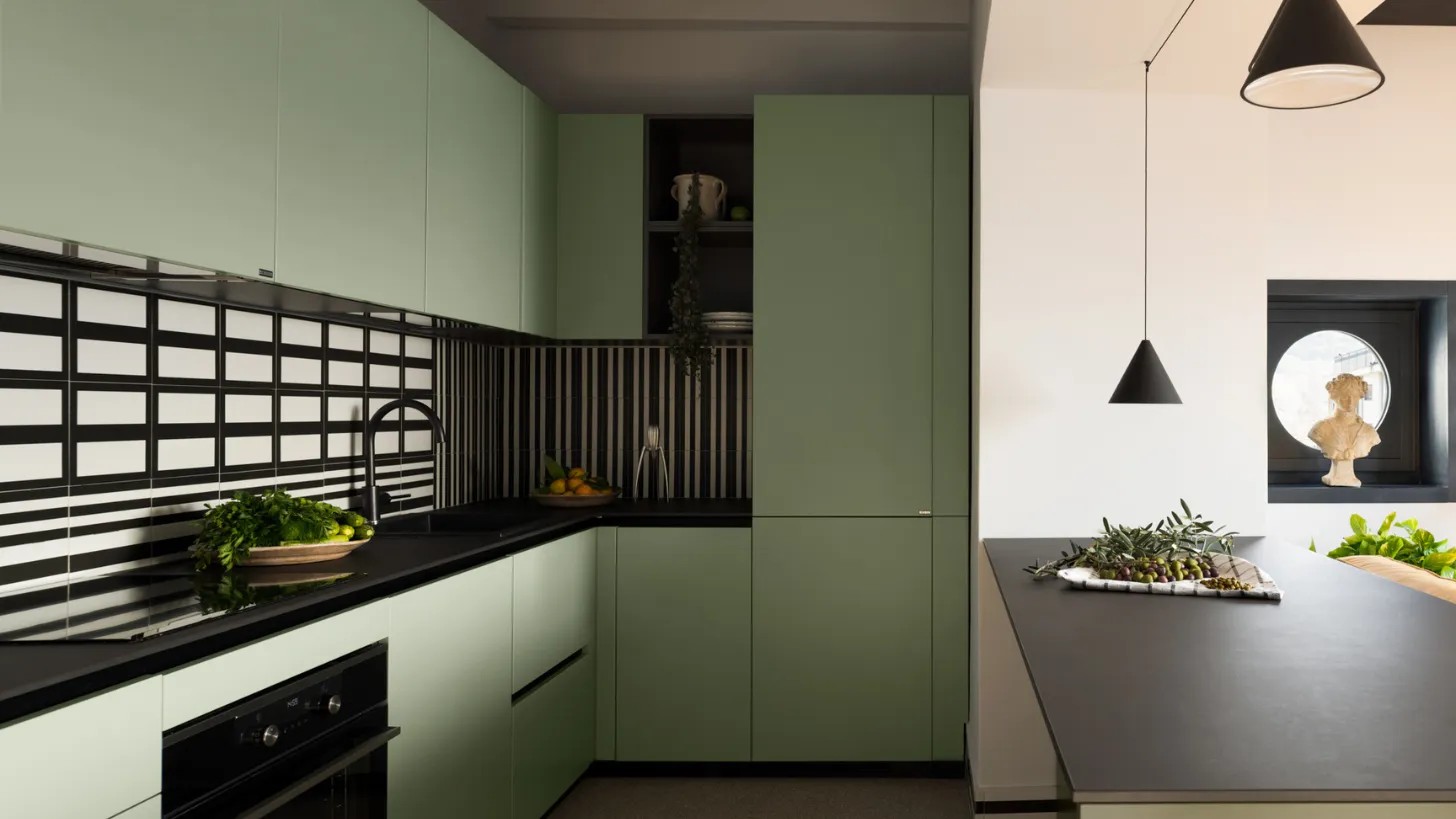
The kitchen itself consists of two complementary green volumes inspired by the dual-toned leaves of the surrounding olive trees. A lighter green section accommodates preparation and storage, while a darker green island serves as a casual dining and social hub.
In the bedroom, a sculptural steel staircase becomes both a functional feature and an architectural focal point. Curving around the bed in a horseshoe formation, it leads to an elevated mezzanine containing storage, a workspace and a meditation area. This design demonstrates how thoughtful planning can dramatically increase functionality without sacrificing openness or visual clarity.
A Modern Mediterranean Retreat Rooted in Simplicity
What makes La Casa Olive e Capperi remarkable is not simply its inventive use of space but its ability to create a genuine sense of freedom within strict physical limitations.
Rather than filling every corner, Valentina Autiero has allowed the architecture to breathe. The result is a home that feels larger than its footprint suggests, where light, colour and landscape are given equal importance to furniture and function. valentinaautieroarchitetto.com
Credits
Photography - Carlo Oriente


