
Bookshelves and cabinets are integral to the architectural language of contemporary interiors. They frame rooms and establish visual rhythm while offering a way to accommodate the objects that make a house feel personal. The most compelling designs don’t just fill an empty wall; they are influenced by the architecture around them.
For homeowners and designers, the question is not just what to store, but how storage can contribute to the overall experience of a space.

When Storage Becomes Architecture
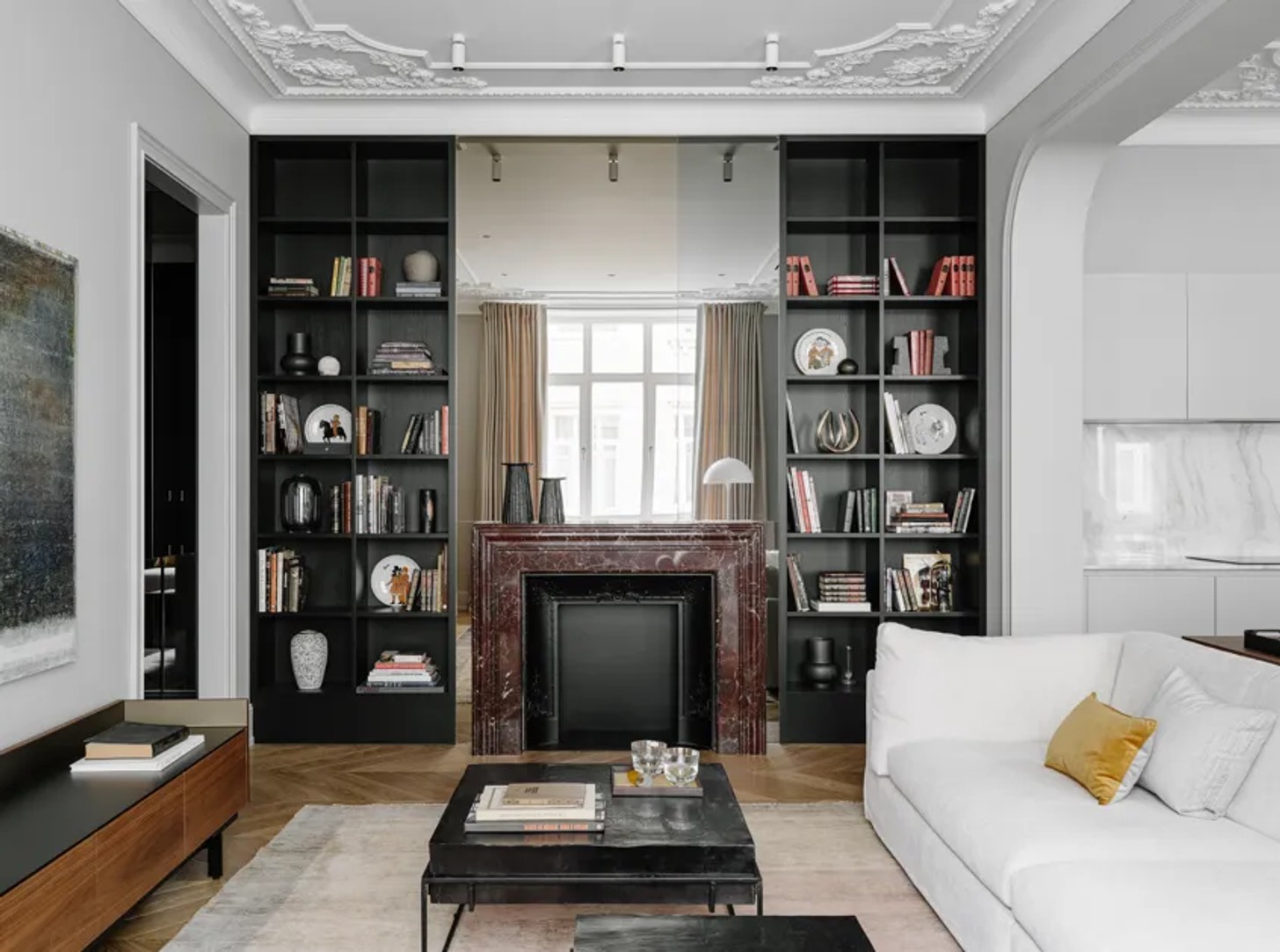
A well-designed bookshelf can bring definition to an undistinguished room. Floor-to-ceiling joinery draws the eye upwards, emphasising ceiling height, while a continuous wall of cabinetry can establish a strong visual anchor in an open-plan living area. In rooms where architectural detail is limited, shelving can introduce the sense of structure that might be missing.
Proportion is key. A unit that extends across an entire wall creates a different effect from a narrow, freestanding bookcase, and neither of these need to dominate the room to be effective. In smaller interiors, shallower shelving can provide useful storage without overwhelming the available space.
The most successful designs consider the relationship between the unit, the ceiling, the skirting, and neighbouring windows or doorways. So instead of treating these elements as obstacles, considered joinery incorporates them into a cohesive composition.
The Case for Material Contrast
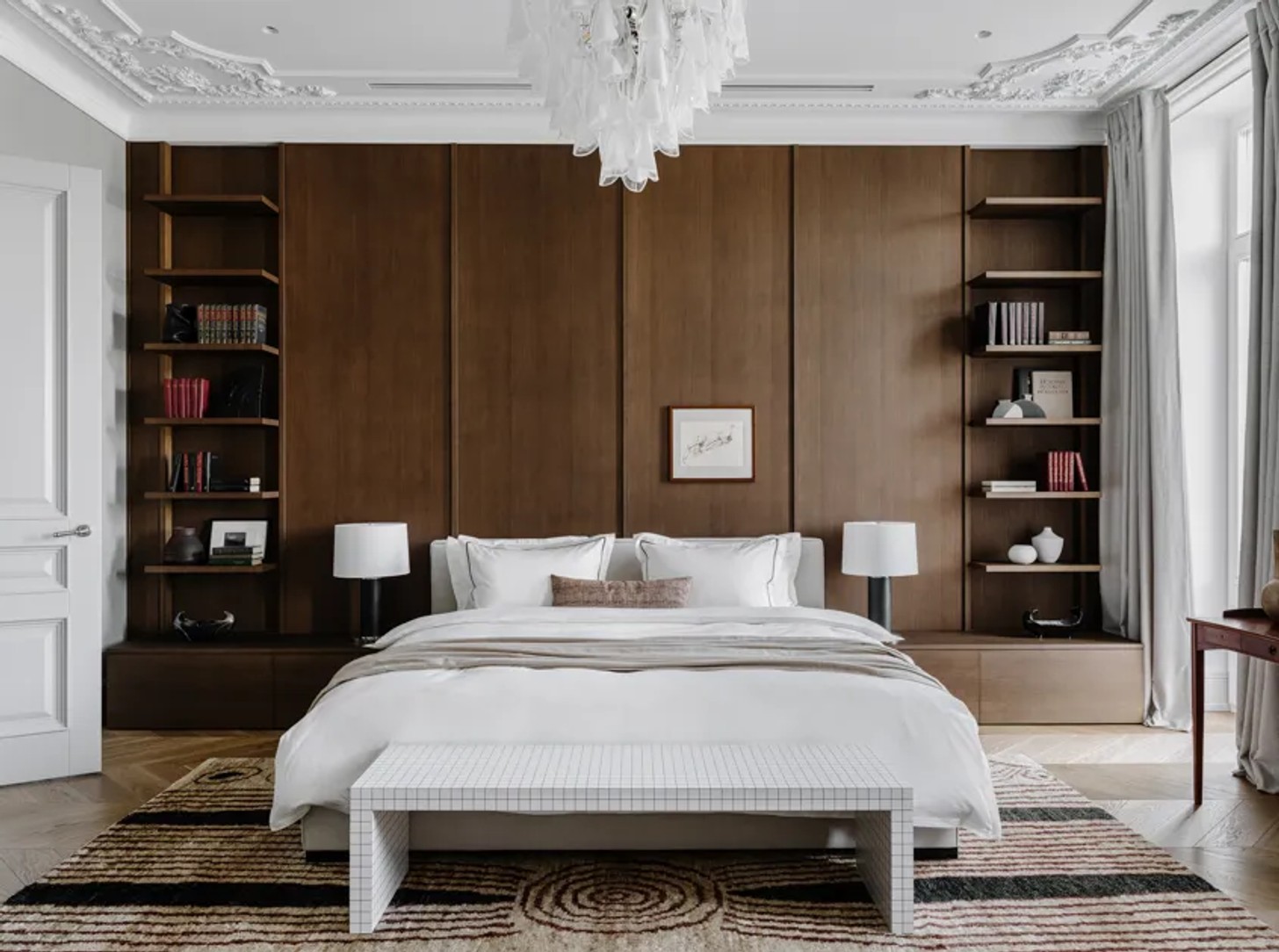
Material choice determines whether a bookshelf recedes into the background or becomes a defining feature. Natural timber introduces warmth, making it effective in interiors that might feel stark. Dark-stained wood creates depth and lends itself to more traditional or richly layered spaces, while pale oak and ash offer a lighter, more contemporary expression.
Painted cabinetry presents another opportunity. Matching shelving to the wall colour creates a seamless effect, allowing books, artwork, and collected objects to be more visible.
There is also room to look beyond timber. Stone shelving, metal frameworks, fluted glass, and woven cabinet doors introduce different textures and levels of visual transparency. Combining materials can be effective: solid lower cupboards provide concealed storage, while open shelving above keeps the composition feeling a bit lighter.
Open Shelves or Concealed Cabinets?
Open bookshelves make collections accessible and allow their contents to contribute to the interior. They work especially well in studies, living rooms and reading spaces, where books are used regularly while adding character to the room.
Closed cabinets, by contrast, offer a quieter visual backdrop. They conceal paperwork, electronics, board games and household essentials, helping communal spaces feel less cluttered. Glazed doors provide a middle ground, protecting delicate objects from dust while keeping collections visible.
A combination of the two is often the most versatile solution. Open sections can be reserved for books and selected objects, while closed compartments accommodate everything that does not need to be on display. This balance is especially valuable in multipurpose rooms, where a single piece of furniture may need to serve several functions.
The Freedom of Freestanding Design
Built-in joinery offers precision and permanence, but freestanding bookshelves and cabinets have their own appeal. An antique bookcase, sculptural shelving unit, or vintage display cabinet can introduce individuality without requiring a renovation.
Freestanding pieces also allow greater flexibility as a home evolves. A cabinet can move between rooms, while a modular shelving system can be expanded or reconfigured whenever storage needs change.
Consider scale carefully. A big cabinet can anchor a generous room, while a slender piece may be more appropriate in a passage or compact study. Allowing some wall space to remain visible around freestanding furniture helps prevent the interior from feeling overcrowded.
Designing for the Long Term
The most enduring bookshelf and cabinet designs begin with overall function. Books require appropriate shelving and adequate support: heavier objects need stable construction, and tall units should be securely anchored to the wall. Adjustable shelves can accommodate collections that change over time, while integrated lighting can make deeper cabinetry more practical.
Equally important is resisting the temptation to design solely for the moment. A good storage solution should adapt to changing routines, growing collections, and new uses for a room.
Ultimately, the bookshelf or cabinet that works hardest is the one that feels inseparable from the space around it, with considered proportion, honest materials, and designed around the rhythms of everyday life.
Image Credits
Mikhail Loskutov


