
As wellness is considered to be an important part of residential design, the outdoor bathroom is emerging as more than a luxury reserved for boutique hotels and secluded holiday homes. It is an opportunity to create a personal retreat that brings together design, nature, and the art of slowing down.
The beauty of an alfresco wellness space lies in its ability to feel both intentional and effortless. Here is how to bring the experience home.

Let architecture lead the experience
An outdoor retreat should feel like a natural extension of the home. Consider how existing architectural elements can frame the space, from a courtyard enclosed by textured walls to a timber deck that opens onto a garden.
Privacy is essential, but it should not come at the expense of openness. Slatted screens, planted borders, and strategically positioned walls can create a sense of seclusion while allowing light and air to move freely.
Materials play an equally important role in the design. Natural stone, timber, limewash, and textured concrete introduce an organic quality that complements the surrounding landscape. Instead of competing with nature, the architecture should provide a deliberate backdrop for it.
The outdoor shower: A daily ritual, reimagined
An open-air shower is perhaps the simplest way to introduce a sense of wellness into an outdoor space. Whether it’s positioned against a stone wall or tucked into a private garden corner, it offers a refreshing connection to the elements.
A rainfall showerhead creates a spa-like experience, while brushed brass, matte black, or stainless-steel fittings can establish a separate architectural character.
For a more immersive setting, incorporate a built-in bench, concealed drainage, and planting. Fragrant herbs, indigenous greenery, and the gentle sound of water can turn an ordinary shower into a moment of quiet indulgence.
The key is to balance visual appeal with practical considerations, including water resistance, drainage, privacy, and weather exposure.
Make room for the art of soaking
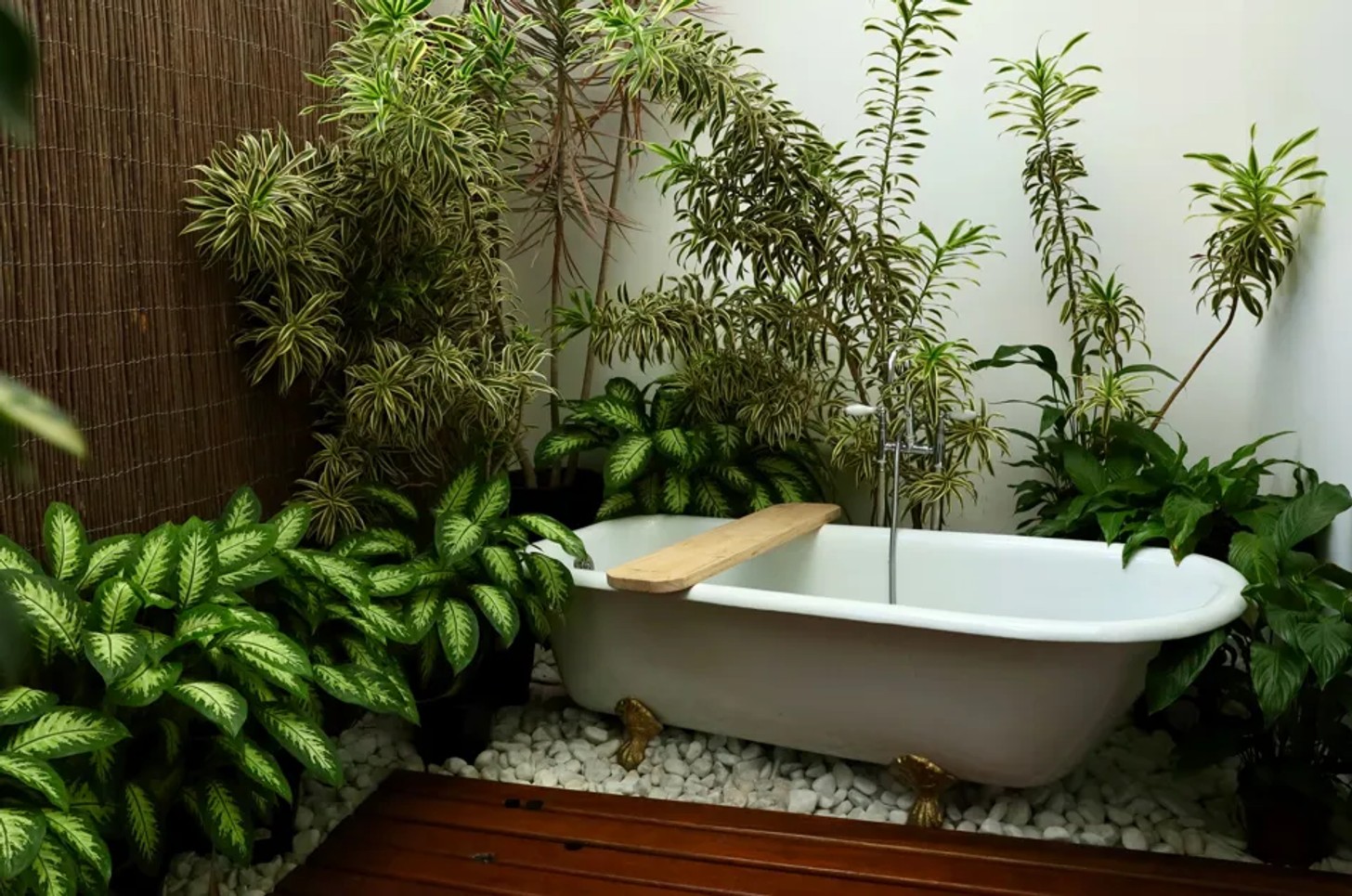
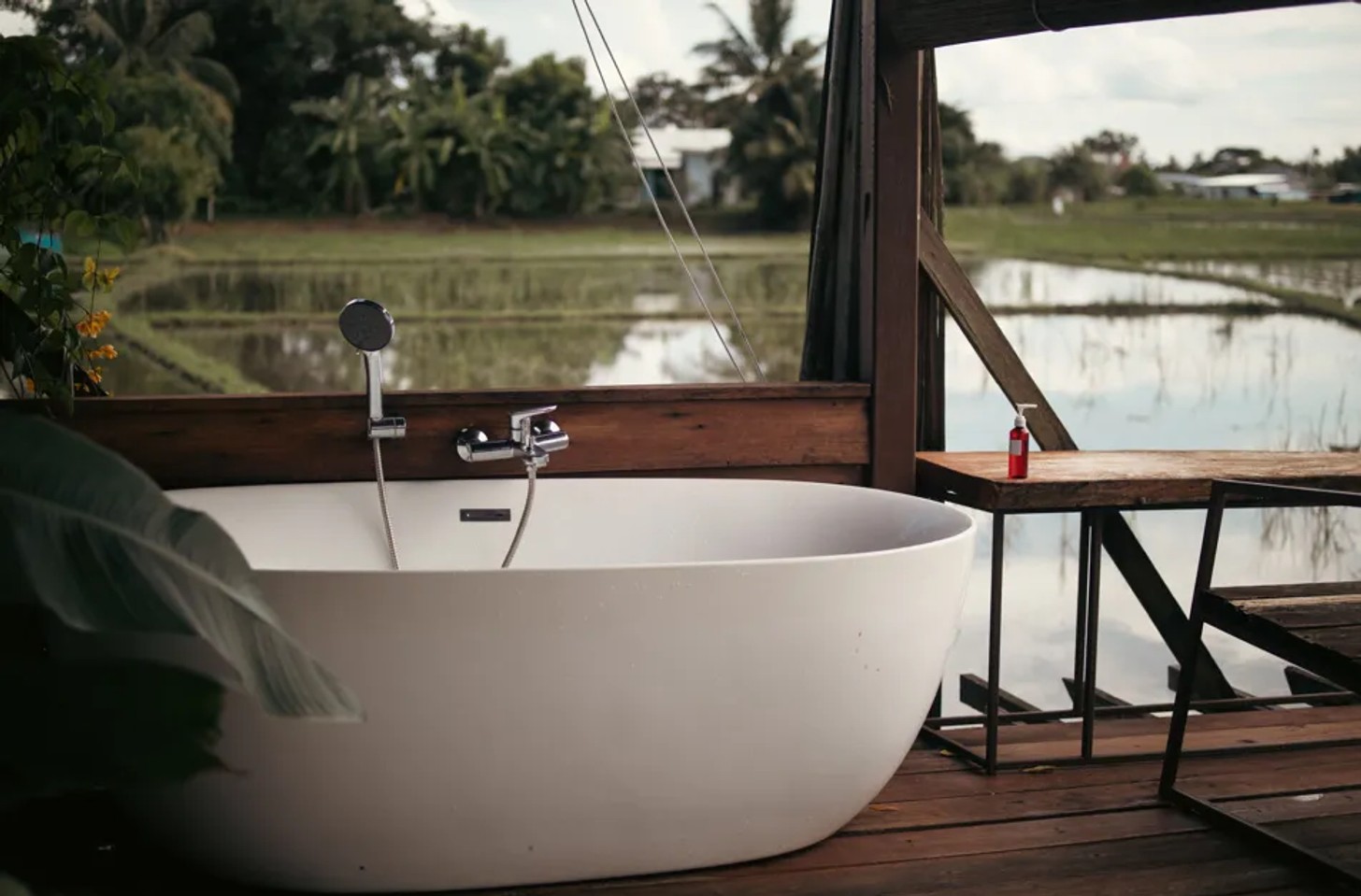
A sculptural freestanding tub positioned beneath the sky introduces a striking architectural element, especially when paired with a restrained material palette. Imagine a deep stone bath set against a textured wall, surrounded by lush planting or overlooking a private courtyard.
However, the experience does not need not be elaborate. A timber platform, discreet outdoor lighting, and a small ledge for bath essentials can be enough to create an atmosphere of understated luxury.
When planning an outdoor bath, consider its proximity to plumbing, the weight of the filled tub, and the need for enough screening. The most beautiful spaces are those designed to function as effortlessly as they look.
Create an atmosphere that invites you to linger
Wellness is as much about atmosphere as it is about space. Lighting, texture, and sensory details can transform an outdoor bathroom into a retreat that feels inviting throughout the day.
Warm, low-level lighting creates a softer ambience after sunset, while lanterns and subtle wall lights add depth without overwhelming the architecture.
Introduce tactile elements through outdoor towels, accessories, and weather-resistant seating. A small planted courtyard or a carefully positioned tree can provide shade and a sense of connection to the changing seasons.
For a more complete retreat, consider incorporating a compact sauna, a cold plunge, or a sheltered relaxation area depending on the available space.
Design for your own version of wellness
The most successful alfresco retreats are not necessarily the largest or most extravagant. They are the spaces that respond to the way you want to live daily.
By bringing architecture together with natural materials and considered design, an everyday outdoor space can become something far more meaningful: a personal sanctuary that makes slowing down feel like second nature.
Image Credits: Pexels


