
What happens when the calm character of a Napa Valley farmhouse meets the polished allure of a Parisian bistro? For hospitality brand Napa Bistro, the answer is shaped across two new restaurants in North Carolina, designed by FictionWorks, the studio co-founded by Andreas De Camps and Olivia King.
While Napa Bistro & Wine Bar Stonecrest in Charlotte and Napa Bistro & Wine Bar Glenwood in Raleigh share the same footprint, each restaurant interprets the concept differently. In Charlotte, an existing space was transformed through a renovation that retains traces of its original character. Raleigh, meanwhile, is a ground-up project designed as the centrepiece of a new residential neighbourhood.

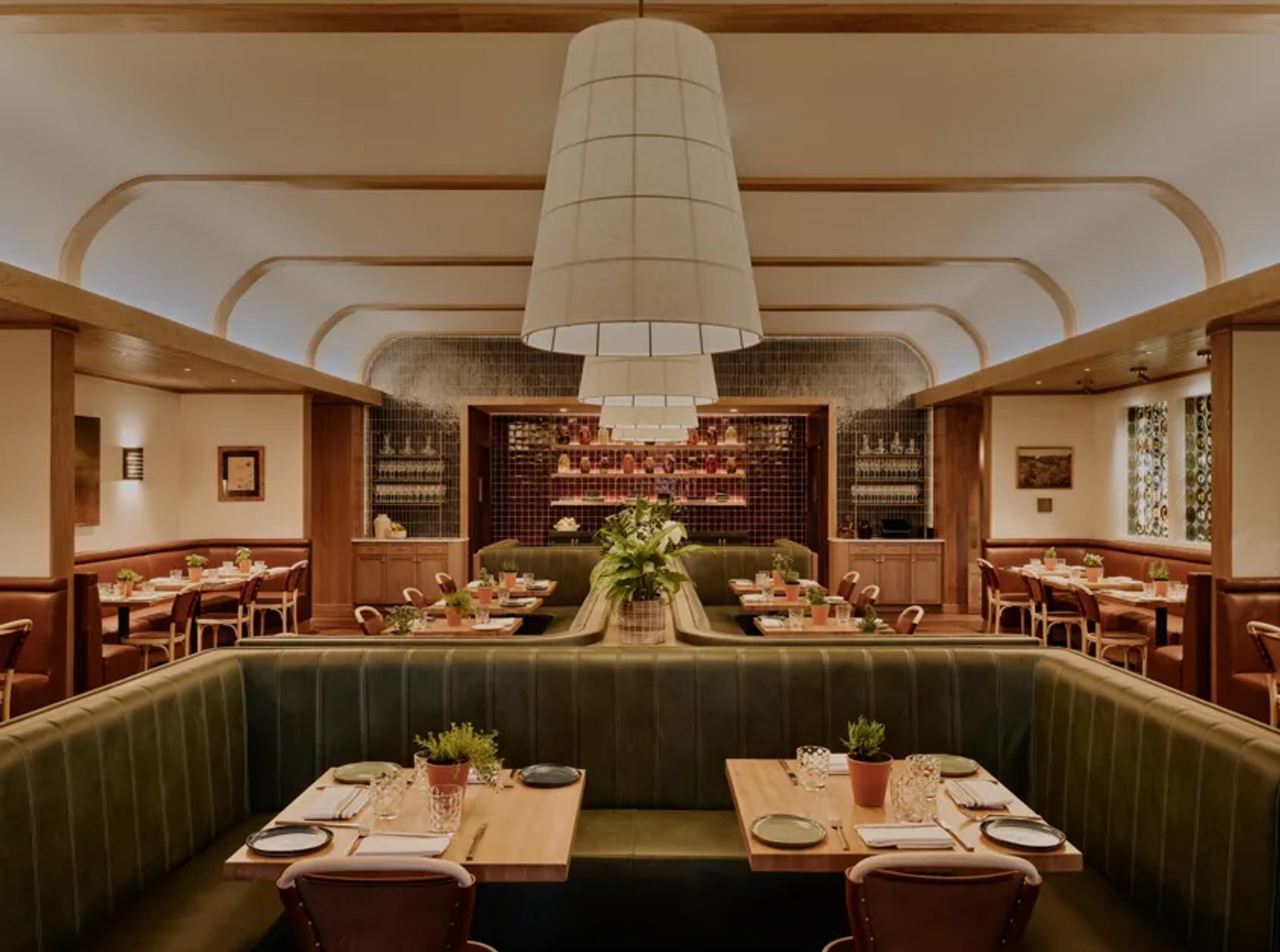
Both are located in one of the US's fastest-growing regions, but their interiors offer different expressions of the same story.
The starting point for that story is the Paris Wine Tasting of 1976, better known as the Judgment of Paris. The landmark blind tasting placed wines from California alongside some of France's most celebrated bottles, with Napa Valley wines taking the top position in both the Chardonnay and red wine categories. Beyond its influence on the wine industry, the event represented a moment of cultural exchange – and challenged long-held assumptions about where exceptional wine could come from.
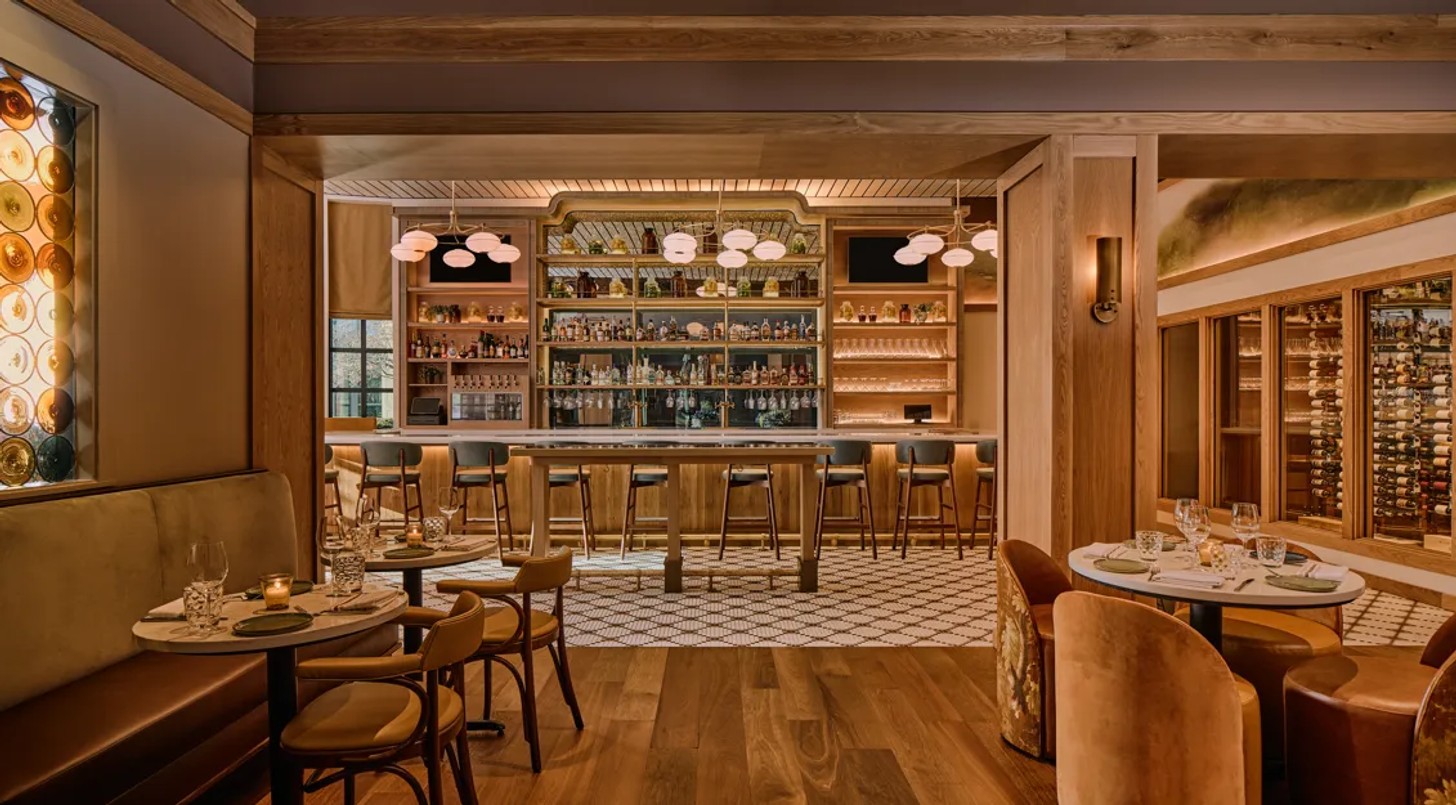
Instead of reproducing the competition literally, FictionWorks used it as a conceptual springboard. “Rather than recreating the event literally, we used it as the foundation for the restaurant's story, celebrating discovery, craftsmanship, and the idea of challenging expectations,” the team explains. “That same spirit shaped every aspect of the design, creating a space that feels familiar but also unexpected.”
That tension between the familiar and the unexpected is evident in the material palette. Rich timber, natural stone, soft upholstery, and vintage-inspired lighting establish the warmth associated with California wine country, while black-and-white tile, sculptural details, and considered brass and bronze accents introduce the refinement of a traditional French bistro. Subtle references to the 1970s – the decade in which the Judgment of Paris took place – add another layer to the interiors without tipping into nostalgia.
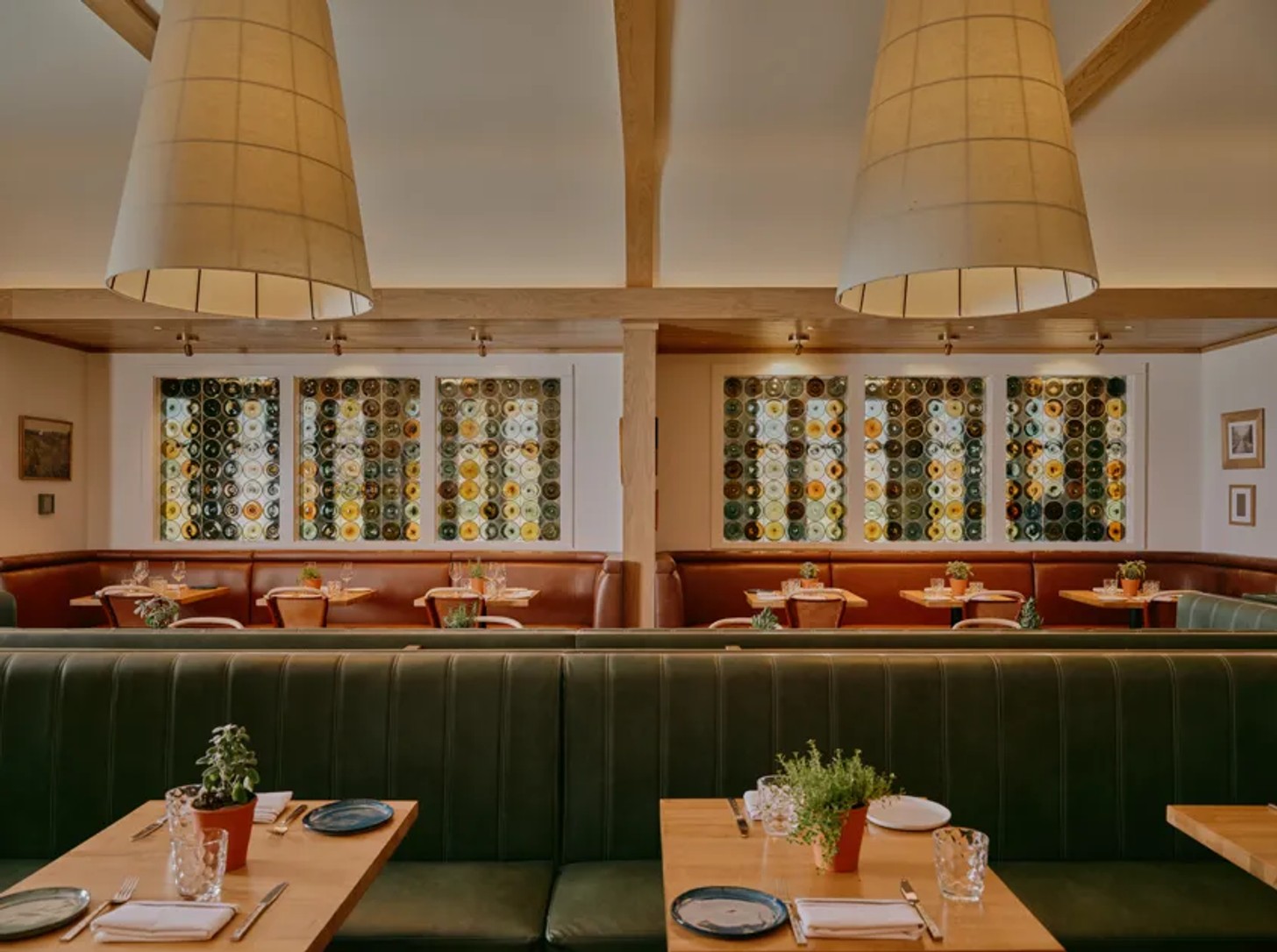
Colour plays an equally important role. Deep greens reference Napa's vineyards, while amber, burnt orange, and warm gold recall the tones of aged wine and vintage interiors. A custom stained-glass installation, made from hand-blown rondels, brings colour and texture into the spaces, while its form subtly references the punt of a wine bottle.
Art further develops the narrative. Photography and digital works by Julia Crane, an artist-in-residence at Chappellet winery in Napa Valley, appear in both restaurants, introducing a contemporary perspective alongside archival imagery documenting Napa Valley's evolution. Salvaged Napa Valley artefacts and work by Charlotte-based artists connect the broader story to its origin, ensuring the interiors feel rooted in their surroundings.
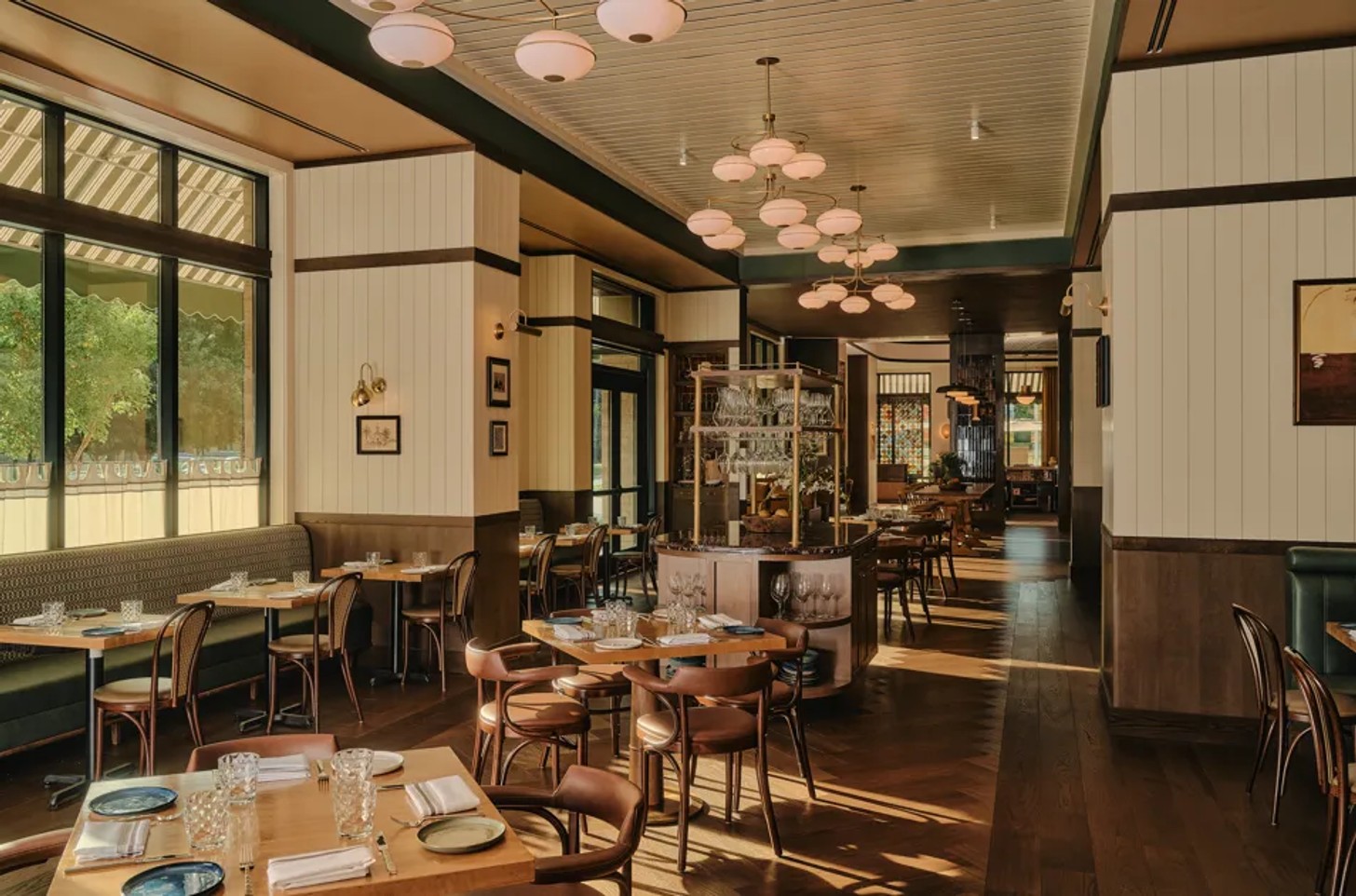
The restaurants were also designed around how people actually use them. “The goal was to create a restaurant that feels approachable enough for a casual weeknight dinner while offering the sense of occasion people look for when celebrating over a great meal and a bottle of wine,” says FictionWorks. Intimate seating and carefully scaled spaces encourage guests to relax, balancing everyday dining with the celebration of a special occasion.
In Charlotte, that experience unfolds through a sequence of connected rooms inspired by the rhythm of a Napa Valley farmhouse. Each space has its own character, creating an intimate progression through the restaurant. A curved acoustic ceiling by BASWA Acoustics adds another functional layer, softening sound while contributing to the movement and visual rhythm of the interior.
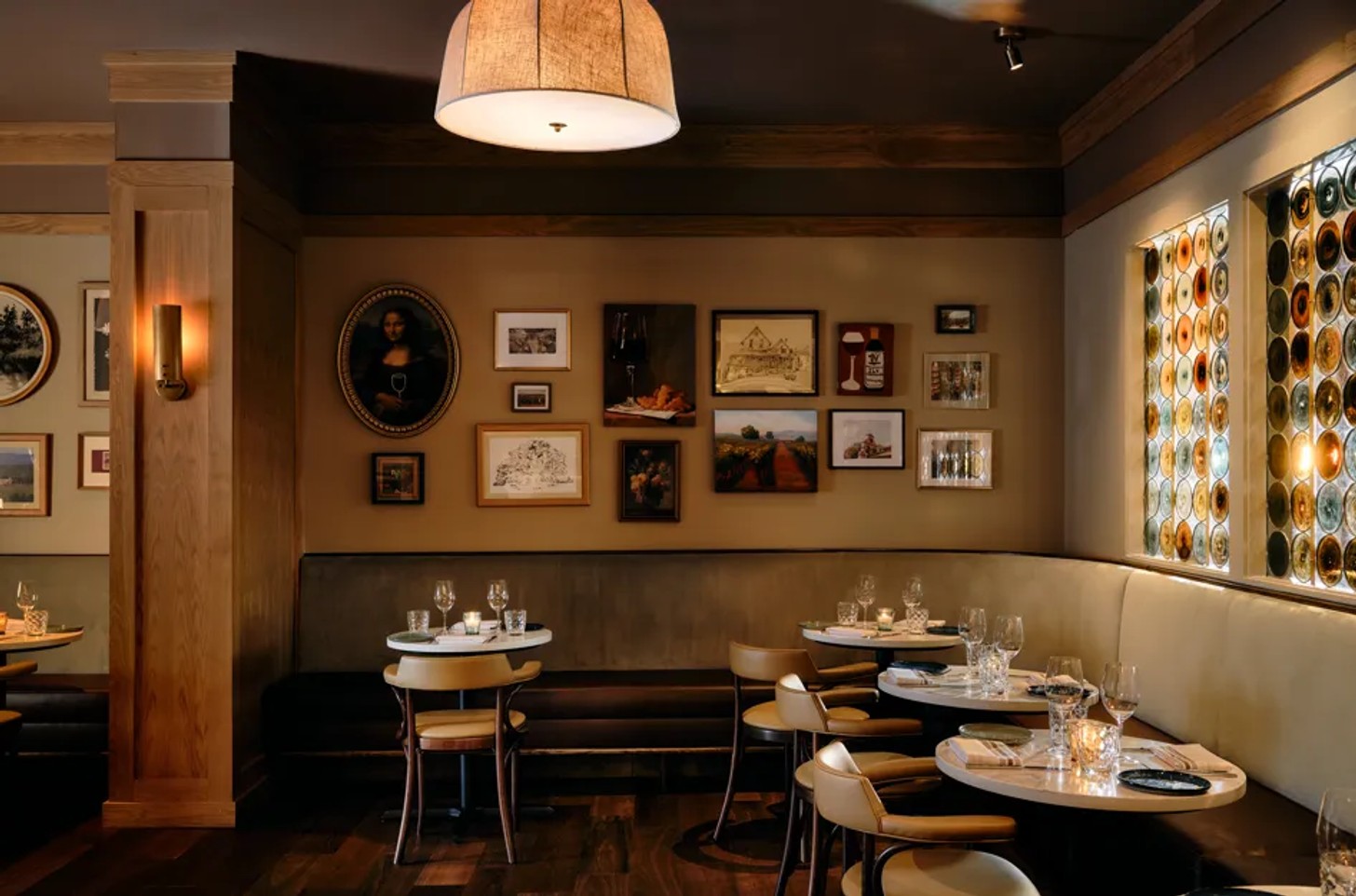
Raleigh takes a different approach. Its more expansive dining room draws from the scale and energy of a French brasserie, with a lively bar anchoring the space. The dining area maintains a visual connection to the open kitchen and expo line, while a private dining room provides a quieter setting. At its centre, a custom decanter station combines warm timber, stone and brass shelving, turning wine service into part of the architecture.
Together, the two restaurants reinterpret a defining moment in wine history through contemporary hospitality design. Rather than choosing between the relaxed spirit of California and the sophistication of France, Napa Bistro allows the two to coexist – creating spaces shaped as much by craftsmanship, art, and atmosphere as by the story of the wine that inspired them.
Credits
Interior design: FictionWorks (co-founded by Andreas De Camps and Olivia King), Instagram @fictionworks.design
Architecture: In Situ Studio
Photography: Pablo Enriquez, Instagram @pablo.enriquez


