
Johannesburg-based garden designer Liz Steyn, shows how a small garden can be every bit as generous as a large one- a formal framework filled with romantic planting, and the simple pleasure of something always in bloom.
The Season of Smallness
In Johannesburg, where gardens have long been lavish in scale, a quieter shift is underway. The move towards more compact homes and gardens that are learning to do more with less.

This 1000-square-metre property, largely claimed by the house itself, leaves only fragments of space for planting. Yet in the hands of garden designer Liz Steyn, constraint becomes an invitation to distil and compose. Rather than lament what is lost, Steyn leans into what remains, designing a garden that feels intimate, enveloping, and personal. ‘A small garden asks for precision but it also offers a kind of closeness you can’t achieve at scale,’ she says, ‘Here, every centimetre is considered.’
An Inward Garden
Unlike the expansive, outward-looking gardens of the Cape, Johannesburg gardens have long turned inward. Liz begins, as always, with orientation. Establishing true north allows her to choreograph light and shade, guiding planting decisions that respond to both summer intensity and winter retreat. From there, the question becomes more client-centred and philosophical - how should the garden feel, how does one want to use the space? ‘I always try and create a garden that has soul - a space which my clients will love and where they can sit quietly and gather their thoughts.’
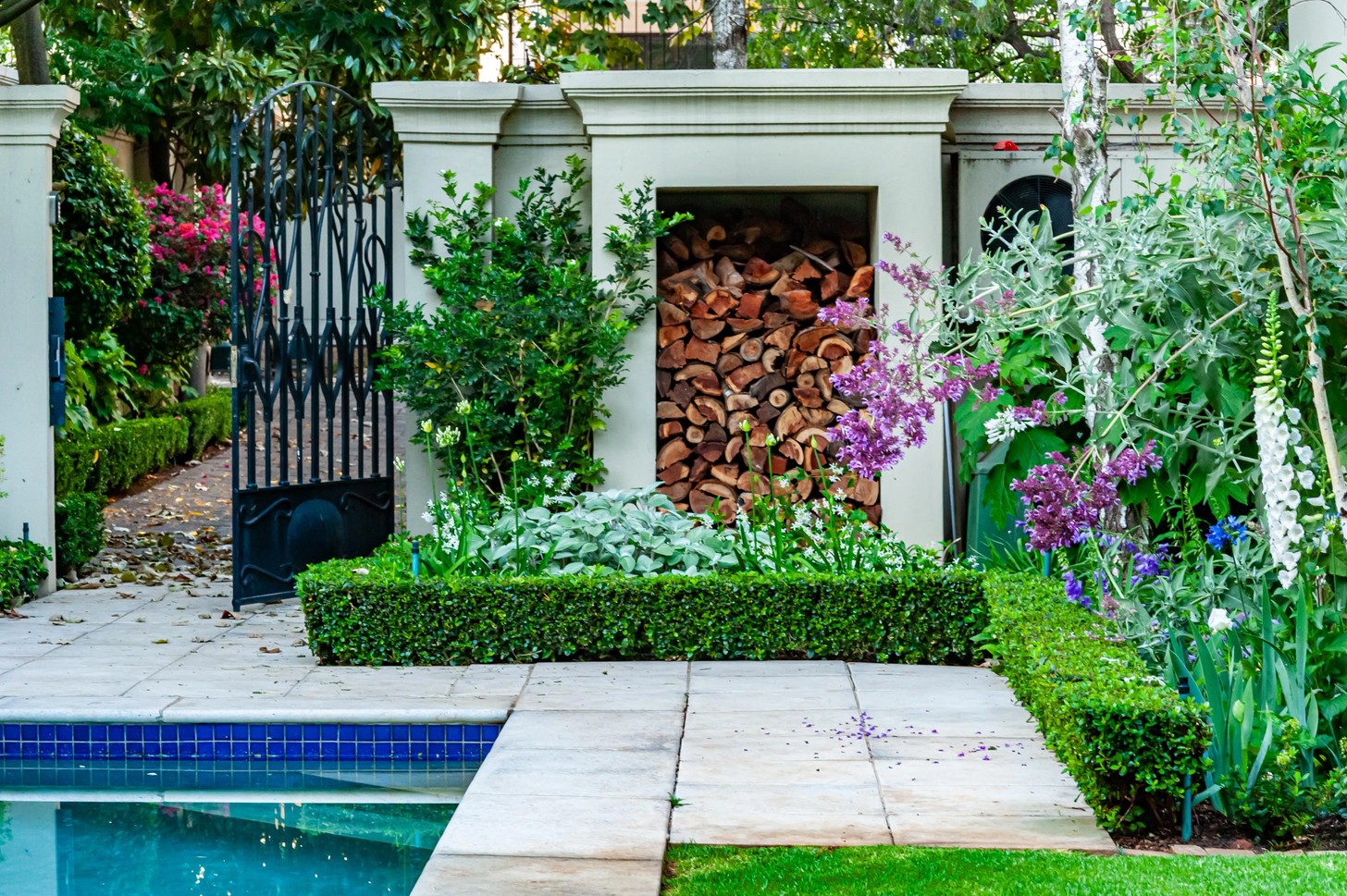
This is not a garden that borrows from the landscape beyond, it is self-contained and composed as a series of tightly held spaces. Privacy is resolved through structure in addition to screening. Liz uses a combination of hedging, layered evergreens and perennials, and carefully controlled sightlines to create the feeling of enclosure. Traffic and external noise is softened with flowing water and dense planting.
Structure First, Romance Within
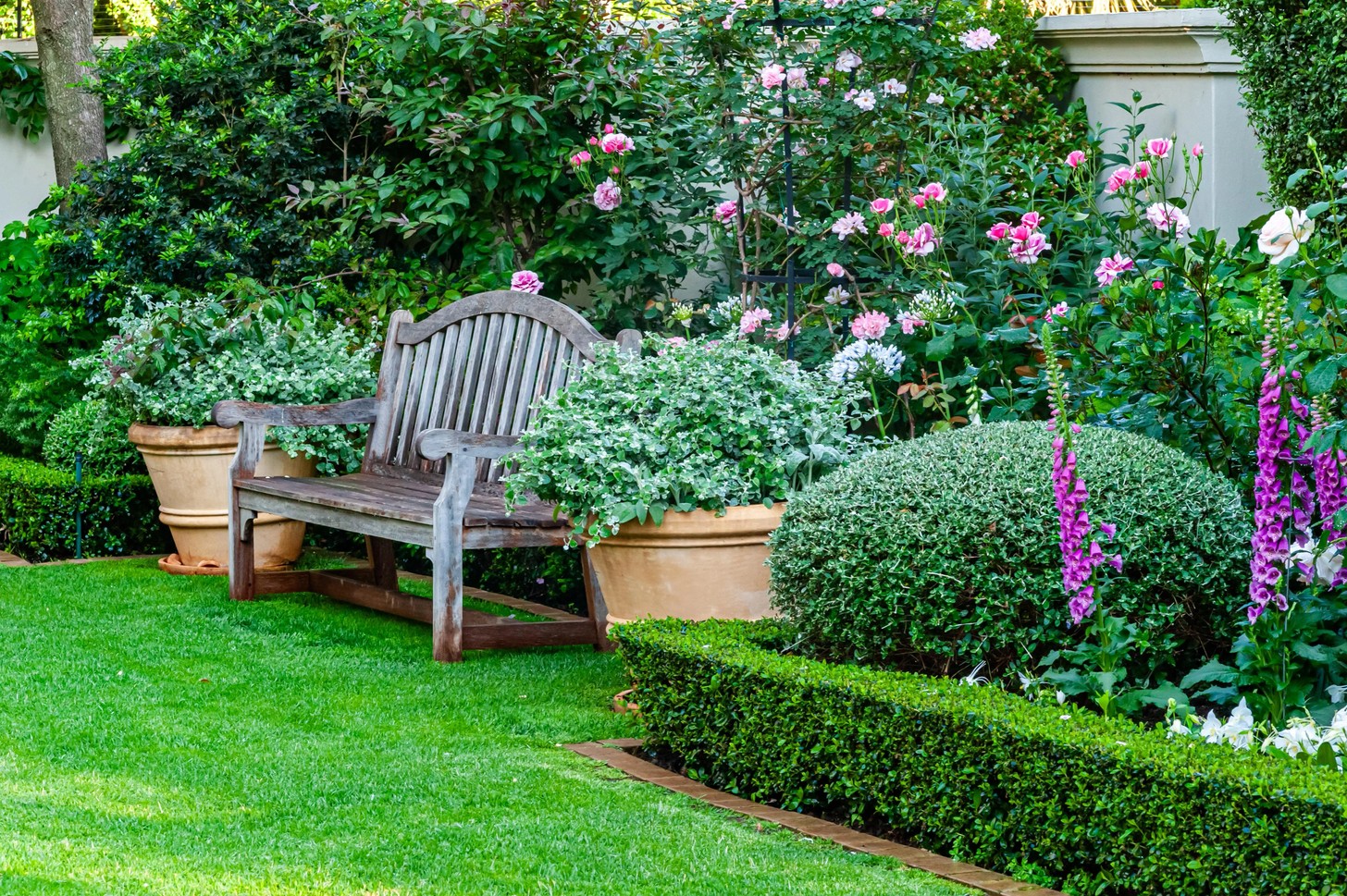
The formal bones of the garden have been softened with an abundant, flower-laden plant palette - a tight geometry filled with something far more unruly. A linear 20m pool defines the eastern edge and a modest lawn - a step down from the patio, creates both spill-over entertaining and central breathing space for the design. Borders are tightly composed with evergreen shrubs, climbing roses on stands and seasonal perennials. But within this framework, the planting loosens.
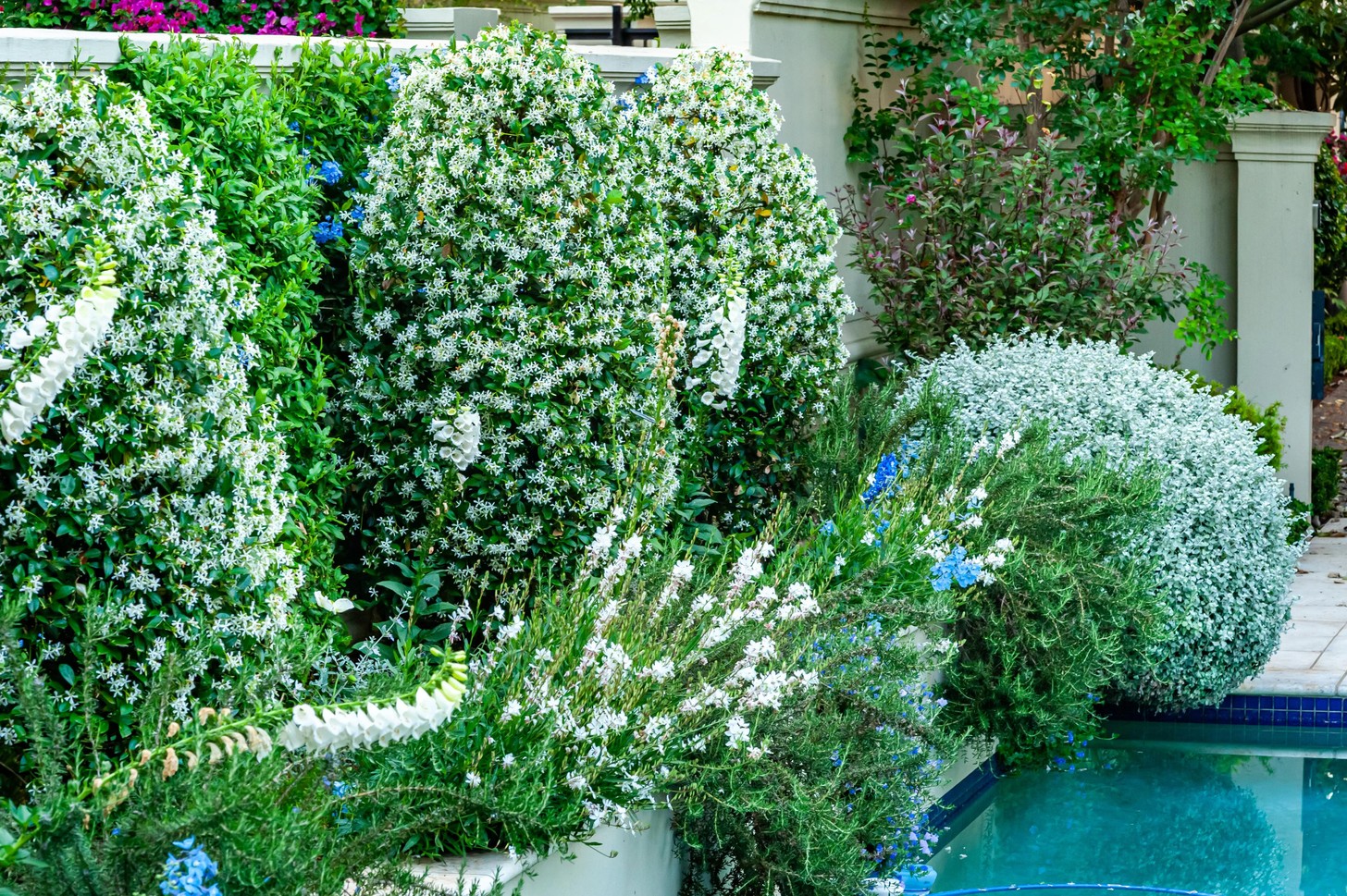
A west-facing, raised planter box softens the hard edge of the pool. A cascading palette of heat-tolerant plants have been selected for year-round interest. ‘Structure gives the garden its bones but planting is where it begins to breathe,’ says Liz. Here, cascading Rosemary ‘McConnel’s Blue’ flowers in winter; obelisks are covered in late spring and early summer- flowering star jasmine; Plumbago ‘Cape Royal’ and delphiniums explode into bloom in summer; and silver-coloured Helichrysum and blue convolvulus provide year-round appeal.
The result is enduring, a language of gardening that values traditional formality, generosity and continuity.
Planting for All Seasons
Perhaps the greatest challenge lies in the northern border - a space that bakes in summer yet retreats into shade for much of winter. Here, Liz builds in layers. A low, clipped hedge of Escallonia ‘Pink Princess’ behind which evergreen shrubs Pittosporum, Viburnum and Camellias, anchor the composition. Fragranced roses ‘Roberto Capucci’ and ‘Nahema’ thread through the scheme in summer, joined by other seasonal performers: foxgloves and aquilegia in winter, delphiniums and salvias in summer.
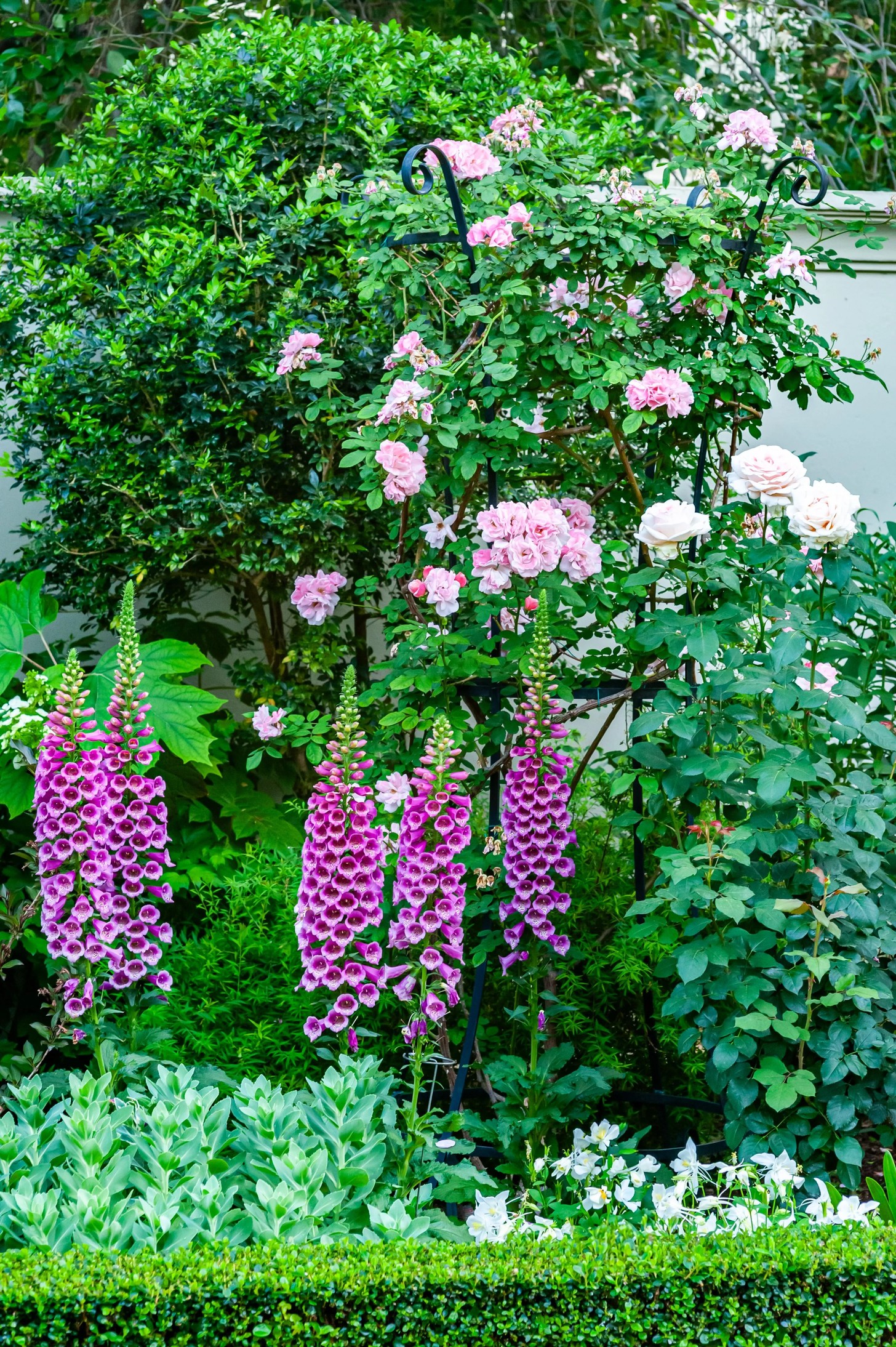
Even the narrowest beds are composed in three dimension and across time. ‘I like a border to feel magnanimous - never empty, never waiting for its moment,’ comments Liz. This is planting for year round garden living, rather than singular climax. A garden that holds its fullness throughout the year.
Illusions of Space
In the tightest part of the garden, Liz turns to the subtle tools of illusion: along the western edge, a narrow three-metre corridor with difficult low light, she introduces a water feature deliberately oversized for the space. Positioned just beyond a picture window, it draws the eye outward, expanding the perceived width of the garden while softening its edges with sound.
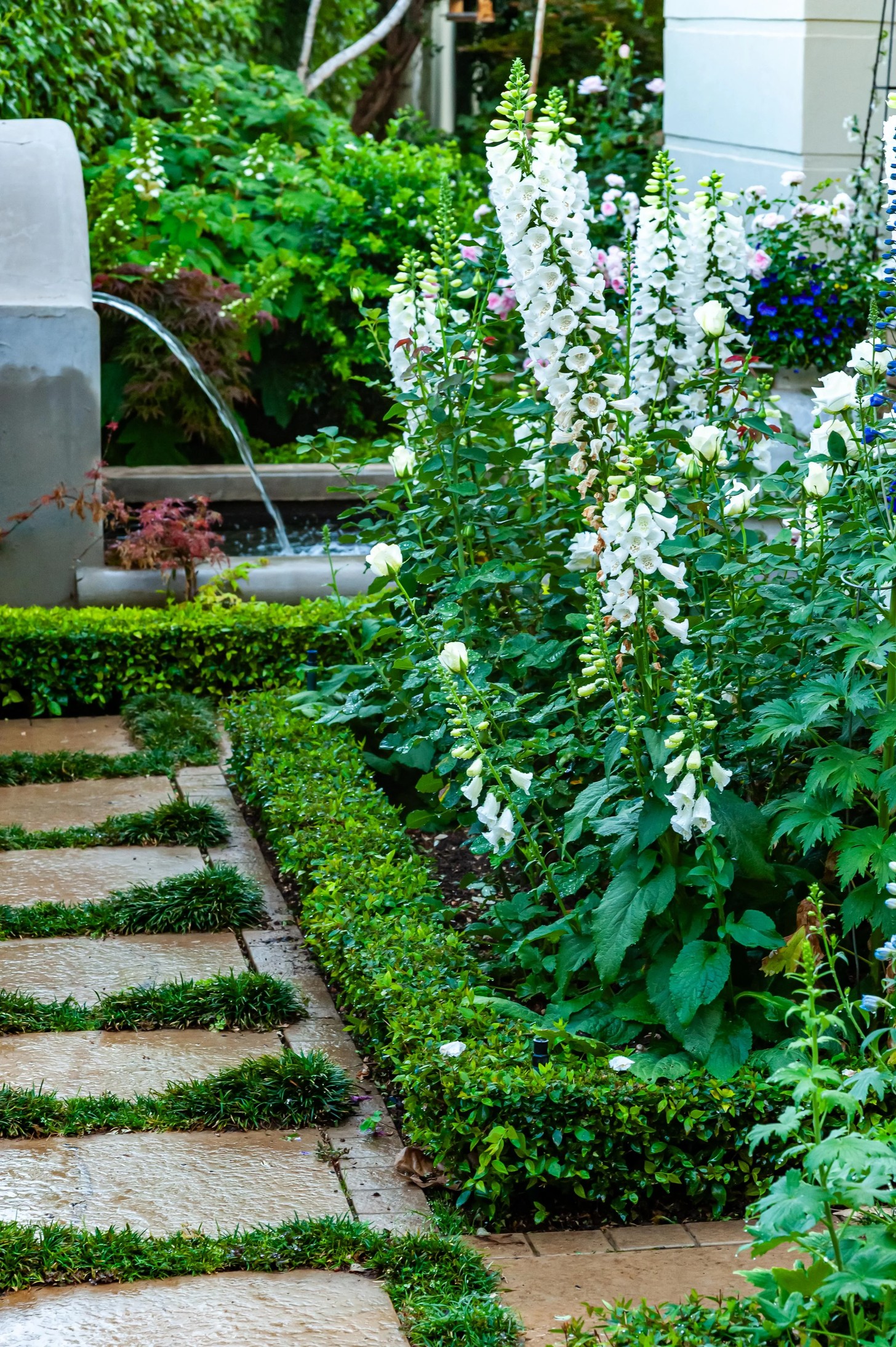
Elsewhere, repetition, layering and vertical planting lend depth where there is little room to spare. ‘If a space is small, I don’t make everything smaller, I give it something generous to hold onto,’ she says. It is a quiet sleight of hand, the garden feels larger not because it is, but because it is experienced that way.
A Garden Out of Time
There is something enduring at play here, something beyond a mere traditional formal garden. An adherence to a slower, more attentive way of gardening. Yes, there are old roses. Yes, there are clipped hedges and layered borders. But what emerges is not nostalgia, it is atmosphere.
Some gardens follow trends, others follow seasons. In an age of pared-back landscapes and architectural restraint, this garden offers a return to romance, to abundance, to the pleasure of a garden that feels alive all year round. And in a smaller space, that experience becomes all the more immediate.
Credits
Text by Heidi Bertish
Images: Connall Oostebroek


