
Drawing inspiration from the historic architecture of its surroundings, this 178-square-metre Moscow apartment by interior designer Katya Begicheva is an elegant exploration of colour, craftsmanship and collected design. Vintage furniture sits alongside contemporary artworks and bespoke decorative pieces, creating a family home that feels sophisticated yet deeply personal.
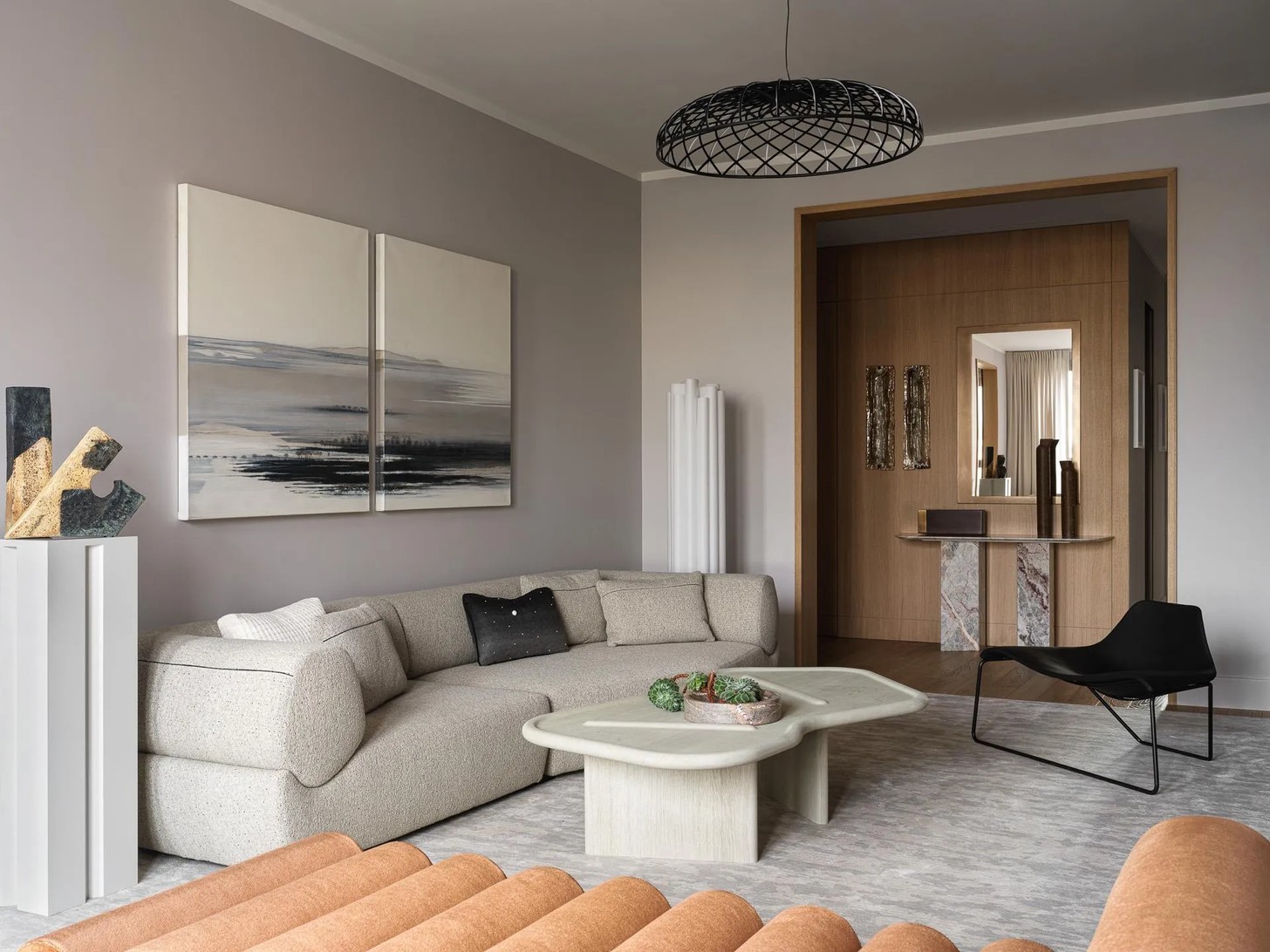
Located near the former Imperial State Wine Warehouses No. 3, built between 1899 and 1901 to a design by architect Alexander Roop, the apartment takes subtle cues from its architectural surroundings. Having worked with the homeowners previously, Begicheva approached the project with an understanding of their tastes and lifestyle.

An Architectural Approach to Space
Working with the apartment's existing floor plan, Begicheva reorganised the interior into three distinct zones: a formal living and entertaining area, a main bedroom suite and a private wing accommodating the family's two daughters.
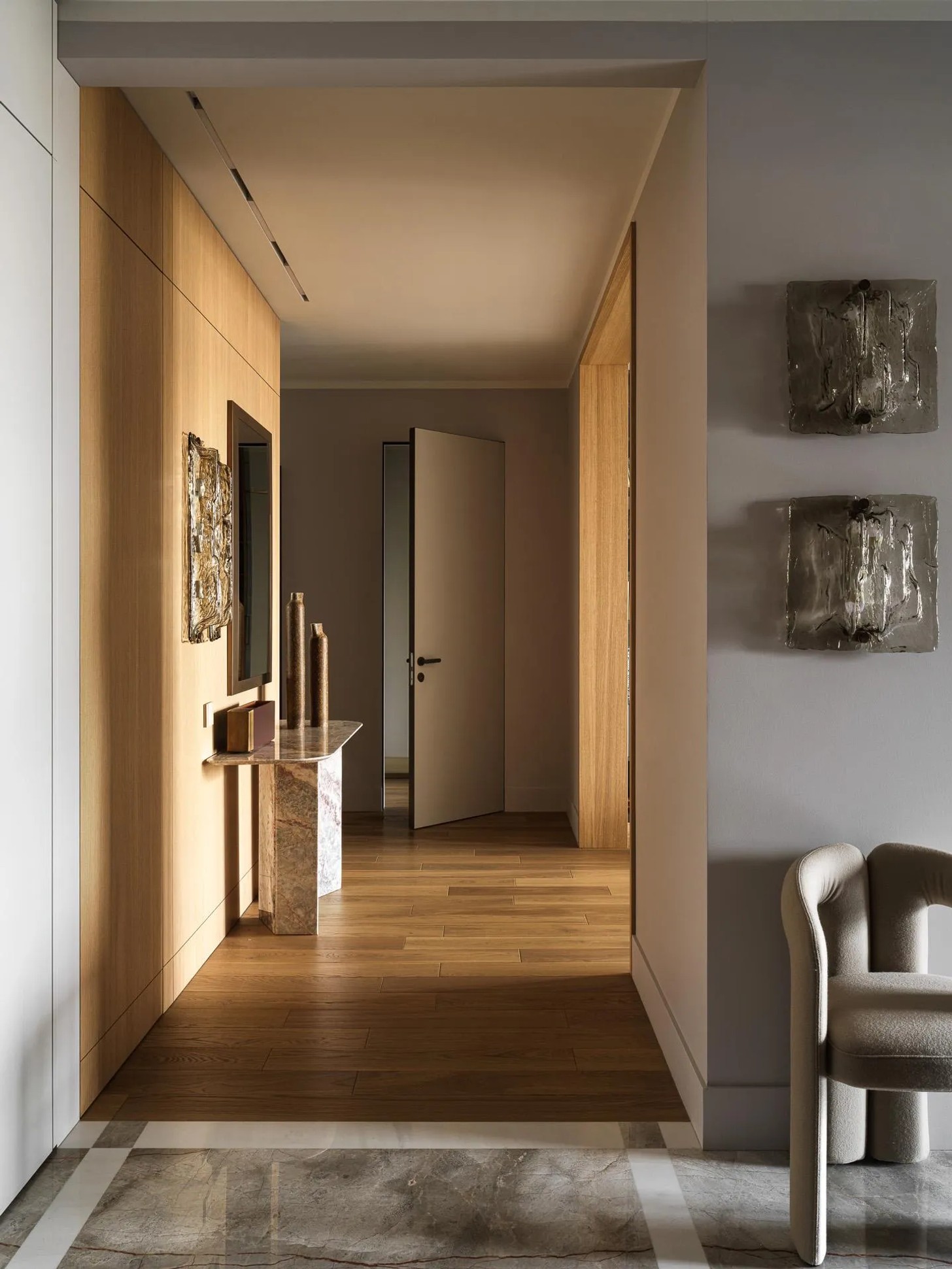
Architectural gestures introduce a sense of rhythm throughout. Repositioned doorways align along a single axis, while two portals in the living room establish a circular enfilade, referencing the spatial arrangements traditionally associated with palace architecture.
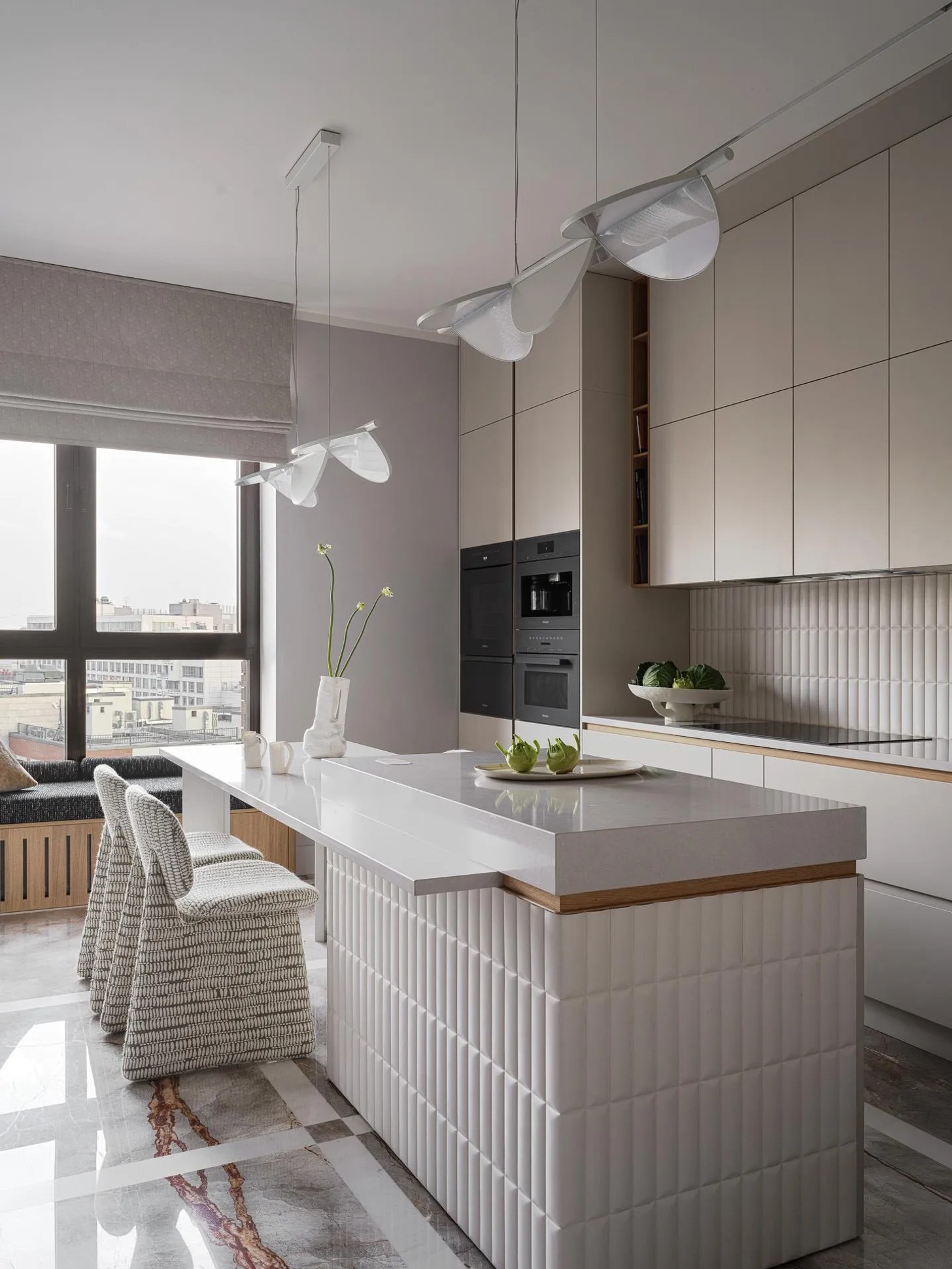
Despite these classical influences, the layout responds to contemporary family life. Rather than incorporating a formal dining area into the living room, Begicheva focused on elevating the kitchen and dining space through considered furniture, lighting and tactile finishes.
A Colour Palette Inspired by History
The neighbouring warehouses' red-brick façades informed the apartment's colour palette. Against a restrained foundation of pearl grey and oatmeal, warm terracotta and brick tones introduce richness, while graphite and matte bronze provide definition. Green appears as a secondary accent, particularly in one of the daughters' bedrooms.
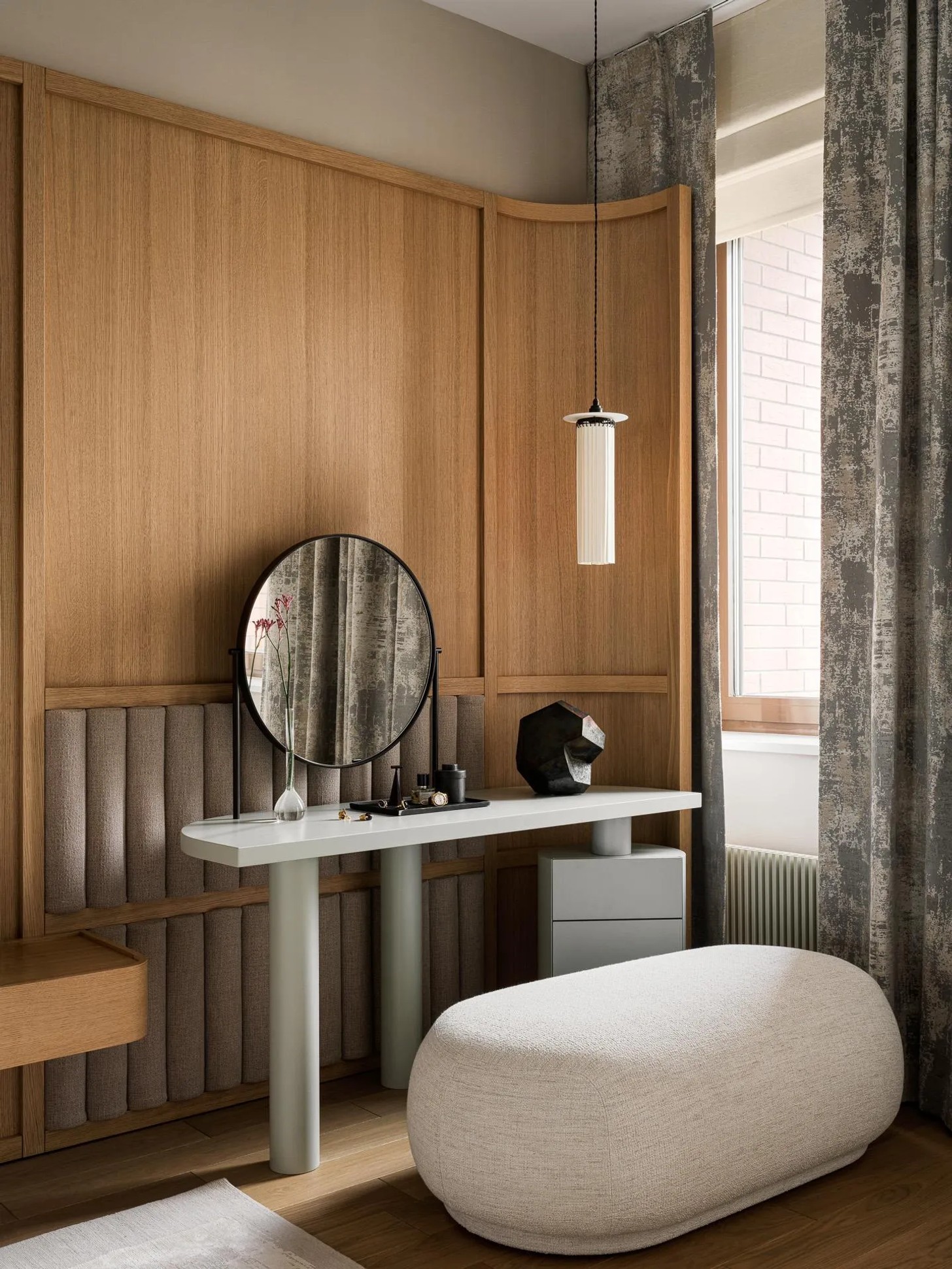
Natural materials take precedence over polished gold finishes and stark contrasts, allowing texture and craftsmanship to become defining features of the interior.
Collecting Across Design Eras
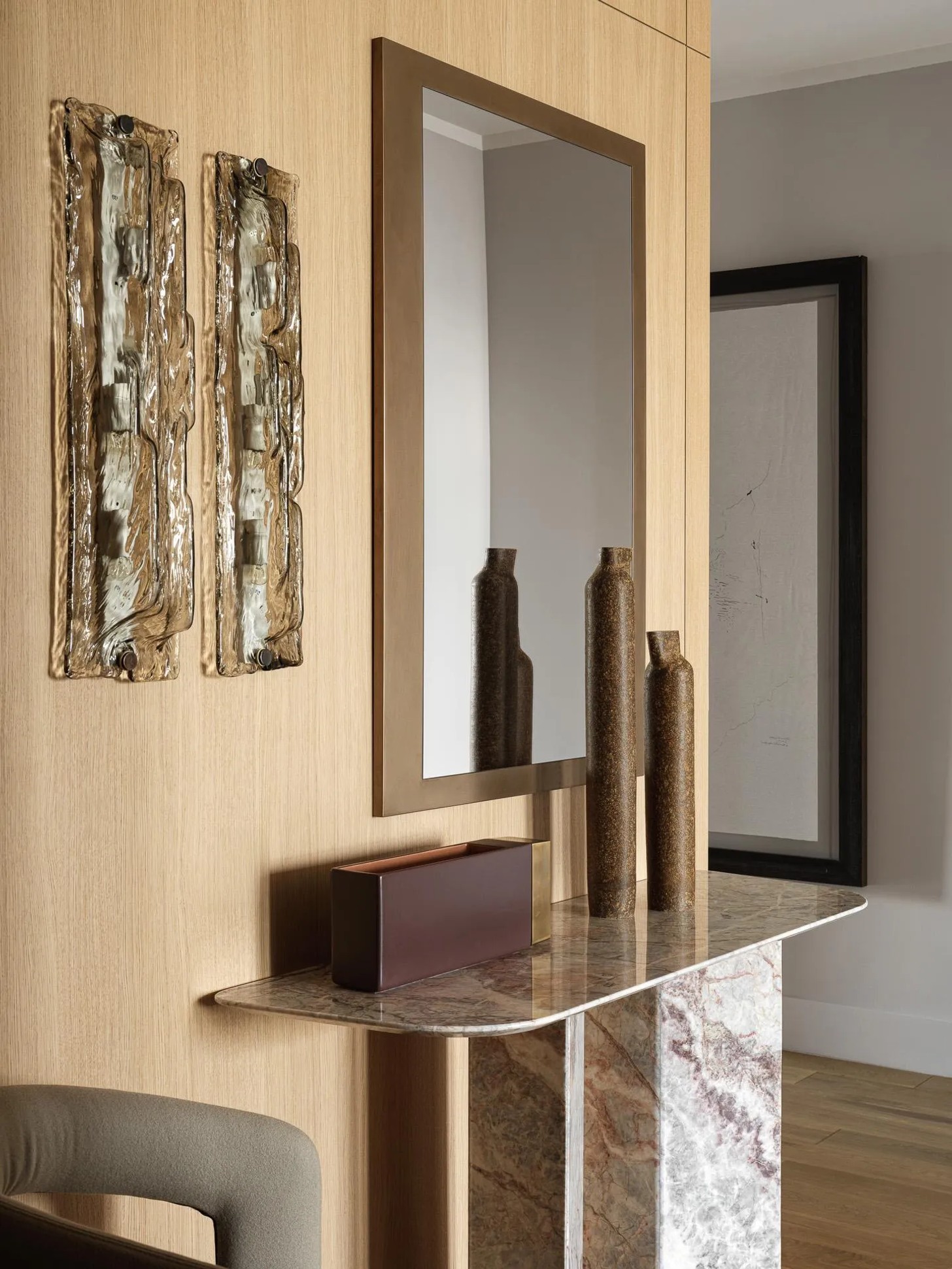
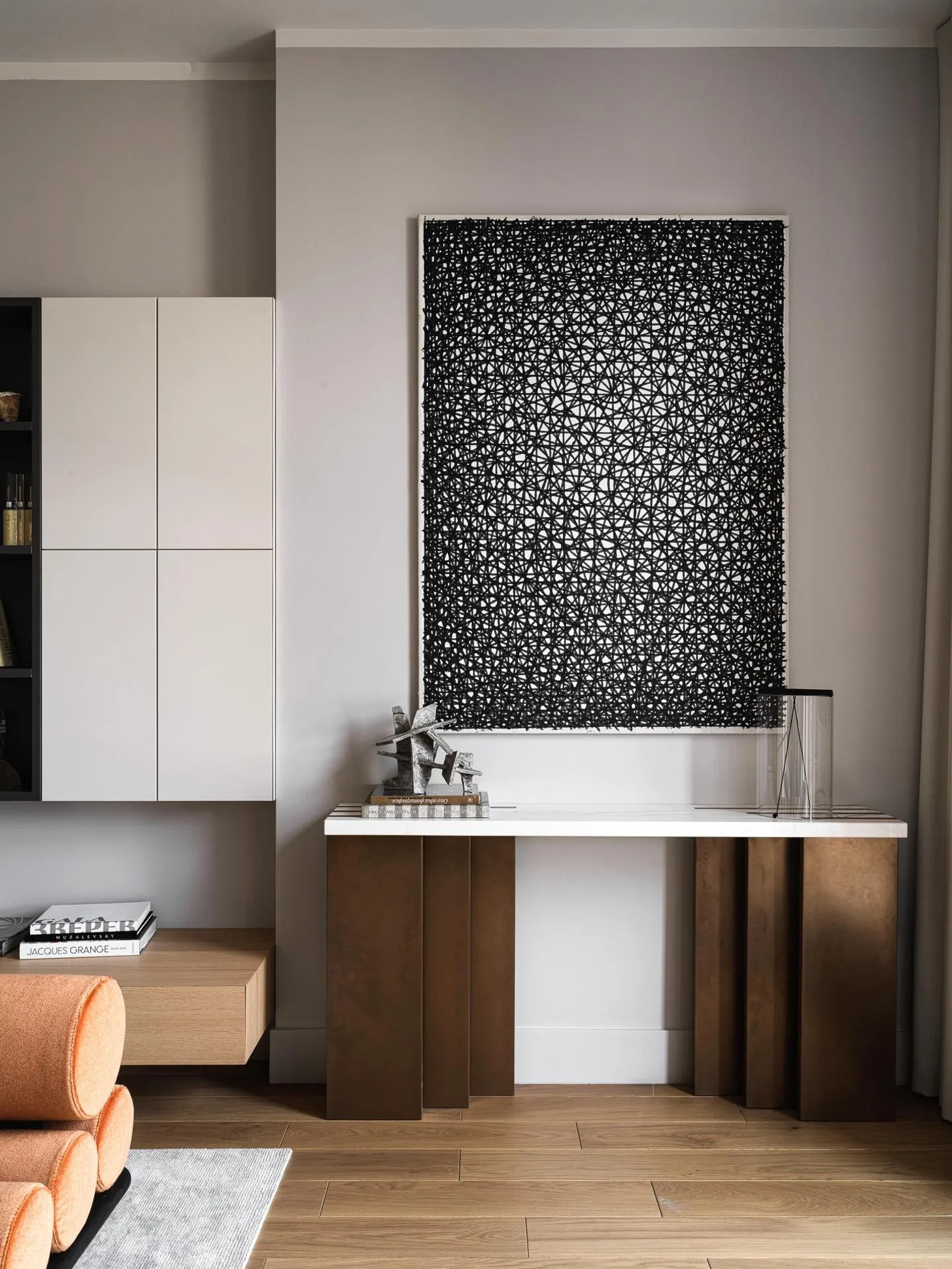
“I try to incorporate vintage pieces into every project, as they add depth and a sense of history,” says Begicheva. In the entrance hall, rare 1970s wall sconces designed by Toni Zuccheri for Venini introduce textured graphite glass, complementing a marble console and mirror.
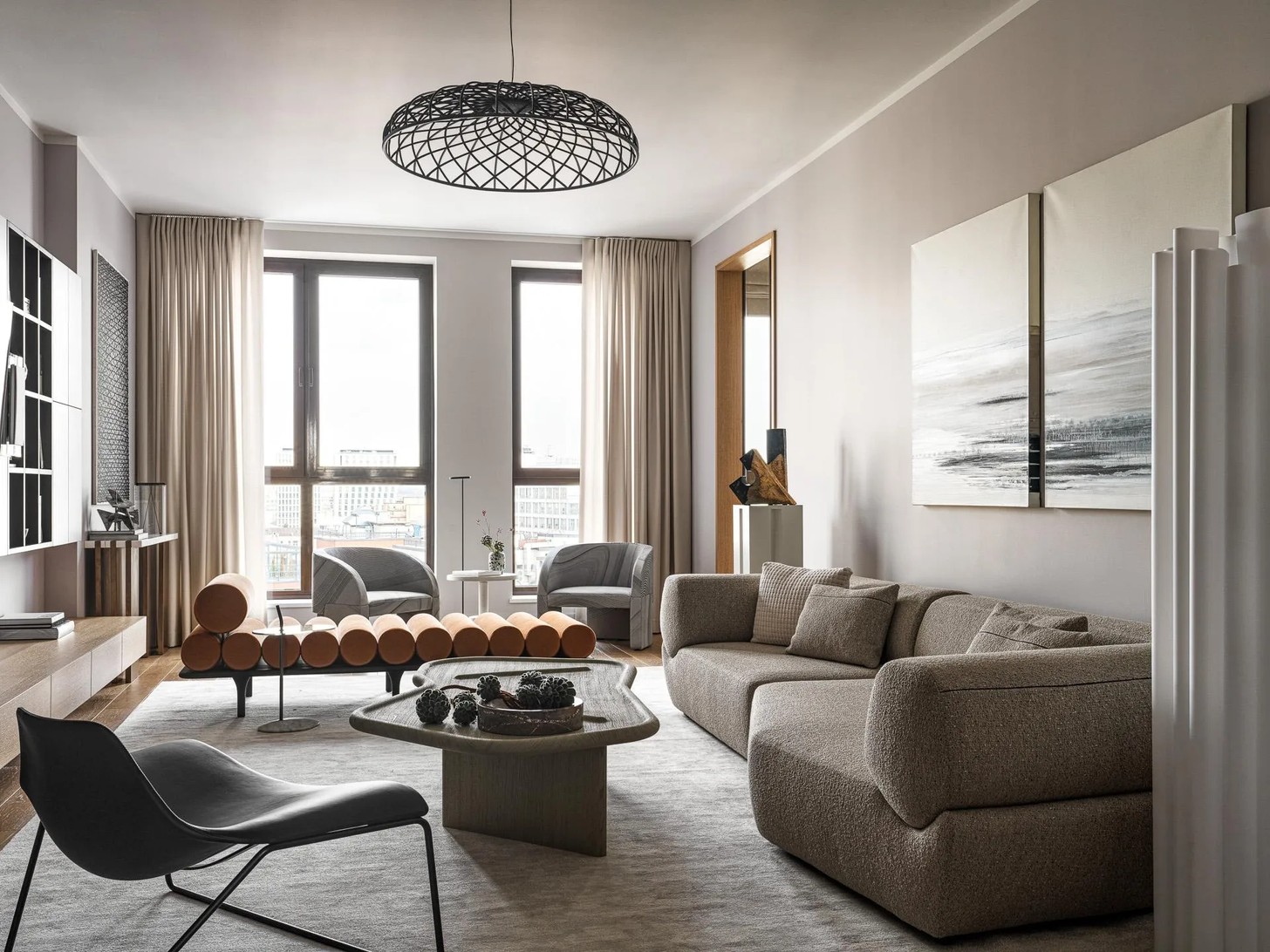
The living room continues this dialogue between past and present. A sculptural daybed by Studiopepe for Tacchini provides a focal point, alongside a deeply brushed oak table handmade to a design by Christophe Delcourt. A polycarbonate floor lamp by Brian Thoreen for Tacchini softly diffuses light, while a sculpture by Konstantin Stanovov introduces another artistic dimension.
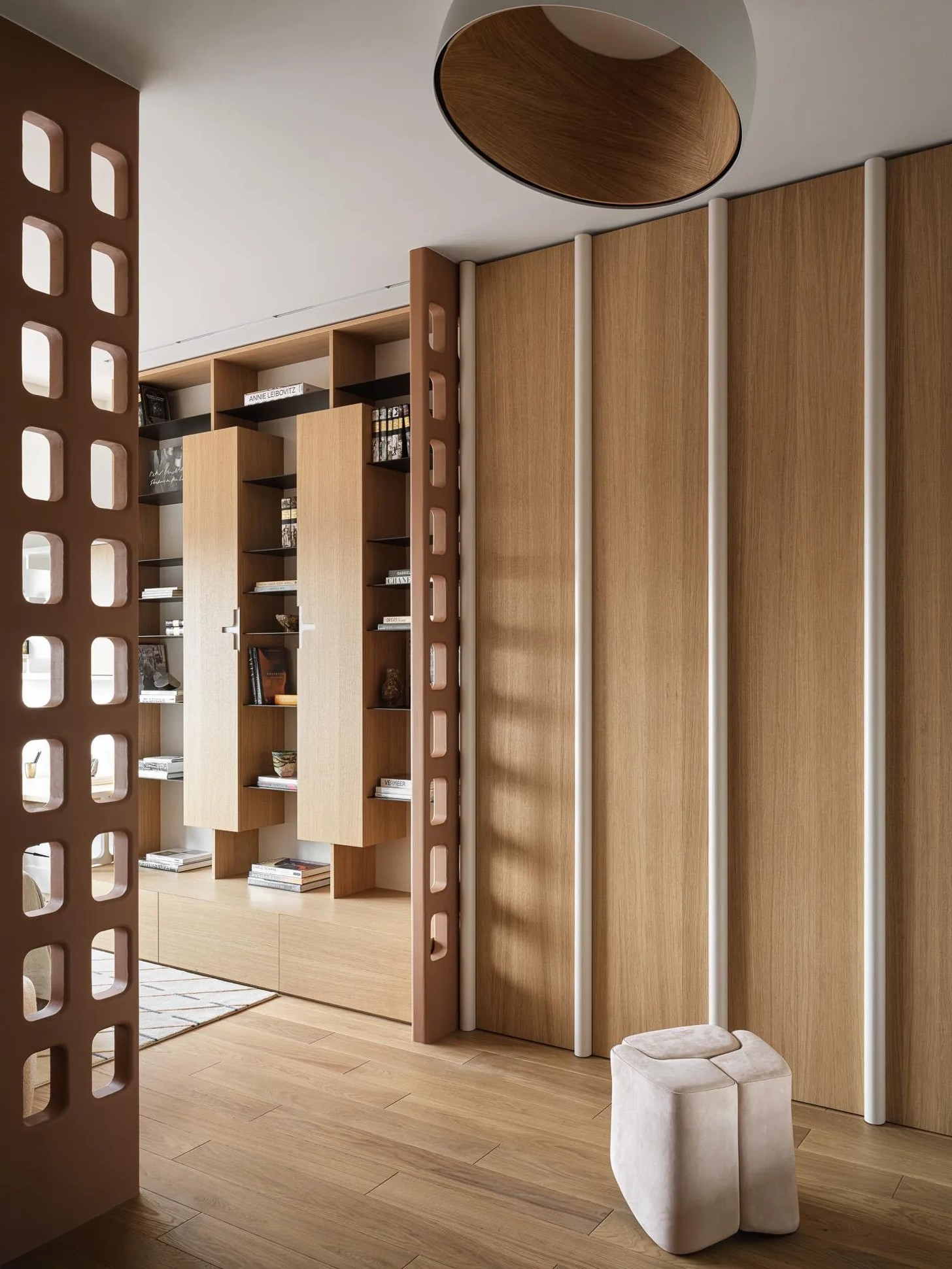
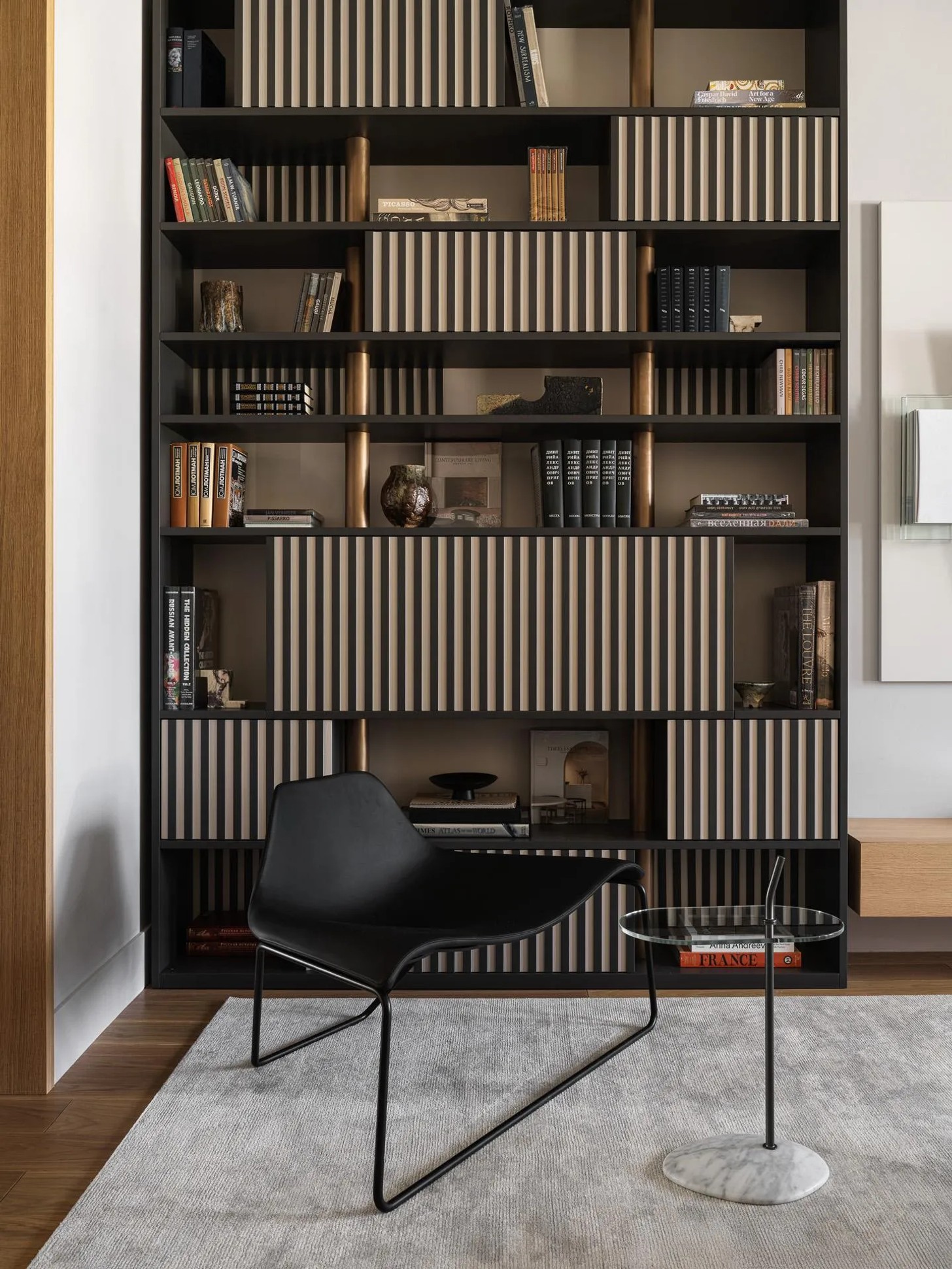
Bespoke shelving accommodates the homeowners' extensive library, incorporating a discreet secrétaire with integrated lighting. Near the panoramic windows, armchairs and a small table create an intimate setting for reading and quiet reflection.
Texture and Craftsmanship in the Kitchen
Three-dimensional matte ceramic tiles from the Biscuit collection lend the kitchen a tactile quality, their relief surfaces accentuated by changing light and shadow. Pierre Frey's Meringue dining chairs reference 1960s design, with textured upholstery that echoes the ceramic finishes.
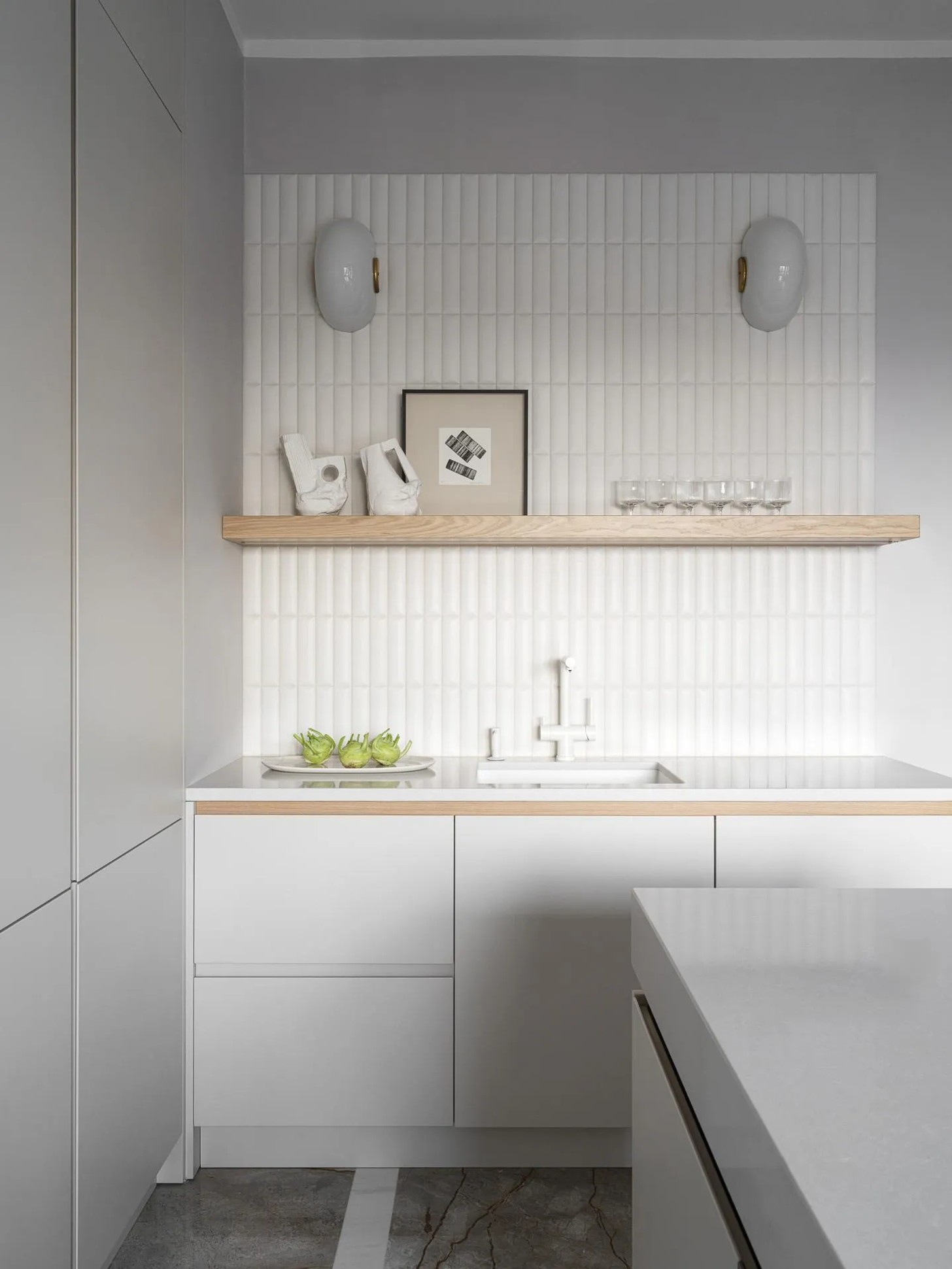
A photograph by James Hill from his Monumental Mosaics of Moscow series introduces an artistic connection to the city, while a built-in window seat offers a comfortable spot for morning coffee.
Private Spaces With Individual Character
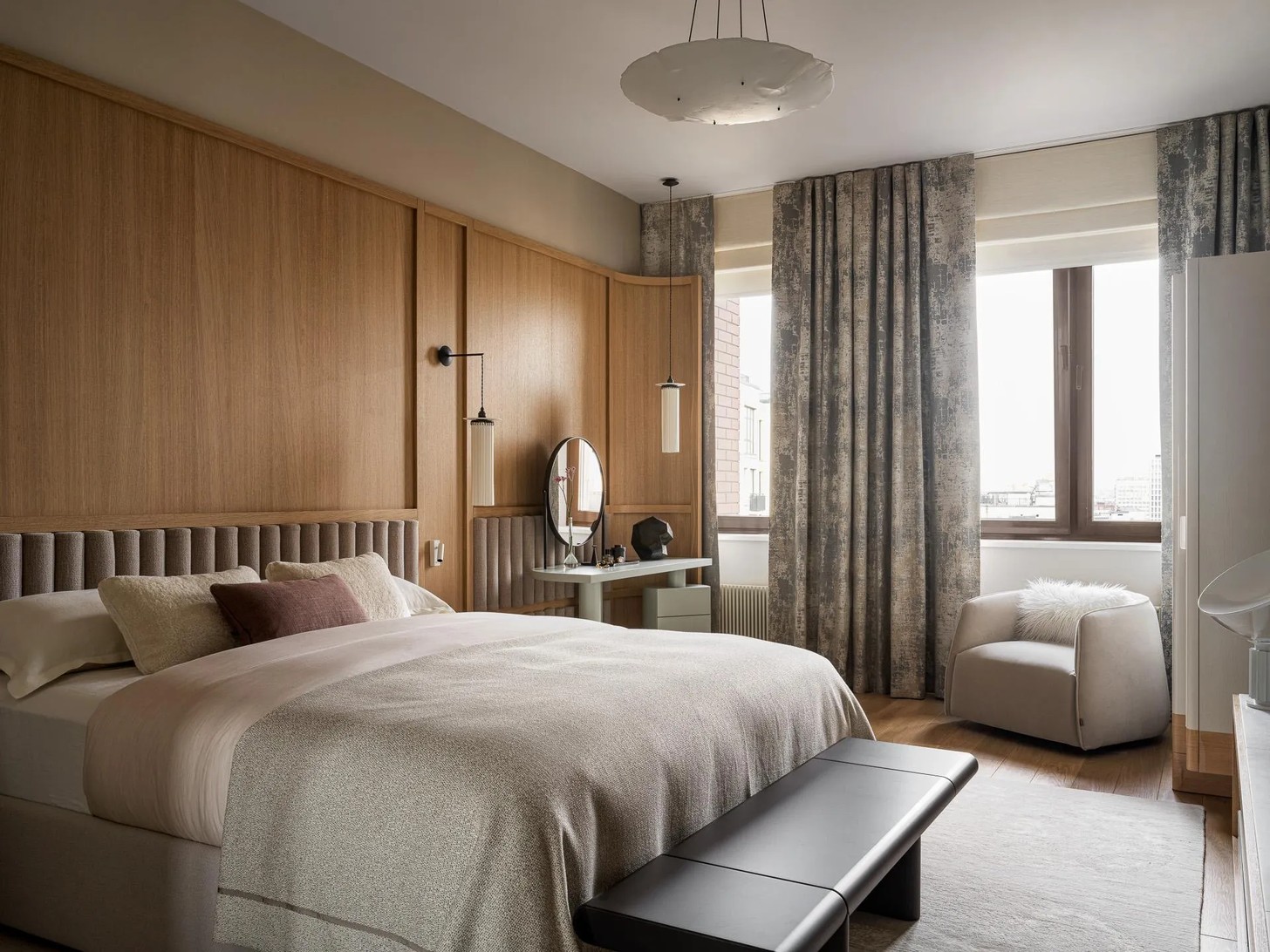
In the main bedroom, a solid oak wardrobe features textured fronts crafted using Andrey Izmailov's signature “wool” technique, developed through a collaboration between Begicheva Design and Woodzen Art. A bespoke dressing table and chandelier further emphasise the project's commitment to craftsmanship.
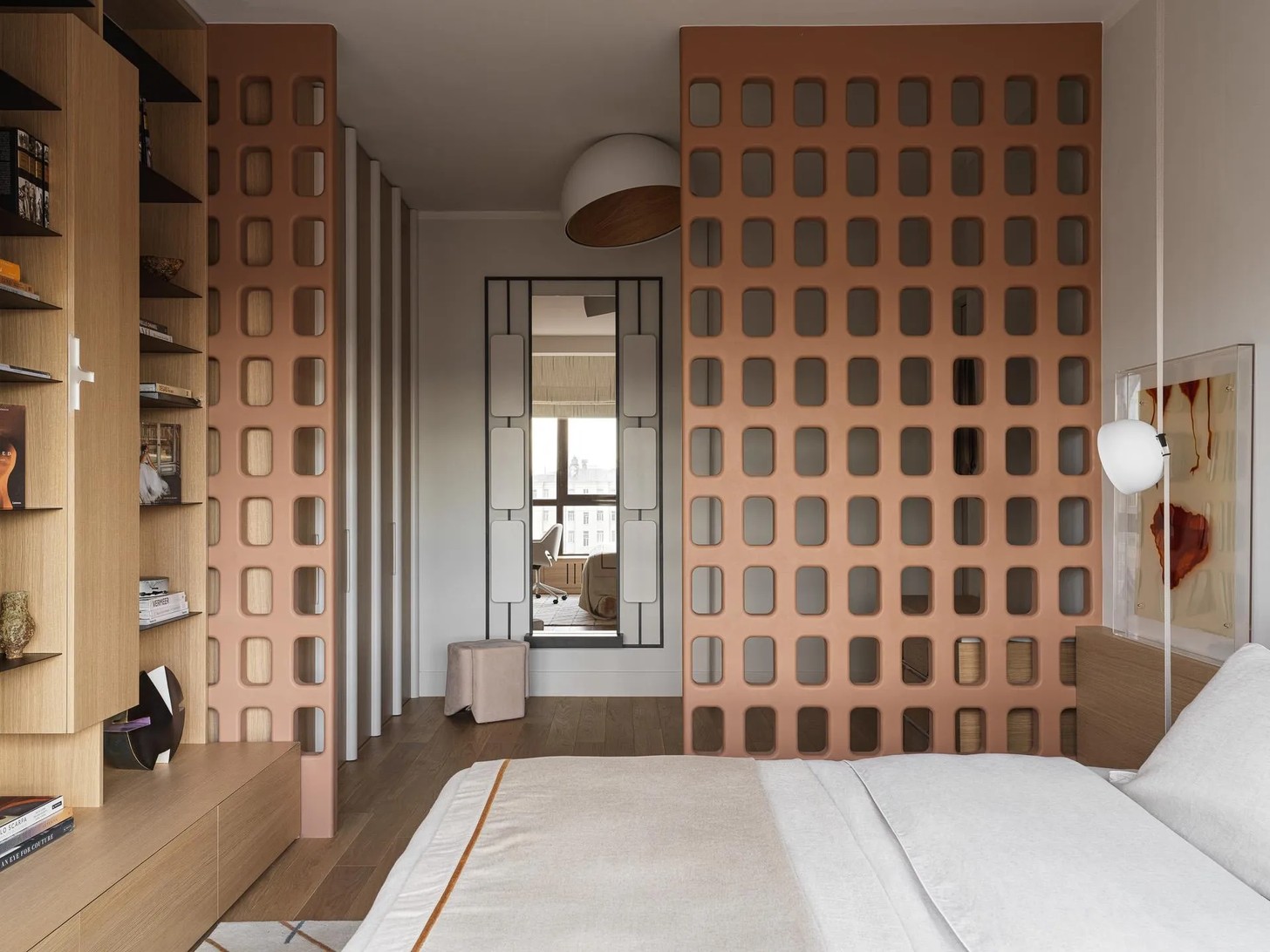
The younger daughter's bedroom is defined by a perforated artistic concrete partition, complemented by custom-designed furniture adapted to her needs.
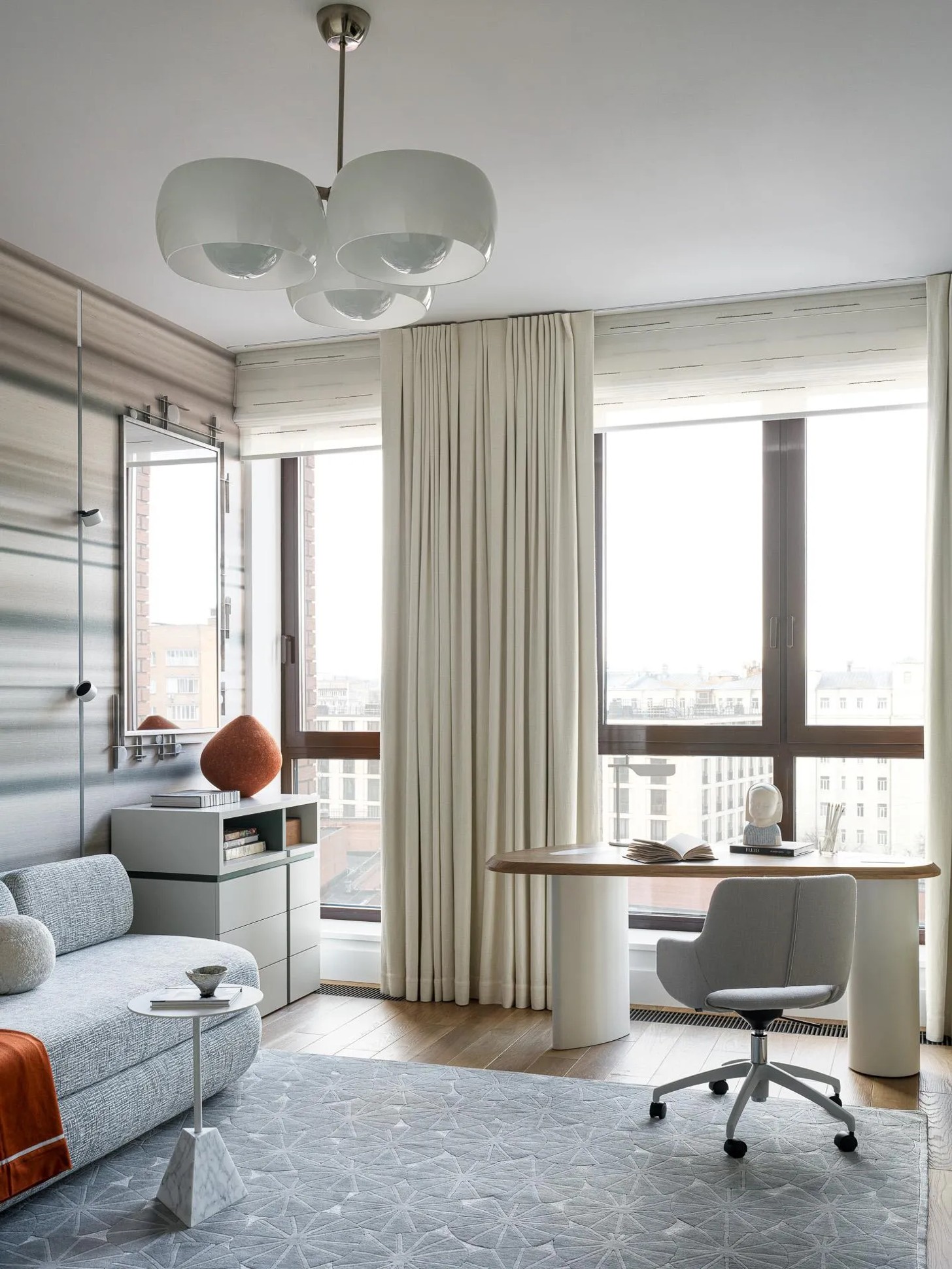
Meanwhile, the older daughter's bedroom, which also serves as a guest room, features bespoke sisal wall coverings, a vintage space-age chandelier by Vico Magistretti and a diptych by Kolya Dykhne. Open shelving incorporating epoxy resin and a sculptural mirror introduce further material interest.
Throughout the apartment, Begicheva demonstrates that timeless interiors need not belong to a single era. By bringing collectible design, meaningful artworks and contemporary craftsmanship together, she has created a home that balances architectural refinement with everyday intimacy.
Credits
Interior designer: Katya Begicheva, Instagram: @begicheva.design
Photo credit: Sergey Krasyuk, Instagram @skrasyuk
Style by Natalia Onufreichuk, Instagram @onufreichuk_before_after


