
Some homes are designed around floor plans. Others are designed around memories.
Tucked away in the historic centre of Caserta in southern Italy, just a short walk from the city's famous Royal Palace, Casa Egle has one of those rare interiors where sentiment shapes every square metre.

Once a modest 45m² storeroom, the compact home has been reimagined by architect and designer Gae Avitabile into an intimate retreat that feels like the careful preservation of a life that’s well lived.
The project started with a collection. Over decades, homeowner Egle gathered furniture, heirlooms, flea-market discoveries, and travel souvenirs – each carrying its own history.
Some pieces belonged to family members, others were found in antique shops or collected on journeys through Morocco, Bali, and beyond. Instead of editing these possessions down, the design allows them to become the architecture's emotional centrepiece.
Nothing feels decorative for decoration's sake; every object has earned its place. Vintage furnishings sit alongside restored architectural details, creating interiors that feel deeply personal.
Original herringbone terracotta flooring anchors the home with warmth, having been meticulously restored.
Crisp white walls and ceilings keep the small footprint feeling more open, while deep green panelling and matching door frames introduce some rhythm and definition throughout the rooms. The restrained palette allows the home's collected objects to calmly command attention.
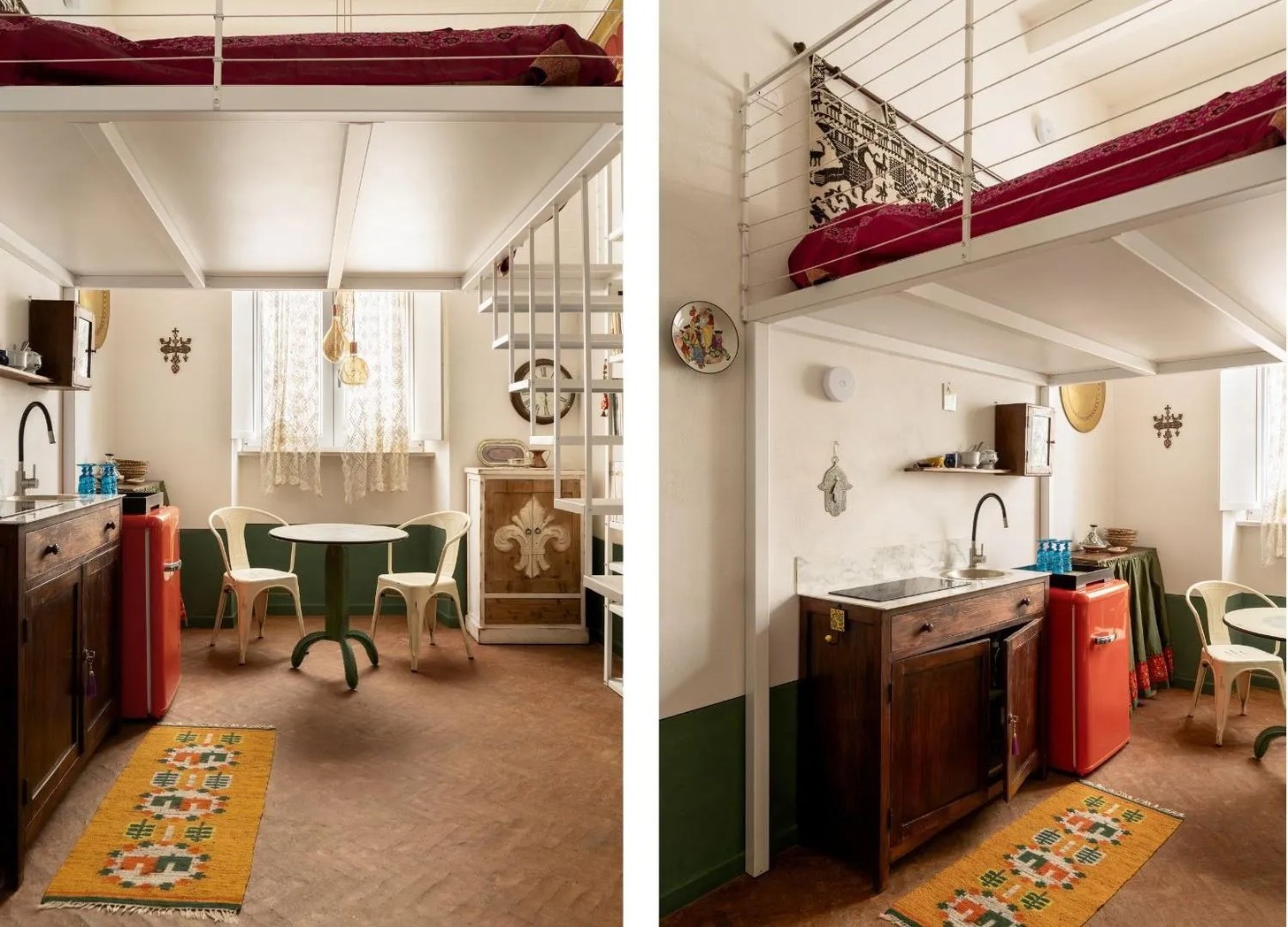
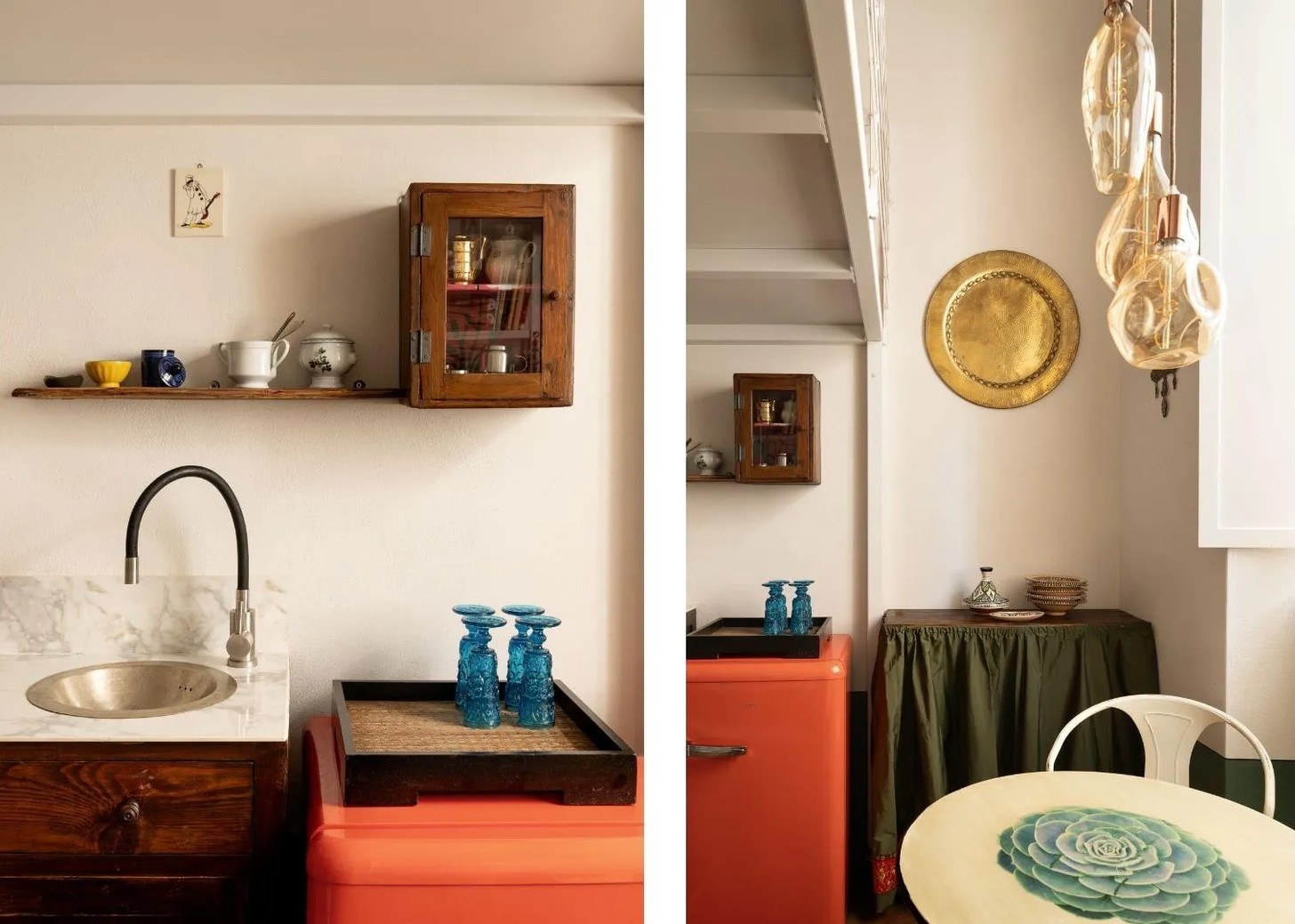
The kitchen is perhaps the clearest expression of Casa Egle's philosophy. Beneath a steel mezzanine that accommodates the sleeping area, an old family dresser has been transformed into a functional kitchen station, completed with a small sink brought home from Morocco.
A bright red retro refrigerator injects unexpected energy into the otherwise earthy space, while a salvaged cabinet wrapped in Moroccan fabric highlights the home's layered story.
Light filters softly through delicate crocheted curtains made from a family bedspread, casting shadows across a simple dining corner furnished with vintage metal chairs and a table whose sculptural cactus-inspired base adds an element of whimsy. Here, souvenirs, antiques and everyday objects coexist effortlessly, proving that personality often outweighs perfection.
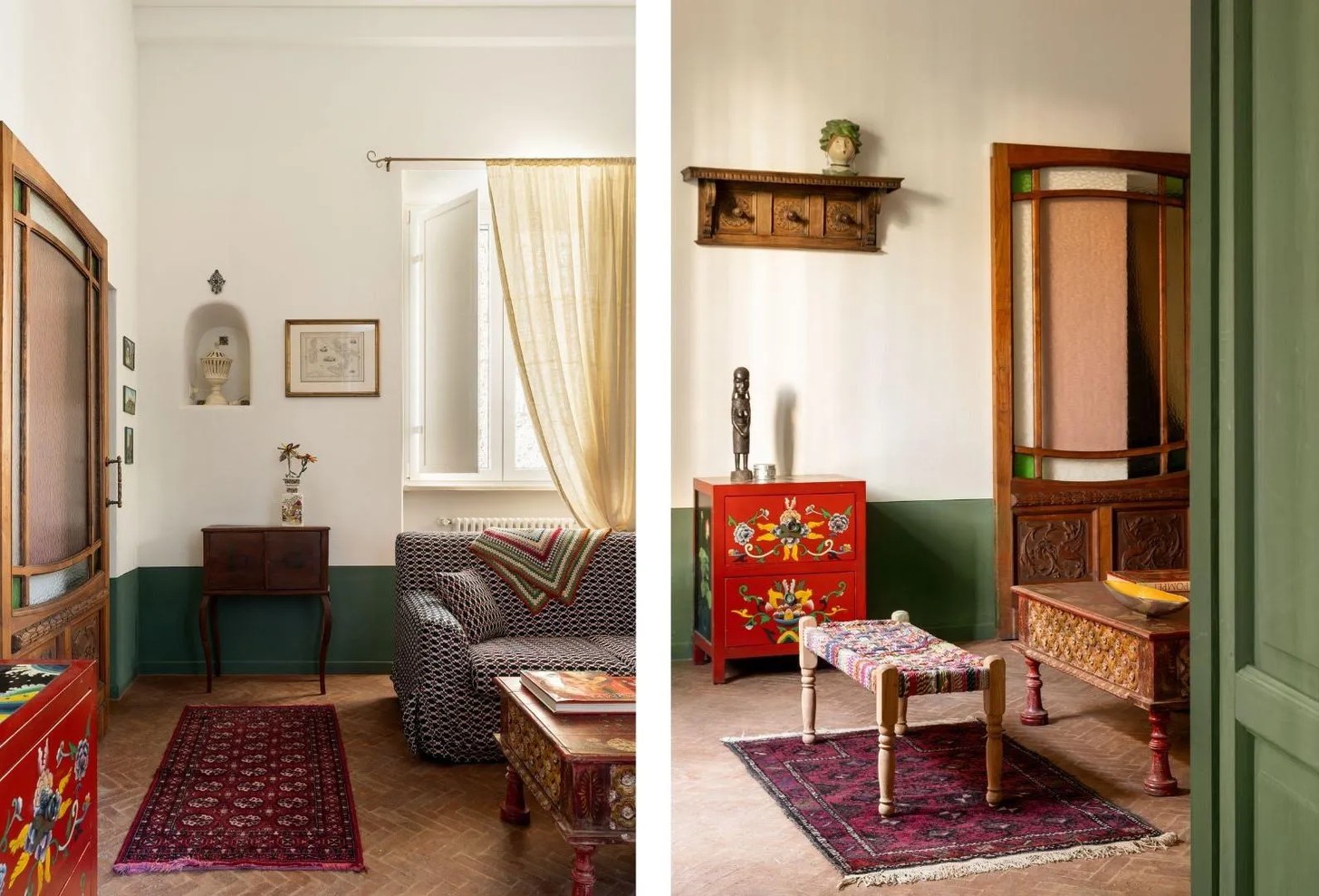
The living room continues the home's journey through a sense of memory. Moroccan textiles upholster the sofa, a colourful woven bench recalls an adventure abroad, while an inlaid coffee table, velvet-and-rattan seating, and a tapestry from Bali create a richly textured setting.
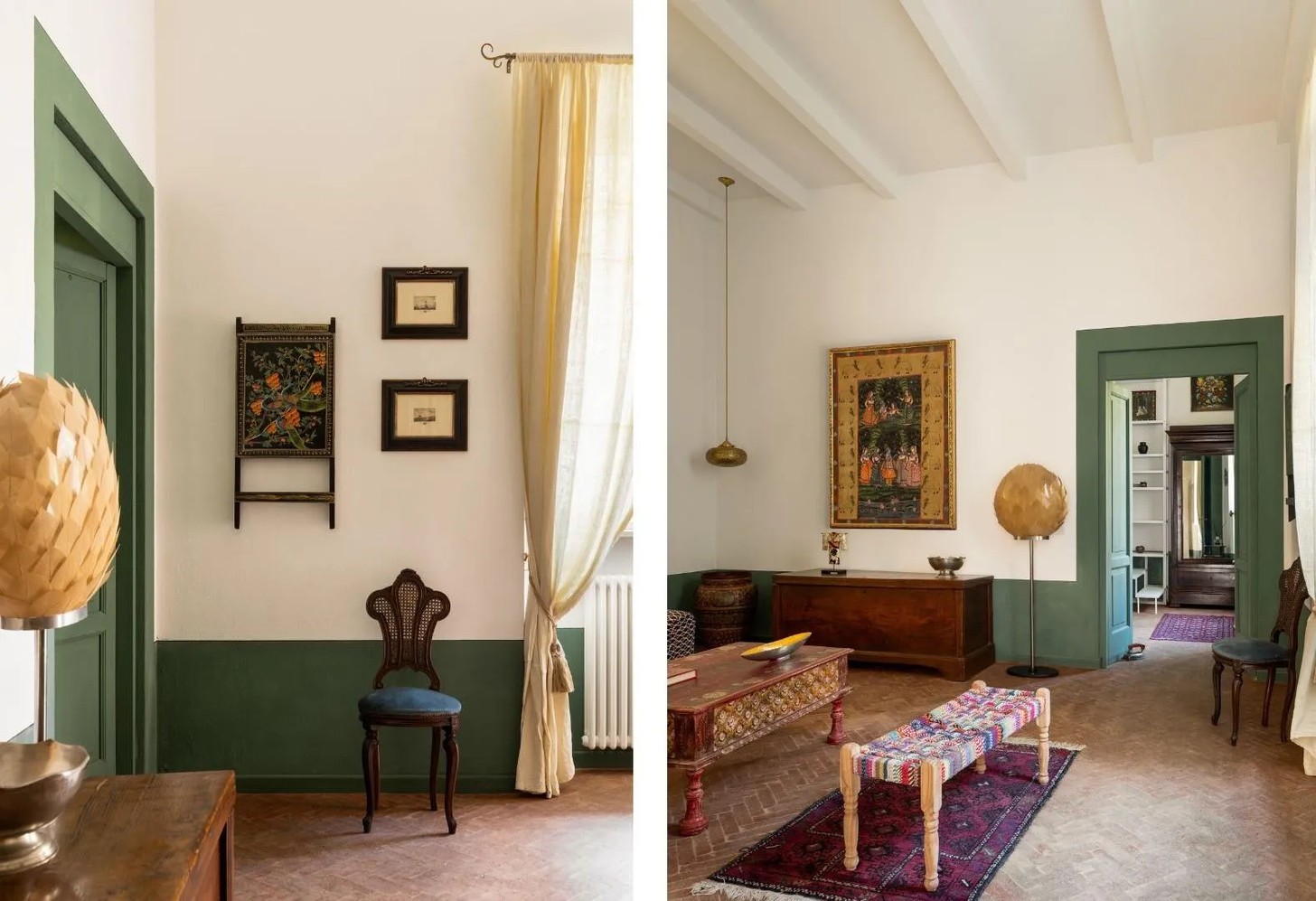
Despite the eclectic mix of influences, the space doesn't feel cluttered. Instead, each piece contributes to a conversation about travel, craftsmanship, and belonging.
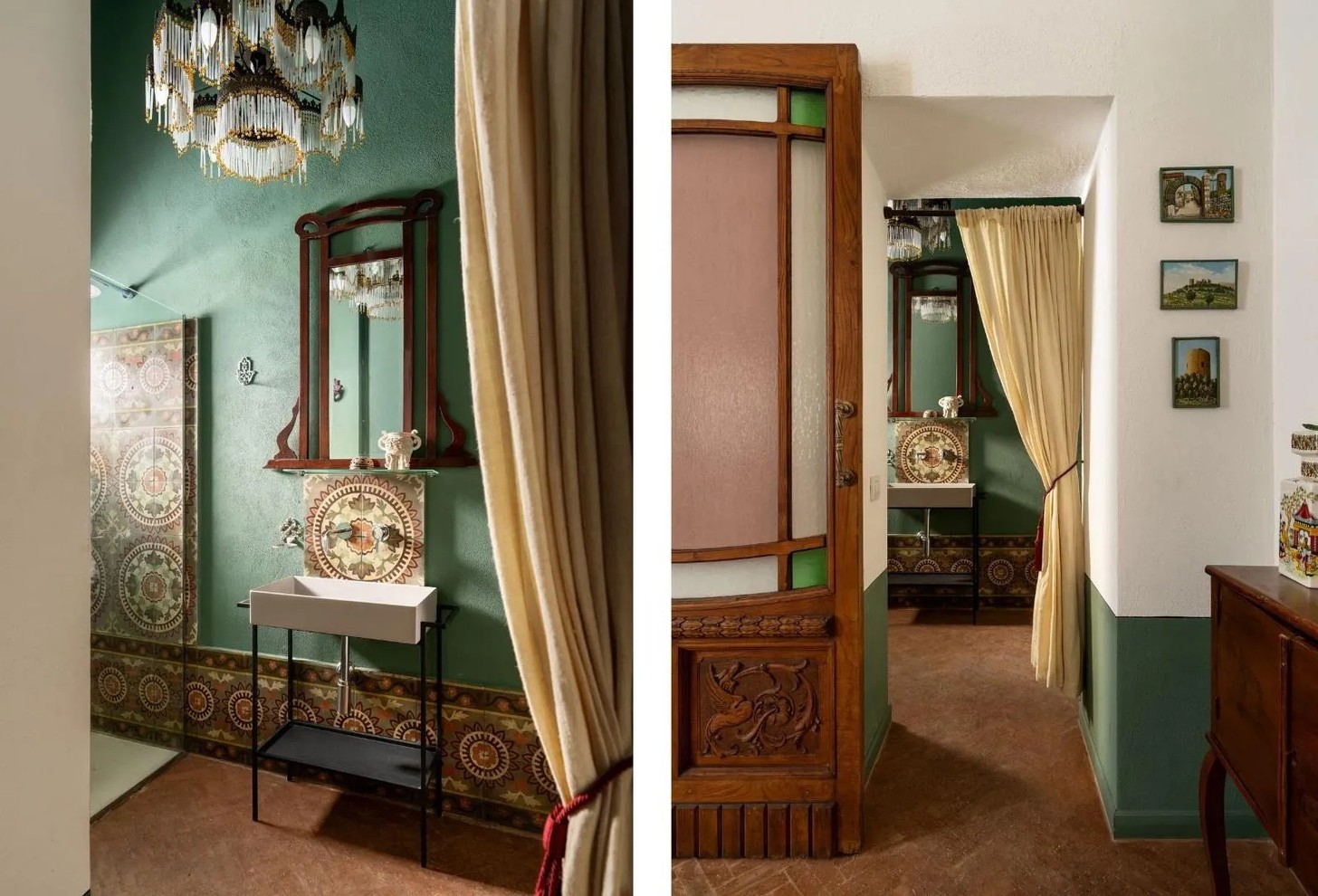
Even the bathroom embraces theatricality without excess. Reclaimed encaustic tiles introduce colour and pattern, while a striking Art Deco mirror hangs beneath an elaborate chandelier.
Against these expressive elements, a minimalist basin provides contemporary contrast. Privacy is achieved through inventive reuse: an old glazed office door sourced from a Naples salvage yard presents as a movable screen, paired with a hemp curtain passed down through generations.
What makes Casa Egle memorable isn't just its compact footprint or restored details. It's the way the home challenges the idea that good design depends on buying new. Instead, it demonstrates how interiors become richer when they preserve traces of the people who inhabit them.
Casa Egle offers something far more enduring: a reminder that the most beautiful interiors are often the ones built around memory, craftsmanship, and the poetry of giving cherished objects another life.
Credits
Architecture & Interior Design: Gae Avitabile Design Studio (@gaeavitabiledesignstudio)
Photography: Courtesy of Gae Avitabile Design Studio


