
A beautiful closet is about more than just immaculate cabinetry. It should make getting dressed easier, protect your clothes and accessories, and use every centimetre intelligently. The trick is to design around how you actually live – not only how you want the room to look.
Start with what you own
Before choosing finishes, take stock of your wardrobe. Separate long-hanging pieces such as dresses and coats from shirts, trousers and skirts, then account for folded clothing, shoes, handbags, jewellery, and less frequently used items.

This will determine the layout. Shorter garments can be stored on two levels, while dresses and coats need uninterrupted hanging space. Seasonal pieces, luggage and elaborate wear can go higher up, leaving everyday essentials at eye level and within easy reach.
The best closet is designed around your wardrobe, instead of forcing your wardrobe into a standard system.
Mix storage types
A considered closet needs a combination of hanging rails, shelves, drawers, and dedicated storage.
Drawers are ideal for underwear, socks, jewellery, and smaller items that quickly become untidy on open shelves. Deeper drawers work well for knitwear and T-shirts, while dividers help keep smaller pieces organised.
Open shelving is useful for shoes, bags, and neatly folded clothing, but combining it with closed cabinetry creates a cleaner look and hides anything less photogenic. Glass-fronted doors offer a middle ground, keeping accessories visible while protecting them from dust.
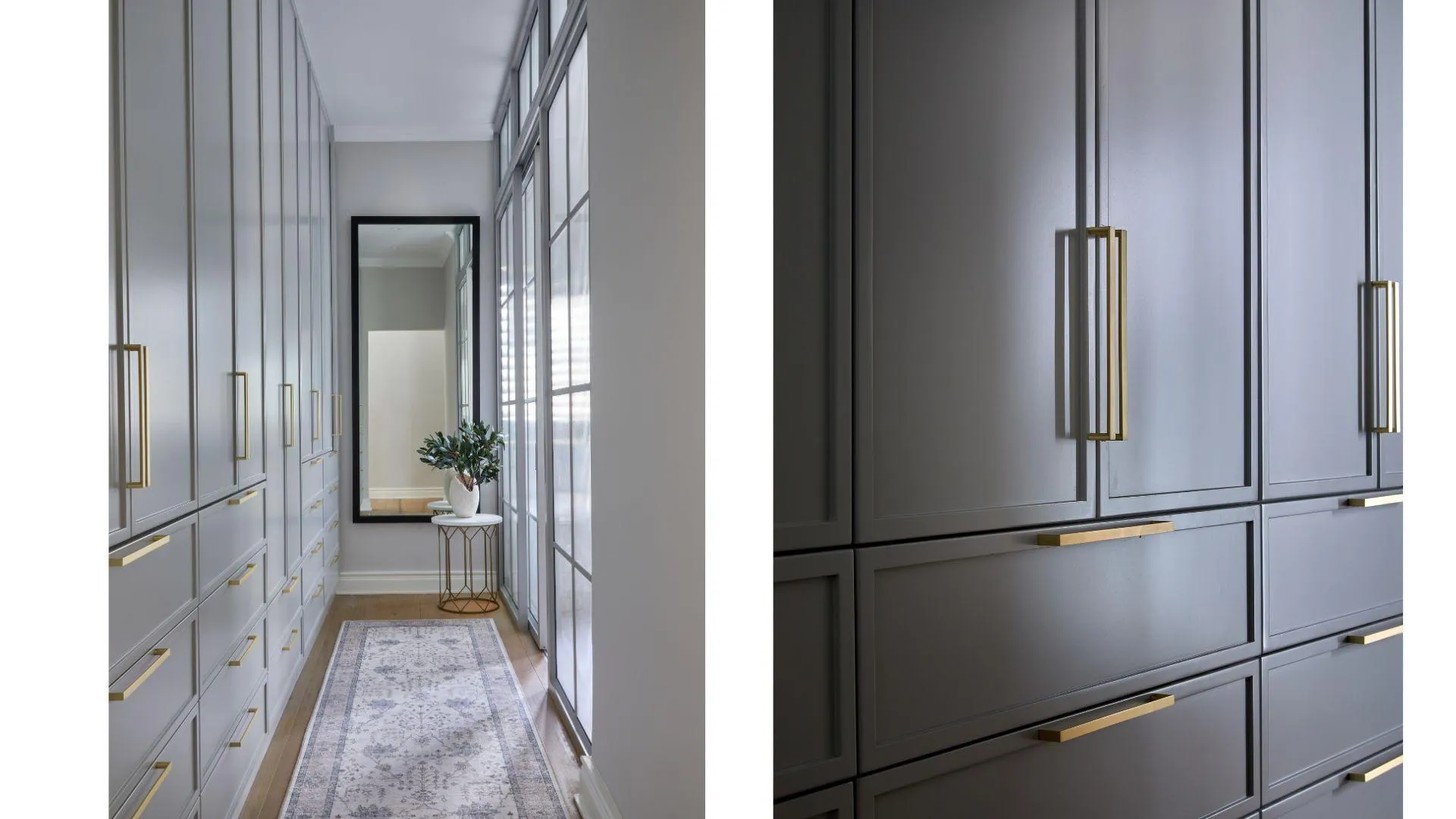
Get the dimensions right
More storage does not automatically mean better storage. Shelves that are too deep can make folded clothes difficult to see and reach, while poorly positioned hanging rails can waste valuable vertical space.
Adjustable shelving and rails are also a smart investment because your storage needs will almost certainly change. Measure carefully before installation, taking doors, drawers, skirting boards, electrical points, and ceiling height into account.
Give shoes and accessories a proper home
Shoes should be stored so you can see the collection instead of needing to dig through a pile. Dedicated shelving, adjustable racks, or angled displays can work particularly well.
The same goes for handbags, belts, watches, and sunglasses. A shallow drawer with compartments is far more useful for jewellery than a collection of loose boxes, while a dedicated handbag shelf will help preserve the shape of larger bags.
A small valet hook or pull-out rail is another worthwhile addition for laying out your weekly outfits.
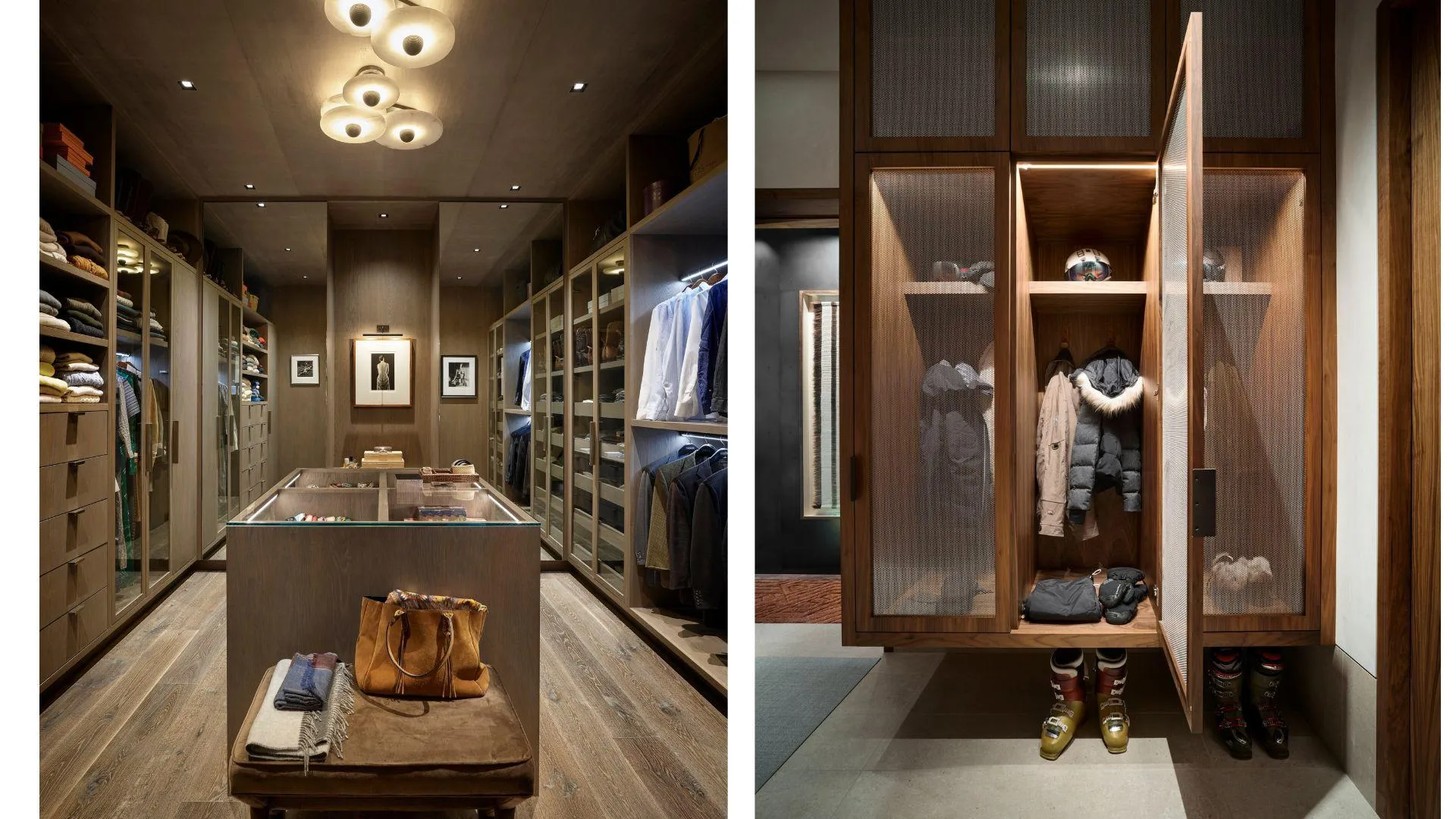
Choose materials for longevity
The material you choose will set the tone for the entire space.
A painted medium-density fireboard offers a smooth, versatile finish and works notably well for refined cabinetry. Plywood is a strong choice where durability is the priority, while laminate is practical for hard-working wardrobes and is available in finishes that mimic timber and other materials.
Timber veneer brings warmth and natural variation, making fitted cabinetry feel more like furniture. Mixing materials can make the design feel richer: consider using timber veneer with brushed metal hardware, painted cabinetry with leather pulls, or dark joinery with warm brass details.
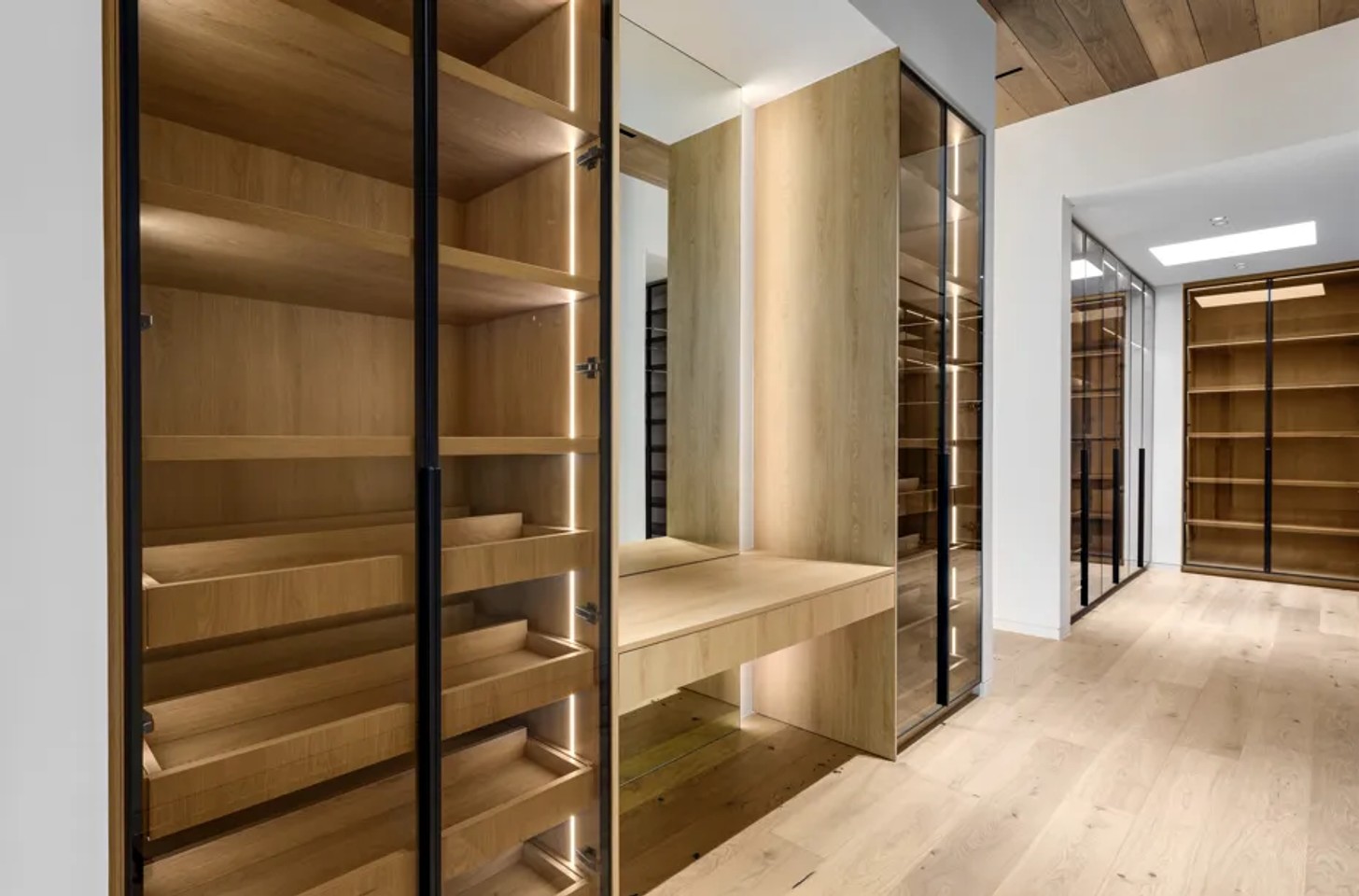
Make lighting part of the plan
Even the best-designed closet will be frustrating if you cannot see what is inside.
Use general ceiling lighting alongside integrated LED strips beneath shelves or inside cabinets. Sensor-controlled lighting can be useful in darker sections and drawers.
A full-length mirror is essential, but its position matters. Place it somewhere with enough light to see an entire outfit clearly rather than treating it as an afterthought.
Treat the closet as a room
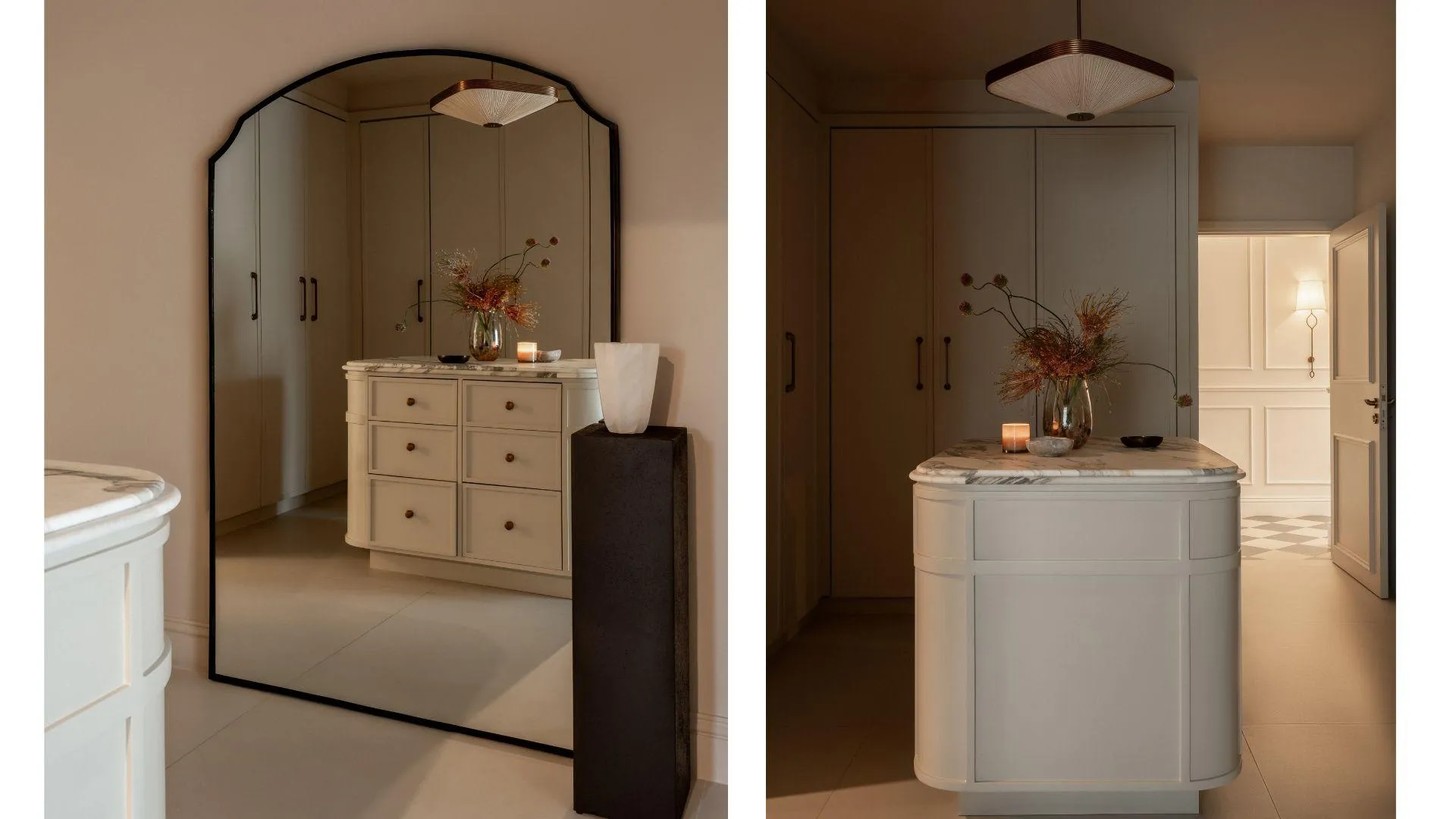
If space allows, bring in furniture that makes the closet feel intentional. A bench or upholstered ottoman provides somewhere to sit while putting on shoes, while a sculptural chair, rug, or freestanding dresser can add warmth and personality.
In a larger dressing room, a central island can provide both a practical folding surface and additional drawer storage. Just make sure there is enough clearance to move comfortably when doors and drawers are open.
Don't forget the practical extras
Some of the most useful details are rarely visible in photographs. A pull-out laundry hamper keeps worn clothing in one place, while concealed ironing boards or dedicated spaces for a steamer make everyday maintenance easier.
Ventilation is also worth considering, particularly in enclosed storage. Shoes and occasional garments benefit from some air circulation rather than being packed tightly into inaccessible cupboards.
Ultimately, the luxury of a well-designed closet is not how much it holds. It is how effortlessly it works. Everything should have a place, be easy to find, and simple to put away – with enough flexibility for the wardrobe to evolve.
Image Credits
Mikhail Loskutov, Casa Mia Visuals, Greg Cox, Matthew Millman, Thibault Debaene, Stefan Lindeque


