
Sculptural walls have given interiors a more tactile way to make an impact. Plaster relief, carved timber, textured stone, three-dimensional tiles, and softly worked finishes all add depth to a room without relying on a busy pattern or a collection of objects.
The appeal is straightforward: a dimensional wall can bring character, materiality, and movement to a space while remaining part of the architecture.

Think beyond a flat surface
There are several ways to give a wall dimension, and they do not all involve building out a dramatic relief. Plaster can be modelled or applied with visible movement; stone can provide a naturally irregular surface; timber can introduce rhythm through panelling or carving; and relief tiles can create pattern through shadow instead of colour.
The most successful approach is often tonal. Keeping the material and colour relatively restrained allows the surface itself to provide visual interest.
Light is part of the design
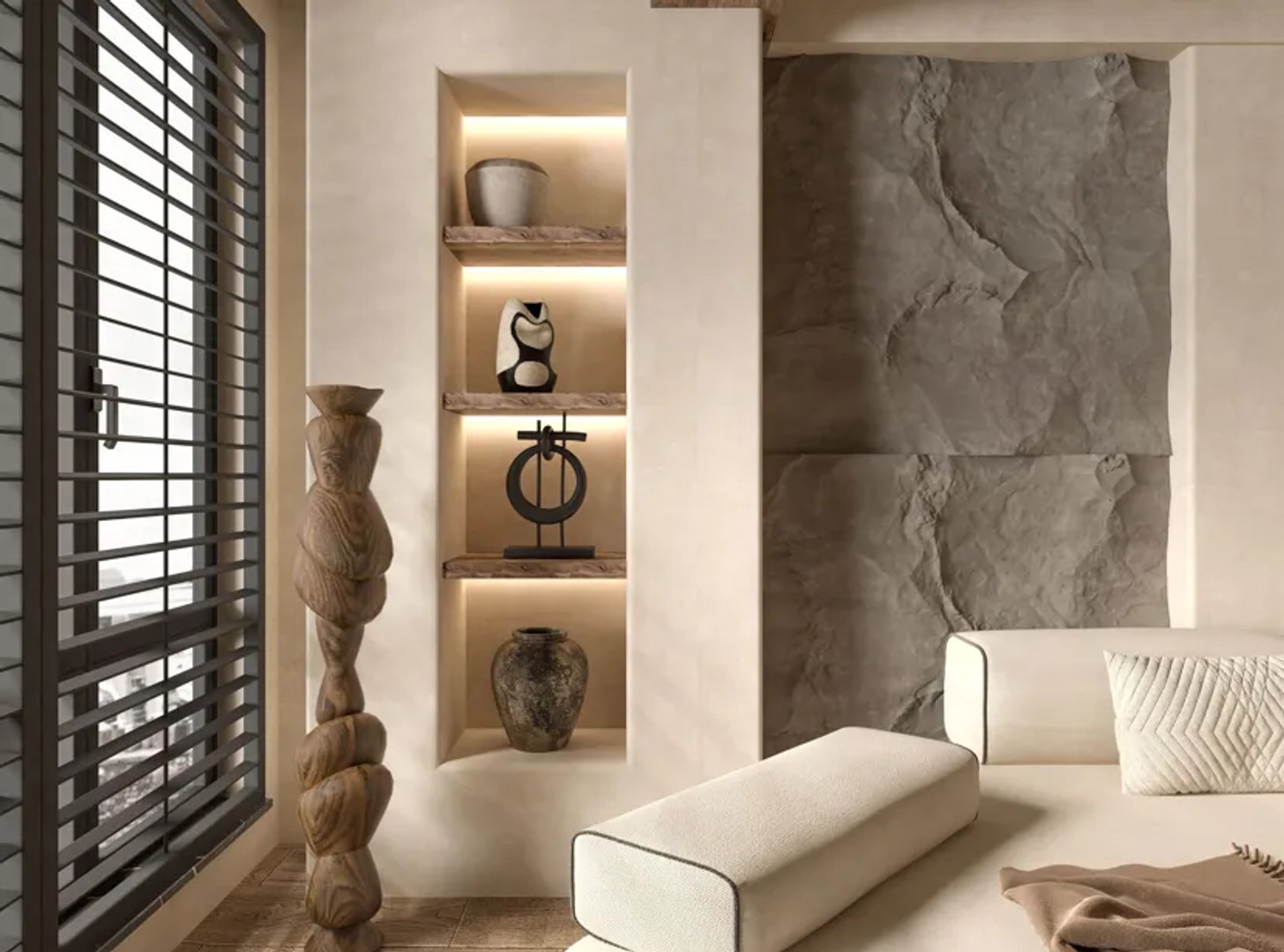
This is the detail that should be considered before the wall is finished, not afterwards. Relief is examined through shadow, so the direction and quality of light can dramatically change how a surface looks. Architectural lighting specialists and makers of relief surfaces both emphasise the value of directional light for revealing texture.
Natural daylight can do the same thing as the sun moves across a room, while carefully positioned wall lights can pick out the ease after dark. A surface that looks muted in diffuse daylight can become much more pronounced when light skims across it.
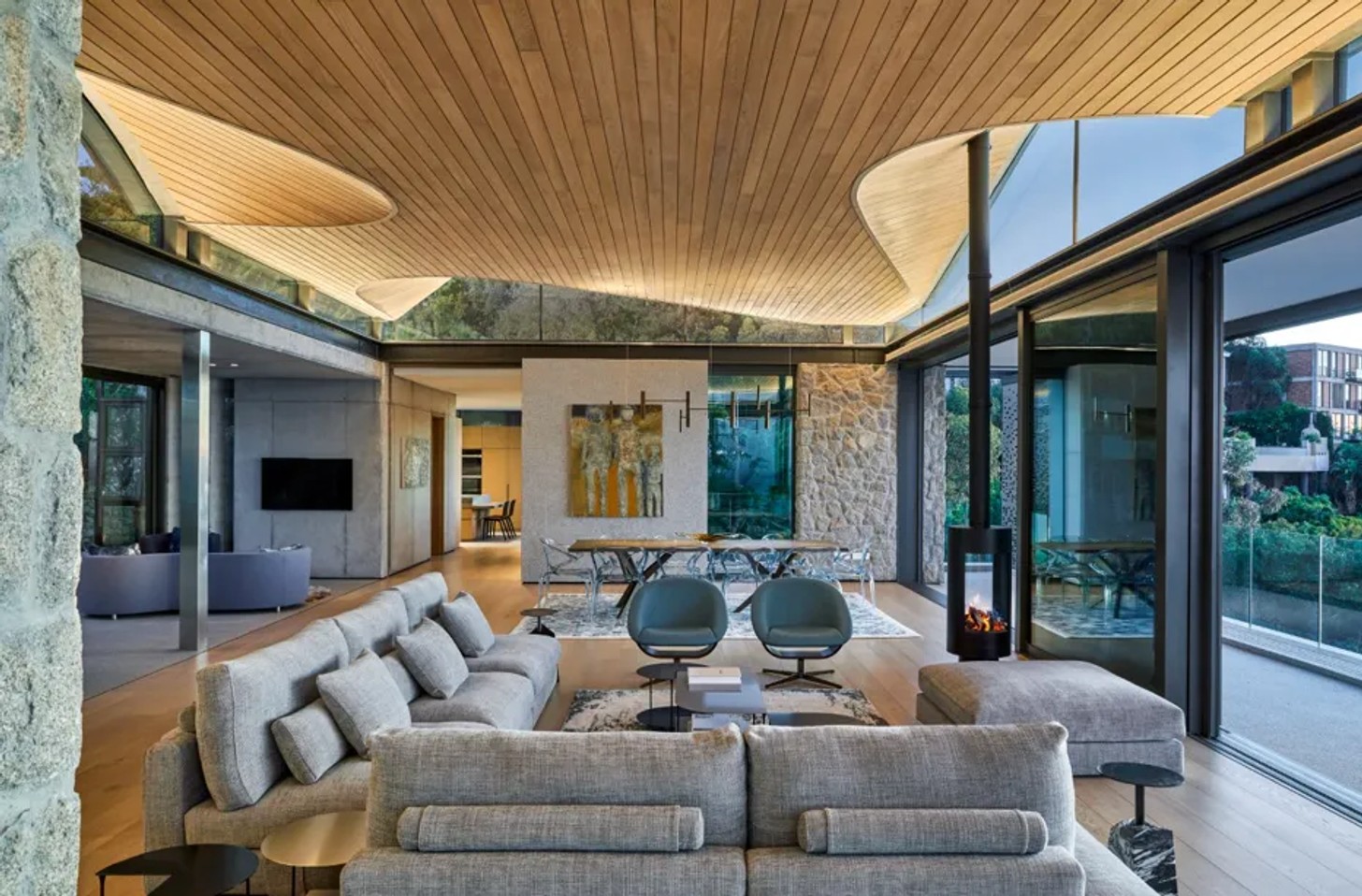
Make it feel built in
The distinction between decoration and architecture is what makes this idea more interesting. A relief can be designed to fit the proportions of a particular wall, a timber treatment can continue into cabinetry, or a textured finish can run through an entrance, fireplace, or built-in joinery.
Instead of adding another object to the room, the surface becomes part of the room's composition. That is mostly effective in minimalist interiors, where one strong material gesture can do more than several smaller decorative pieces.
Let the material show itself
There is also a reason these surfaces feel warmer than a regular finish: you can see and sometimes feel how they were made. Trowel marks, subtle variations in plaster, and the natural irregularities of stone give a surface character that a printed pattern cannot reproduce.
This makes sculptural walls especially well suited to interiors built around natural materials. Stone, timber, clay, and plaster can alsoz introduce texture without adding another competing colour or pattern.
Not every feature wall needs to be loud
The idea does not have to mean a floor-to-ceiling installation. A modest plaster relief behind a bed, a fluted timber panel in a study, or a textured finish in a powder room can be enough.
Scale matters. A large relief can anchor a big room, while a smaller intervention can give a compact space a sense of detail. The goal is not to make every wall interesting; it is to choose the one surface that benefits most from being designed differently.
How to bring it home
You do not need to redesign an entire home to try out the idea. A powder room, entrance hall, fireplace wall, or bedroom can be a good starting point because the surface can have a clear role without competing with too many other elements around the home.
Before choosing a finish, look at the natural light, decide how the wall will be lit at night and consider how far the surface will project into the room. Deep relief needs more care than a subtle texture, especially where circulation, cleaning, or furniture placement is concerned.
Most importantly, let the wall breathe. The point is not to cover every available surface. One beautifully considered sculptural treatment, given enough space and the right light, can have far more impact than a room full of competing finishes.
Image Credits
Dana Damewood, Ema Peter Photography, Greg Cox, Pexels


