
The Warm-Up
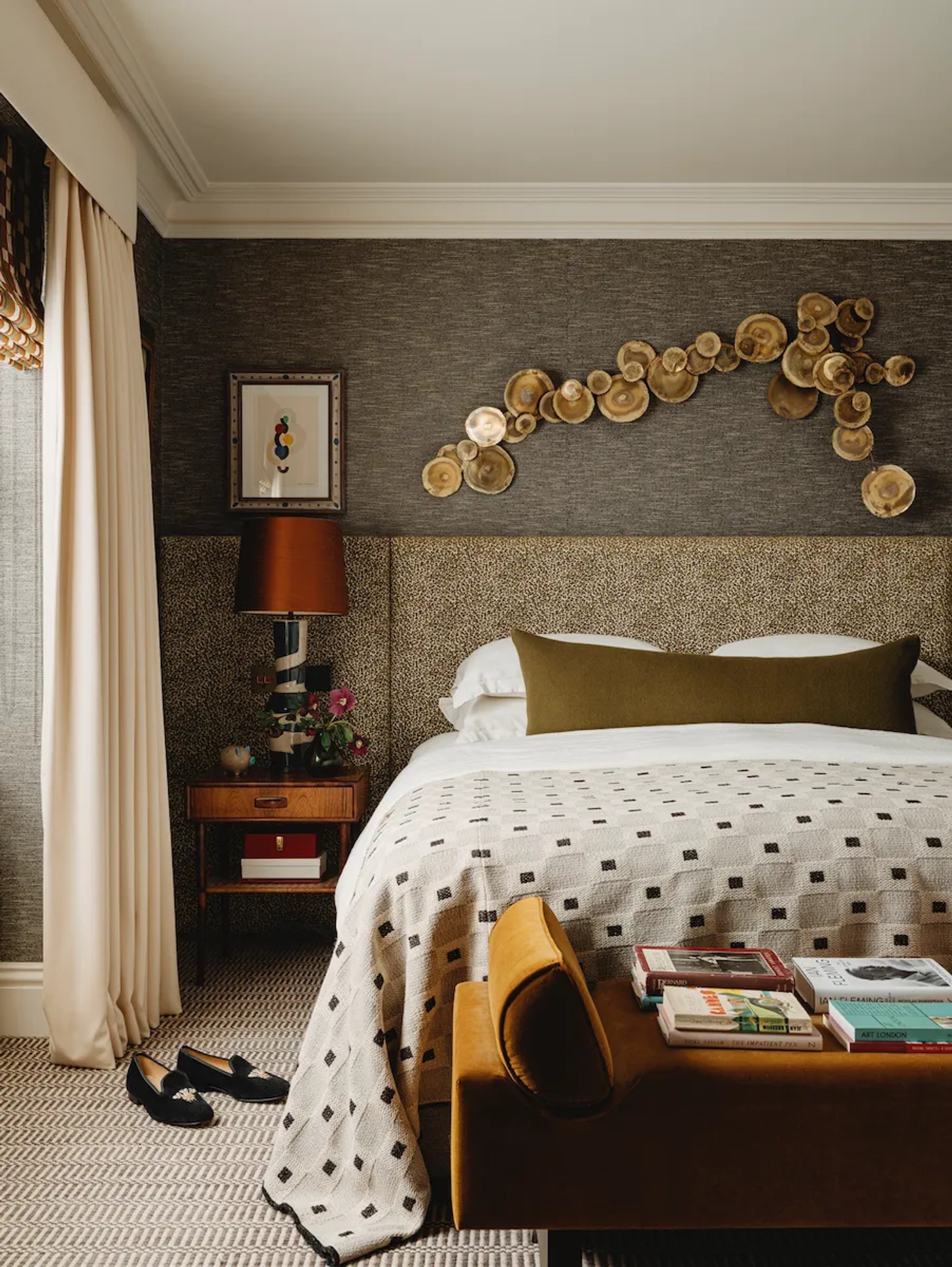
A layered approach to texture keeps this bedroom feeling rich rather than overly restrained. Cooler tones and graphic patterns are softened through tactile fabrics, while the ochre velvet daybed introduces warmth and contrast, drawing the eye through the room. The mix of patterned textiles, upholstery and wall coverings creates depth without relying on excessive colour or ornamentation.

Earthbound
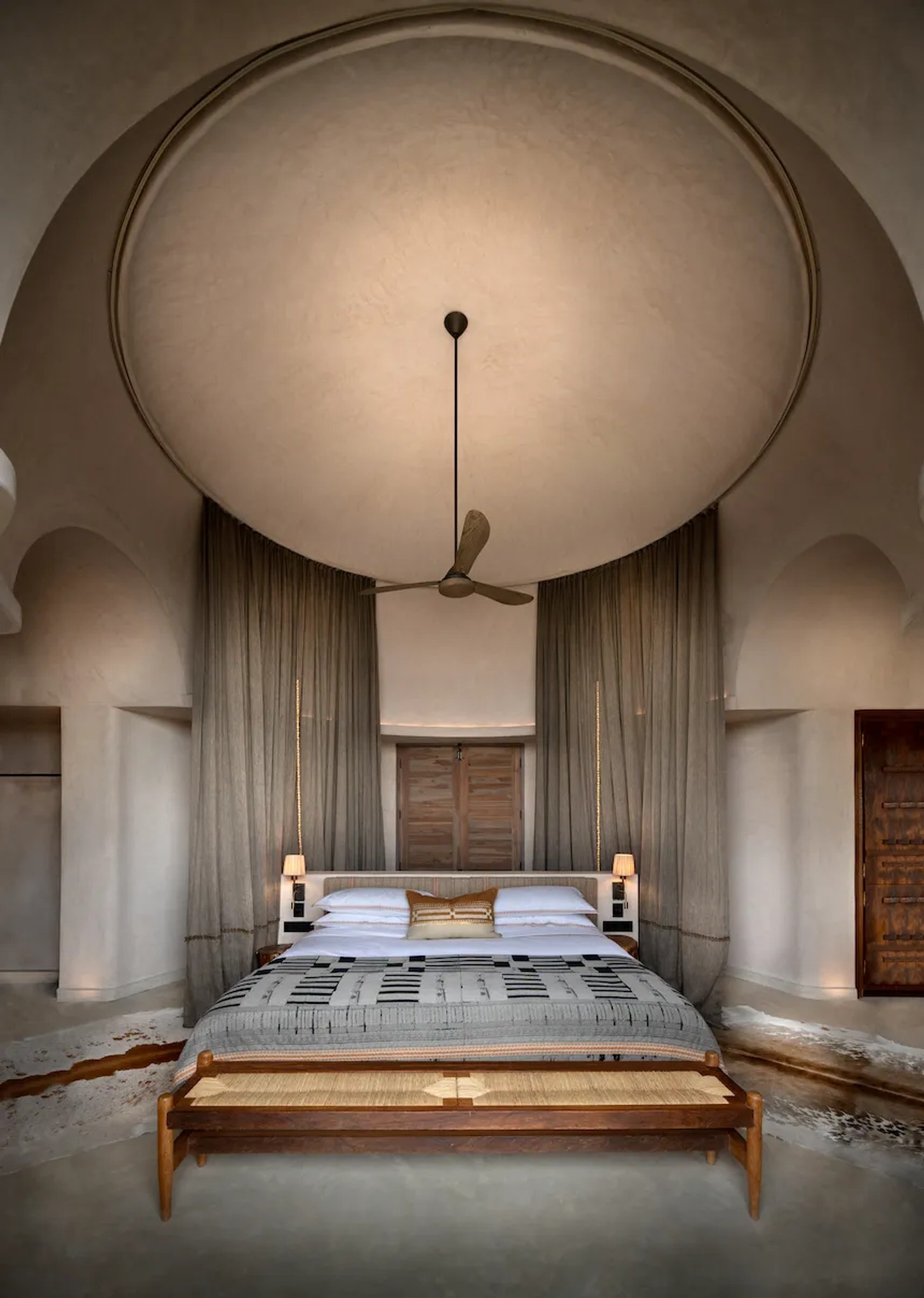
Sculptural architecture does much of the work here. The curved plaster dome softens the room’s scale, while built-in elements and recessed detailing keep the space visually calm and uninterrupted. Rather than relying on decoration, raw timber, tactile plaster and woven textiles layer warmth into the pared-back shell. Earthy neutrals and soft blacks, inspired by the surrounding landscape and wildlife, reinforce the connection to place, while low lighting and enveloping drapery create a cocooning atmosphere that feels both grounded and restorative.
Softly Tailored
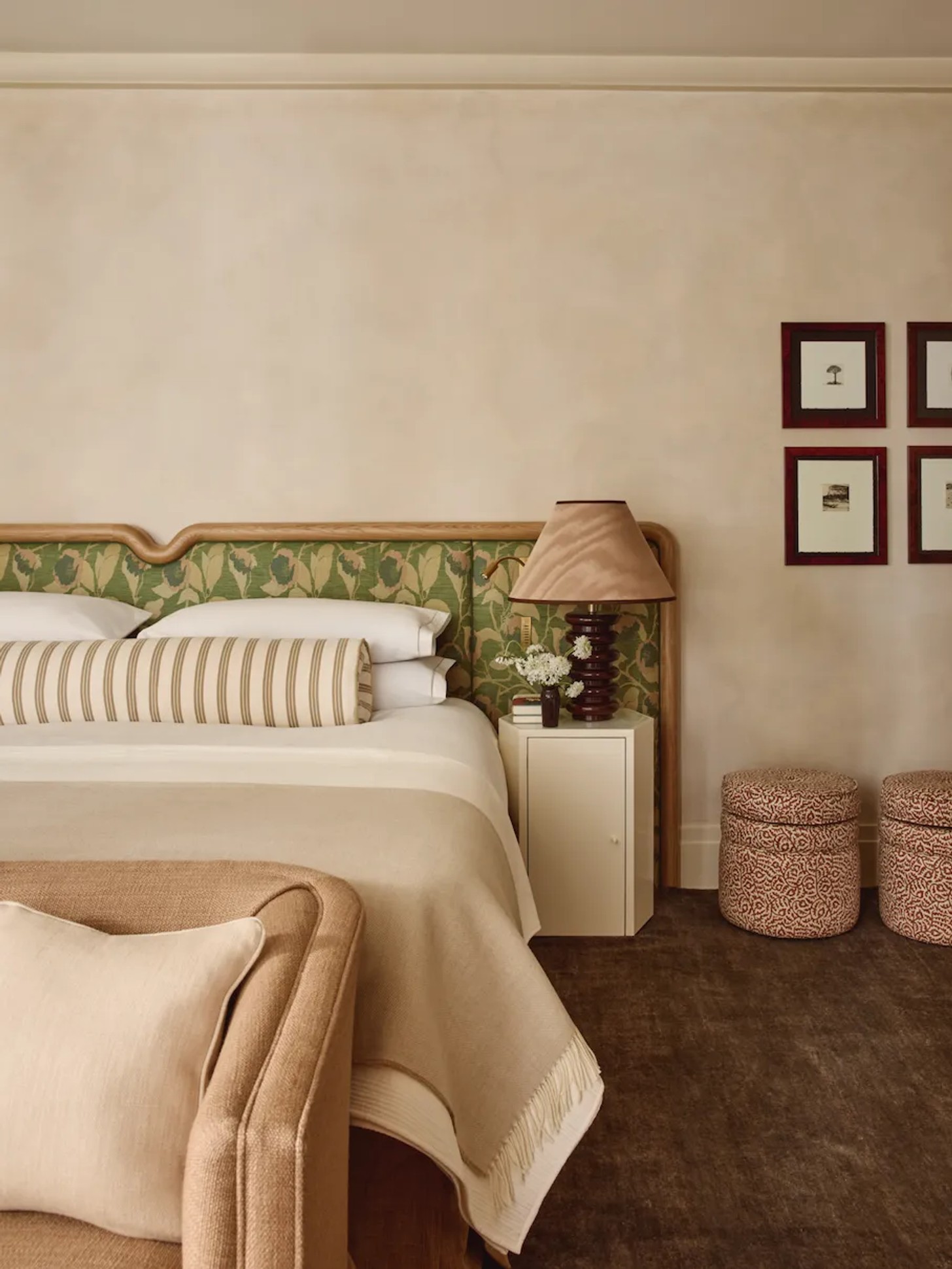
The restraint used in this bedroom lends it a sense of luxury. Rather than relying on bold colour or excess layering, the designer built warmth through tonal variation and texture; limewash walls, woven upholstery and softly patterned textiles all working within a muted palette. The headboard introduces gentle movement, while buttercream lacquer bedside tables sharpen the scheme with a more polished finish. Subtle greens and blush tones prevent the neutrals from feeling flat, adding depth without disrupting the room’s calm, cocooning mood.
Soft Architecture
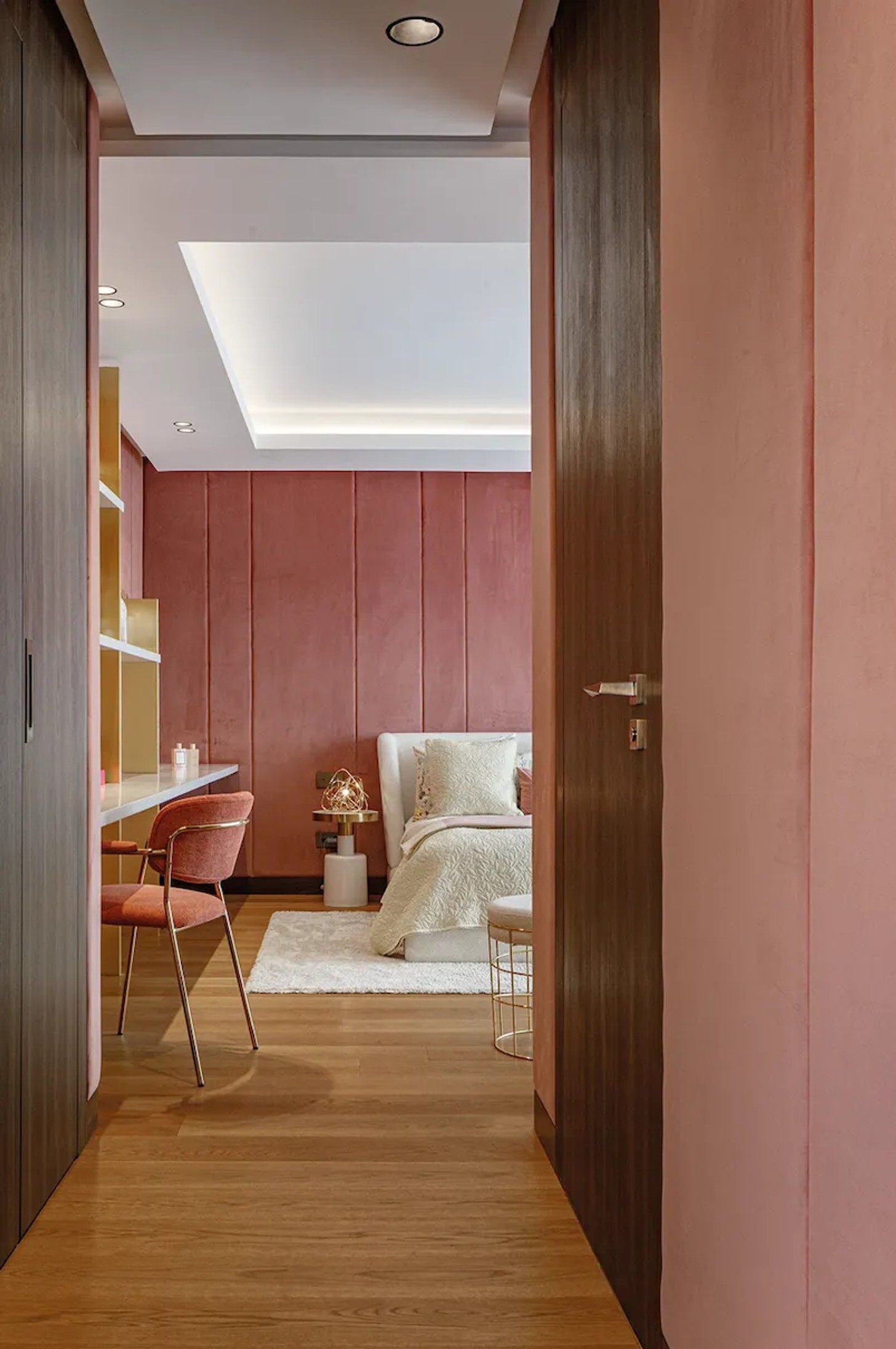
Fabric can do more than add colour— it can reshape how a room feels. Here, upholstered wall panels soften the architecture, improve acoustics and create a sense of enclosure that makes the bedroom feel deeply personal. The lesson is to treat fabric as an architectural element rather than a decorative finish. Paired with a restrained palette and simple furnishings, this textured wall treatment introduces warmth, depth and intimacy without overwhelming the space, proving that comfort often comes from what you feel as much as what you see.
Light Touch
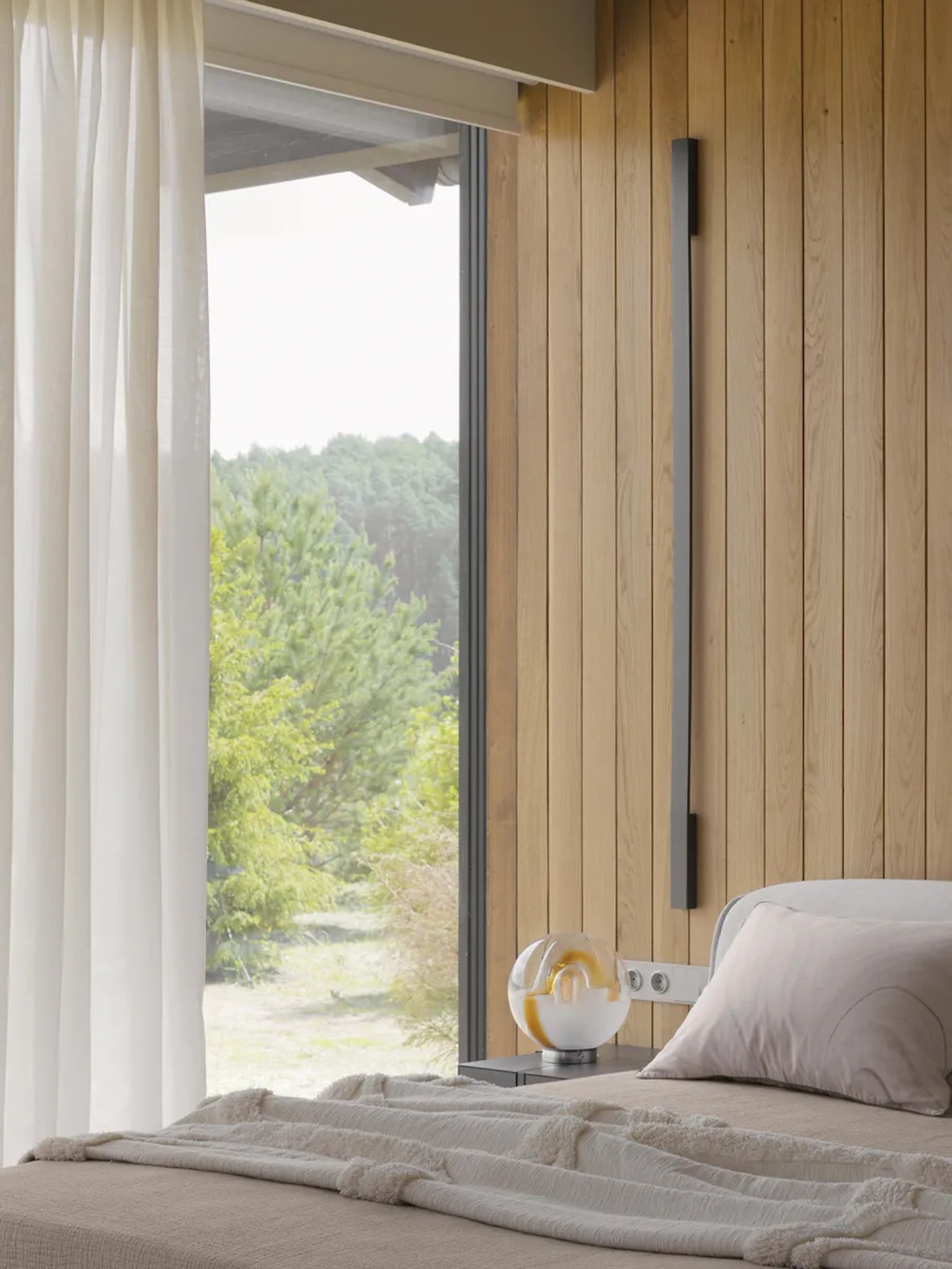
Softness keeps this timber-lined bedroom from feeling heavy. Full-height sheer curtains diffuse the natural light, while a cloud-like pendant draws the eye upward, counterbalancing the warmth of the wood panelling. The restrained palette—natural timber, micro-concrete and muted textiles — allows the forest views to remain the focal point. Rather than filling the room with decoration, carefully chosen lighting, ceramics and artworks bring personality in quieter ways, reinforcing the calm precision that defines the space.
A Soft Divide
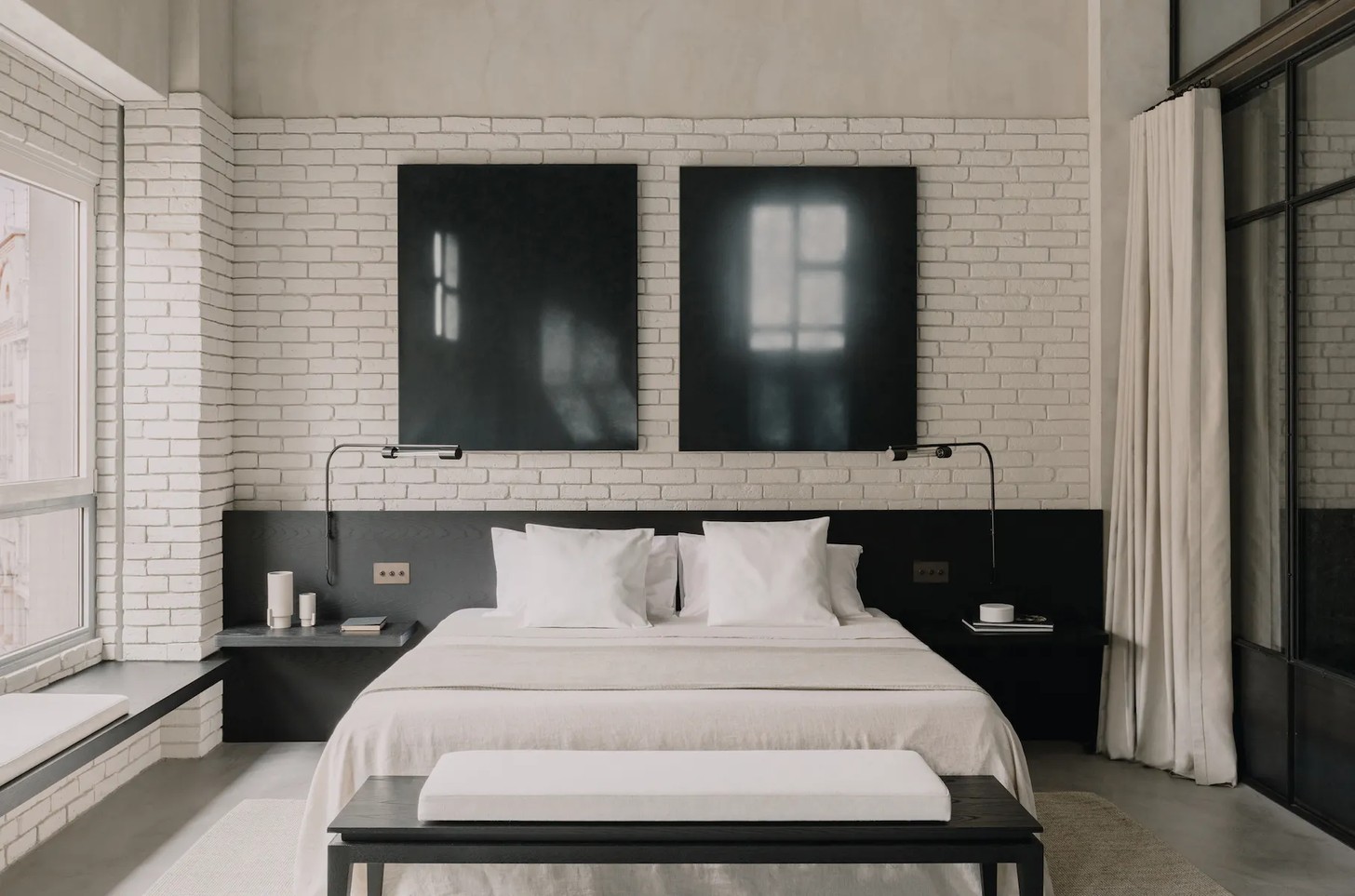
How do you make openplan and industrial feel cosy? Start by balancing hard architectural lines with softness and restraint. Here, glazing partitions maintain openness and allow light to move freely through the apartment, while linen curtains, natural fibre rugs and upholstered elements temper the starkness of brick, steel and glass. The blackframed structure gives the bedroom definition without fully enclosing it, creating privacy without heaviness. A muted palette and minimal detailing further soften the industrial shell, proving that warmth doesn’t have to come from excess—it can emerge through texture, proportion and carefully controlled light.
The Mix Master
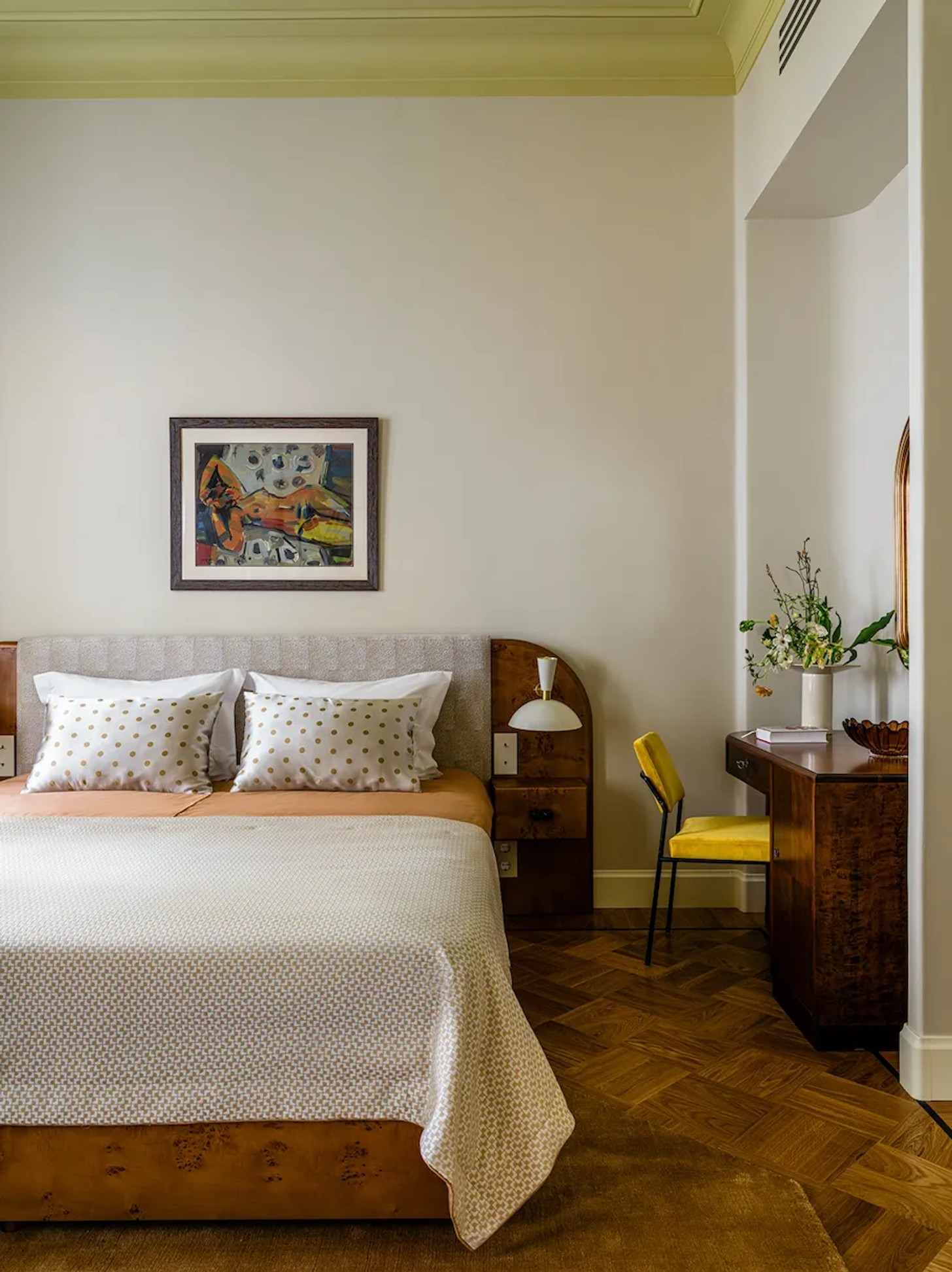
The secret to keeping vintage from feeling dated lies in contrast. Here, restored parquet floors, vintage lighting and collected furniture bring character and history, while contemporary artwork, textiles and accessories keep the room firmly rooted in the present. Rather than creating a period interior, the designer uses colour and material as a common thread between old and new. The result feels layered rather than nostalgic—a reminder that heritage pieces work best when given contemporary company.
Credits
Text by Catherine Mo
Images: Supplied


