
In the historic town of Aurora, Toronto, a family home offers a reminder that our surroundings can shape how we feel. Created by interior designer Charlene Huang of Charlene Huang Interiors, the residence is a personal sanctuary for a family of three, balancing European character with the principles of Eastern philosophy to create a space that encourages a slower pace of living.
For the homeowners, a successful Chinese-Canadian couple who built a thriving restaurant business in just two years, home needed to be more than a beautiful place to return to. Their demanding workdays were filled with constant movement, noise and stimulation, leaving little room for rest or family time. They wanted an environment that felt entirely different from their professional lives: calm, restorative and rich in character, with moments of boldness that reflected their entrepreneurial spirit.

“Rather than creating another beautiful house, we wanted this home to become their sanctuary,” says Huang. “A place that could offer the emotional restoration they had been missing.”
A Design Philosophy Rooted in Balance
The project began with a simple but powerful idea: wellness is one of life's most valuable assets. This became the foundation for every design decision, from the colour palette and material selection to the arrangement of the rooms.
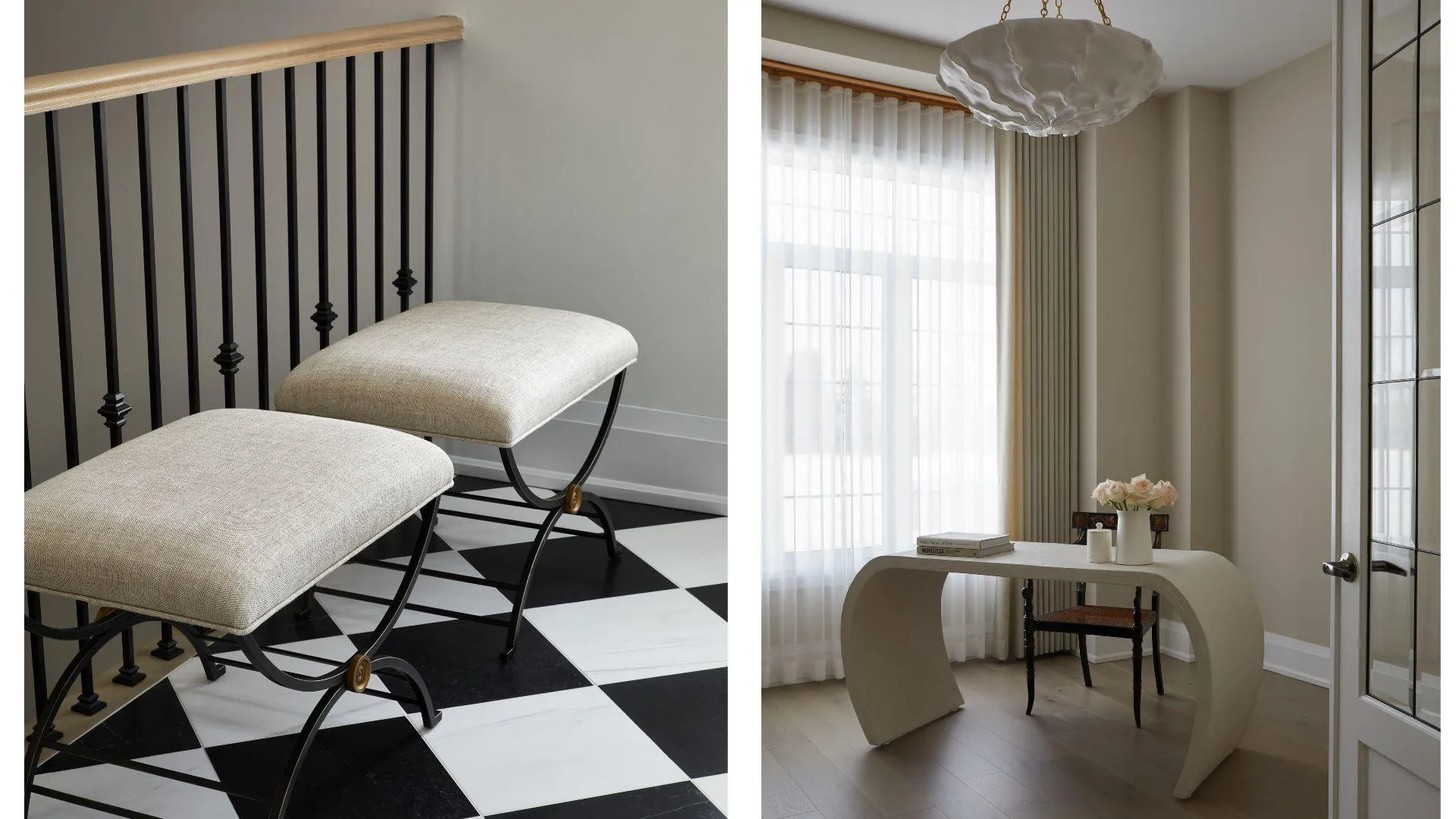
Drawing on environmental psychology, biophilic design and the relationship between our surroundings and emotional wellbeing, Huang approached the home as a place of visual rest. The homeowners independently chose black and white as the colours that made them feel most at ease, creating a foundation that feels both timeless and grounding.
Inspired by Eastern philosophy, the palette explores the relationship between opposing forces. Black represents intensity and the unknown, while white brings clarity and calm – an interplay used to create a sense of balance.
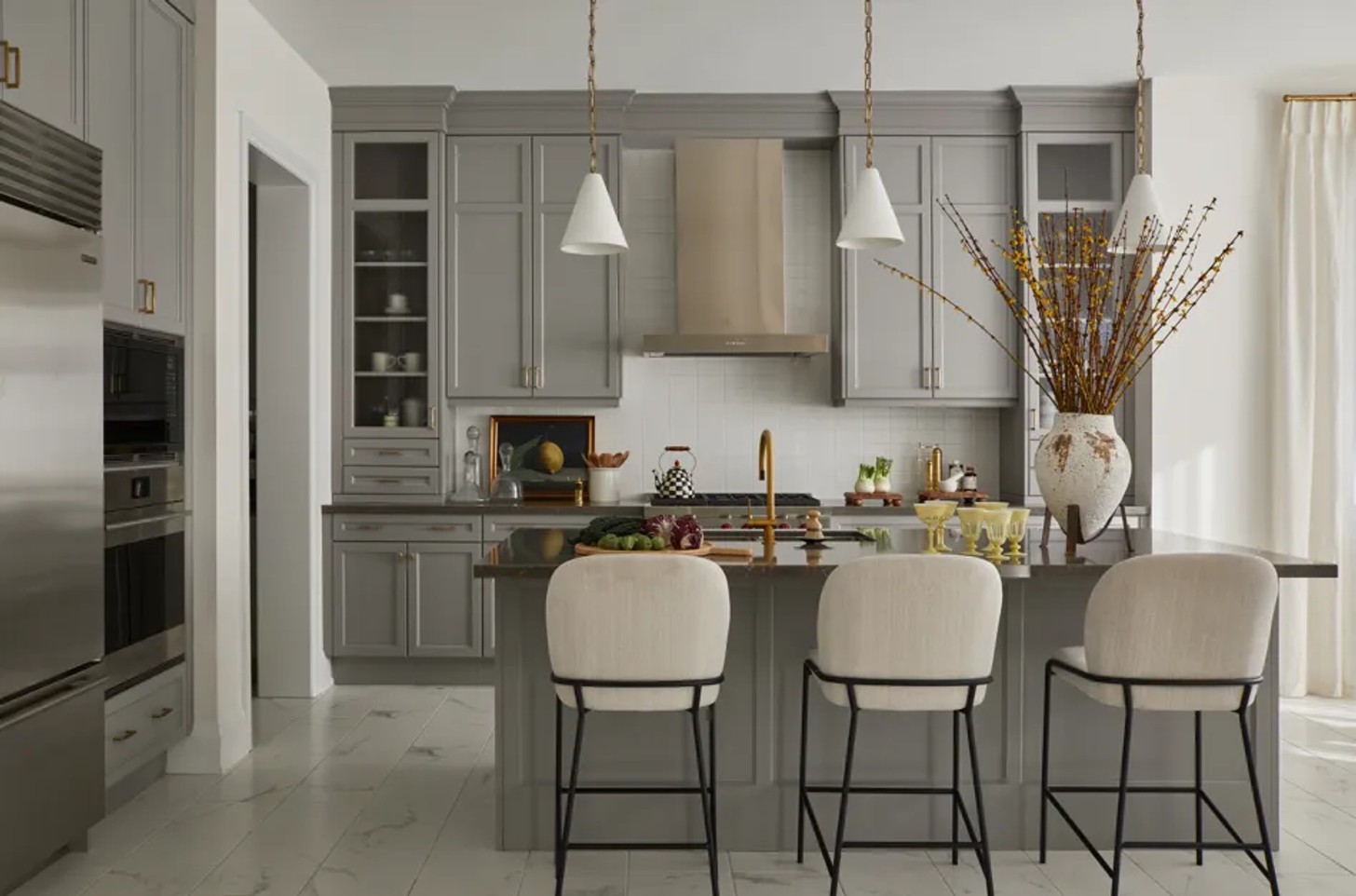
Accents of orange and pale pink bring warmth and individuality, while natural materials and tactile finishes soften the monochromatic design. Together, these elements create a visual detox from the demands of everyday life.
A Connection to Nature and History
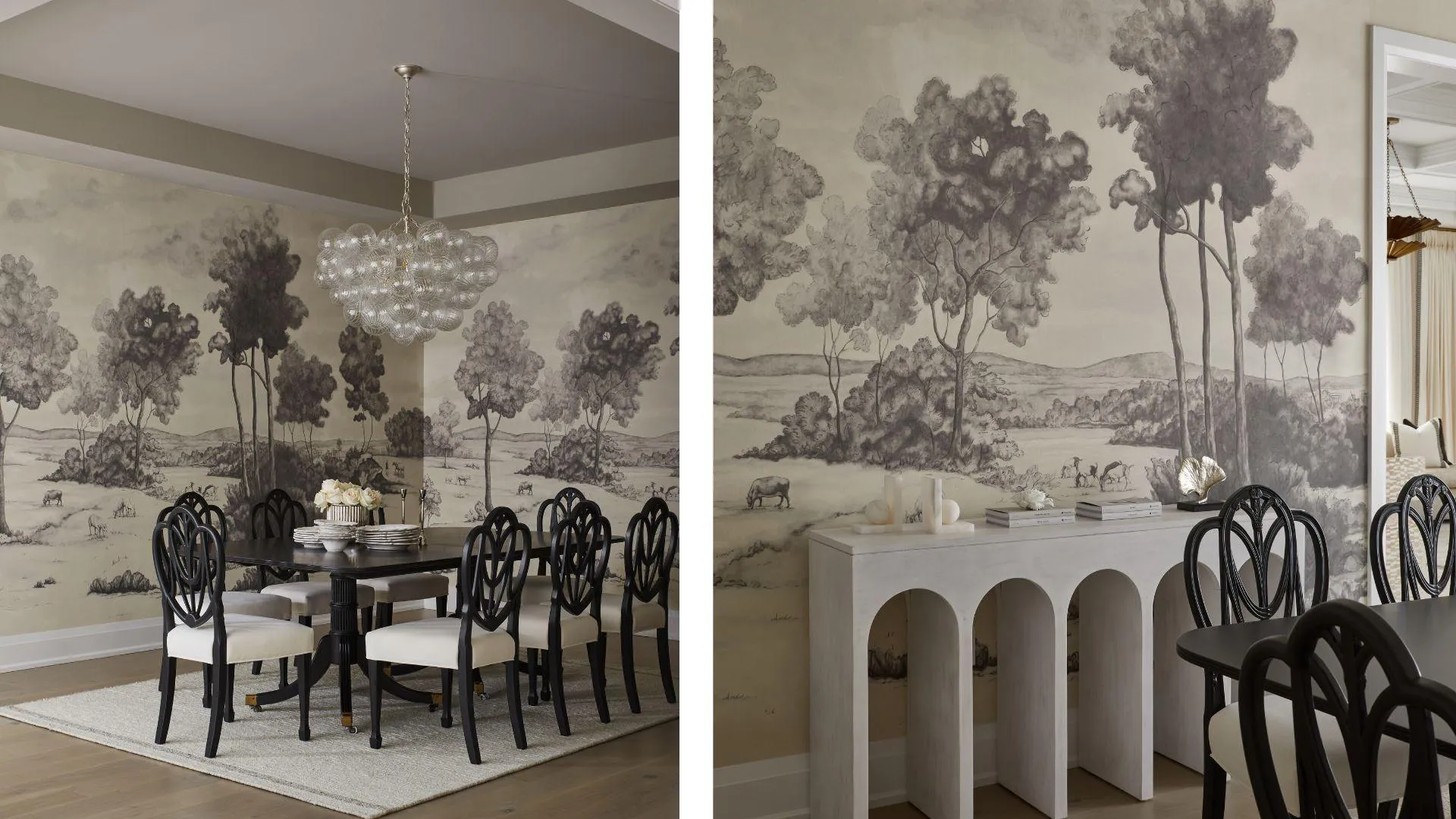
The surrounding landscape plays an important role in the home's atmosphere. From the dining room, a small grove of mature trees inspired the inclusion of Barry Dixon's reinterpretation of an 18th-century English countryside mural.
The mural creates a visual connection between the interior and the wooded landscape, bringing the restorative qualities of nature into the home. Its historical character also introduces a sense of European elegance, setting the tone for the vintage furnishings and finishes throughout.
In the foyer, an antique-finished marble checkerboard floor, handcrafted by artisans in Montreal, establishes a distinctive first impression. Wool, cotton and cashmere upholstery introduce softness, while a textured limestone mantel and custom marble coffee table bring together natural textures and refined craftsmanship.
Giving Vintage Pieces a New Chapter
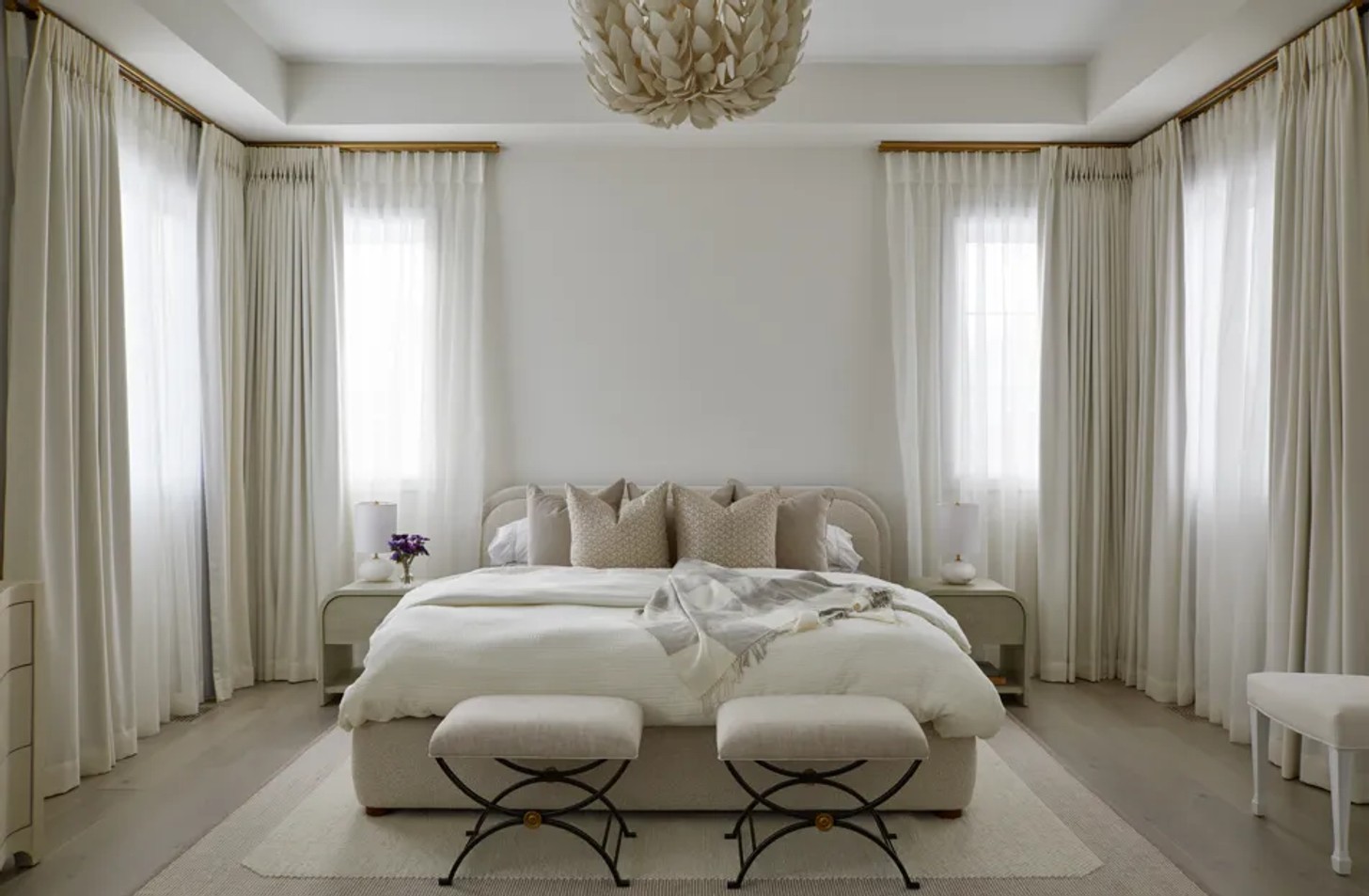
Vintage furniture is central to the home's character, with British furnishings and classic European silhouettes adding depth and a sense of history.
One of Huang's most meaningful discoveries was a discounted Duncan Phyfe-style dining set found at a Toronto vintage market. Instead of overlooking the pieces, she recognised their potential and had the wood refinished and the chairs recovered.
The dining room now pairs a black Duncan Phyfe table, a 19th-century American design classic, with British Hepplewhite chairs. Originally finished in mahogany, the chairs were updated in black with white wool upholstery, allowing their traditional structures to feel fresh and contemporary.
The entire dining set demonstrates how thoughtful restoration can bring lasting design into a home without relying on newly manufactured furniture.
In the breakfast area, six vintage British shield-back chairs were refinished in white and covered in pale lilac wool. Their curved silhouettes echo the oval table, creating a softer rhythm within the space.
These pieces are complemented by an original artwork by Canadian artist Anton Cetin above the living room's limestone mantel. A copper chandelier was selected for its ability to develop a natural patina over time, reflecting the homeowners' appreciation for objects that evolve alongside the people who live with them.
Spaces Designed for Living Well
The home's layout further supports its restorative purpose. Instead of positioning the television above the fireplace, Huang divided the living room into two intimate conversation areas, allowing the fireplace to remain a big part of the space, while accommodating the family's everyday routines.
For a more expressive contrast, the powder room introduces dark, moody limewash walls and a custom Calacatta Viola marble sink. Its sculptural presence brings a sense of individuality to the home, reflecting the entrepreneurial spirit that inspired the project.
Ultimately, this Aurora residence is a thoughtful exploration of how design can support emotional wellbeing. Through its black-and-white palette, vintage British furnishings, natural textures and connection to the landscape, the home offers a calm rhythm of living.
Credits
Interior design: Charlene Huang Interiors, Instagram @charlenehuanginteriors
Photography: Niamh Barry, Instagram @niamhbarryphoto


