
In South Africa, outdoor cooking is less of a novelty than a way of life. The braai, long lunches and evenings spent entertaining outside have made the outdoor kitchen an increasingly important extension of the home. But creating one that looks good is only part of the equation. A successful outdoor kitchen needs to work with its climate, withstand the elements and make cooking and entertaining feel effortless.
The first consideration is location. House & Garden South Africa has previously recommended positioning an outdoor dining area close to the main kitchen or braai, while also looking for protection from prevailing winds. The same principle applies to the kitchen itself: the shorter the journey between the indoor and outdoor spaces, the more likely the outdoor kitchen is to become part of everyday life rather than an occasional entertaining zone.

Start With The Cooking Zone
The grill or braai will usually be the focal point, but it should not dictate the entire layout. Think about how you actually cook and build the space around that routine.
A built-in braai can sit alongside a gas grill, pizza oven or hotplate, depending on how much cooking you intend to do outdoors. For a more comprehensive setup, consider adding a sink, under-counter refrigeration and dedicated storage. House & Garden's guide to alfresco dining notes that more expansive outdoor kitchens can include islands, ovens, stoves, bar areas and additional storage.
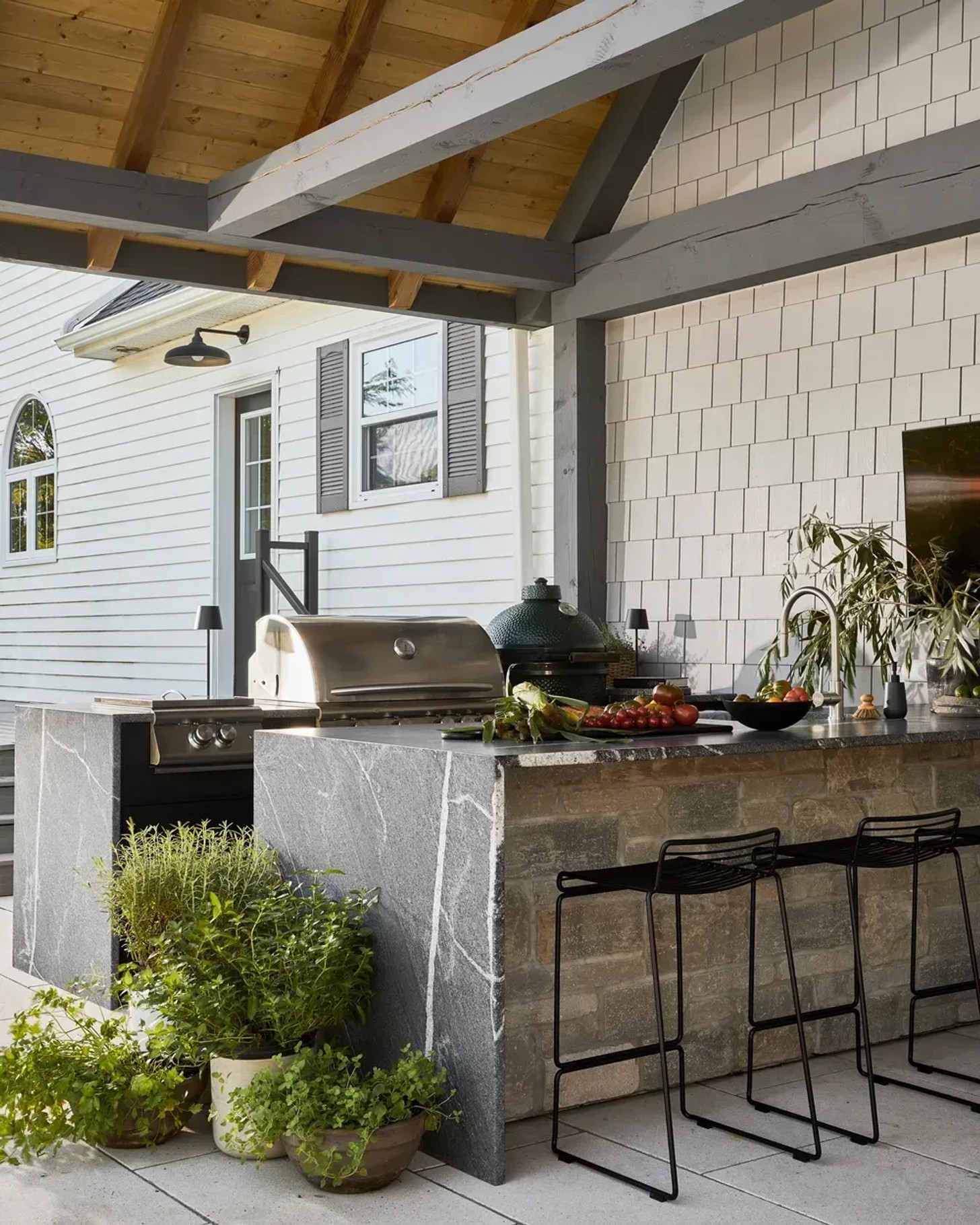
Ventilation and clearance around cooking appliances are equally important, particularly where the kitchen sits beneath a roof or pergola. Appliance placement should be planned with safety, airflow and access in mind rather than simply fitting equipment into whatever space remains.
Create A Proper Prep Zone
An outdoor kitchen needs more than a grill. A generous work surface beside the cooking area means vegetables can be chopped, meat seasoned and dishes assembled without repeatedly returning indoors.
Think of the prep zone as you would an indoor kitchen worktop. It should be easy to clean, resistant to heat and spills and durable enough to cope with daily exposure to the weather.
Natural stone, concrete, stainless steel and appropriately specified sintered or porcelain surfaces can all be considered, depending on the application and level of exposure. For particularly exposed kitchens, materials with strong resistance to UV, moisture and temperature changes are worth prioritising.
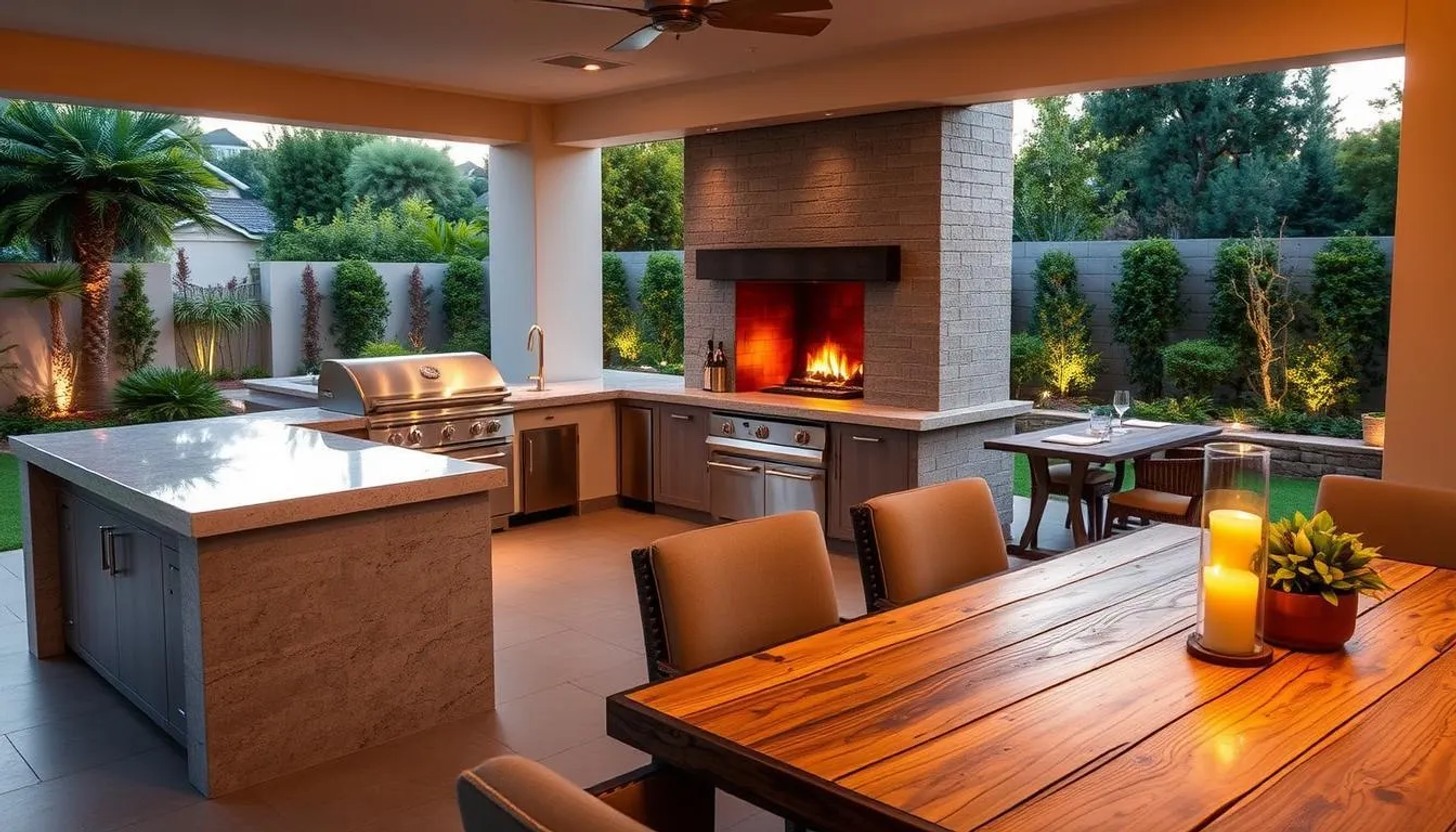
Cabinetry deserves the same consideration. Materials designed for indoor kitchens are not automatically suitable outside; sun, rain, humidity and temperature fluctuations can cause unsuitable boards and finishes to swell, fade or deteriorate.
Design For Shade And Shelter
South Africa's sunshine is one of the pleasures of outdoor living, but an outdoor kitchen needs protection from it. A pergola, covered veranda or retractable awning can make the difference between a kitchen that is enjoyable throughout the year and one that becomes unbearably hot in summer.
Shelter should also account for rain and wind. In Cape Town, for example, outdoor structures need to contend with strong southeasterly winds, winter rainfall, intense UV exposure and, in coastal areas, salt-laden air.
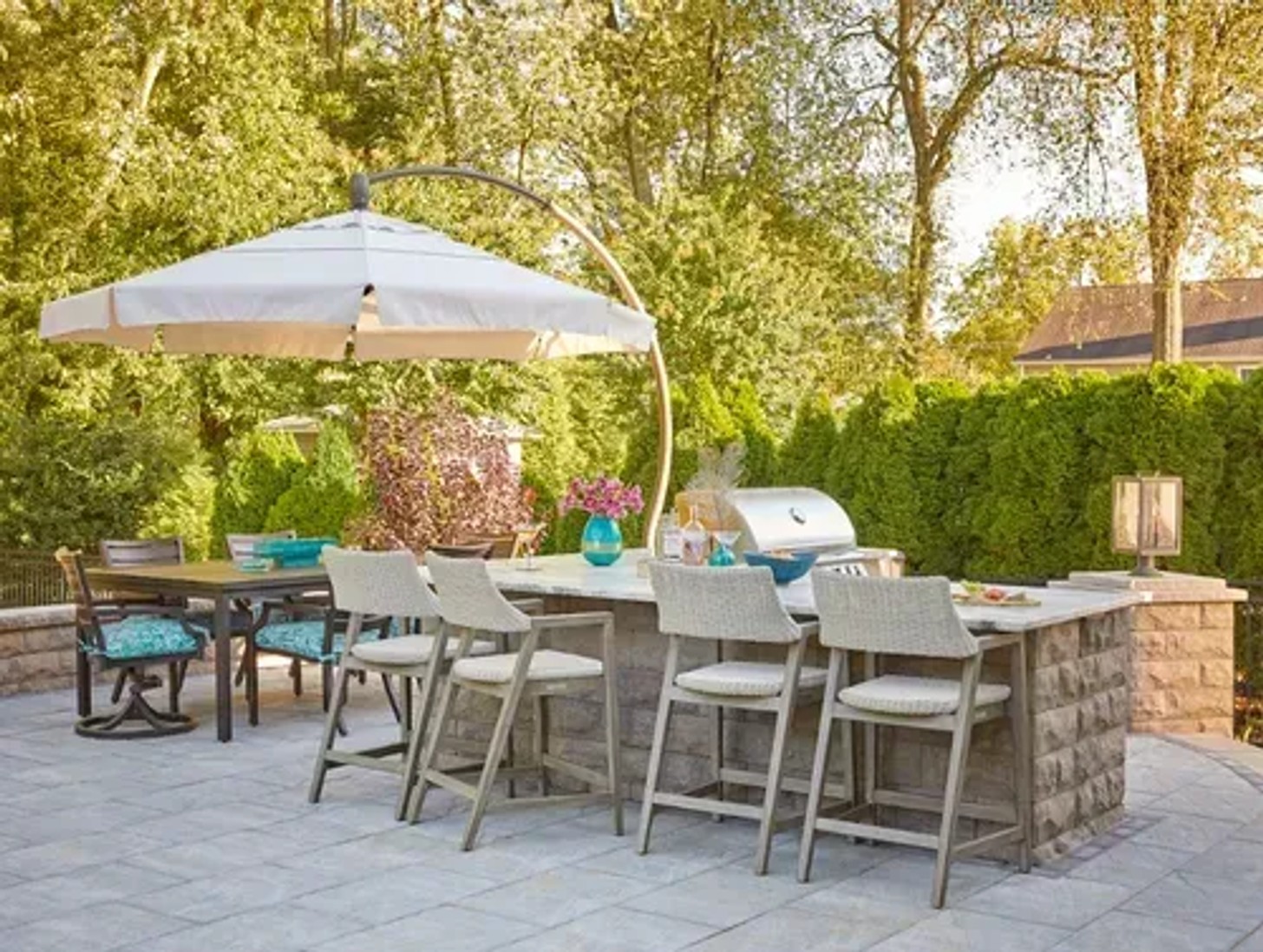
The ideal solution does not necessarily mean enclosing the kitchen completely. Instead, consider layered protection: a solid overhead cover, screened sides where necessary and enough openness to maintain airflow and a connection with the garden.
Choose Materials That Can Take The Weather
Material selection is where an outdoor kitchen can either succeed or fail. Stainless steel is a practical choice for cooking equipment, while powder-coated aluminium can be useful for cabinetry and structural elements because it does not rust and can be specified for outdoor use.
For coastal properties, corrosion resistance becomes even more important. Countertops should be selected according to their exposure to UV, moisture, heat and staining, rather than purely for their appearance.
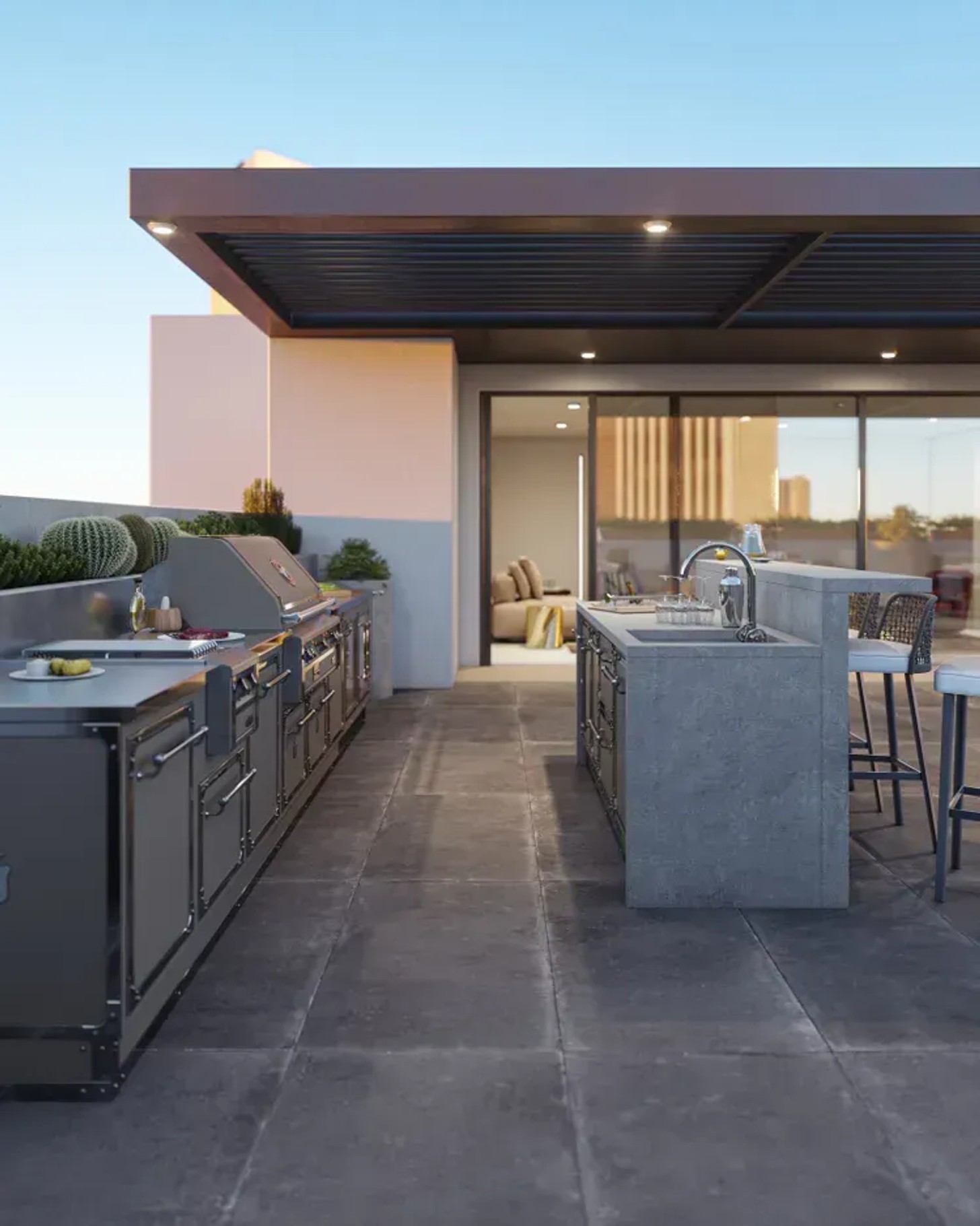
Timber can bring warmth and soften a hardscape, but it needs to be an appropriate outdoor species and properly maintained. The aim is not to eliminate weathering altogether, but to choose materials that will age gracefully rather than deteriorate prematurely.
Connect Cooking And Entertaining
Finally, remember that an outdoor kitchen is also a social space. Position the grill where the person cooking can remain part of the conversation, rather than being separated from guests.
A nearby dining table, comfortable seating, good lighting and a clear connection to the garden can turn the kitchen into an outdoor room. As House & Garden South Africa has noted, keeping the cooking area close to the dining zone makes outdoor entertaining more interactive and reduces the constant movement between kitchen and garden.
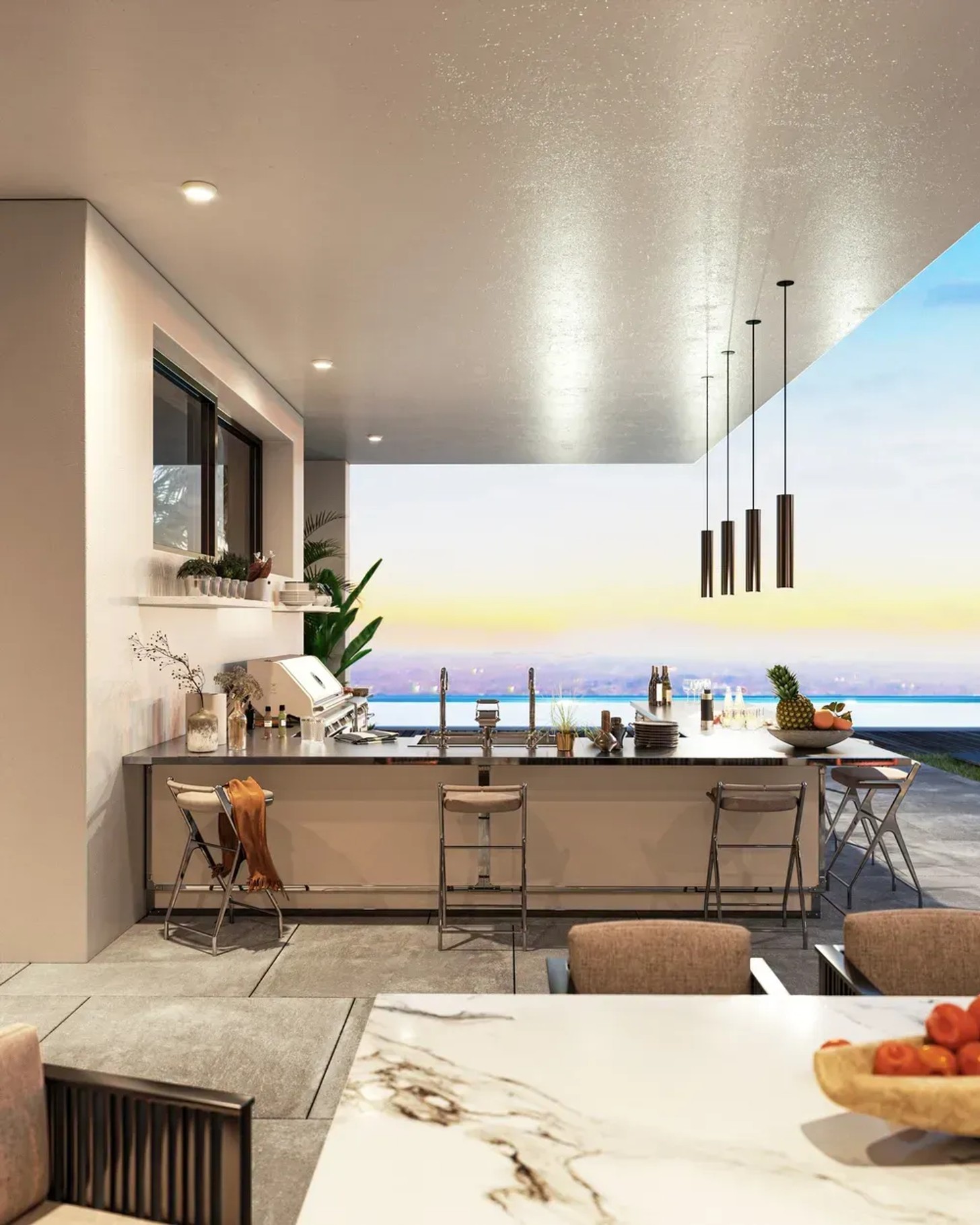
The best outdoor kitchens therefore do more than provide a place to cook. They extend the way a South African home is lived in – creating a space that can move effortlessly from morning coffee to an afternoon braai and, with the right weather protection and lighting, well into the evening.
Credits
Images: Marcos Garcia, Lauren Miller, Pexels, Amy Neunsinger, Courtesy of Officine Gullo


