
In the heart of Italy’s Sorrento Peninsula, an old butcher’s shop has been given a new lease on life, becoming a celebration of food, family heritage, and design. Reimagined by Neapolitan architect and interior designer Valentina Autiero, La Tradizione in Seiano di Vico Equense is a space where the past and present come together, with an approach to restoration that honours its history without compromising on a contemporary vision.
Long before it became the destination it is today, La Tradizione was a traditional butcher’s shop, where the rhythm of daily life was marked by the sound of knives, the scent of fresh meat, and the familiar exchanges between customers and shopkeepers. Over the years, the business gradually evolved into a deli and supplier of local food and wine, eventually expanding to include a bistro and grill restaurant celebrating the flavours of the Campania region and the comforts of Italian home cooking.

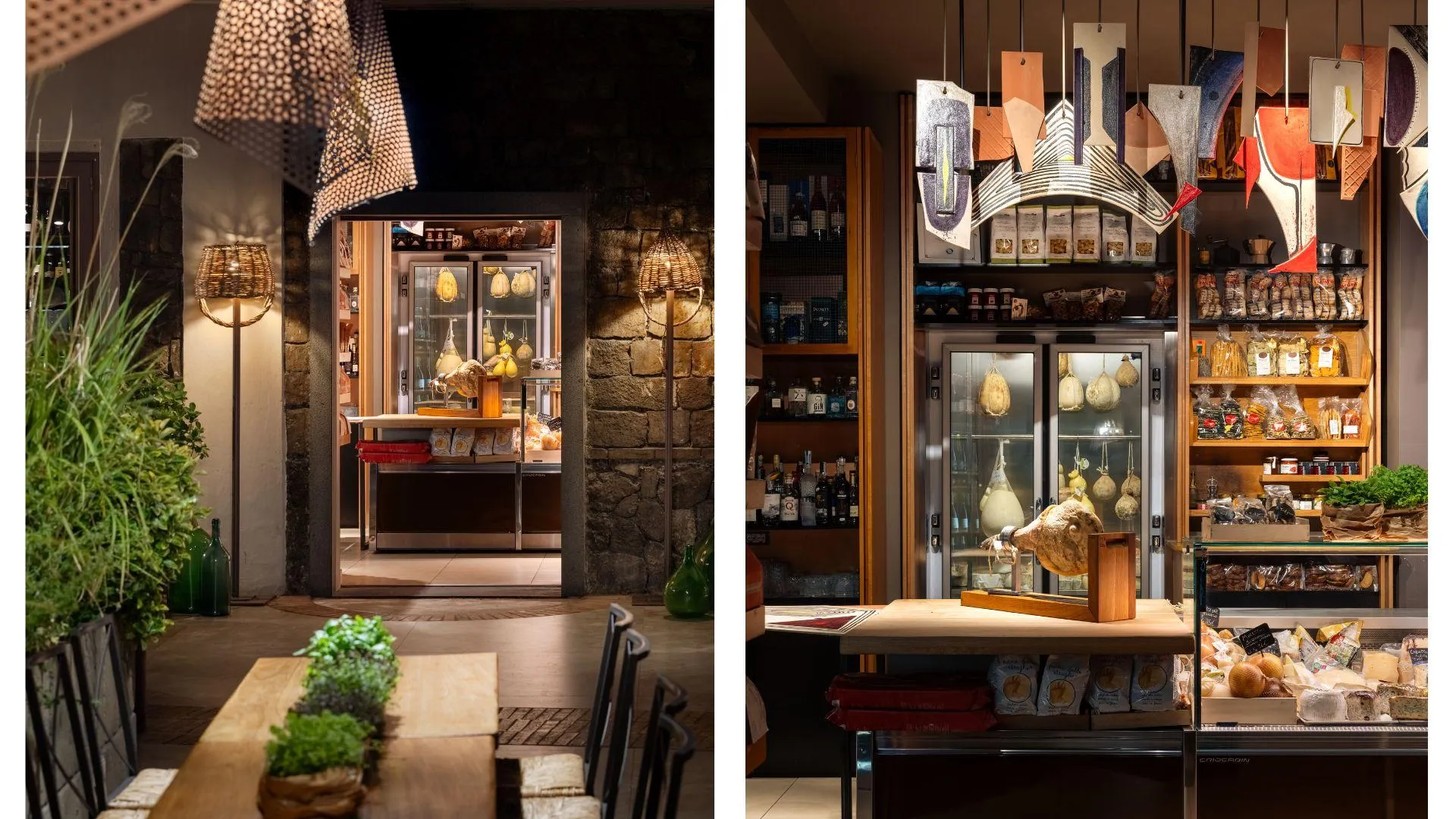
It is this layered history that inspired Autiero’s approach to the renovation. Instead of erasing the character of the original premises, her vision was to preserve the stories embedded within its walls while introducing a fresh architectural language. The result is an inviting space that pays tribute to generations of family tradition and a shared appreciation for good food.
Stepping inside, the first impression is one of warmth and sensory richness. Earthy-toned walls establish a welcoming backdrop, while carefully arranged display counters showcase an abundant selection of local meats, cured delicacies, artisan cheeses, and wines. Here, the food itself becomes part of the interior, adding colour, texture, and character to the space.
One of the most striking features is a large, brightly coloured ceramic sculpture that runs through the deli, drawing attention to the display counters. Designed by Autiero in collaboration with Pierfrancesco Solimene of Solimene Art, the piece introduces a playful artistic element while referencing the region's celebrated ceramic-making tradition.
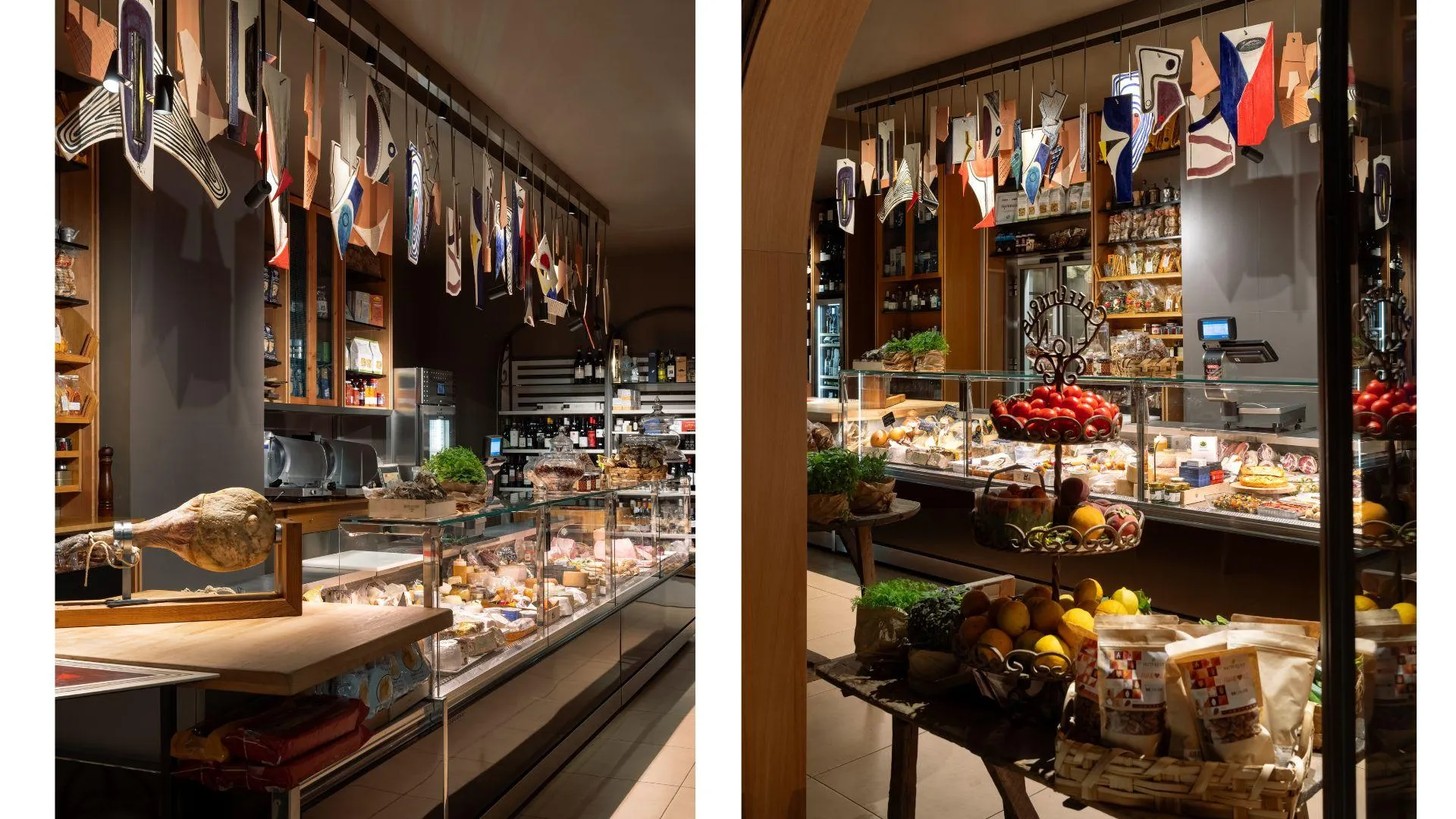
Above, an equally expressive installation of colourful ceramic fragments hangs from the ceiling. Its irregular forms recall the original butcher's shop, where meat was once suspended from wooden frameworks. Reinterpreted through colour and movement, the installation becomes a poetic reminder of the building's former life, connecting its history to its new identity.
Throughout the space, the relationship between food and architecture remains a central part of the space. A generous cheese counter, featuring local specialities connects visually with the outdoors, while a central preparation counter invites visitors to observe the everyday routine of food-making. From kneading to tasting and sharing, these familiar movements become part of the experience, reinforcing the sense of authenticity that defines La Tradizione.
The attention to detail extends to the shop's architectural elements and furnishings. Wooden arches frame openings and create a natural flow between the interior and exterior, while cleverly reworked shop windows provide practical storage. Elsewhere, old wooden baskets have been transformed into floor lamps, steel cones become lanterns, and former work surfaces have been converted to countertops.
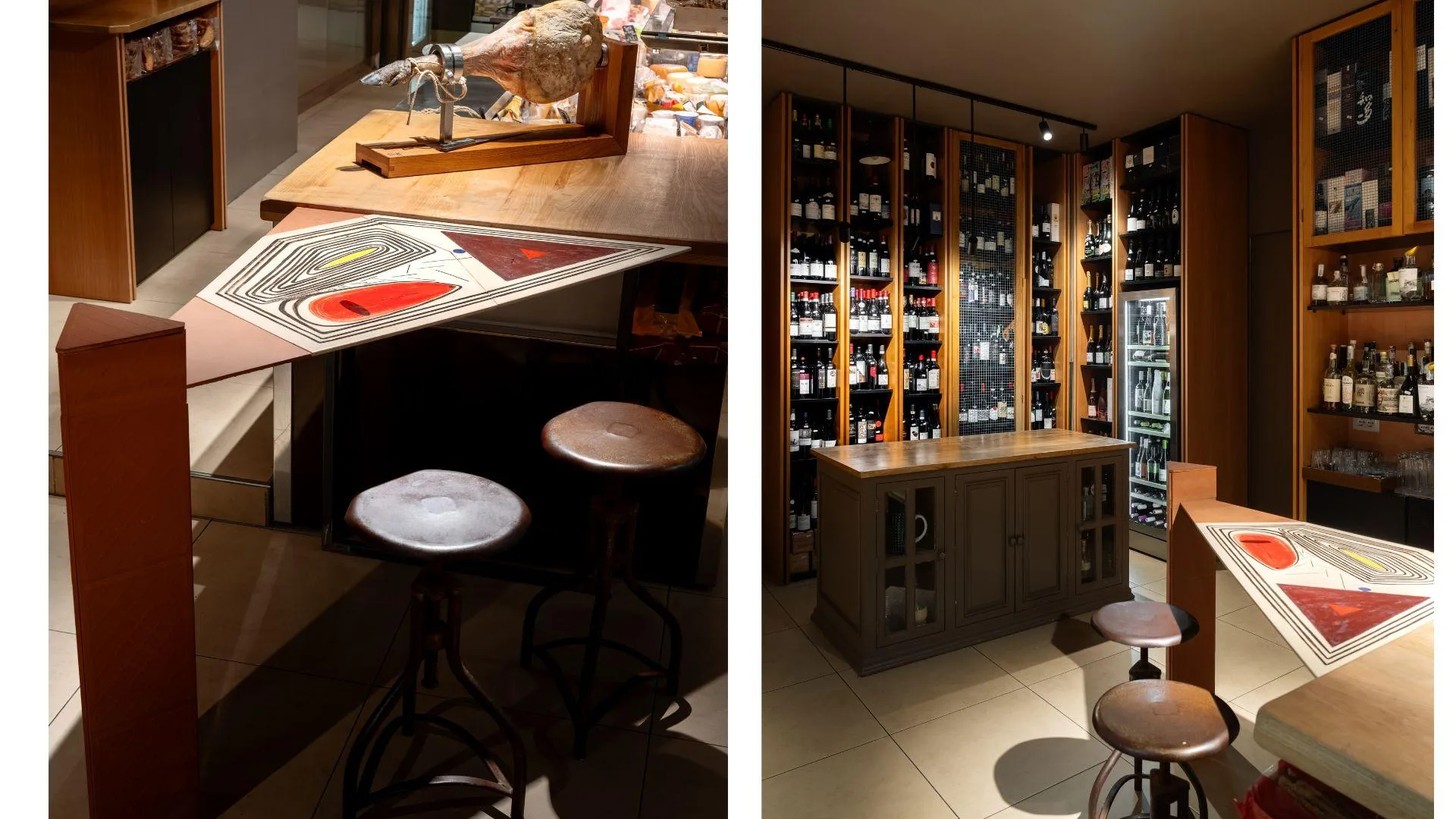
This approach to reuse gives the interiors a sense of character. Rather than introducing unnecessary newness, Autiero embraces what already exists, allowing familiar materials and objects to take on a different purpose. It is a considered, almost zero-mile design philosophy that celebrates local craftsmanship while keeping the story of the building alive.
Outside, vintage chairs and tables provide a relaxed setting that reflects the slower pace of life associated with the region. Simple and unpretentious, the outdoor space shares the welcoming spirit of the deli, inviting guests to enjoy something delicious and settle into the moment.
Ultimately, La Tradizione is a reflection of how design can preserve heritage while allowing it to evolve. Through Autiero's sensitive approach, the shop's history has been woven into its next chapter. A reminder that tradition does not need to remain the same to be meaningful.
Credits
Architect: Valentina Autiero, Instagram @valentina_autiero_architetto


