
Lighting can make or break the overall feel of a bathroom. The right palette can soften stone, highlight architectural details, and create a sense of calm, while the wrong one can leave the room feeling harsh, overly bright, or surprisingly difficult to use.
From the guest bathroom to the main ensuite, there is more to choosing a light than simply finding a fitting you like. Here are the key considerations to keep in mind.

Think beyond one ceiling light
A single central light rarely does a bathroom justice. Instead, think about layers of light: ambient lighting for overall illumination, task lighting for areas such as the vanity and mirror, and accent lighting to create atmosphere.
This also gives you flexibility. You may want brighter light when getting ready in the morning, but something softer in the evening.
Get the vanity lighting right
The vanity is one of the most important areas to consider. A light positioned directly above the mirror can cast shadows onto the face, making everyday tasks such as shaving or applying make-up more difficult.
Where possible, consider lighting on either side of the mirror for more even light. In a double vanity, make sure the lighting works for both users instead of treating the entire vanity as one zone.
Choose the right colour temperature
The colour of your bathroom lighting will influence how the entire space feels.
Cooler white light can feel crisp and clean, while warmer light creates a softer, more inviting atmosphere. The choice should complement the bathroom's finishes, from stone and timber to paint and metalwork.
It is also worth keeping the colour temperature consistent across your fittings so that different areas of the bathroom don't appear noticeably different.
Don't overlook colour rendering
Colour rendering is especially important around a bathroom mirror. A good colour-rendering light source will show skin tones and the colours of surfaces more accurately, which is useful when applying make-up or choosing colours for clothing.
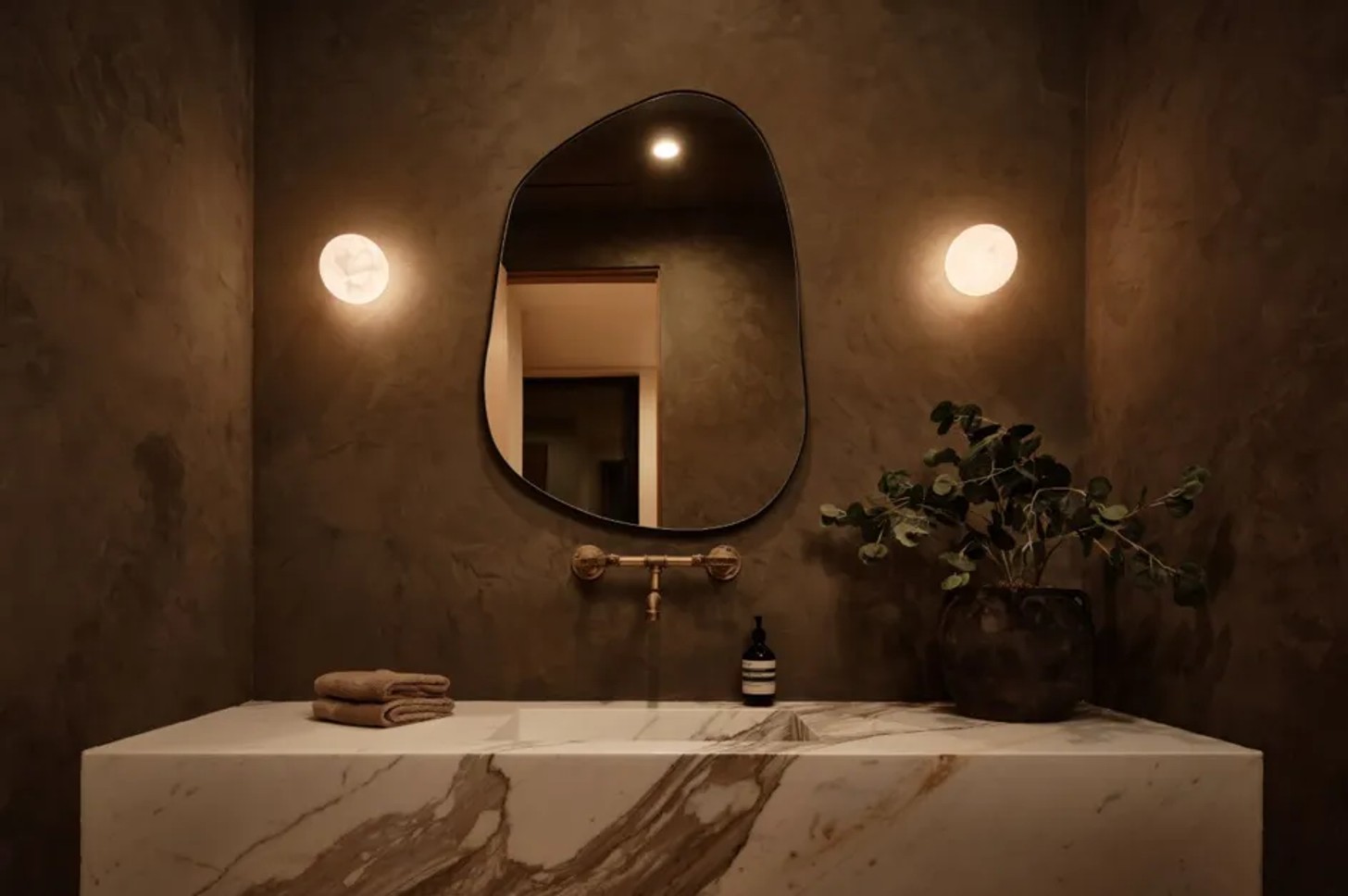
Consider where the light will be used
Not every part of the bathroom needs the same level of brightness.
The shower may need practical, well-positioned lighting, while the area around the bath could benefit from something softer and more atmospheric. Low-level lighting beneath a floating vanity or within a niche can provide a subtle glow without illuminating the entire room.
Think about how you move through the bathroom and what you actually need to see.
Pay attention to moisture and IP ratings
Bathrooms are humid environments, and fittings installed near water need to be appropriately rated for their location. An IP (Ingress Protection) rating indicates how well a fitting is protected against moisture and other external elements.
The required rating depends on where the light is positioned, so always check the manufacturer's specifications and confirm the requirements with a qualified electrician before installation.
Think about glare
Bathrooms are full of reflective surfaces – mirrors, glass, polished stone, glossy tiles, and chrome – which can make glare more noticeable.
Before installing a fitting, consider where the light will fall and what it will reflect off. Diffused light can help create a softer effect, while carefully positioning fittings can prevent the uncomfortable glare that comes from looking directly into a bright lamp or its reflection.
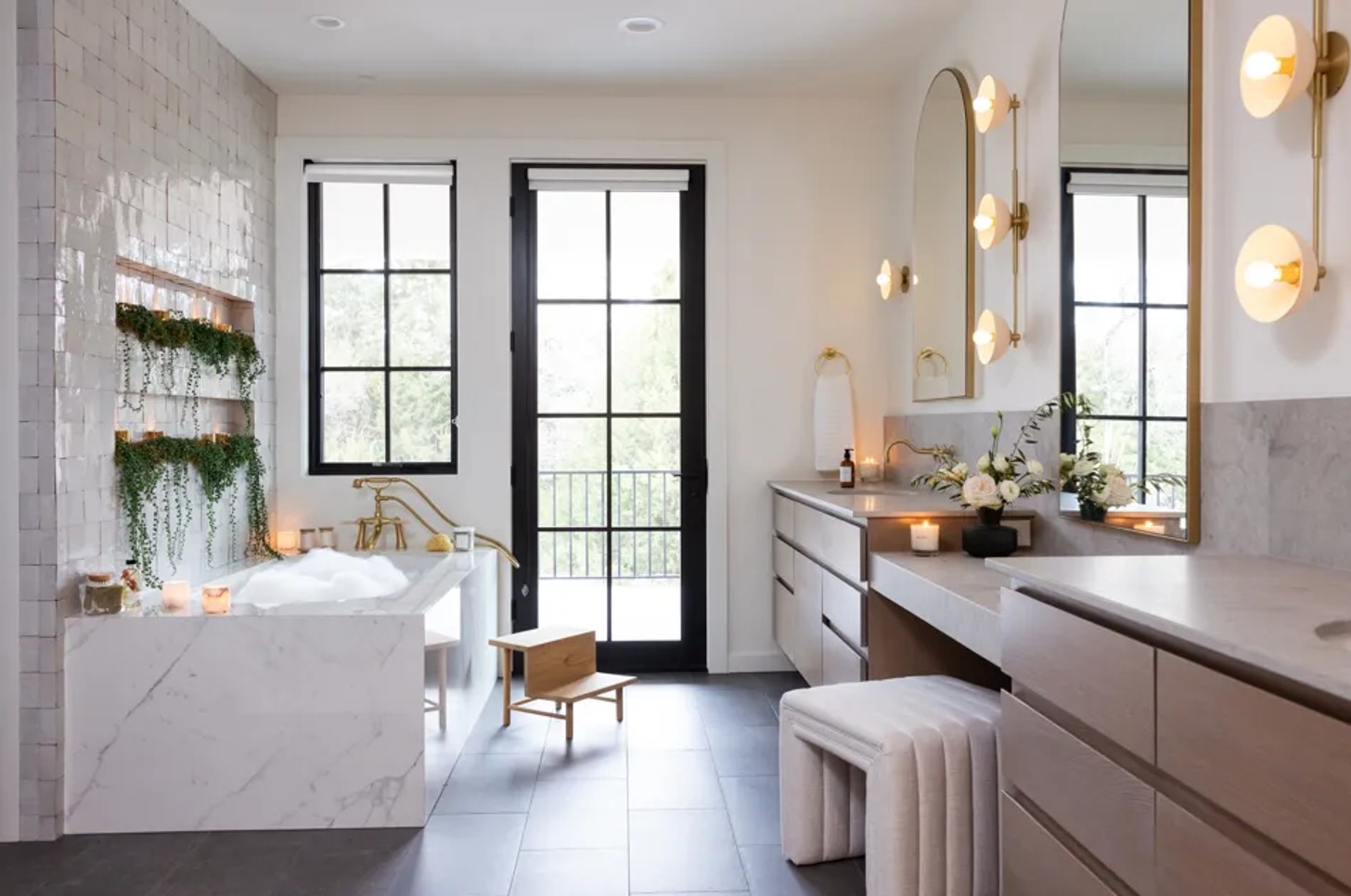
Don't forget the dimmer
A dimmer can be one of the simplest ways to make bathroom lighting more versatile.
Bright light is useful when cleaning, grooming or getting ready, but a lower setting can create a much calmer atmosphere for an evening bath or shower. Just make sure the LED lamps and fittings you choose are compatible with your dimming system.
Let the fitting contribute to the design
A sculptural pendant, considered wall light or interesting sconce can become part of the room's design, particularly in a guest bathroom or powder room where practicality doesn't have to always dominate.
In a larger ensuite, decorative fittings can help introduce warmth and personality, while discreet recessed, or concealed lighting may be better suited to a minimalist scheme.
Guest bathroom or ensuite?
The function of the bathroom should influence your approach.
A guest bathroom can be an opportunity to experiment. Since it is generally used for shorter periods, decorative wall lights, a statement pendant, or atmospheric accent lighting can be the central part.
A main ensuite needs more flexibility. Consider separate lighting for the vanity, shower and bath, as well as softer illumination for nighttime use.
A family bathroom needs to work even harder, so practical, layered lighting should take priority.
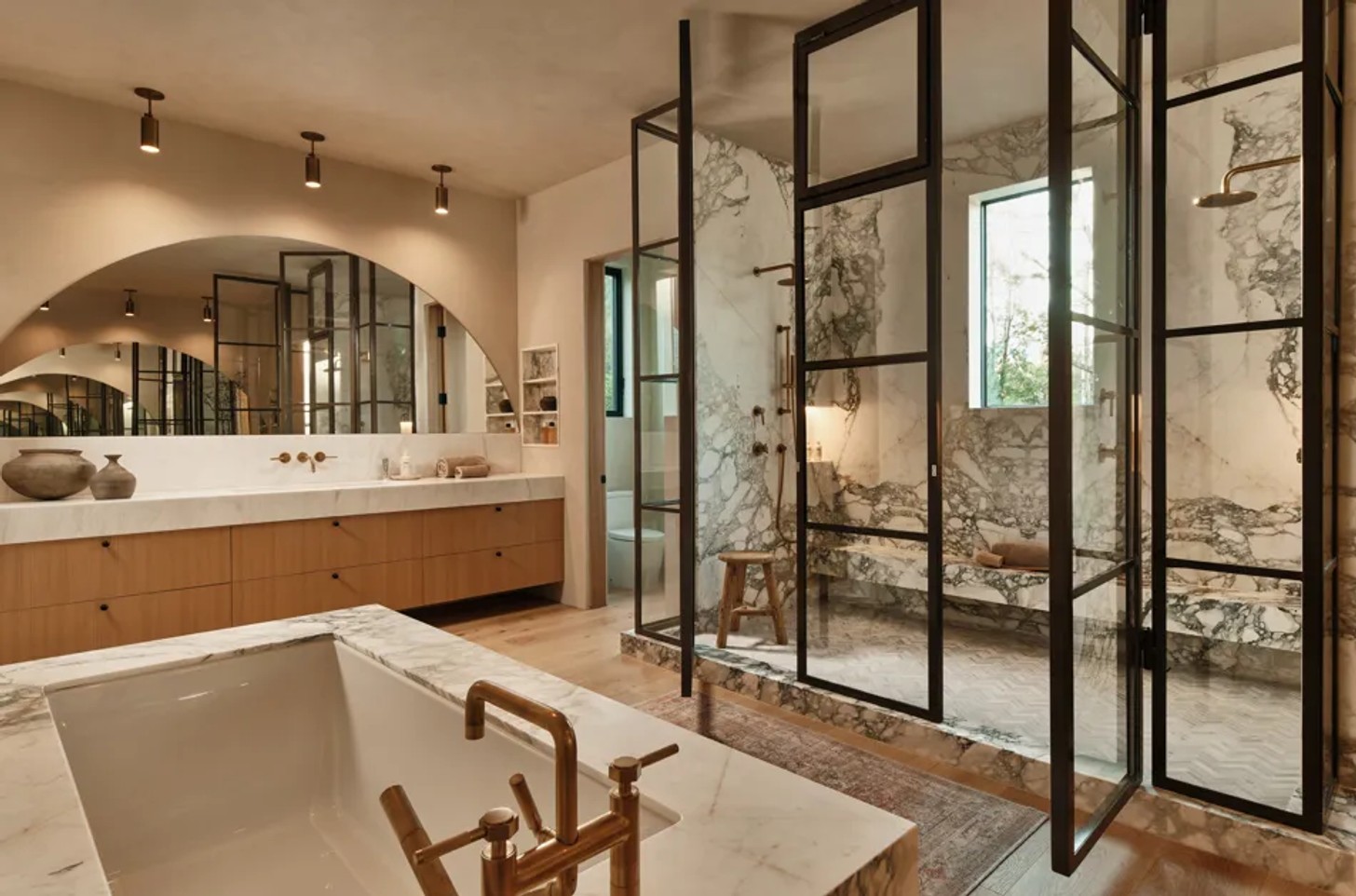
Check the specifications before you buy
Before falling for a beautiful fitting, check the practical details: its IP rating, dimensions, wattage, colour temperature, CRI, dimmability, and installation requirements.
Also consider the position of the fitting in relation to water, mirrors, cabinetry, and ceiling height. A light that looks perfect online may not be suitable for the space once all of these factors are taken into account.
Ultimately, good bathroom lighting is about finding a balance between function, safety and atmosphere. Instead of filling the room with light, think about where light is needed, where it can create mood, and how the bathroom will be used throughout the day.
Get those details right, and the lighting becomes more than a practical necessity – it becomes part of the architecture and design of the room.
Image Credits
Dana Damewood, Damir Otegen, Todd Goodman, Nils Timm


